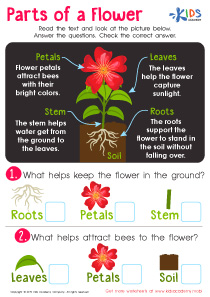
Vocabulary enhancement Easy Reading Fiction Worksheets for Ages 3-9
6 filtered results
Difficulty Level
Grade
Age
-
From - To
Subject
Activity
Standards
Enhance your child's vocabulary with our engaging Easy Reading Fiction Worksheets designed for ages 3-9! These vibrant and interactive resources make learning enjoyable while helping young readers build their language skills. Each worksheet focuses on enriching vocabulary through fun stories, picture prompts, and engaging exercises that cater to various learning levels. Suitable for both home and classroom use, our worksheets encourage creativity and comprehension, allowing children to explore new words in context. Watch your little ones flourish in their reading journey as they develop essential skills that set the foundation for future academic success. Start your vocabulary enhancement adventure today!
Favorites
With answer key
Interactive
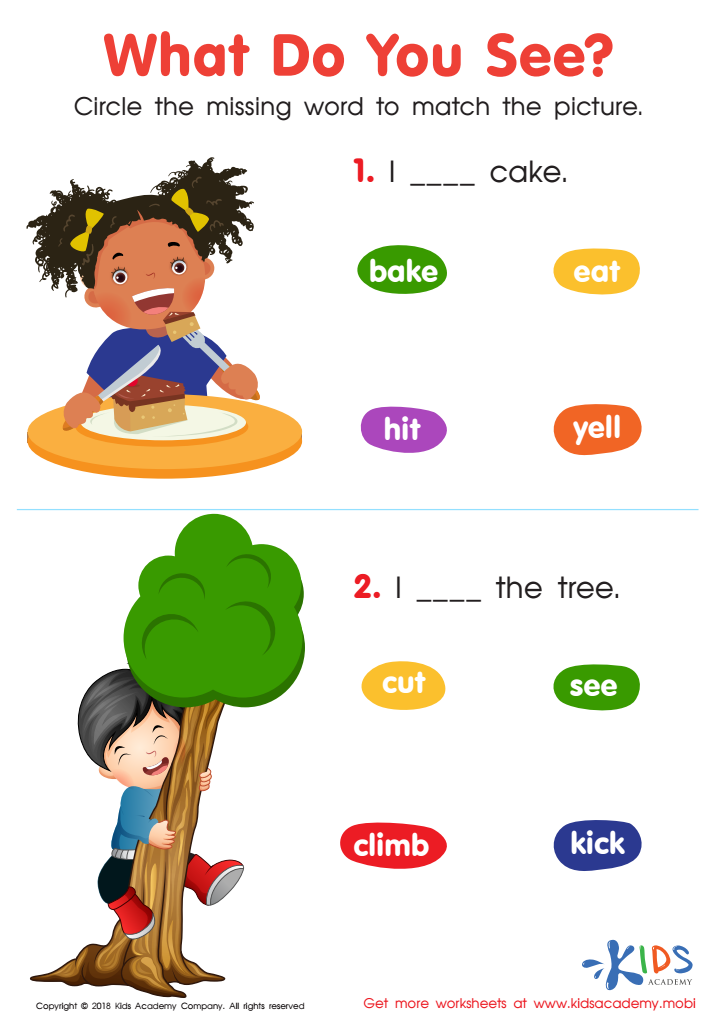
What Do You See? Reading Worksheet
New readers can use the attractive pictures and high-frequency words on this worksheet to practice expressive language skills and decode as they fill in the blanks. As they circle the correct words, they'll feel like reading superstars!
What Do You See? Reading Worksheet
Worksheet
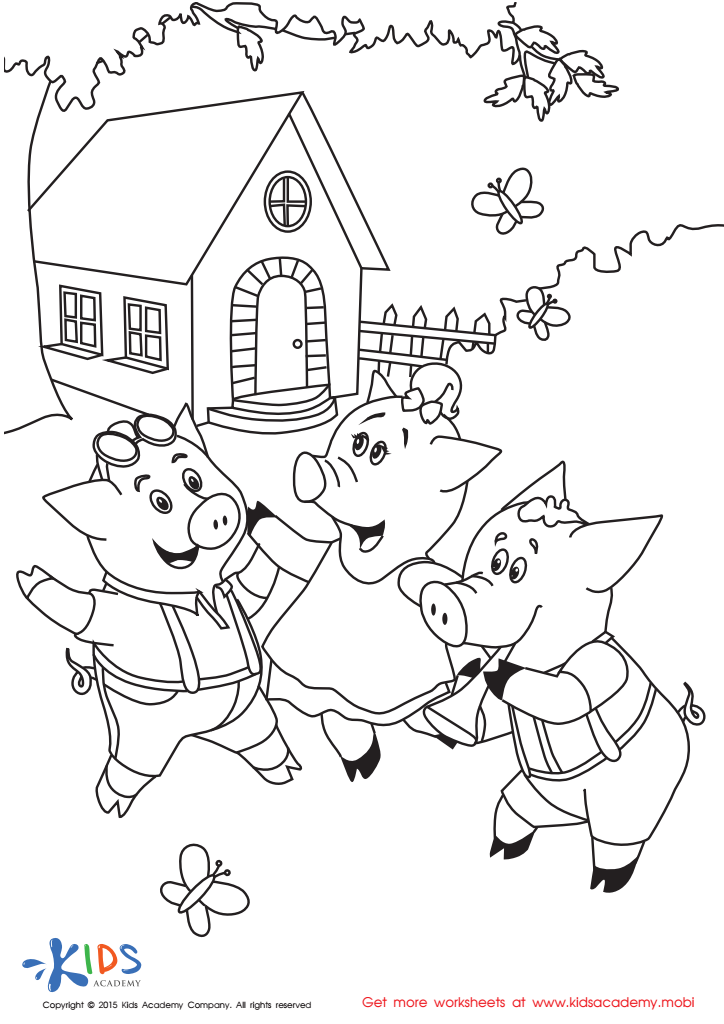
Folktales Printable PDF Worksheet: The 3 Little Pigs
Then, help your child to color the scene with pink piglets, blue sky and green grass. Make the brick house bright and vivid. Enjoy!
Download (PDF)
 Assign to My Students
Assign to My Students
Folktales Printable PDF Worksheet: The 3 Little Pigs
Worksheet
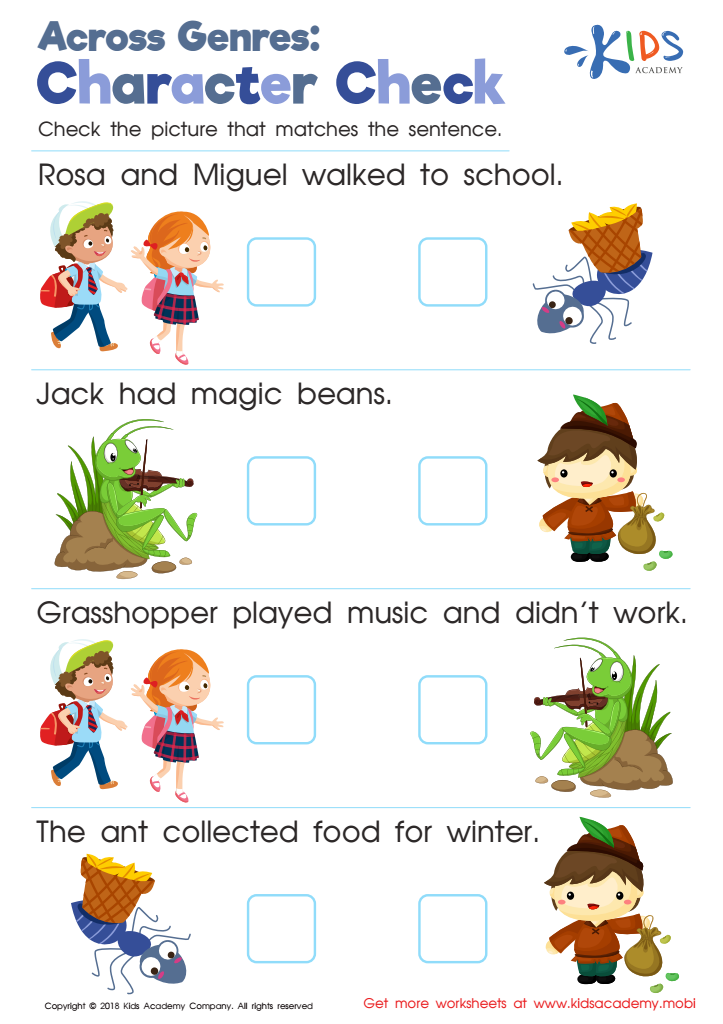
Across Genres: Character Check Worksheet
Read the sentences to your kids, then have them match the pictures to them. Ask them to look at the pictures and help them check which one goes with the sentence. The aim is to see how well they can do this exercise. (80 words)
Across Genres: Character Check Worksheet
Worksheet
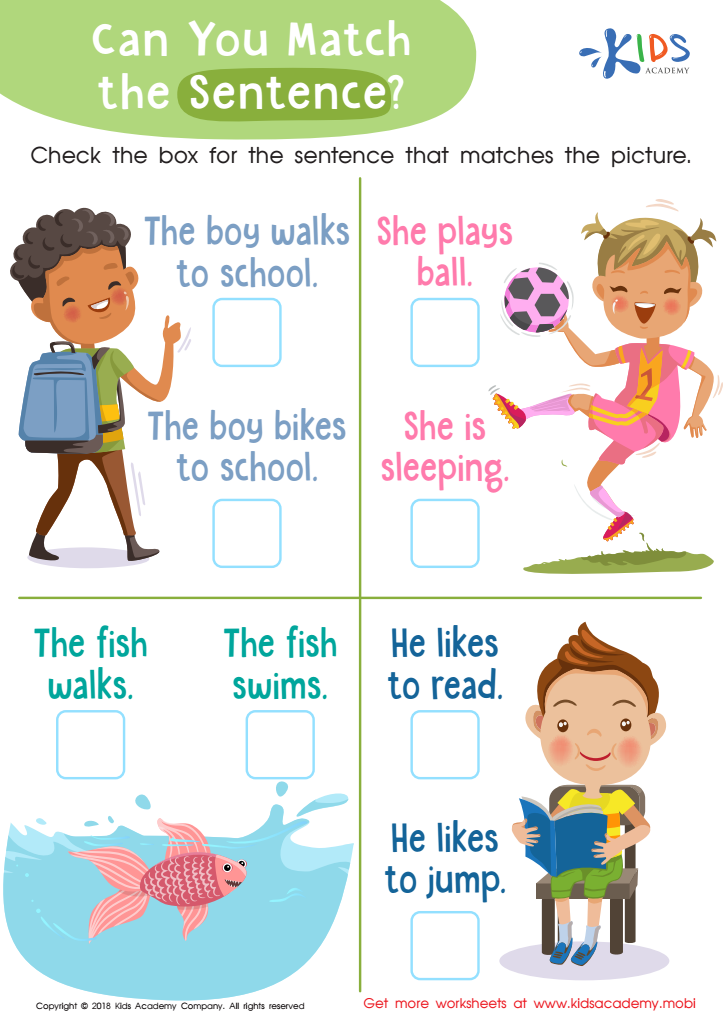
Can You Match the Sentence? Worksheet
Kids gain fluency with this worksheet which uses bright pictures. They select the sentence that matches the image and check the box. This repetition of words and phrases helps them improve their reading skills while having fun.
Can You Match the Sentence? Worksheet
Worksheet
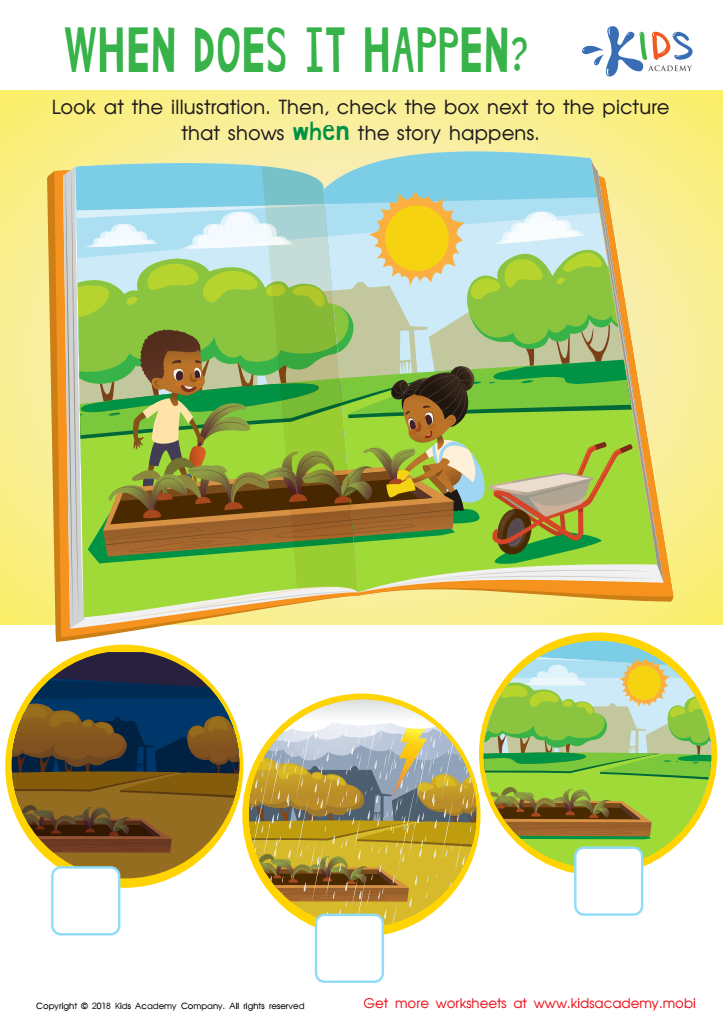
When Does It Happen? Worksheet
Help your kids learn about the different times of day and when events occur using this worksheet. Ask them to look at the pictures and determine which box shows when the story happened. Then, discuss how they can use this knowledge to better describe events that occur.
When Does It Happen? Worksheet
Worksheet
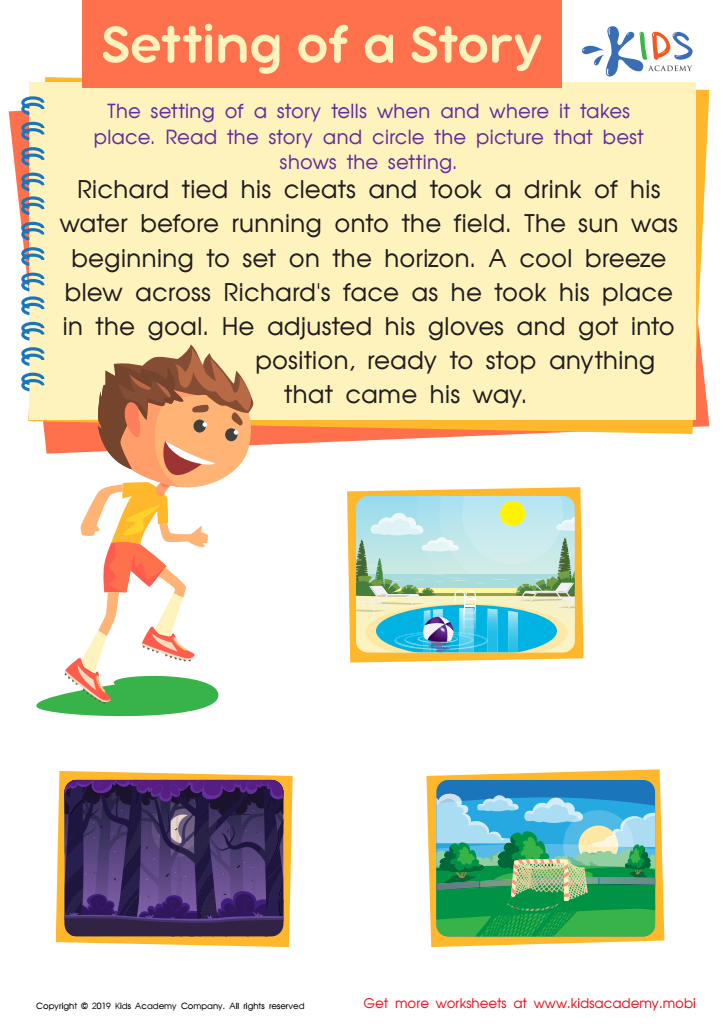
Setting of a Story Worksheet
You need characters, theme, POV, plot and setting to tell a good story. Ask your kids to explain them and use this worksheet with a story to teach them about setting. Read the story with your kids, then have them circle the picture that best shows the setting.
Setting of a Story Worksheet
Worksheet
Join Kids Academy for Free
Who is primarily going to use this learning content?






.jpg)

Vocabulary enhancement through easy reading fiction for ages 3-9 is crucial for several reasons. Firstly, the early years are formative for language development, as children begin to develop foundational skills that will influence their reading and comprehension abilities. Easy reading fiction introduces rich vocabulary in an engaging context, when children's minds are most receptive to new words and concepts.
Secondly, these stories encourage a love for reading by using simple yet captivating narratives. This engagement not only enhances vocabulary but also fosters better communication skills and boosts confidence in expressing thoughts and ideas. Thirdly, a robust vocabulary is linked to academic success; children with enhanced vocabulary sets are likely to excel in various educational assessments and literary tasks.
Moreover, reading fiction helps develop empathy and emotional intelligence as children learn to navigate different perspectives and experiences. It builds critical thinking skills as they predict outcomes and make connections to their lives.
Lastly, the role of teachers and parents in this process is invaluable—as they provide guidance and avenues for discussions, making reading a shared experience. Supporting vocabulary development through easy fiction helps create lifelong learners, ensuring children are well-equipped for future success in their education and beyond.