
Sound Association Easy Worksheets for 3-Year-Olds
3 filtered results
Difficulty Level
Grade
Age
-
From - To
Subject
Activity
Standards
Discover our engaging Sound Association Easy Worksheets tailored specifically for 3-year-olds! Designed to enhance early language and cognitive skills, these worksheets help children identify sounds and connect them to everyday objects. Through fun and interactive exercises, little learners will enjoy matching sounds to images, boosting their auditory recognition and critical thinking abilities. Our colorful and age-appropriate activities make learning delightful and effective, ensuring children stay engaged while playing with sounds. Explore our collection today and give your child the tools they need to succeed in their early education journey, all while having fun! Perfect for parents and educators alike.
Favorites
With answer key
Interactive
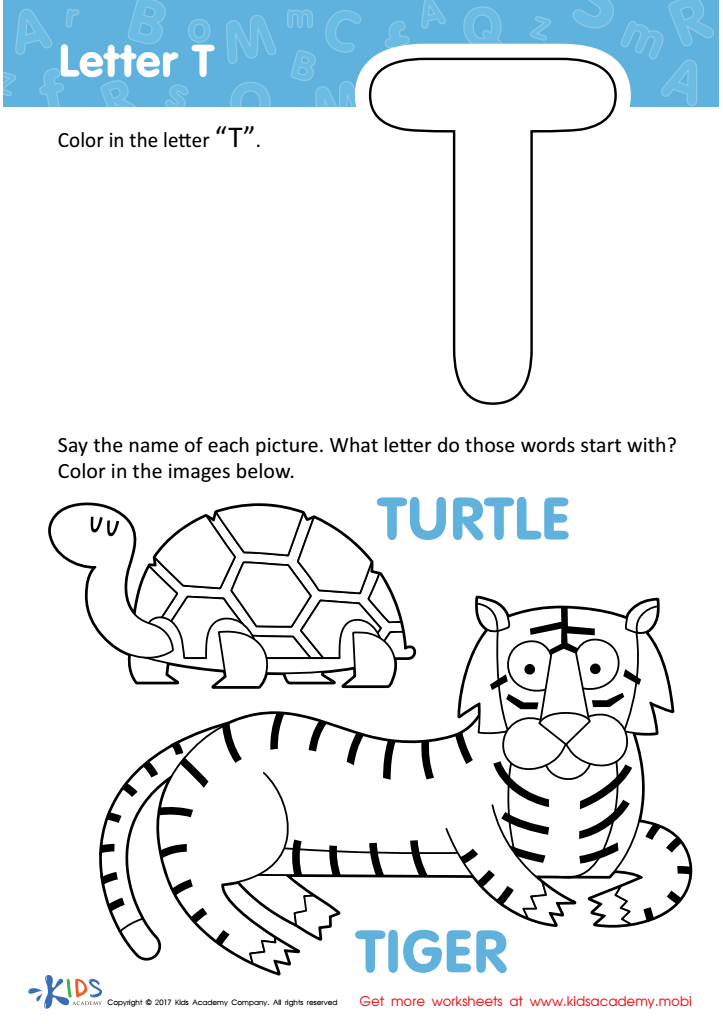
Letter T Coloring Sheet
Introduce your child to the letter "T" and its animals – turtles and tigers! With this coloring page, you can stimulate your child's imagination and creativity, while helping them recognize the letter "T". Have fun with your child and get coloring!
Download (PDF)
 Assign to My Students
Assign to My Students
Letter T Coloring Sheet
Worksheet
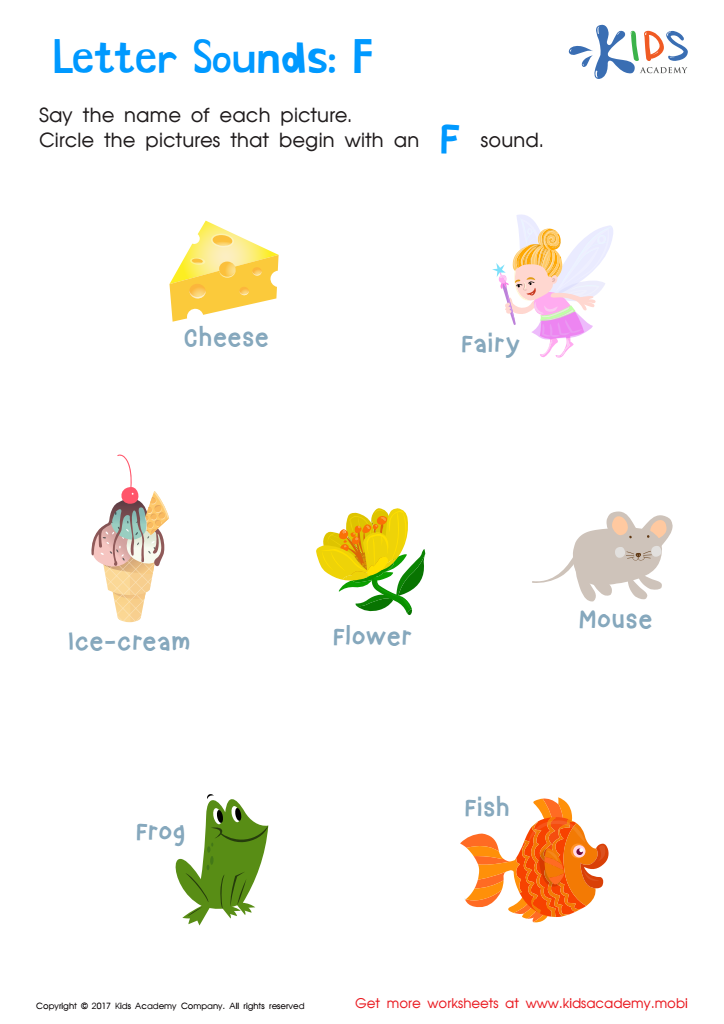
Letter F Sounds Worksheet
Kids will practice identifying 'f' words, tracing, and coloring the letter F for a great way to learn phonics.
Help your child discover the wonders of the letter 'F' with this fun worksheet! Kids will practice identifying 'F' words, tracing and coloring the letter, and building early reading skills. Stimulate their learning and let them connect letter sounds to words they know. An enjoyable way to practice phonics!
Letter F Sounds Worksheet
Worksheet
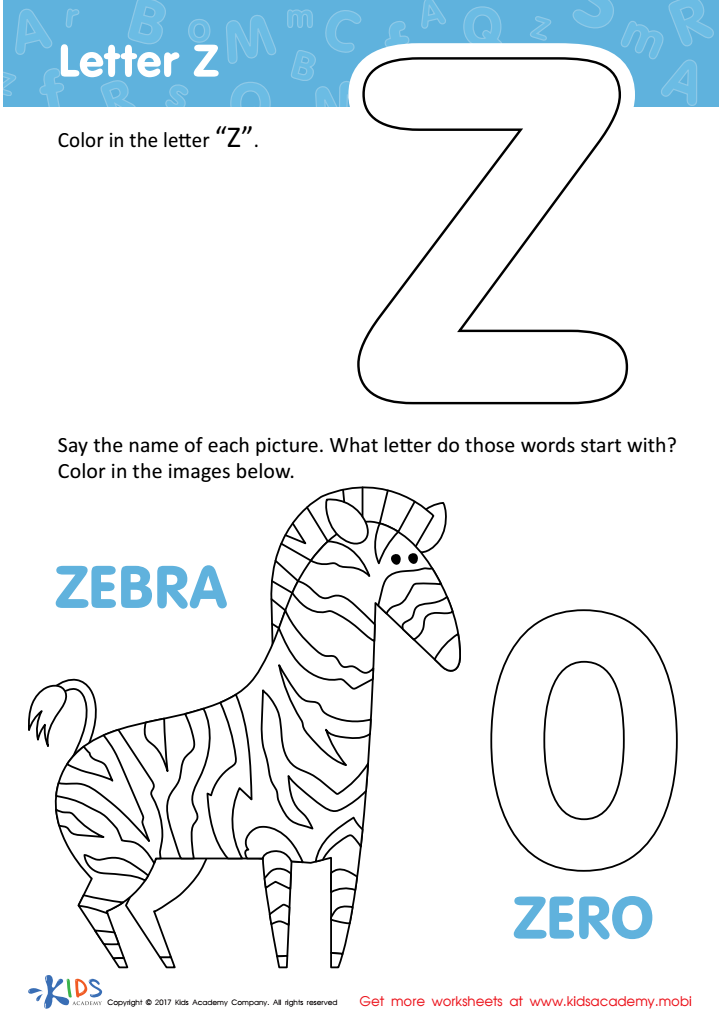
Letter Z Coloring Sheet
This coloring page featuring the letter "Z" is perfect for your child to practice letter recognition! Help them learn the unique sound it makes as they color. It'll be a fun and easy activity they won't have trouble with!
Download (PDF)
Assign to My Students
Assign to My Students
Letter Z Coloring Sheet
Worksheet
Join Kids Academy for Free
Who is primarily going to use this learning content?







Sound Association is a critical component of early literacy development, especially for 3-year-olds. During this stage, children are rapidly acquiring language and developing the skills necessary for communication and reading. Parents and teachers should care about Sound Association because it enhances phonemic awareness—the ability to hear, identify, and manipulate sounds in spoken words. This foundational skill is essential for future reading success.
When children learn to associate sounds with corresponding letters and words, they build a strong connection between auditory input and written text. This can lead to improved vocabulary, listening skills, and overall language comprehension. Activities that promote sound association—like rhyming games, singing songs, and reading aloud—engage young learners in a fun and interactive manner, making learning enjoyable.
Additionally, fostering sound association supports various cognitive skills, such as memory and attention, which are vital for overall learning. By effectively guiding children in these early years, parents and teachers can foster a love of reading and a solid foundation for future academic achievement. Given the significant role these skills play in literacy and lifelong learning, prioritizing sound association is crucial for both educators and families.








