Discover our engaging Visual Perception Easy Worksheets designed specifically for 3-year-olds! These fun, printable activities help young children develop crucial visual skills essential for learning. Through colorful illustrations and interactive challenges, kids will enhance their ability to recognize shapes, patterns, and sizes while improving focus and attention to detail. Perfect for homeschooling or classroom use, our worksheets encourage creativity and critical thinking, setting a strong foundation for future educational success. Explore a variety of themes and keep your little ones entertained while they learn. Start fostering their visual perception skills today with our delightful worksheets!

Check out this FREE "Visual perception" Trial Lesson for age 3!

Arrange up to 5 Objects

Favorites
With answer key
Interactive
  • 3
  • Visual perception
  • Easy
Coloring Page: Number 4

Number 4 Printable

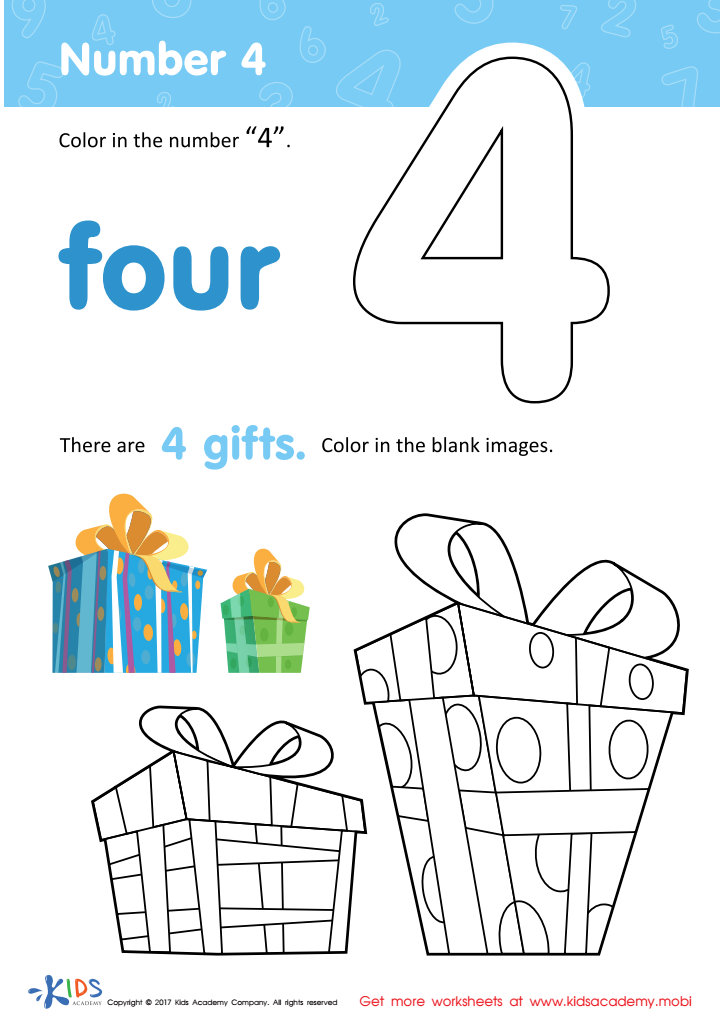
Kids love gifts! Give your child a learning opportunity with this number 4 coloring page. As they design their own wrapping paper, they'll learn to read and recognize the number four. An exciting way to have fun and learn at the same time!
Download (PDF)
Assign to My Students
Number 4 Printable
Worksheet
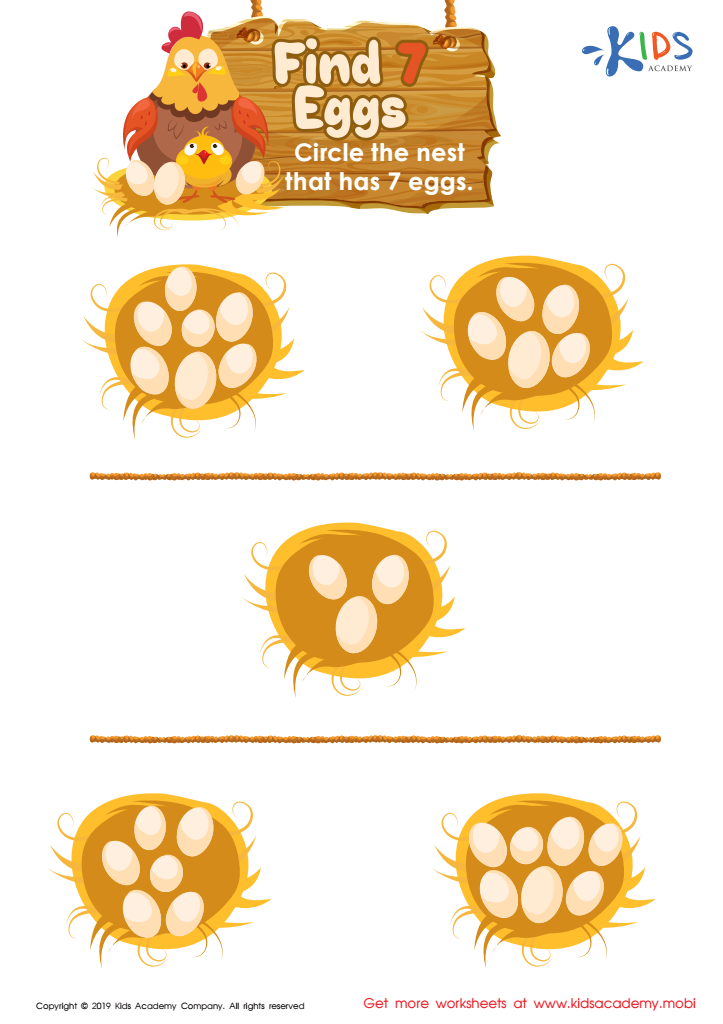
Find 7 Eggs Worksheet

Find 7 Eggs Worksheet

Mama chicken needs help counting her eggs! Have your child use one-to-one number representation to count and circle the nests that have seven eggs with this free and fun worksheet. Picture representation is a great way to start building math skills. Download this PDF and make math time fast and enjoyable!
Find 7 Eggs Worksheet
Worksheet
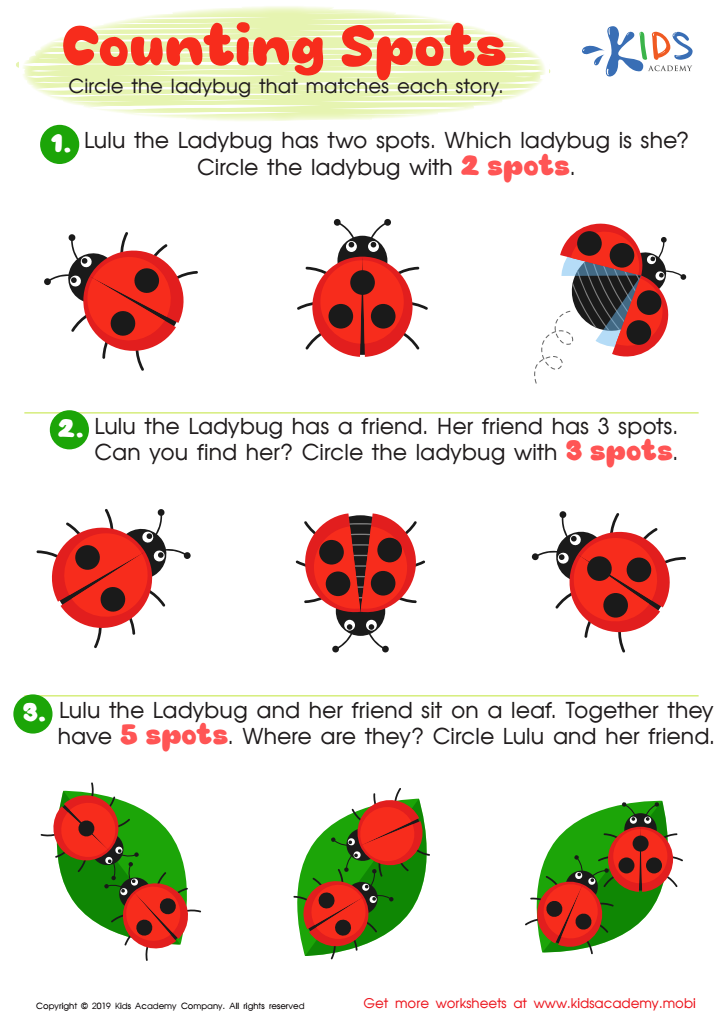
Counting Spots Worksheet

Counting Spots Worksheet

This worksheet is full of cute, colorful ladybugs. Help your kids identify Lulu, who has two spots on her body. Count the spots on each ladybug and circle the one with two spots. Then read the instructions on the other sections and help them find the ladybugs there, too!
Counting Spots Worksheet
Worksheet
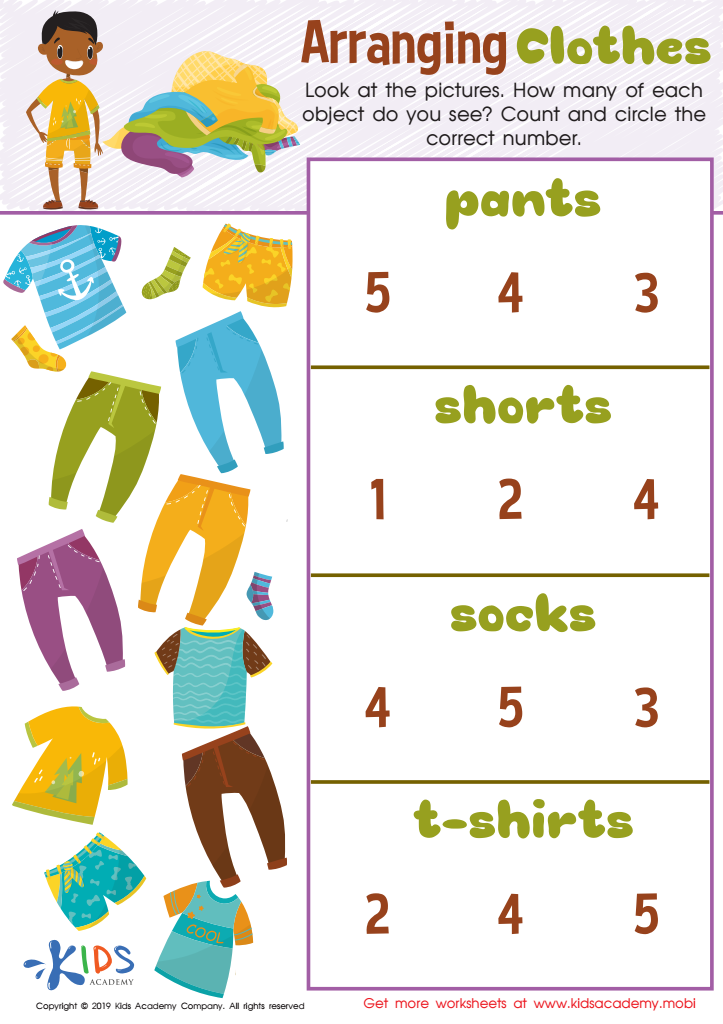
Arranging Clothes Worksheet

Arranging Clothes Worksheet

This worksheet uses familiar items, brightly colored to attract your kids. Ask them to name each item, then count them and circle the right number.
Arranging Clothes Worksheet
Worksheet
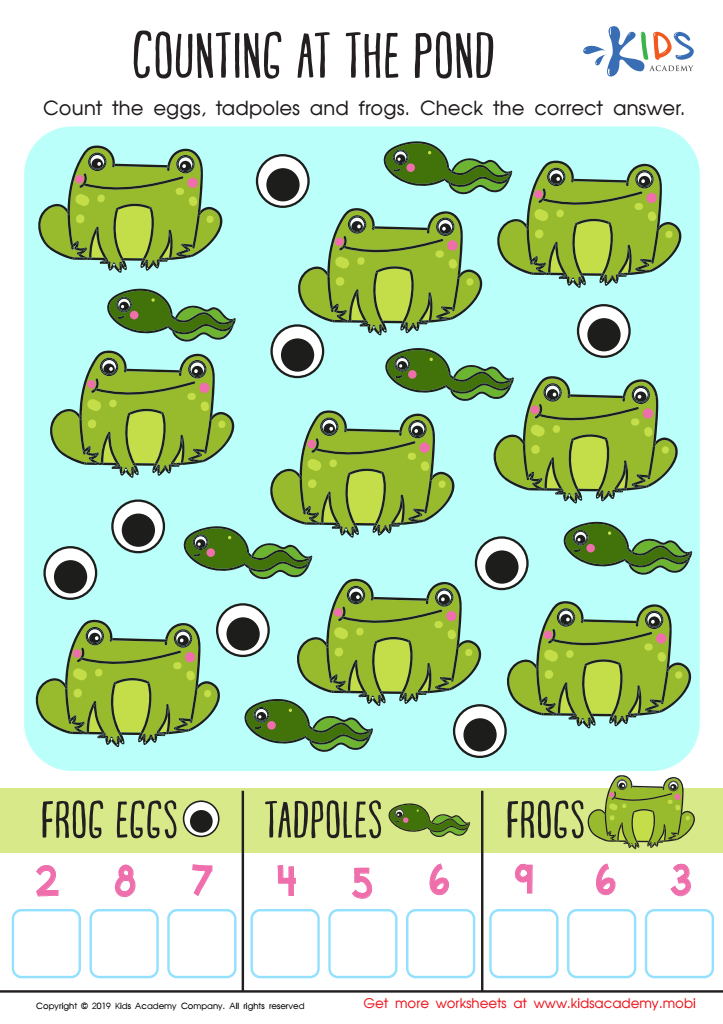
Counting at the Pond Worksheet

Counting at the Pond Worksheet

Ask your kids what they see in the picture. Can they identify the animal? Where does it live, what does it eat and what sound does it make? These questions will help get them in the math mood. Help them count the eggs, tadpoles and frogs, then check the answer.
Counting at the Pond Worksheet
Worksheet
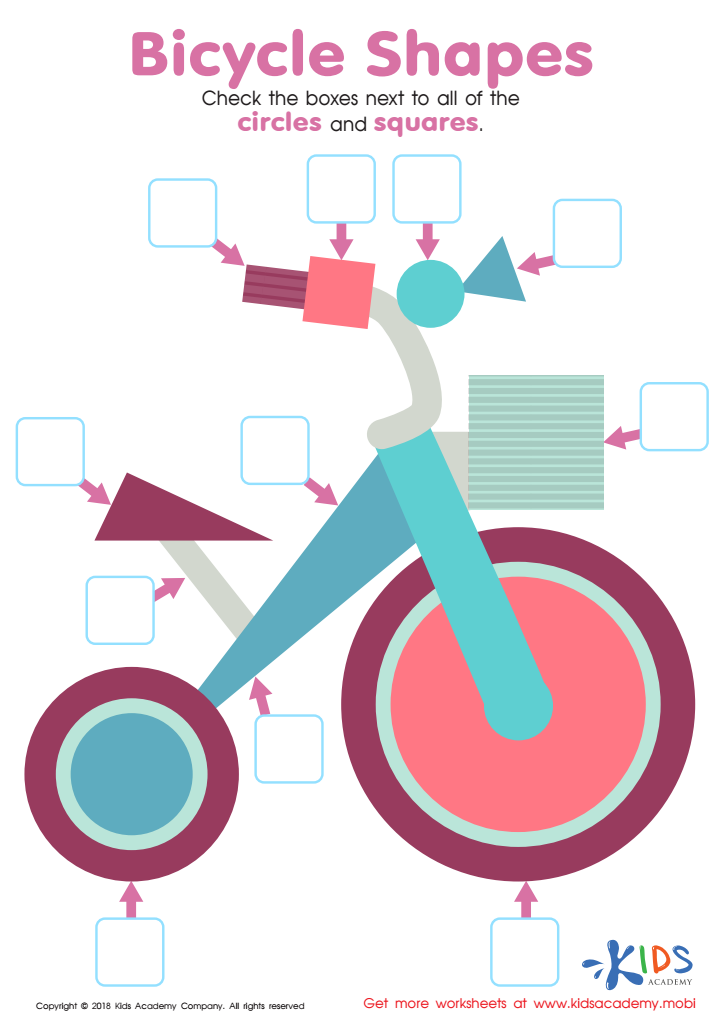
Bicycle Shapes Worksheet Preview

Bicycle Shapes Worksheet

This fun geometry worksheet for preschoolers asks the child to spot hidden shapes (circles, squares) in a colorful bicycle. Each shape varies in size and the child checks the box when it's found. It's a visual way to teach shapes.
Bicycle Shapes Worksheet
Worksheet
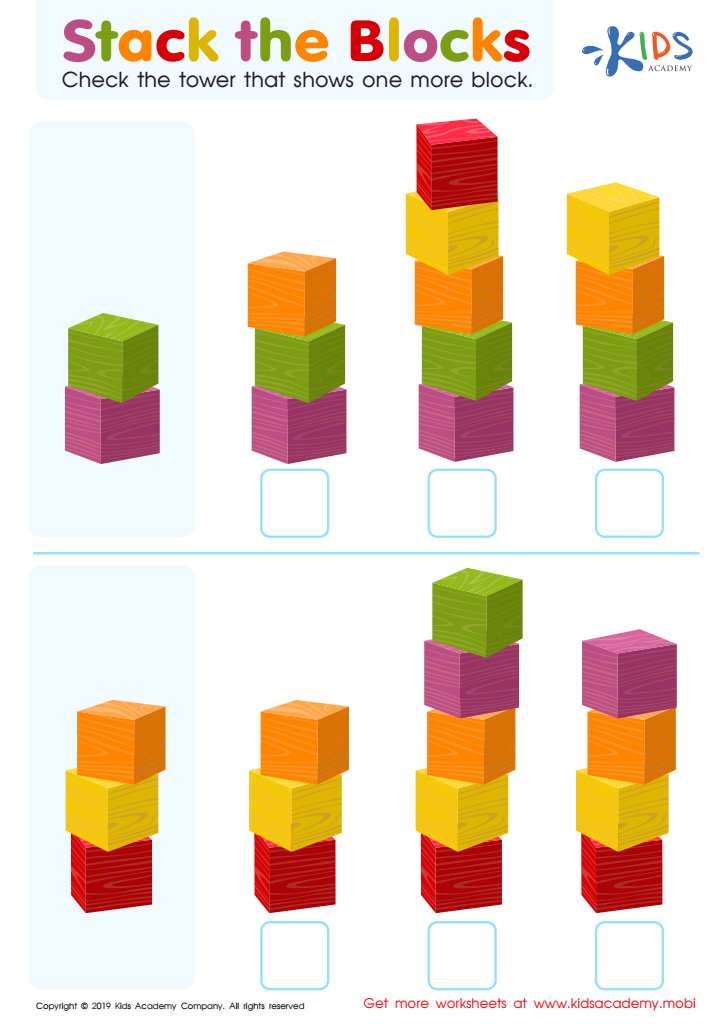
Stack the Blocks Worksheet
Stack the Blocks Worksheet

Playing with blocks is a great way for kids to learn! They can create patterns, shapes, and even count. In this worksheet, ask them to identify the colors and count each stack of blocks. If they can spot one extra block in the tower, even better! Encourage learning through play with these fun blocks.
Stack the Blocks Worksheet
Worksheet
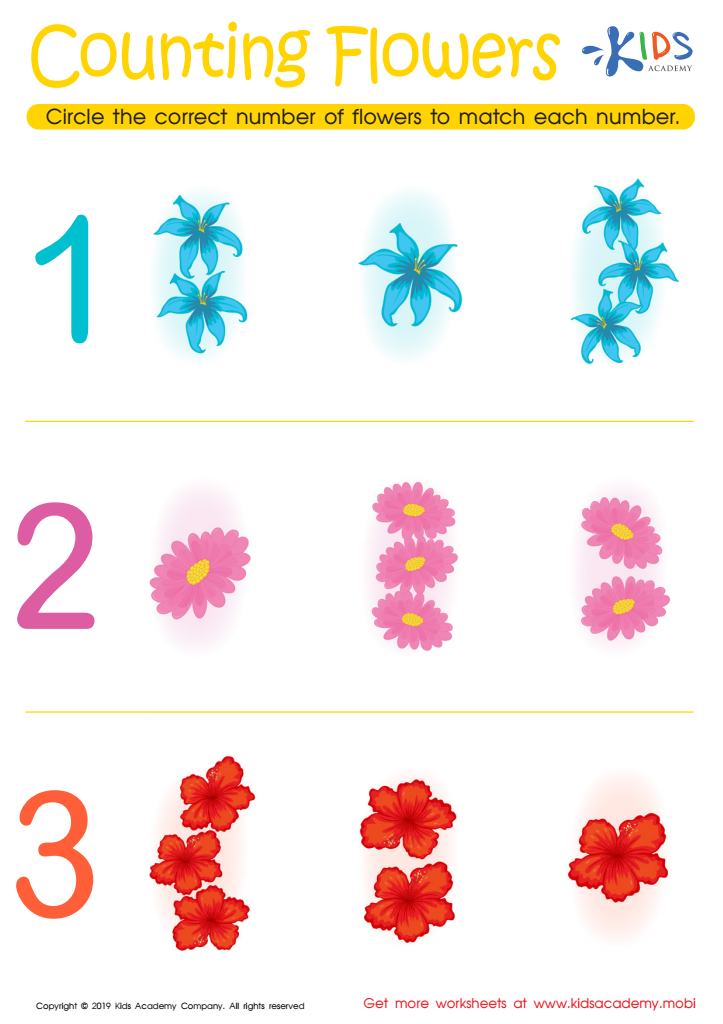
Counting Flowers Worksheet
Counting Flowers Worksheet

Kids love Flower Power! This free PDF helps kids practice basic number sense and counting. They match the correct number of colorful flowers to the corresponding numeral. An enjoyable game that improves basic number sense - perfect!
Counting Flowers Worksheet
Worksheet
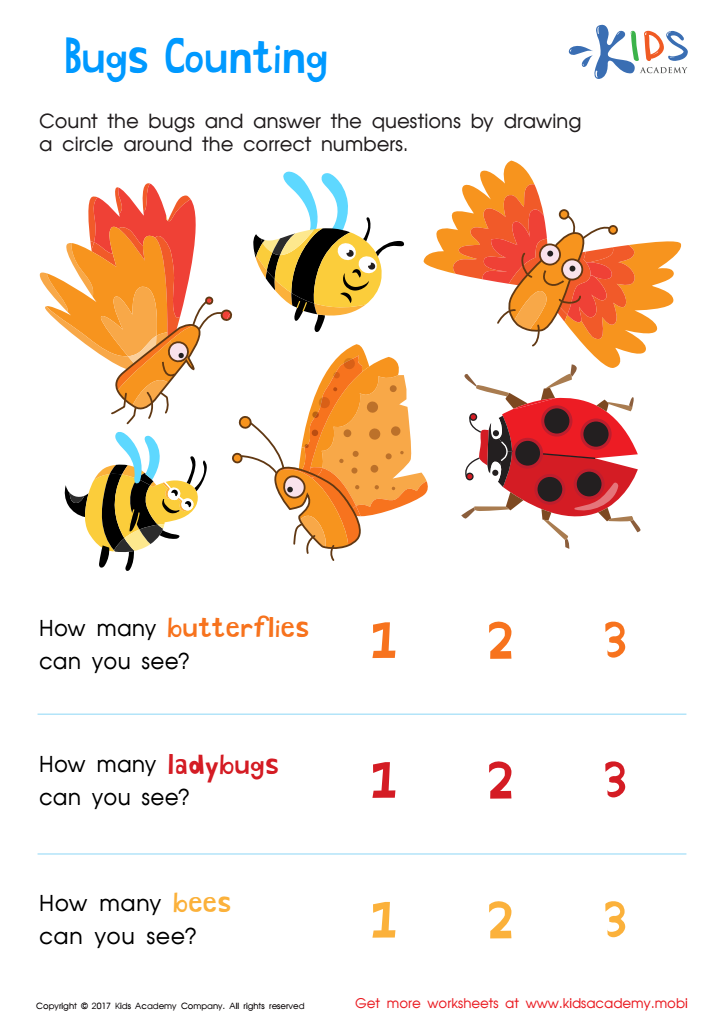
Bugs Counting Printable Worksheet

Bugs Counting Worksheet

Filled with bright reds, yellows, and oranges, your child will love solving these fun bug-related math problems.
Bugs Counting Worksheet
Worksheet
Which Wagons Have 1 Less? Worksheet

Which Wagons Have 1 Less? Worksheet

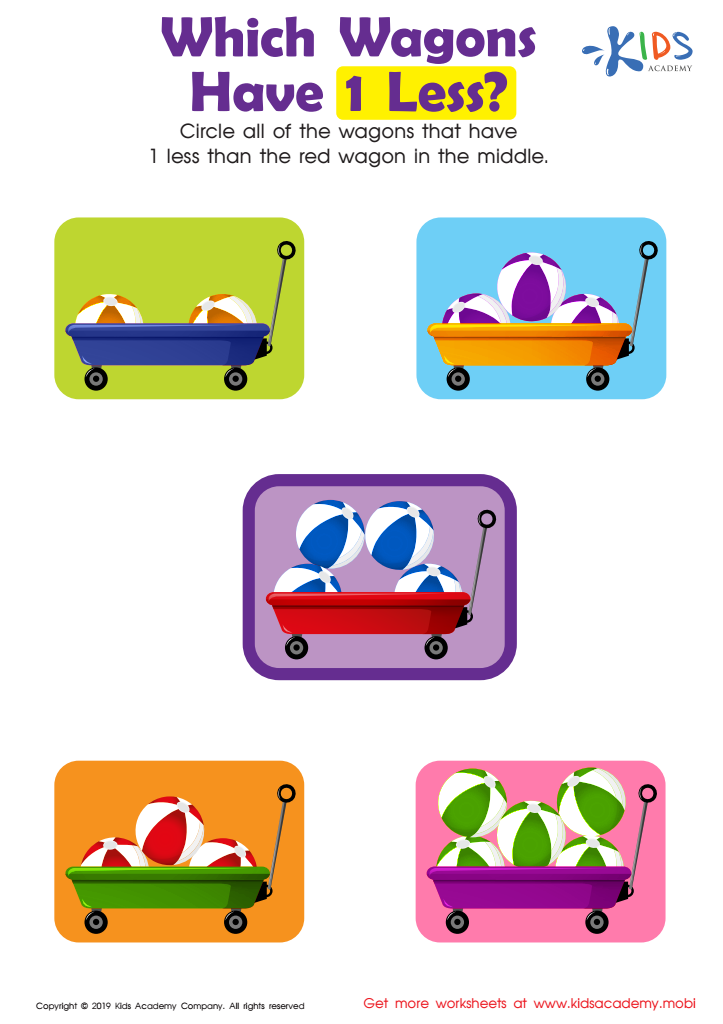
Test your kid's counting skills with a simple exercise. Ask them to count the balls in the five wagons shown and to circle the wagons with one less than the red wagon in the middle. This will give their brains a simple task that tests their knowledge of numbers.
Which Wagons Have 1 Less? Worksheet
Worksheet
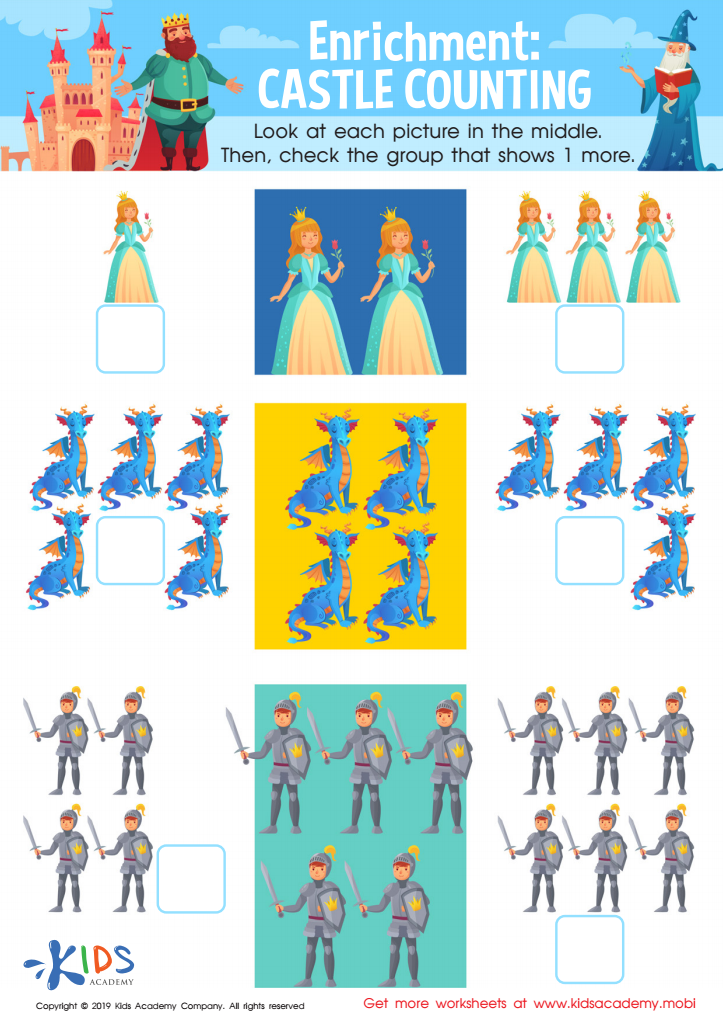
Enrichment: Castle Counting Worksheet


Enrichment: Castle Counting Worksheet

Help your kids learn to count. Start with easy counting of numbers as high as possible. Use the pictures in this printout. Point to the middle one, help them identify it and then count one more than it. Do this to help them get ready for more difficult math concepts like addition, subtraction and multiplication.
Enrichment: Castle Counting Worksheet

Worksheet


Visual perception is an essential skill that helps children understand and interact with the world around them. For 3-year-olds, this skill involves more than just seeing; it’s about recognizing shapes, colors, and sizes, as well as understanding spatial relationships. Developing strong visual perception helps young children learn to differentiate between objects, follow along in books, and recognize familiar signs and symbols.

Parents and teachers should care about visual perception because it lays the foundation for future learning, including reading and writing. Children with good visual perception can better identify letters and numbers, which are crucial for literacy and math skills. Moreover, strong visual processing can boost a child's confidence in navigating their environment, from playing games to engaging in art activities.

When parents and teachers encourage activities that support visual perception, such as puzzles, coloring, and shape sorting, they can enhance a child's cognitive abilities. Moreover, being proactive in nurturing these skills can help identify any potential learning challenges early on, allowing for timely intervention and support. By cultivating visual perception, adults can empower children to become more independent, curious, and successful learners in their early years and beyond.