Sorting skills Easy Numbers Worksheets for 3-Year-Olds
3 filtered results
-
From - To
Introduce your little ones to the world of numbers with our "Sorting Skills Easy Numbers Worksheets for 3-Year-Olds"! Designed specially for young learners, these interactive worksheets make sorting fun and educational. As children engage with playful images and simple number tasks, they will develop crucial early math skills such as number recognition, counting, and basic classification. Featuring vibrant graphics that capture kids' imaginations, these worksheets are perfect for hands-on learning at home or in preschool settings. Download now to boost your child's confidence and math abilities through enjoyable activities tailored for tiny hands!
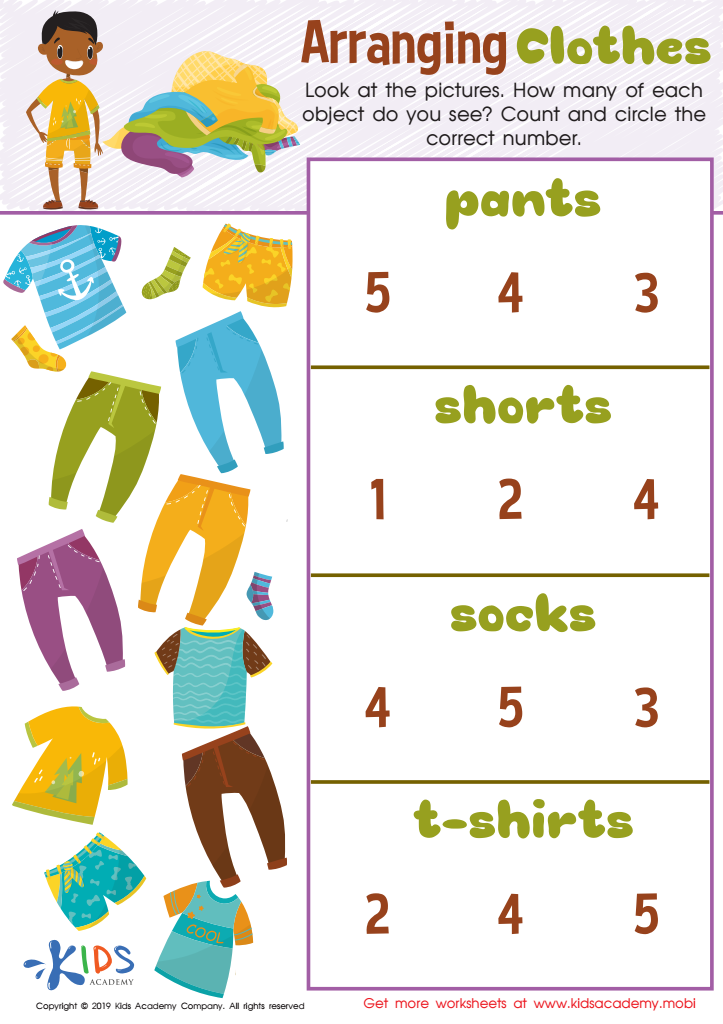
Arranging Clothes Worksheet
 Assign to My Students
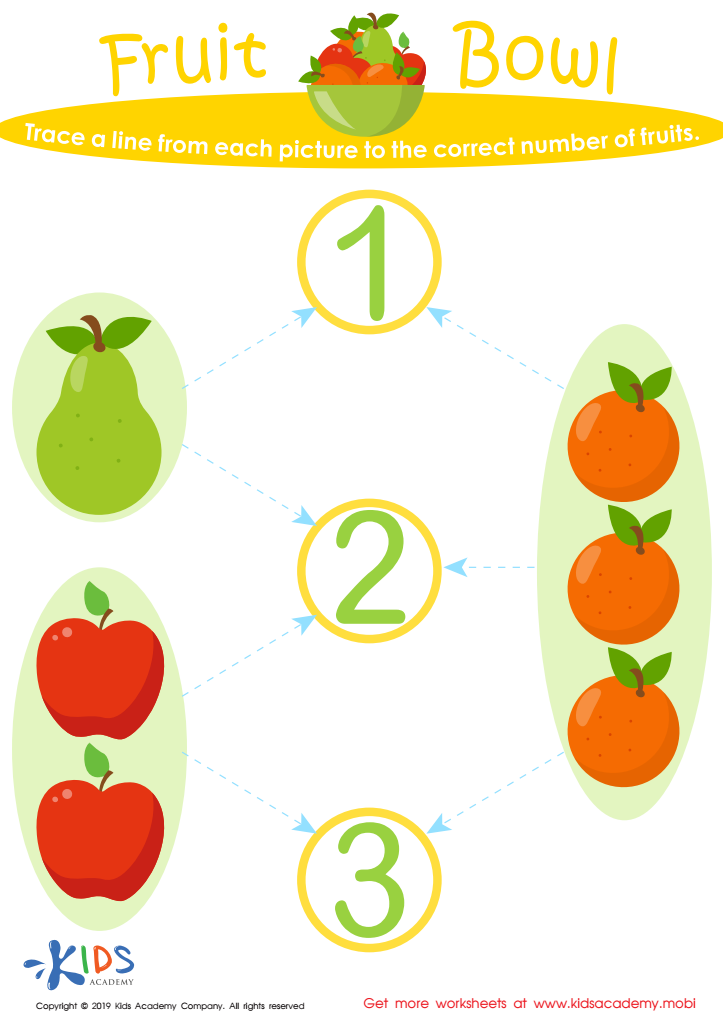
Fruit Bowl Worksheet
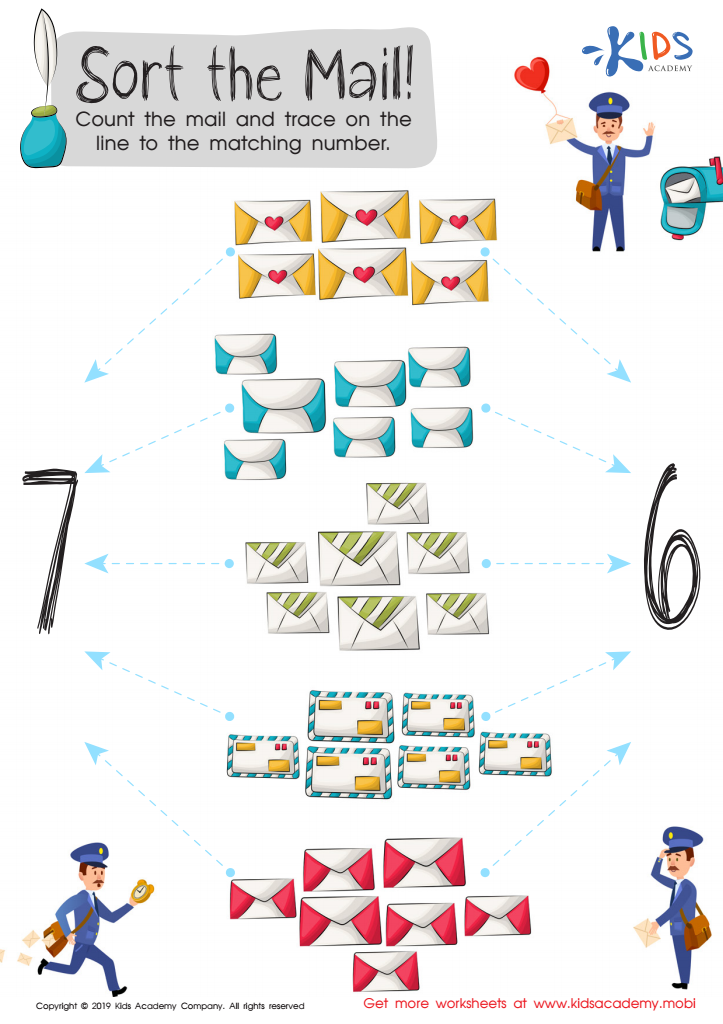
Sort the Mail Worksheet


%20(1).jpg)




Sorting skills and understanding basic numbers are foundational elements in early childhood development that parents and teachers should prioritize for 3-year-olds. Firstly, sorting helps young children develop critical thinking and problem-solving skills. When children sort objects by size, shape, color, or type, they learn to categorize and organize, fostering their ability to notice patterns and make comparisons.
Introducing numbers through sorting activities can also reinforce early math skills. For example, counting and sorting toys or everyday objects helps children grasp the concept of numbers and quantities, which are fundamental to later arithmetic learning. Early number recognition and understanding form the building blocks for more advanced mathematical concepts that children will encounter in school.
Moreover, sorting activities can enhance a child's fine motor skills. Handling and organizing items require hand-eye coordination, dexterity, and precision. These activities also encourage language development, as children learn new vocabulary associated with sorting categories, such as colors, shapes, and numbers.
Furthermore, sorting and counting tasks can build a child’s confidence. Successfully completing these activities gives them a sense of accomplishment and can foster a positive attitude towards learning. Therefore, by integrating sorting skills and easy numbers into playtime, parents and teachers can support holistic development in young children.








