Reading comprehension Easy Math Worksheets for 3-Year-Olds
6 filtered results
-
From - To
Discover engaging "Reading Comprehension Easy Math Worksheets for 3-Year-Olds" to kickstart your child's love for learning at Kids Academy! Tailored for young learners, these worksheets combine foundational math concepts with playful reading activities that enhance comprehension and vocabulary skills. With colorful illustrations and simple tasks, children find joy in counting, recognizing numbers, and following instructions, setting a strong foundation for future academics. Perfect for at-home practice or classroom use, our worksheets make learning fun and effective. Support your child's early education journey with well-designed, age-appropriate resources that boost confidence and stimulate intellectual growth. Explore more today!
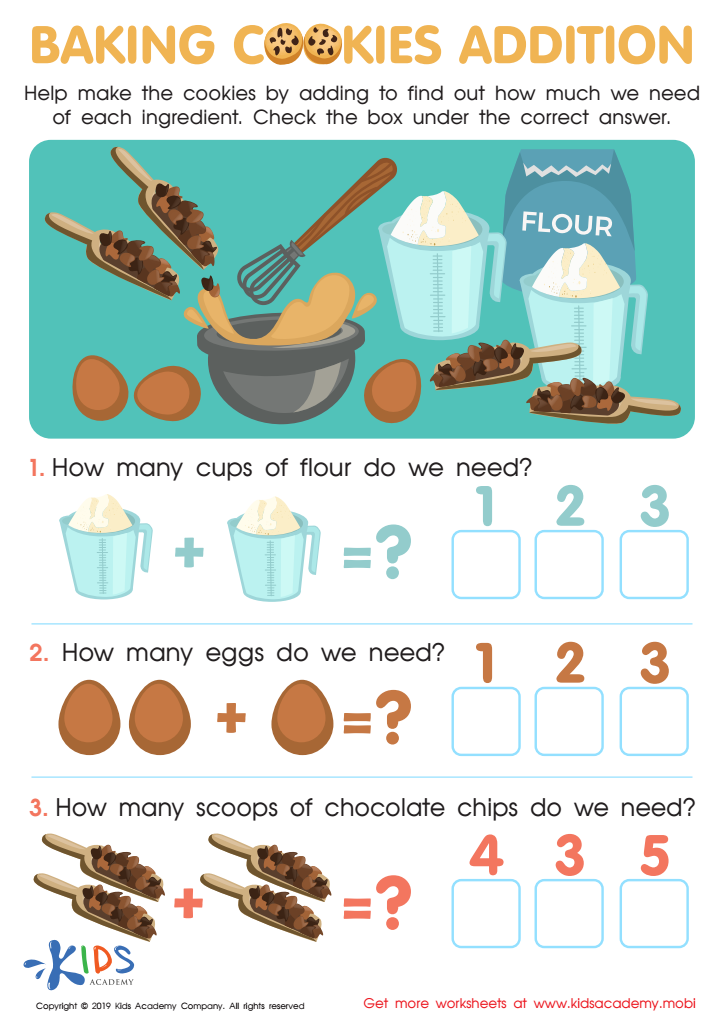
Baking Cookies Addition Worksheet
 Assign to My Students
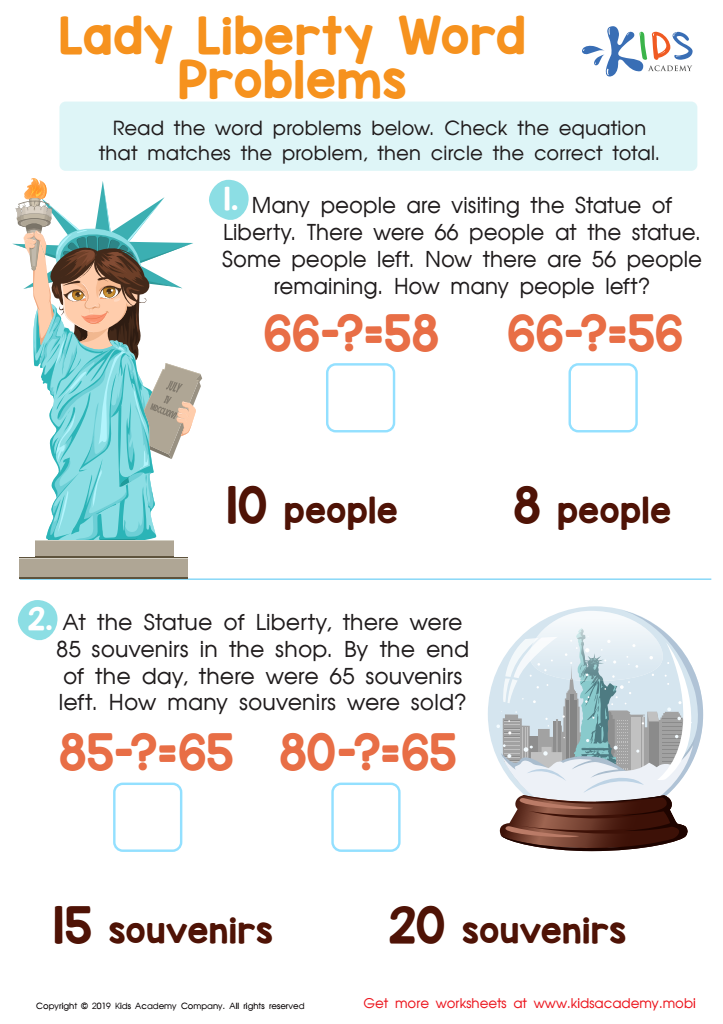
Lady Liberty Worksheet
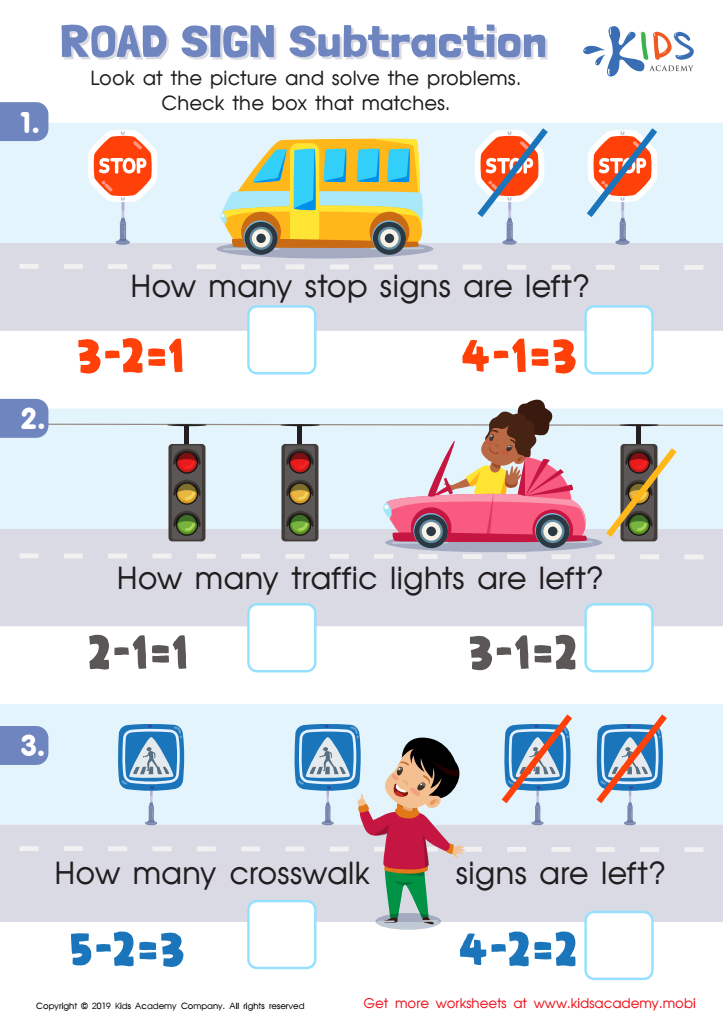
Road Sign Subtraction Worksheet
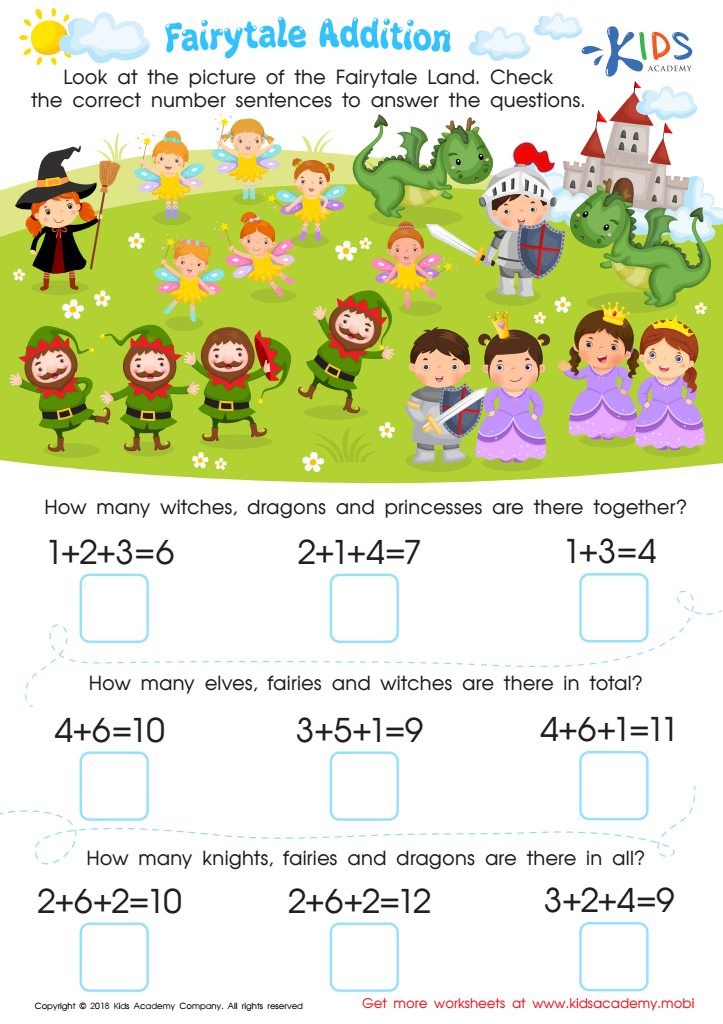
Fairytale Addition Worksheet
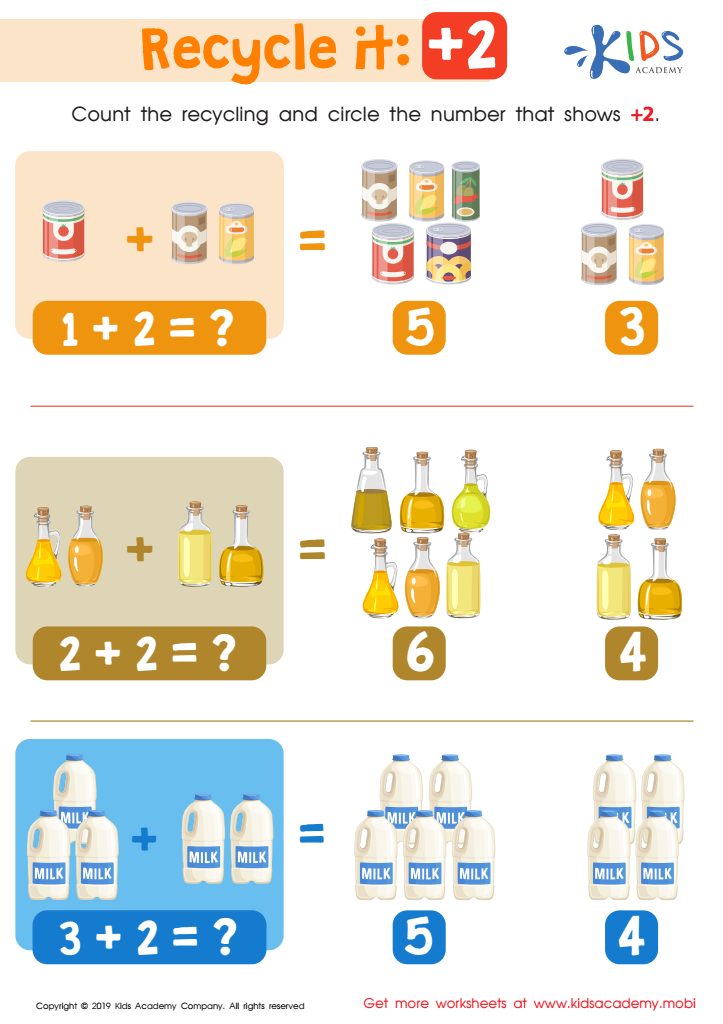
Recycle It: +2 Worksheet
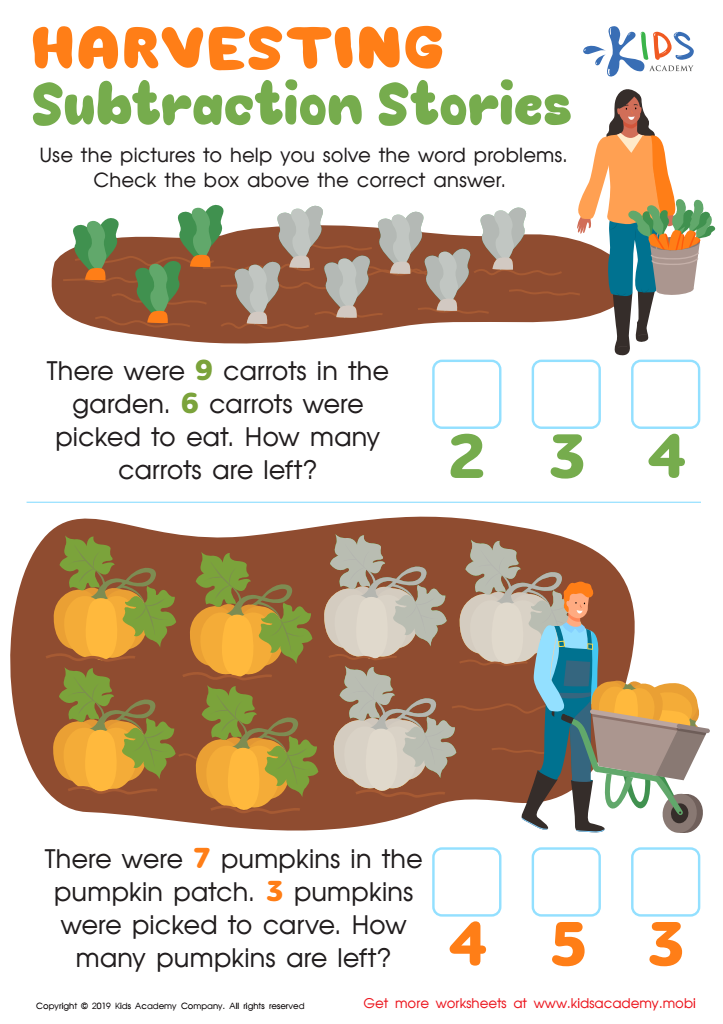
Harvesting Subtraction Stories Worksheet







Parents and teachers should be deeply invested in fostering reading comprehension and early math skills in 3-year-olds because these foundational skills set the stage for lifelong learning and academic success. At this developmental stage, young minds are incredibly receptive and capable of absorbing information at a rapid pace, making it the perfect time to introduce core literacy and numeracy concepts.
Reading comprehension at this early age goes beyond just knowing letters and words; it involves understanding and interpreting simple narratives, which helps develop critical thinking and language skills. When toddlers grasp basic stories, they learn to predict outcomes and relate to characters’ emotions, which fosters empathy and cognitive development.
Similarly, early math skills form the bedrock of numerical understanding. Simple activities like counting objects, recognizing shapes, and sorting items not only enhance a child's mathematical thinking but also improve problem-solving abilities and logical reasoning. Engaging in these activities stimulates curiosity and a positive attitude toward learning difficult subjects later.
Supporting reading comprehension and basic math in young children can enhance their confidence and school readiness, dramatically impacting their future educational trajectory. Parents and teachers who prioritize these areas provide children with vital tools to navigate an ever-evolving educational landscape and become well-rounded, capable individuals.








