Filters

7 filtered results

Clear all filters
Favorites
With answer key
Interactive

7 filtered results

Difficulty Level

Grade


Boost your child's vocabulary with our engaging Easy Phonics Worksheets designed for ages 4-5! These worksheets focus on phonics skills, helping young learners connect sounds with letters to expand their language abilities. Each activity is thoughtfully crafted to enhance vocabulary through playful and interactive learning methods. Children will explore new words while practicing recognition, pronunciation, and usage in context. Perfect for both classroom settings and at-home learning, these resources support early literacy development in a fun and engaging way. Give your child the gift of language and watch their confidence soar as they delve into the world of phonics with our worksheets!

Check out this FREE Trial Lesson on Phonics for age 4-5!

The Letter G Sound

Favorites
With answer key
Interactive
  • 4-5
  • Vocabulary enhancement
  • Phonics
  • Easy
Words with sound g Reading Worksheet

Words with sound g Reading Worksheet

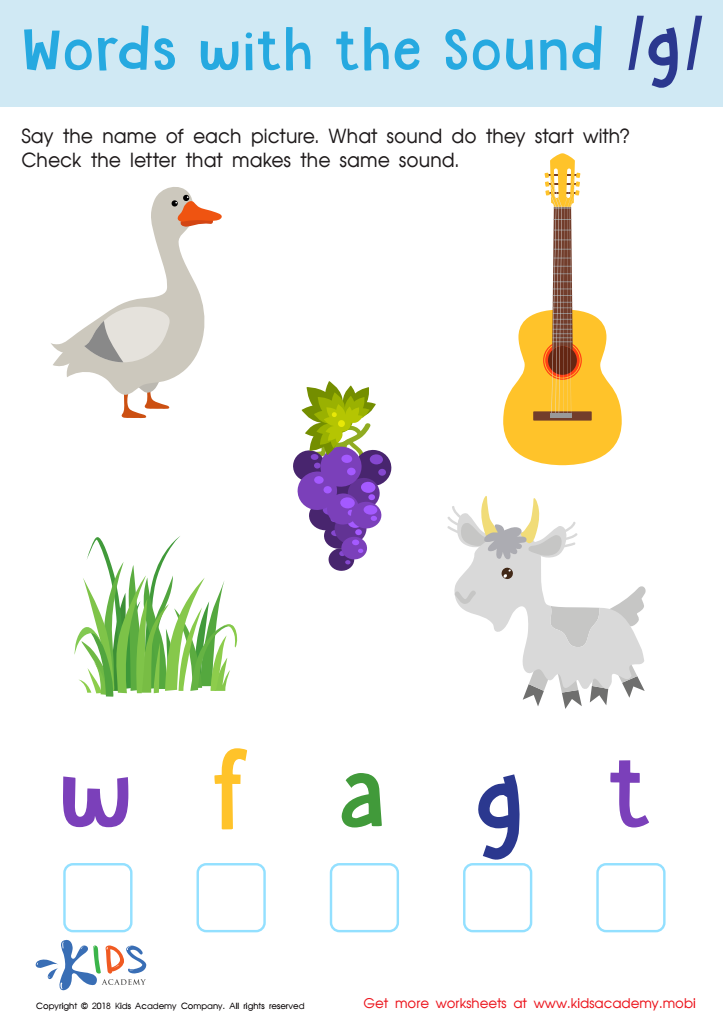
Help your child learn the soft "g" sound with this phonics worksheet. Ask them to name each picture, then identify the letter sound it begins with. If it's "g", they can check the box. Have them repeat each word, listening for the soft "g" sound before moving on to the next page.
Words with sound g Reading Worksheet
Worksheet
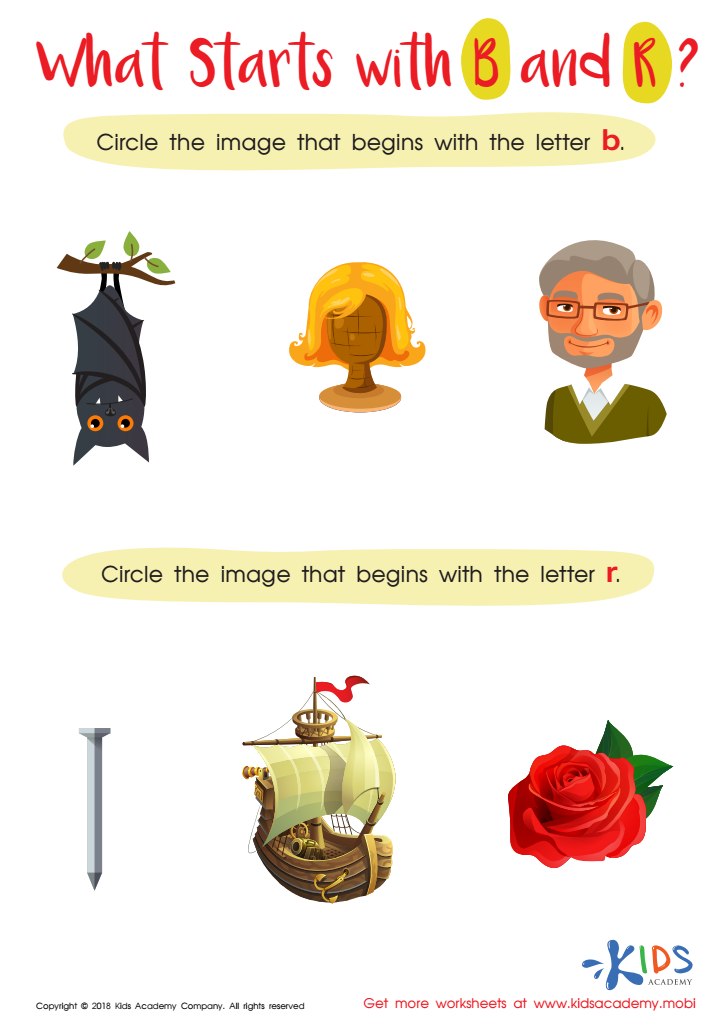
What Starts with B and R? Worksheet

What Starts with B and R? Worksheet

Download this worksheet to help young readers practice visual and motor skills! They'll enjoy matching pictures with "B" and "R" letters while tracing the images. Bright and colorful, this engaging activity will help kids differentiate between words and have fun doing it.
What Starts with B and R? Worksheet
Worksheet
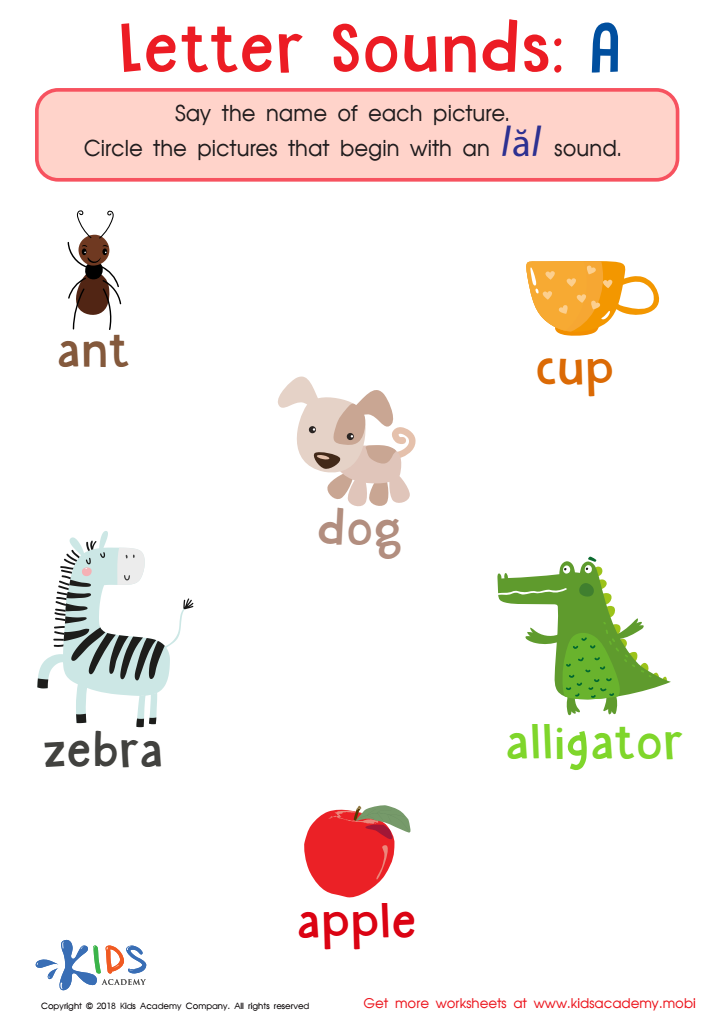
Letter A Sounds Worksheet

Letter A Sounds Worksheet

Encourage your new reader to practice the «ă» sound with this fun, free PDF worksheet. With the help of picture clues, they'll say the name of each word and trace circles around the items that start with «ă». This worksheet is an effective way to boost beginning sound skills while having fun!
Letter A Sounds Worksheet
Worksheet
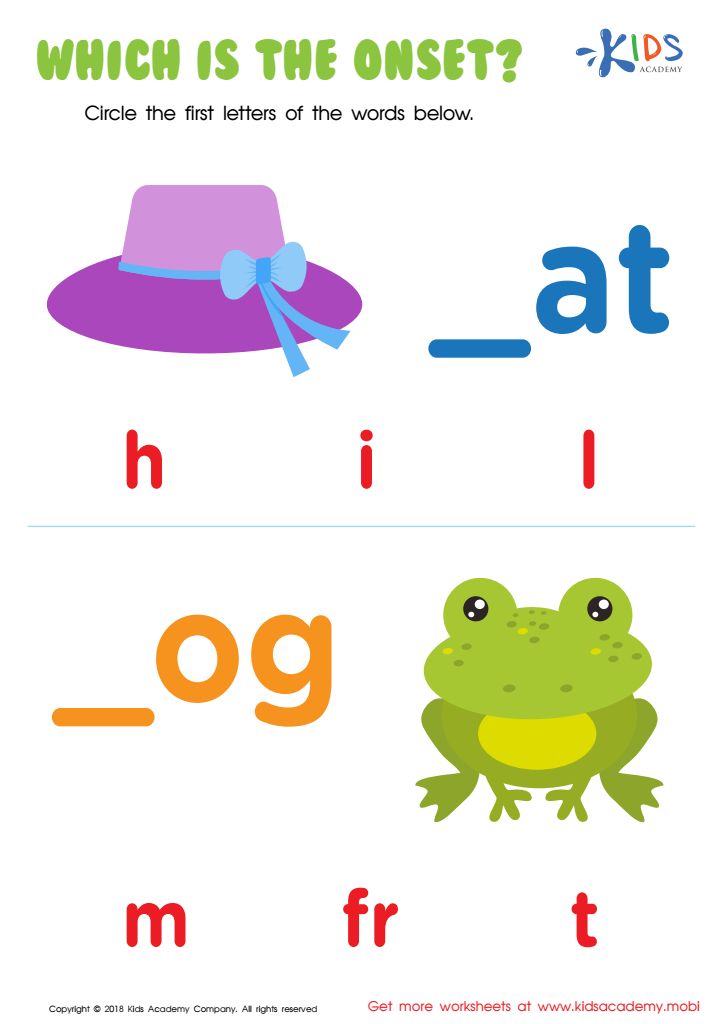
Which Is the Onset? Worksheet

Which Is the Onset? Worksheet

Help your children learn to spell with this bright, fun worksheet. Struggling with spelling small words can make reading and writing sentences difficult. Encourage them to look at the pictures, say the names aloud and circle the correct first letter from the options. They will soon overcome any reluctance to spell.
Which Is the Onset? Worksheet
Worksheet
Choose a Sound Worksheet

Choose a Sound Worksheet

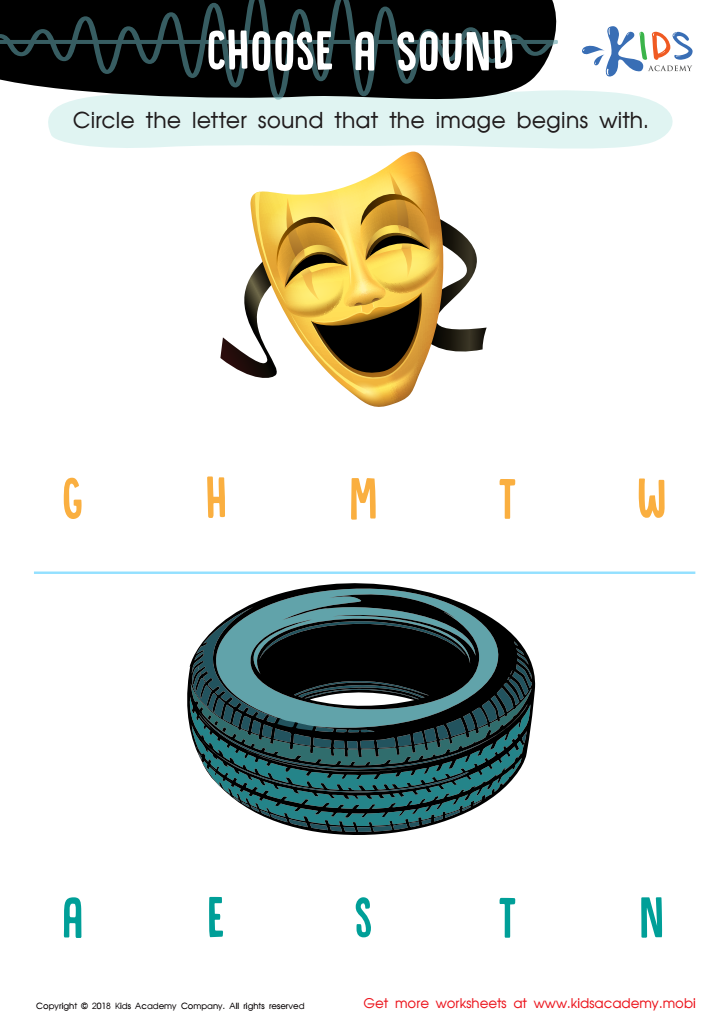
Help your child hone pre-reading skills with this colorful worksheet! They'll practice tracing letter sounds, develop phoneme awareness, and gain confidence. Plus, it's a fun way to work on their fine motor skills.
Choose a Sound Worksheet
Worksheet
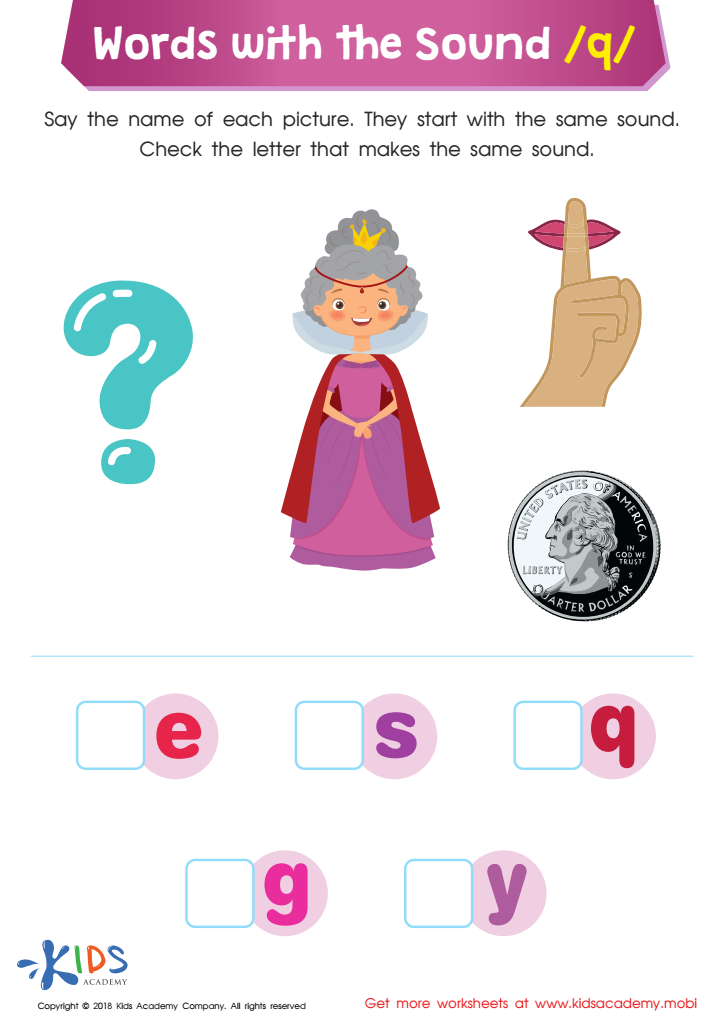
Words with Sound Q Reading Worksheet

Words with Sound Q Reading Worksheet

Beginning readers will love this free PDF worksheet! Bright colors and familiar pictures make it fun, as they say the name of each image and work on fine motor skills. Letters “q” is featured among others, helping to recognize and isolate its sound, which is often seen with a “u” behind it.
Words with Sound Q Reading Worksheet
Worksheet
Finish the Rime Worksheet


Finish the Rime Worksheet

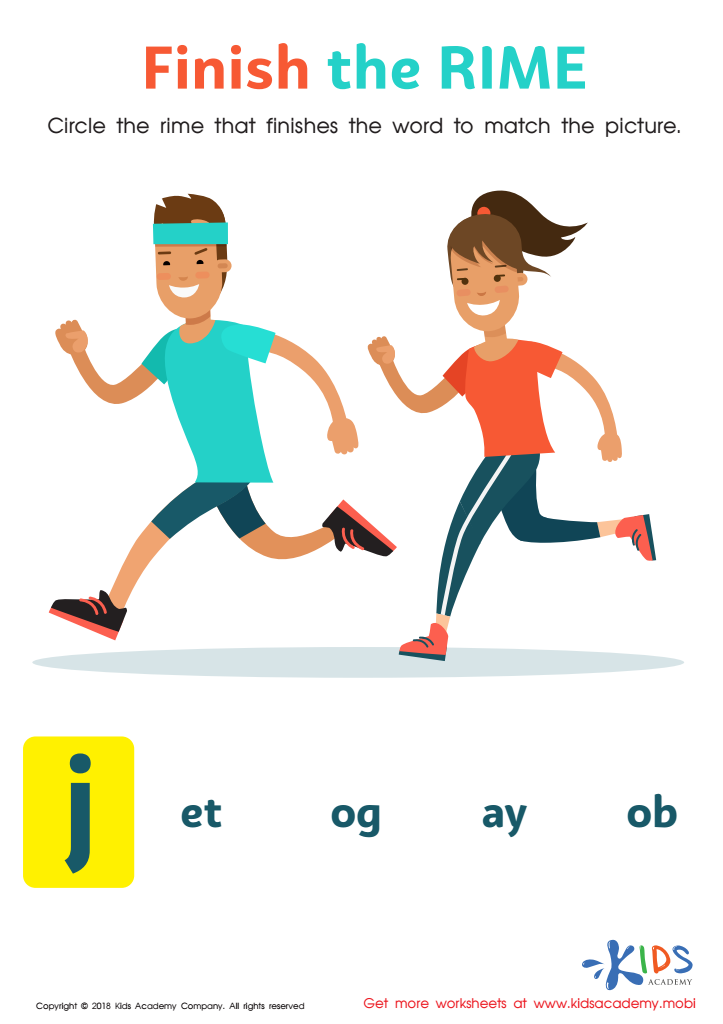
Rimes help kids learn word families and spelling strategies. This PDF worksheet gives new readers practice with initial consonants, pictures, colors and motor skills. It's fun and cheery, and a great way to boost phonological awareness and rime identification.
Finish the Rime Worksheet
Worksheet


Vocabulary enhancement through Easy Phonics is crucial for children aged 4-5, as it lays the foundation for lifelong learning and literacy skills. At this age, children's brains are developing rapidly, making them highly receptive to new sounds, words, and concepts. Introducing phonics helps children understand the relationship between letters and sounds, which ultimately strengthens their reading and writing abilities.

Moreover, a robust vocabulary enhances communication skills, enabling young learners to express their thoughts and feelings more effectively. This builds confidence and self-esteem, encouraging them to participate in discussions and ask questions, vital parts of the learning process. Improved vocabulary also contributes to better comprehension skills, which are essential as children progress through school.

For parents and teachers, emphasizing vocabulary enhancement through early phonics instruction means investing in a child's future success. Research shows that children with strong phonics skills perform better in all academic areas. By fostering a love for reading and language at an early stage, educators and parents can empower children to become enthusiastic learners, capable of tackling more complex subjects as they grow. In essence, supporting vocabulary development through Easy Phonics is a vital step in ensuring a child's academic and personal growth.