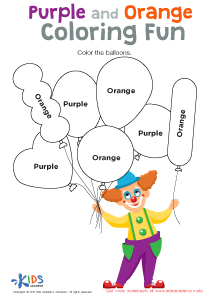
Vocabulary enhancement Easy English for Beginners Worksheets for Ages 4-5
5 filtered results
-
From - To
Unlock the joy of learning with our "Vocabulary Enhancement Easy English for Beginners Worksheets for Ages 4-5." Specifically designed to captivate young minds, these worksheets offer fun and engaging activities to build essential vocabulary skills. Perfect for preschoolers and beginners, the exercises blend pictures, words, and interactive tasks to aid in word recognition and language development. Each worksheet aims to make learning an enjoyable journey, laying a strong foundation for future literacy success. Equip your child with the tools they need to thrive in English and open the door to a world of words today!
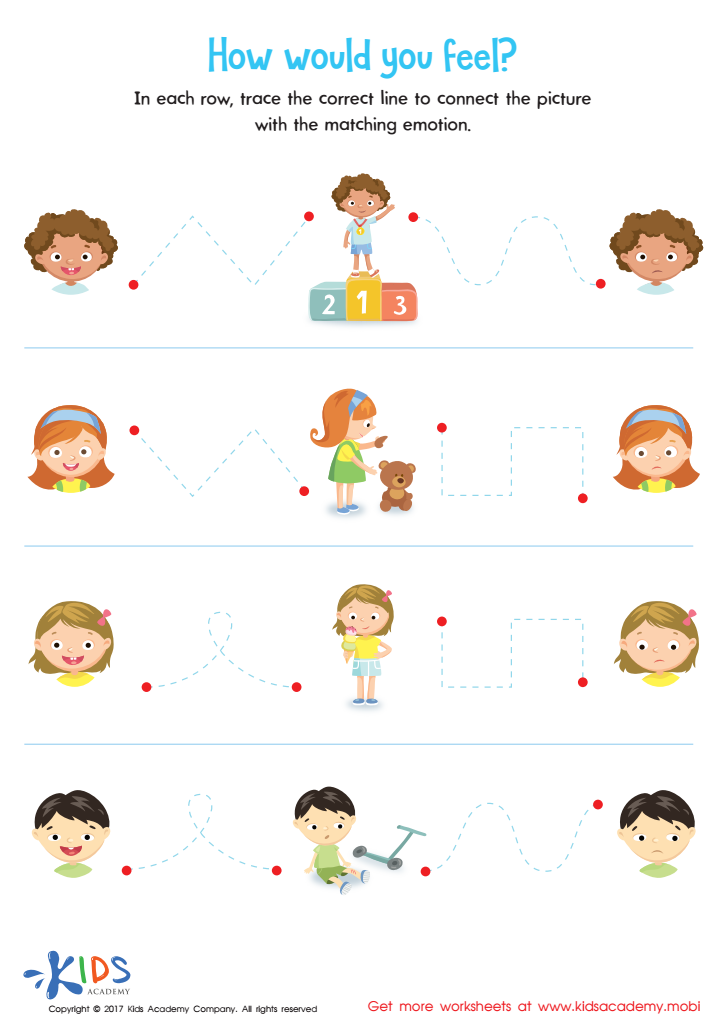
Feelings and Emotions Worksheet
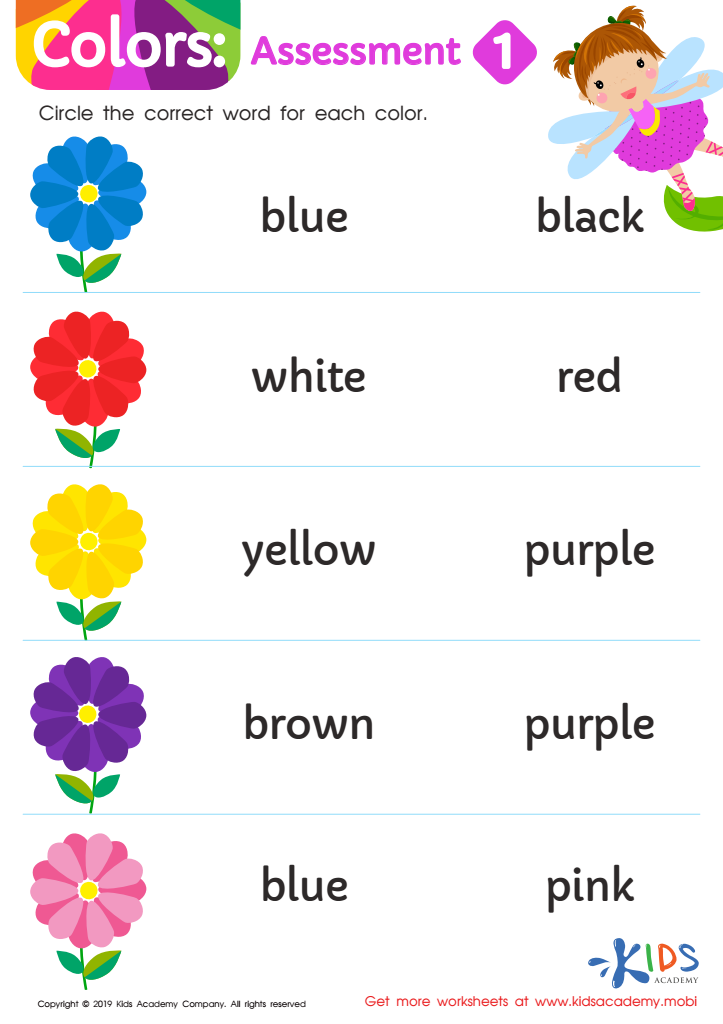
Colors: Assessment 1 Worksheet
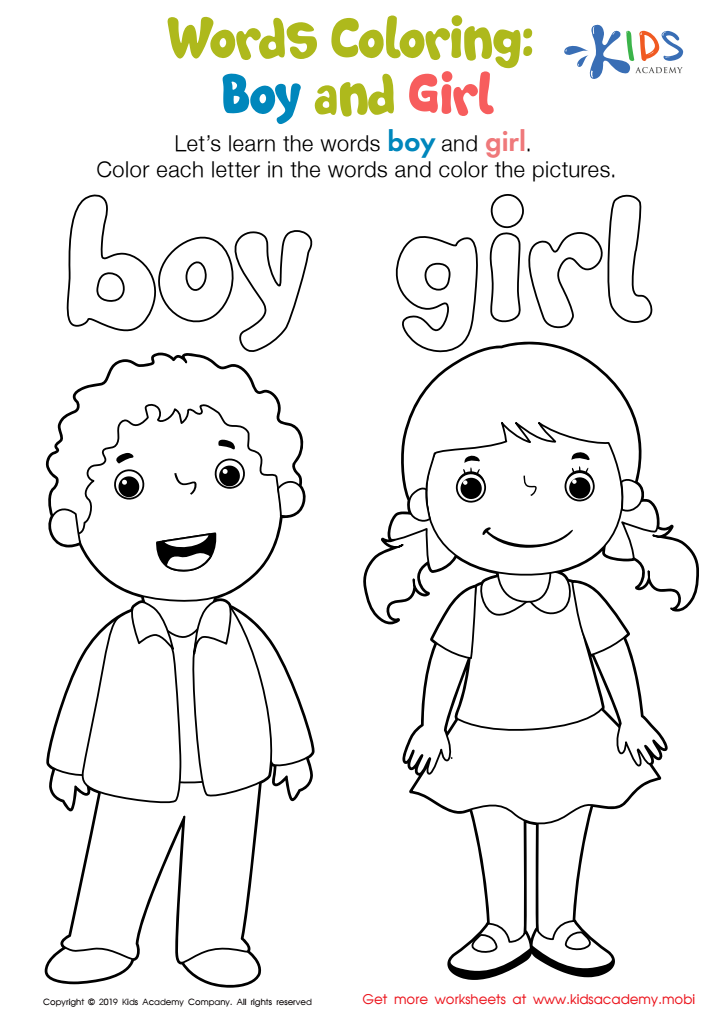
Boy and Girl Words Coloring Worksheet
 Assign to My Students
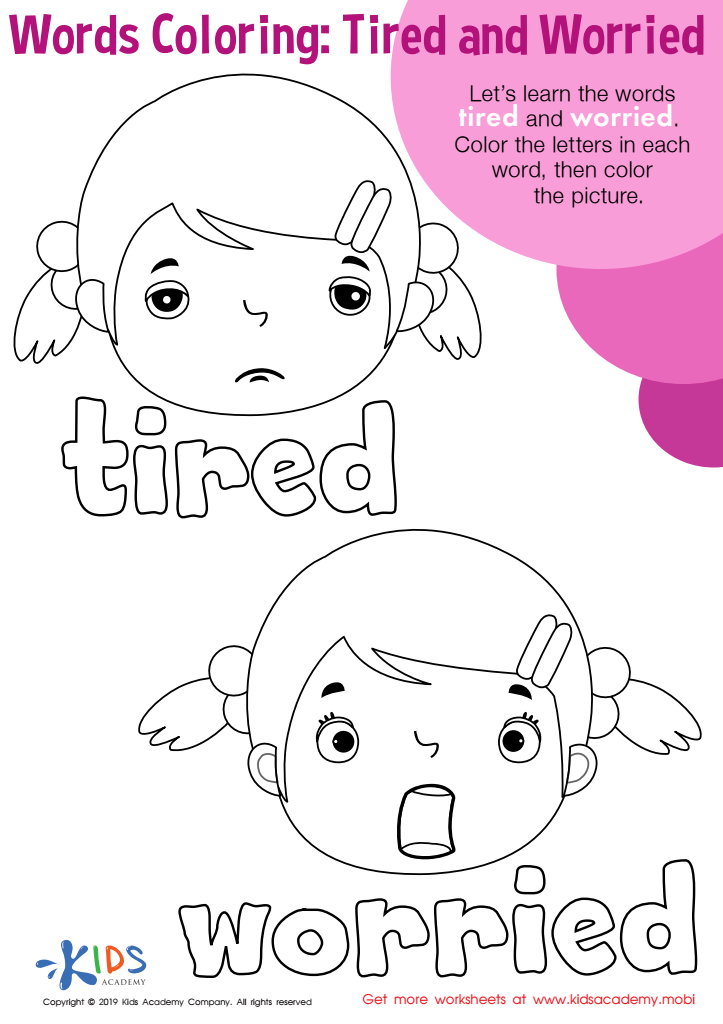
Tired and Worried Words Coloring Worksheet
Assign to My Students
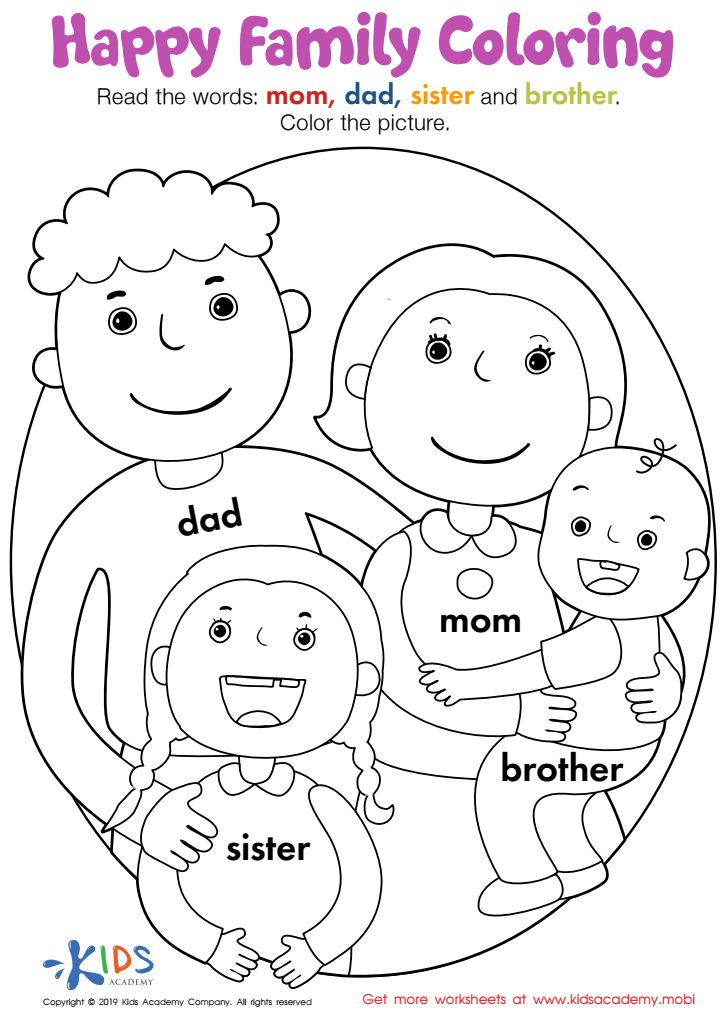
Happy Family Coloring Worksheet
Assign to My Students





Vocabulary enhancement for children aged 4-5 is crucial as it lays the foundation for effective communication and future academic success. At this age, children's brains are incredibly receptive, making it the optimal time for building a strong vocabulary base.
Firstly, a rich vocabulary helps children articulate their thoughts and emotions more clearly, fostering better social interactions and reducing frustration when they cannot express themselves. Enhanced vocabulary skills also lead to improved comprehension skills, allowing children to understand stories and instructions better, which is essential in a classroom setting.
Secondly, early vocabulary development is strongly linked to later reading achievement. Children who start school with a diverse vocabulary tend to be more confident readers and perform better in all areas of literacy. This early boost can have long-term positive effects on their academic journey.
Parents and teachers can support vocabulary enhancement through engaging activities that introduce new words in a fun, nurturing environment. Reading age-appropriate books, singing songs, and having regular conversations about everyday life can make vocabulary learning a natural, enjoyable part of growing up. Hence, prioritizing vocabulary enhancement at a young age sets children up for both immediate and long-lasting benefits in communication, learning, and beyond.