Counting skills Easy Addition and Subtraction Word Problems Worksheets for Ages 4-5
6 filtered results
-
From - To
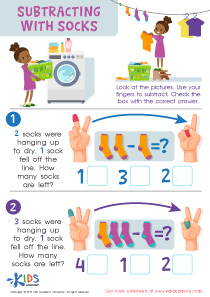
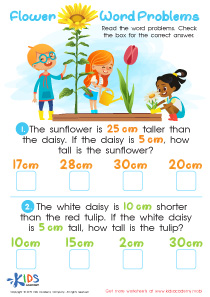
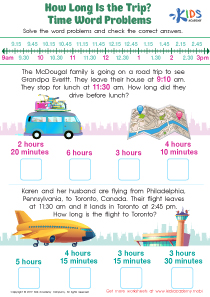
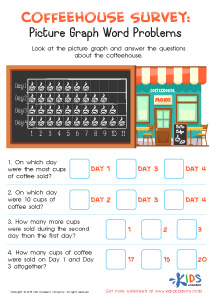
Prepare your little ones for a fun and engaging introduction to math with our "Counting Skills Easy Addition and Subtraction Word Problems Worksheets" for ages 4-5. Designed to enhance comprehension, these worksheets focus on simple word problems that encourage young learners to practice essential counting skills while solving basic addition and subtraction scenarios. Each activity is visually appealing, featuring colorful illustrations that captivate children's attention and motivate them to explore numbers in an enjoyable way. Perfect for homeschooling or classroom use, these worksheets make learning math concepts easy and accessible, instilling confidence in early learners as they develop a strong mathematical foundation.
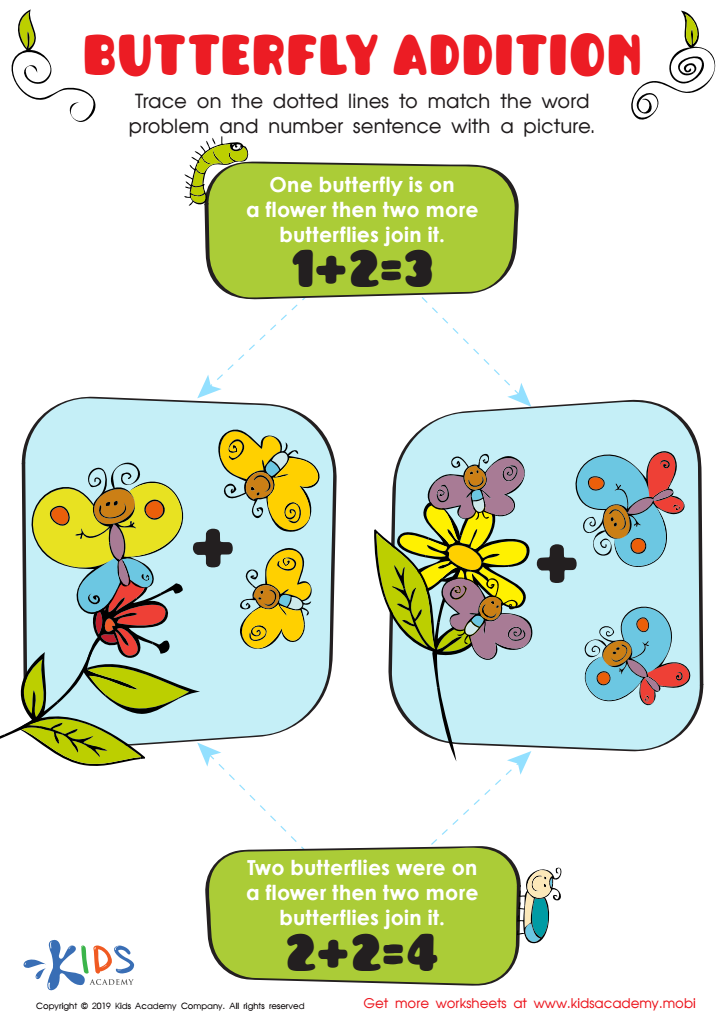
Butterfly Addition Worksheet
 Assign to My Students
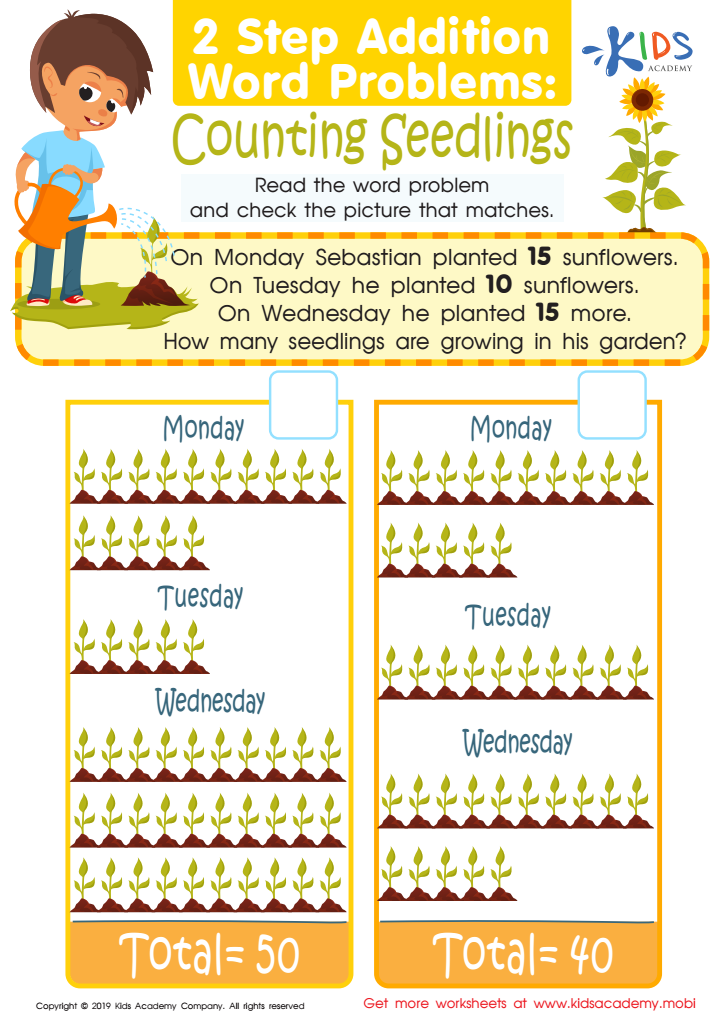
Counting Seedlings Worksheet
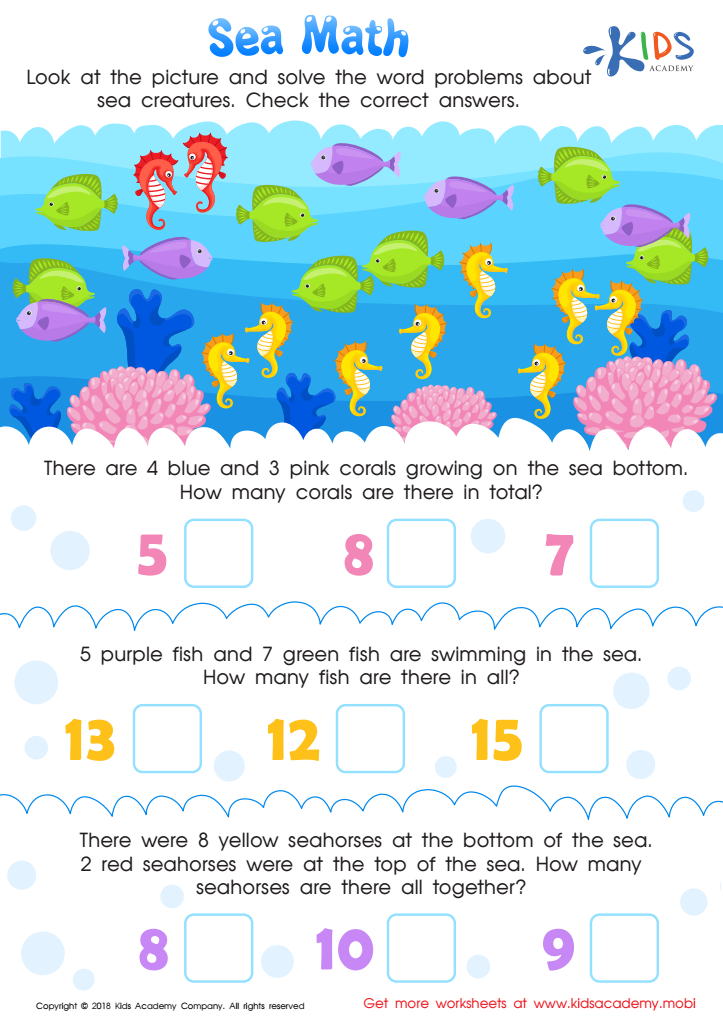
Sea Math Worksheet
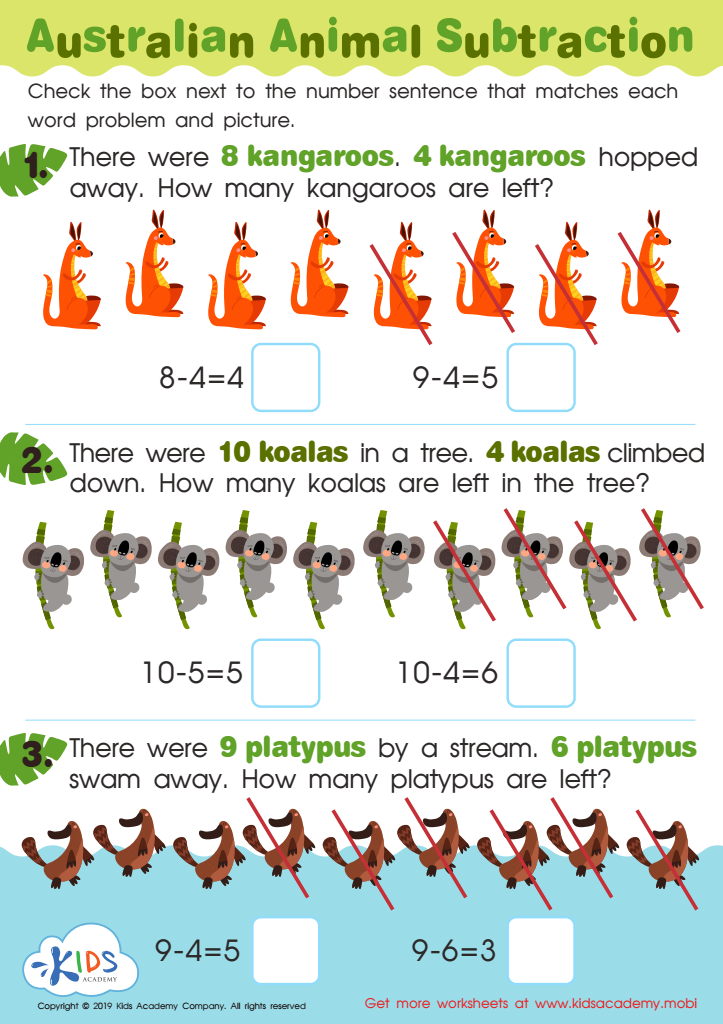
Australian Animal Subtraction Worksheet
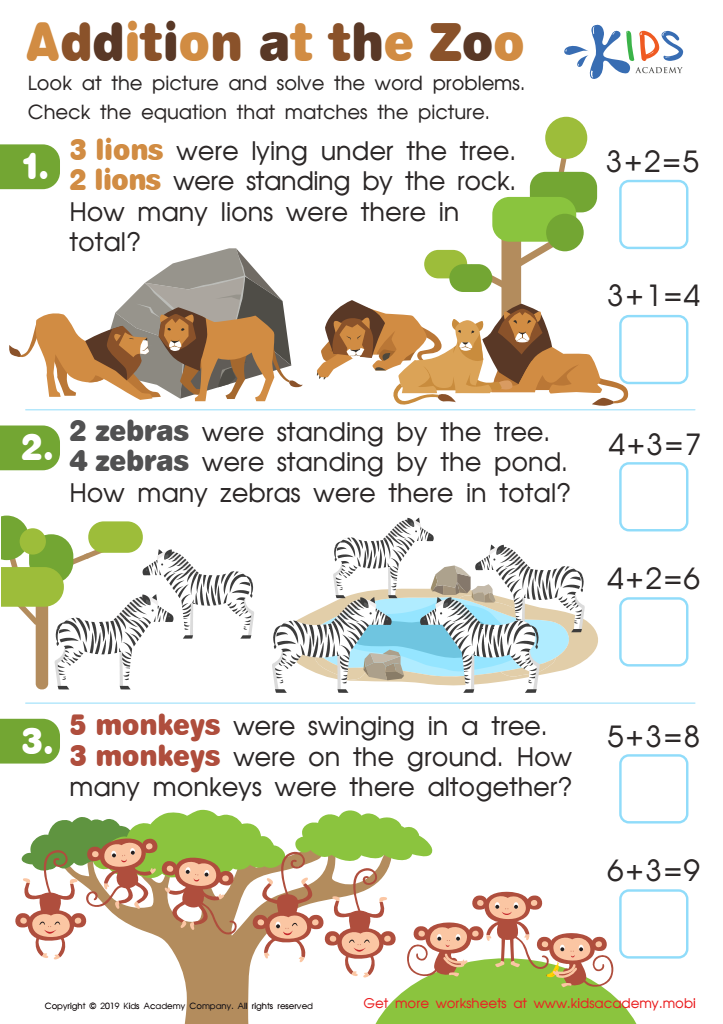
Addition at the Zoo Worksheet
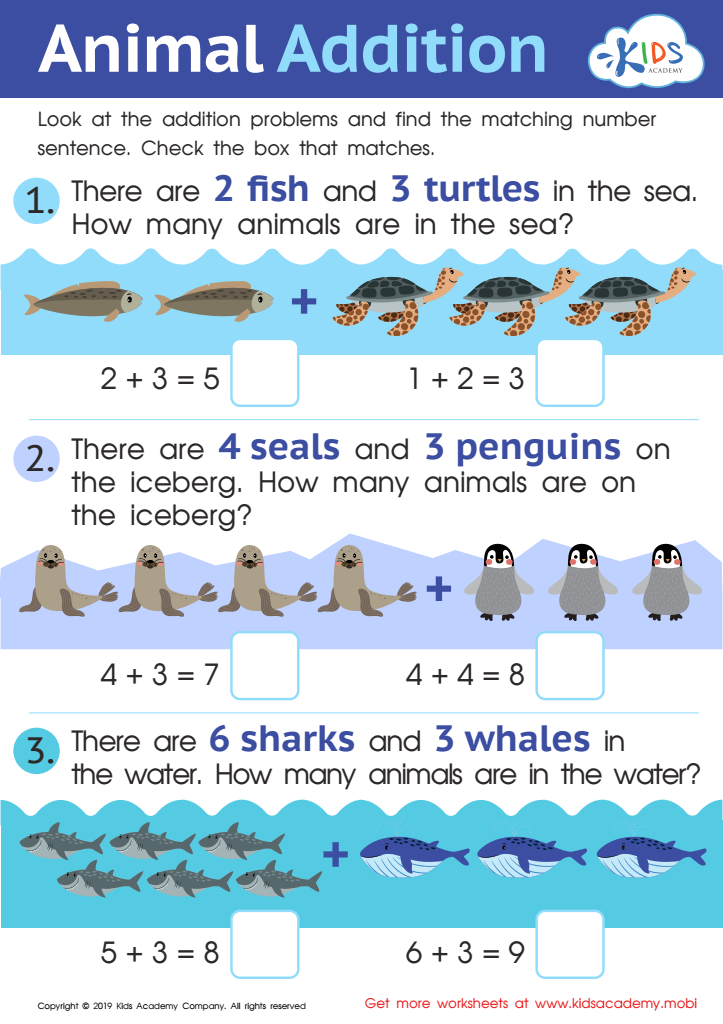
Animal Addition Worksheet








Counting skills, along with easy addition and subtraction word problems, are fundamental components of early childhood mathematics that significantly benefit children aged 4-5. At this stage, children are developing their numerical understanding, and mastering these skills lays the groundwork for future mathematical learning.
Parents and teachers should care about these skills because they promote critical cognitive development. When children engage in counting activities, they practice one-to-one correspondence, which enhances their ability to recognize quantity. Word problems further challenge them to apply their counting skills in context, fostering problem-solving abilities and comprehension.
Additionally, these foundational skills help to cultivate a positive attitude towards mathematics. Early exposure to counting and simple mathematical operations can build confidence and a sense of competence in young learners. This positive experience is essential as it sets the tone for future academic pursuits in math and other subjects.
Encouraging counting skills through engaging activities, such as games or storytelling, can make learning enjoyable and relevant. By supporting the development of these skills, parents and teachers not only aid in cognitive growth but also help children become more equipped for academic challenges in later years. Investing time in mastering counting and simple math lays a foundation for success across the curriculum.