Cognitive Development Easy Addition & Subtraction Worksheets for Ages 4-5
4 filtered results
-
From - To
Enhance your child's cognitive development with our Easy Addition & Subtraction Worksheets designed specifically for ages 4-5! These engaging, age-appropriate worksheets introduce foundational math concepts through fun activities, making learning exciting and effective. Children will develop critical thinking skills while practicing simple addition and subtraction problems. Each worksheet is crafted to encourage problem-solving and improve number recognition, setting the stage for future math success. Ideal for use at home or in the classroom, our resources foster a love for learning while promoting early math proficiency. Download now and watch your child thrive in their mathematical journey!
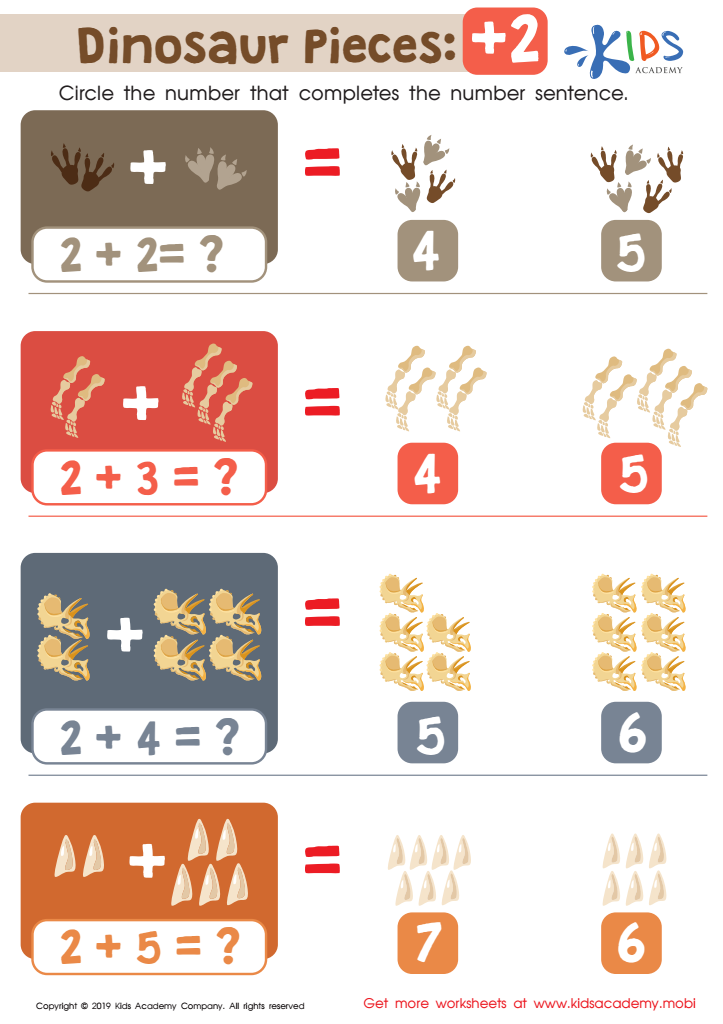
Dinosaur Pieces: +2 Worksheet
 Assign to My Students
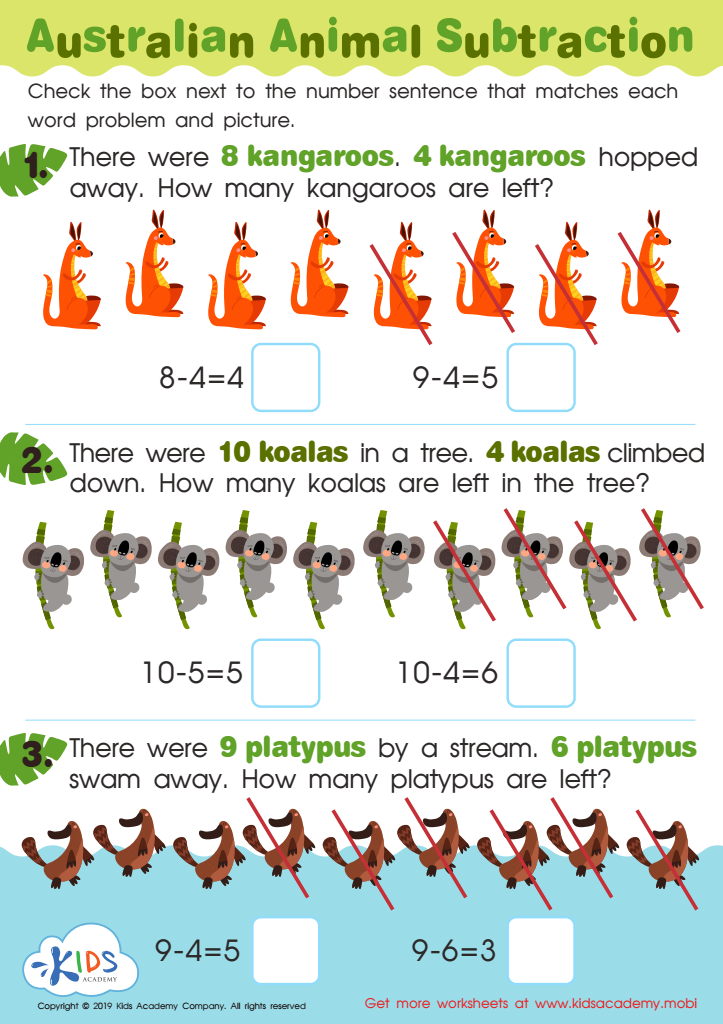
Australian Animal Subtraction Worksheet
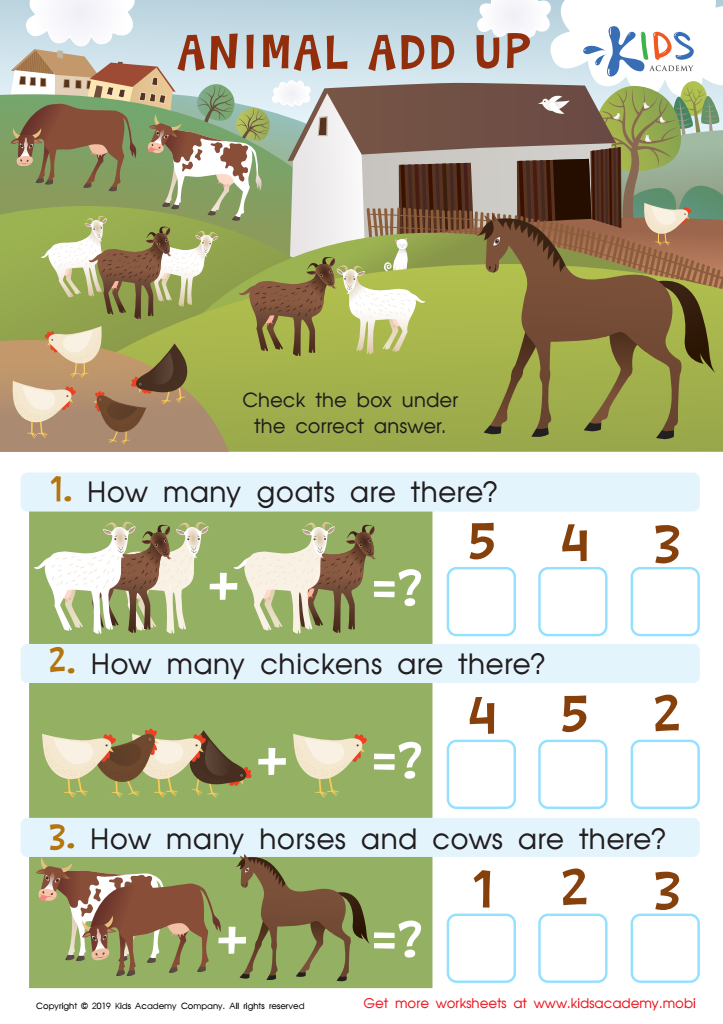
Animal Add Up Worksheet
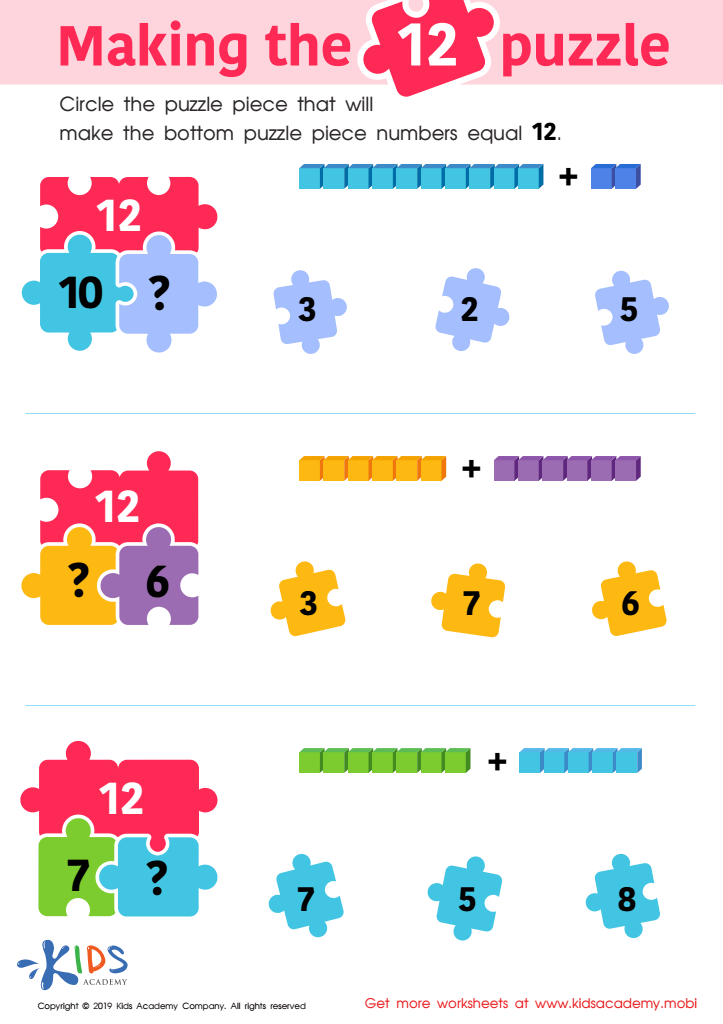
Making the 12 Puzzle Worksheet








Cognitive development is crucial for children aged 4-5 as it lays the foundation for future learning. Easy addition and subtraction activities stimulate critical thinking and problem-solving skills, which are essential at this developmental stage. Engaging children in these basic math concepts not only enhances their numerical skills but also boosts their overall cognitive abilities by promoting logical reasoning and pattern recognition.
Parents and teachers should prioritize these activities because early math competence is strongly linked to later academic success. When children grasp basic addition and subtraction, they gain confidence, which positively impacts their attitude toward learning. Additionally, these skills can lead to improved concentration, memory, and the ability to follow instructions.
Moreover, practicing easy addition and subtraction can be a fun and interactive process. Incorporating games, visuals, and hands-on activities makes learning enjoyable, fostering a love for mathematics that can last a lifetime. Lastly, parents and teachers serve as essential role models. Supporting cognitive development in math helps create a supportive learning environment and encourages positive parental involvement, reinforcing the importance of education in a child’s life. Emphasizing such foundational skills helps ensure that children are well-equipped for future academic and personal challenges.








