Sorting skills Easy Numbers Worksheets for Ages 4-5
3 filtered results
-
From - To
Enhance your child's sorting skills with our engaging Easy Numbers Worksheets, designed for ages 4-5. These worksheets offer a fun and interactive way for young learners to master the fundamentals of sorting numbers and objects. Children will enjoy colorful illustrations and hands-on activities that promote critical thinking and problem-solving. By sorting items based on size, color, and quantity, kids will build foundational math skills while reinforcing their understanding of numerical concepts. Ideal for both home and classroom use, our worksheets make learning enjoyable and effective. Start your child’s mathematical journey today with our delightful sorting skills resources!
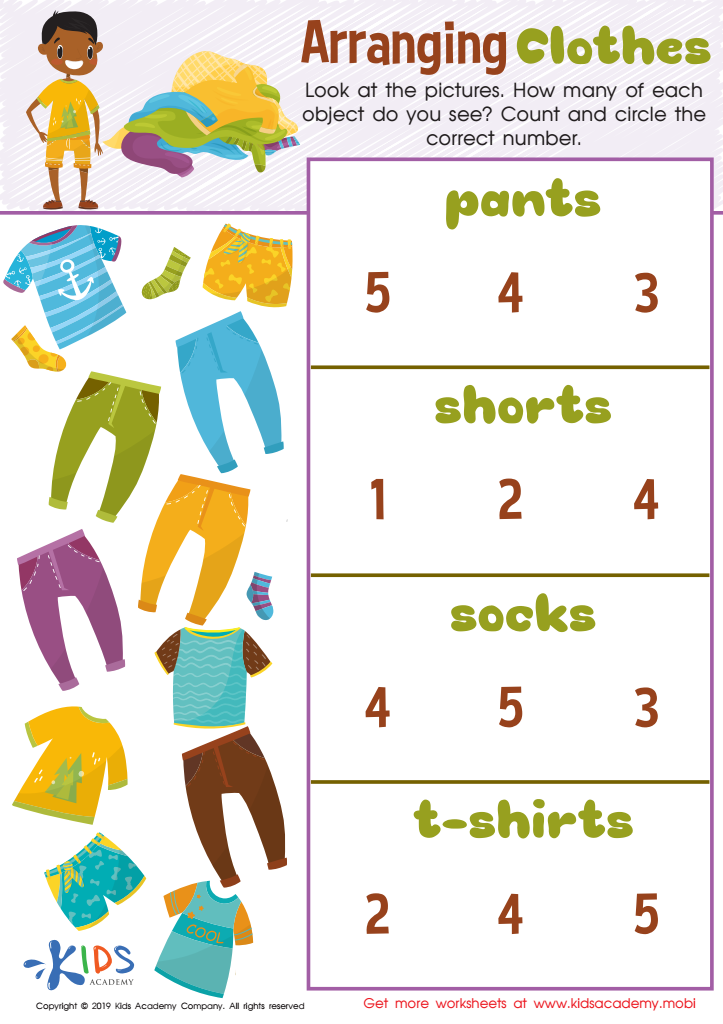
Arranging Clothes Worksheet
 Assign to My Students
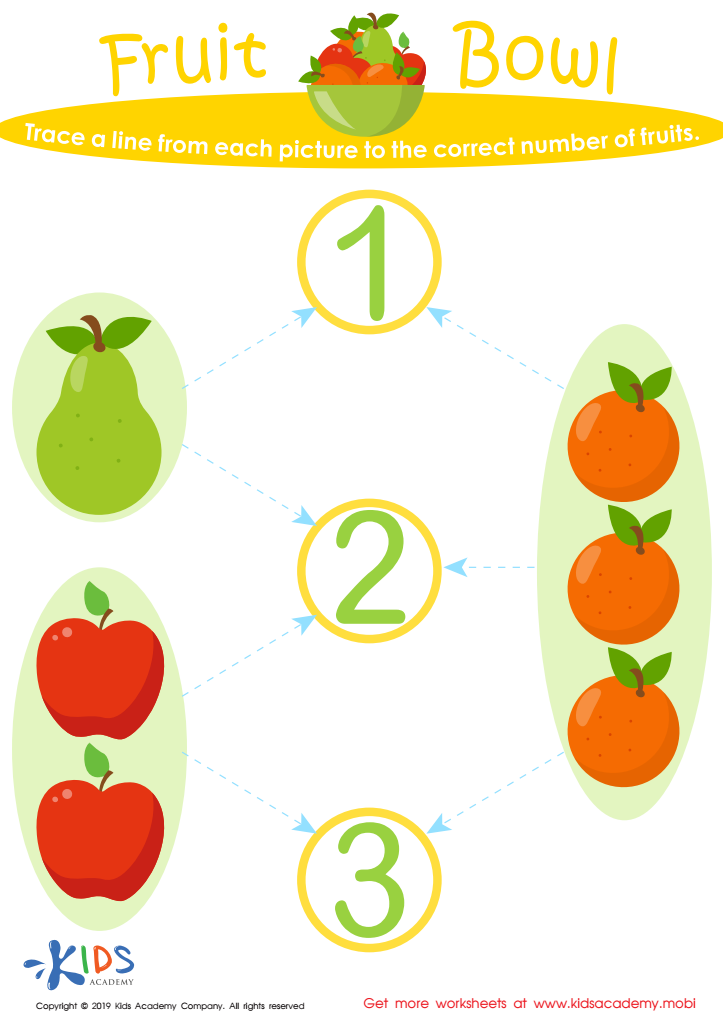
Fruit Bowl Worksheet
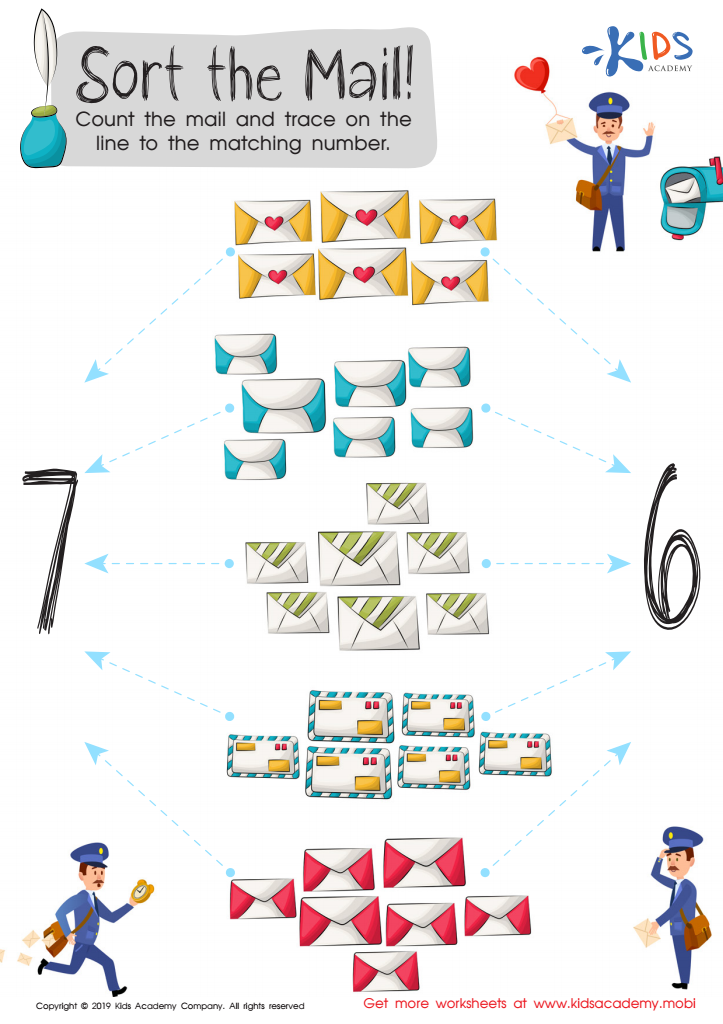
Sort the Mail Worksheet








Sorting skills in early childhood, particularly for ages 4-5, are foundational for a child’s cognitive development. Parents and teachers should care about fostering these skills for several reasons. First, sorting involves categorization, which helps children understand the world around them by identifying similarities and differences. This critical thinking ability forms the groundwork for more advanced mathematical concepts such as counting, more and less, and even basic arithmetic.
Additionally, sorting activities enhance fine motor skills and hand-eye coordination as children manipulate objects. Engaging in sorting can be both a tactile and visual learning experience, making it enjoyable and effective for young learners. Sorting also encourages language development, as children describe their actions, share their thought processes, and communicate about categories they create.
Moreover, early sorting experiences can support social skills, as children often work together in group activities. This collaboration fosters sharing, negotiation, and turn-taking, important aspects of interpersonal interactions. By prioritizing sorting skills, parents and teachers invest in a child’s holistic development, preparing them for future academic challenges and social situations. Encouraging these skills nurtures curiosity, problem-solving, and resilience, essential traits for lifelong learning.








