Understanding sequencing Easy Math Worksheets for Ages 4-5
3 filtered results
-
From - To
Discover the joy of learning with our "Understanding Sequencing Easy Math Worksheets" designed specifically for children aged 4-5. These engaging worksheets introduce young learners to the concept of sequencing through fun activities that foster critical thinking and problem-solving skills. Children will enjoy colorful illustrations and interactive tasks that encourage them to recognize patterns and sequences, laying a strong foundation for future math concepts. Perfect for homeschooling or classroom settings, our worksheets are easy to print and suitable for varied learning styles. Help your child master sequencing in a simple, enjoyable way that prepares them for math success!
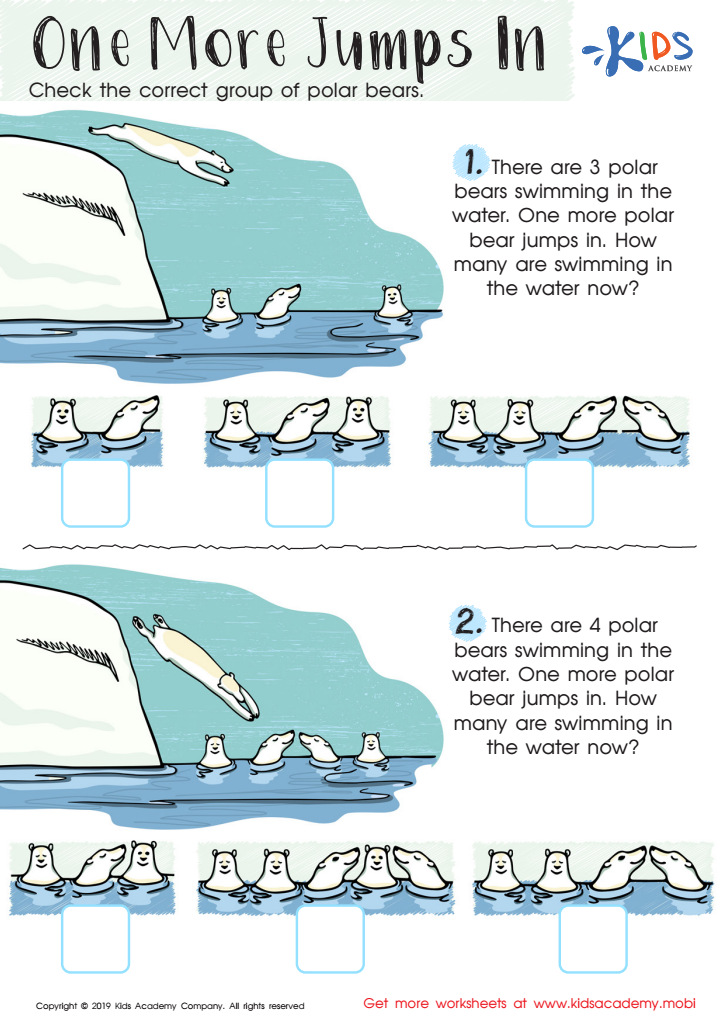
One More Jumps In Worksheet
 Assign to My Students
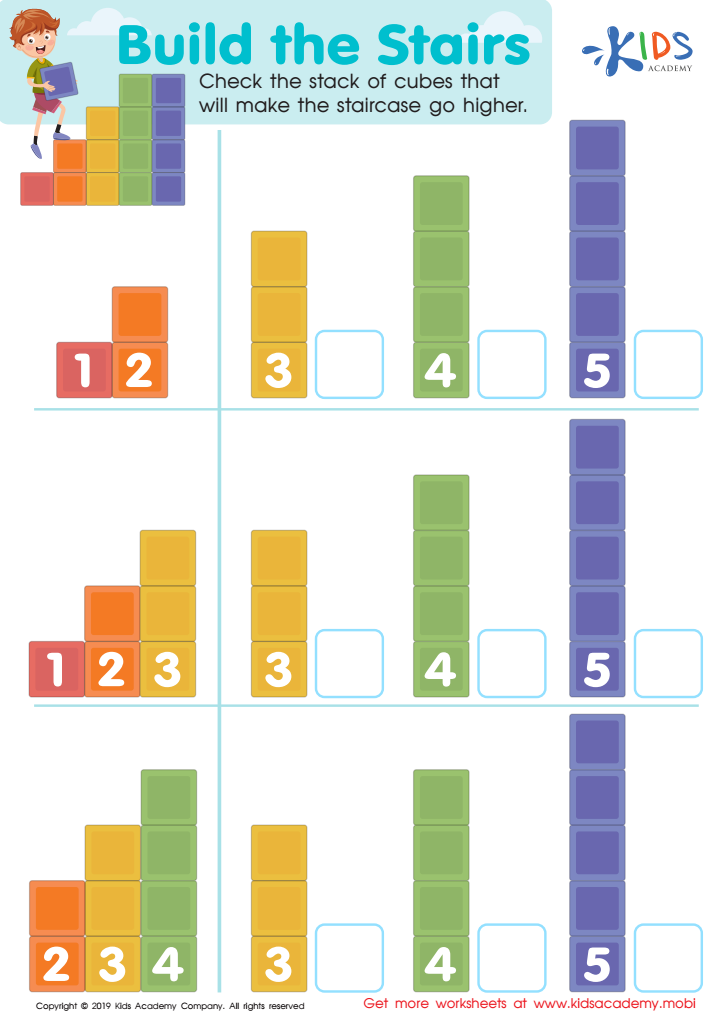
Build the Stairs Worksheet
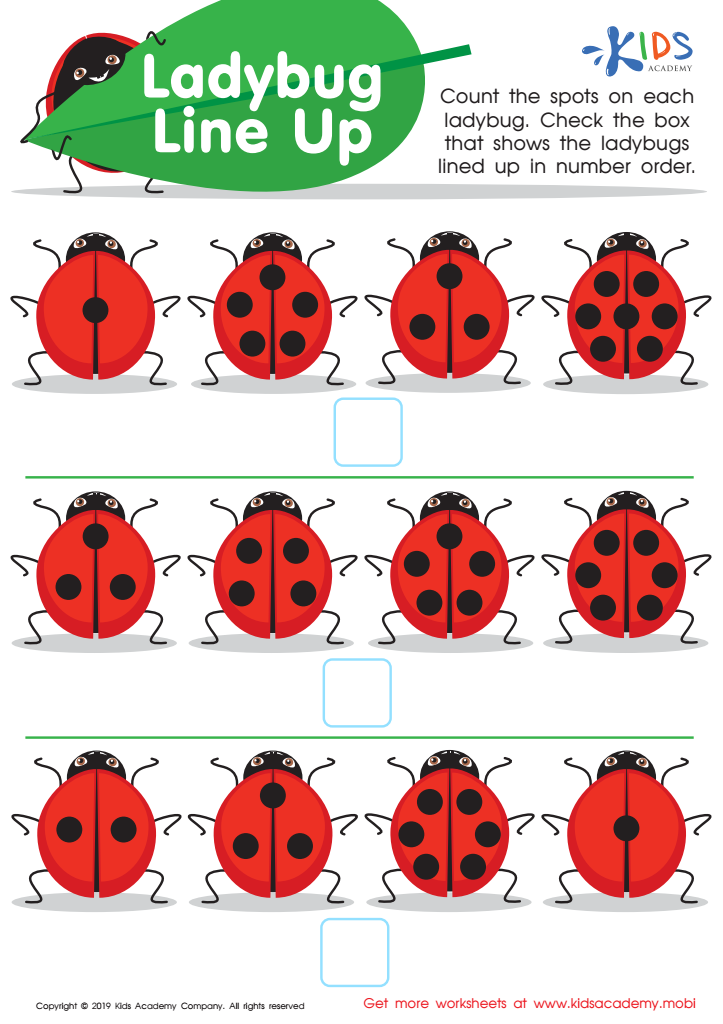
Ladybug Line Up Worksheet







Understanding sequencing is critical for young learners, particularly in math, as it lays the foundation for problem-solving skills and logical thinking. For children aged 4-5, engaging in activities that promote sequencing enhances their cognitive development. It teaches them how to arrange events in order, recognize patterns, and make connections between numbers, which are essential skills in both math and daily life.
Parents and teachers should care about this because effective sequencing skills can lead to greater success in later math learning, as sequencing underpins addition, subtraction, and even more complex operations. Through simple activities like number line exercises, pattern building with blocks, or storytelling, educators and caregivers can make math enjoyable and relatable, helping children grasp concepts naturally.
Moreover, sequencing helps develop language skills, as children learn to articulate thoughts and reasons behind their decisions. Parents and teachers who emphasize these skills create a strong, supportive environment fostering a love for learning. Ultimately, prioritizing sequencing creates a solid foundation for future academic achievement and critical thinking skills, empowering children to systematically approach challenges as they grow. A child equipped with sequencing knowledge is better prepared to navigate both educational and real-world scenarios with confidence and clarity.








