Fine Motor Skills Easy Building Vocabulary Worksheets for Ages 4-5
3 filtered results
-
From - To
Enhance your child's fine motor skills while building their vocabulary with our engaging worksheets designed for ages 4-5! Our easy-to-follow activities promote hand-eye coordination and dexterity, making learning fun and interactive. Each worksheet integrates essential vocabulary building exercises with tasks that encourage writing, cutting, and pasting—perfect for little hands. These resources not only stimulate language development but also provide a creative outlet for young learners. Download our Fine Motor Skills Easy Building Vocabulary Worksheets today and give your child the tools they need for a successful foundation in reading and writing! Help them grow both skills and confidence with each playful activity.

Red and Blue Coloring Fun Worksheet
 Assign to My Students











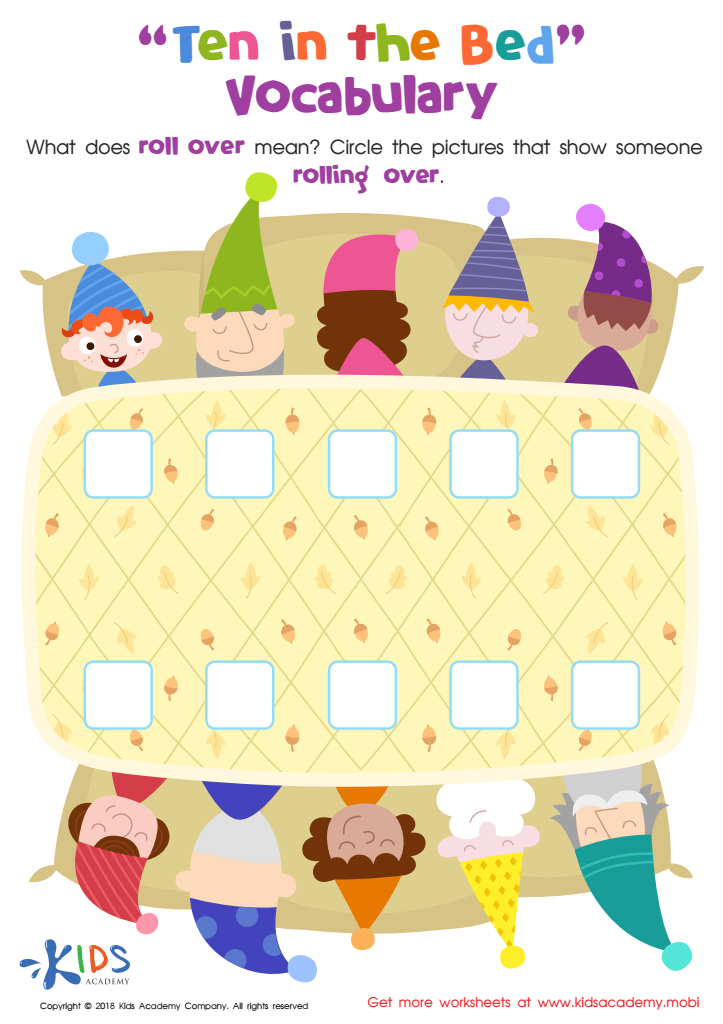
Ten in the Bed: Vocabulary Worksheet

Happy Family Coloring Worksheet
Assign to My Students



.jpg)
.jpg)



Parents and teachers should care about fine motor skills and vocabulary development for ages 4-5 because these skills are essential for a child's overall growth and learning. Fine motor skills involve the small muscles of the hands and fingers, enabling children to perform tasks like drawing, cutting, and writing. Mastering these skills fosters independence and boosts a child’s confidence in personal tasks, such as buttoning their clothes or using utensils.
Building vocabulary at this age is equally important. A rich vocabulary aids in effective communication, aids comprehension, and enhances the ability to express thoughts and feelings. When children hear and use new words, they expand their understanding of the world around them.
Moreover, fine motor skills and vocabulary development go hand in hand. Activities that involve both, such as crafting or storytelling, can stimulate creativity and critical thinking. By focusing on these areas early on, parents and teachers can lay a strong foundation for future learning, making it easier for children to engage with literacy and other subjects later in school. Investing time in these skills now can lead to more competent, confident, and expressive children. Thus, it's vital for caregivers and educators to prioritize these developmental areas.