
Shape identification Easy Worksheets for Ages 4-6
5 filtered results
Difficulty Level
Grade
Age
-
From - To
Subject
Activity
Standards
Introduce young learners to shapes with our "Shape Identification Easy Worksheets for Ages 4-6." Designed to build foundational geometry skills, these fun and interactive worksheets help children recognize and name basic shapes like circles, squares, triangles, and rectangles. Perfect for preschool and kindergarten, each worksheet engages kids with appealing illustrations and activities that are both educational and entertaining. Boost your child's early math skills, enhance their visual discrimination, and foster a love for learning through our easy and enjoyable shape identification worksheets. Ideal for classroom and at-home practice!
Favorites
With answer key
Interactive
Number 2 Printable
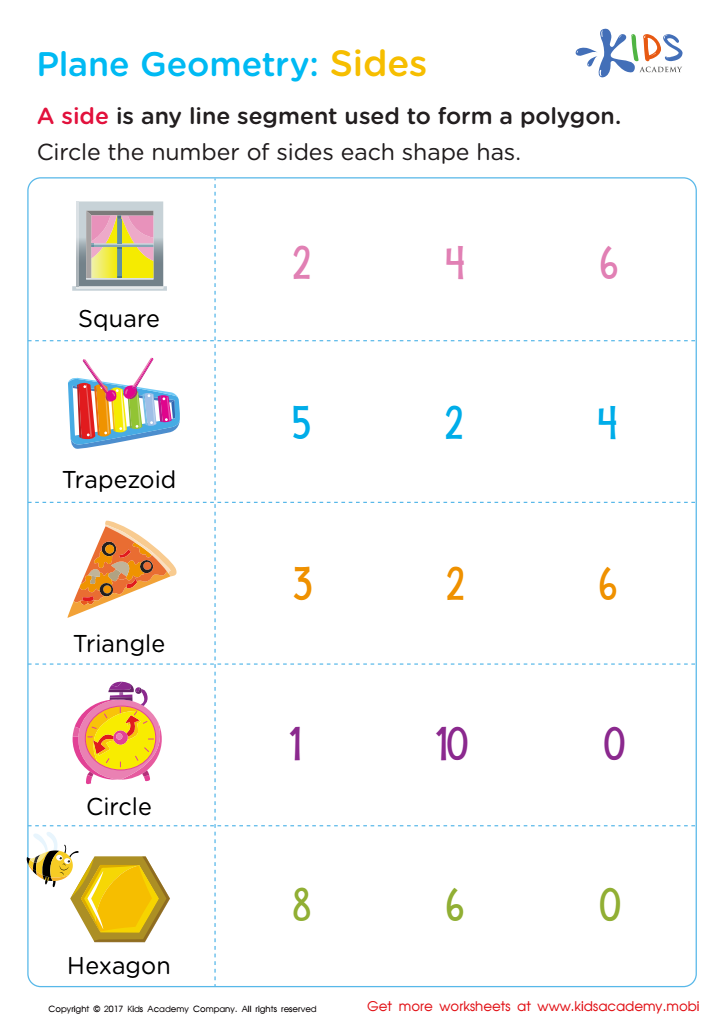
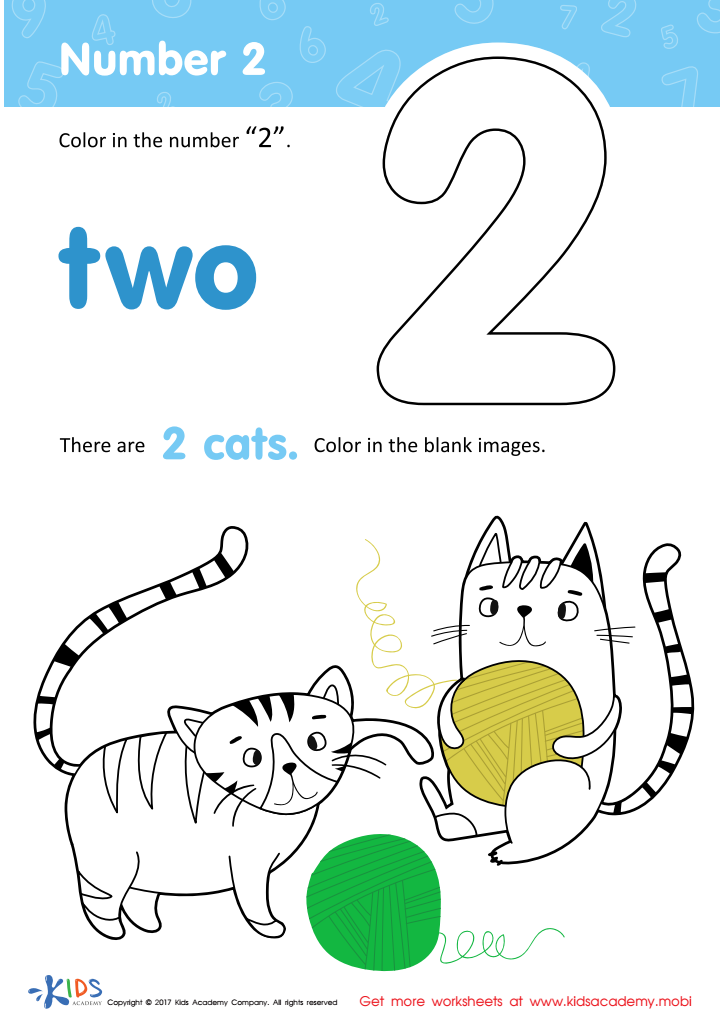
Help your child learn to recognize the number two with these cats and their yarn balls. Print this coloring page – it's great for counting and coloring fun! Your child will develop basic numeracy skills as they visually see numbers in action.
Download (PDF)
 Assign to My Students
Assign to My Students
Number 2 Printable
Worksheet
Bicycle Shapes Worksheet
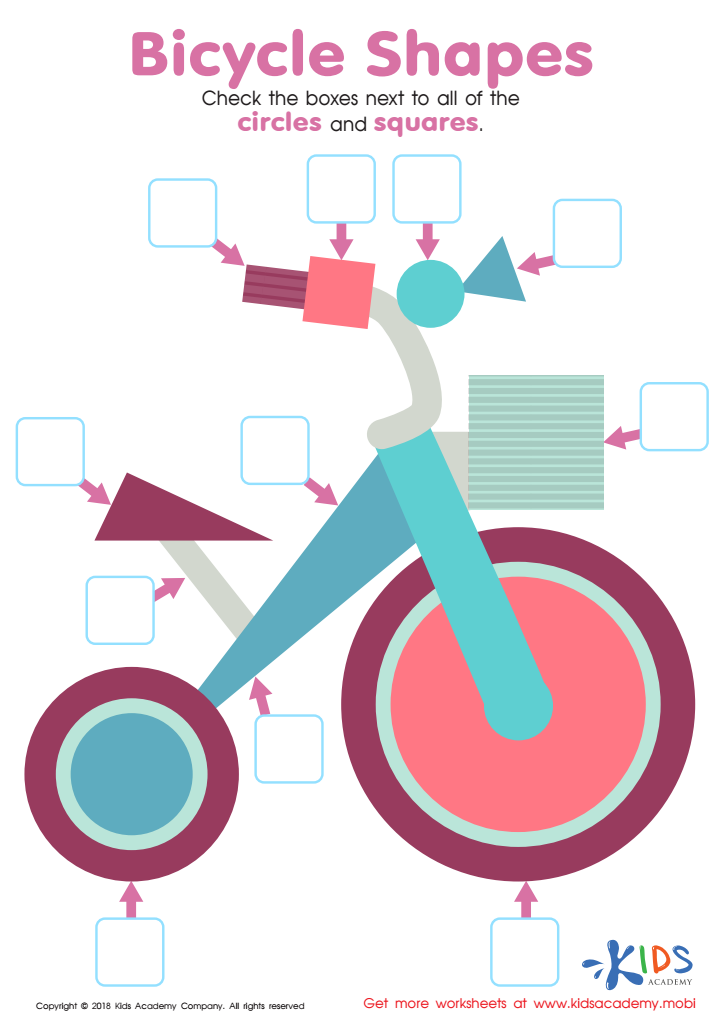
This fun geometry worksheet for preschoolers asks the child to spot hidden shapes (circles, squares) in a colorful bicycle. Each shape varies in size and the child checks the box when it's found. It's a visual way to teach shapes.
Bicycle Shapes Worksheet
Worksheet
Compare and Describe: Part 1 Worksheet
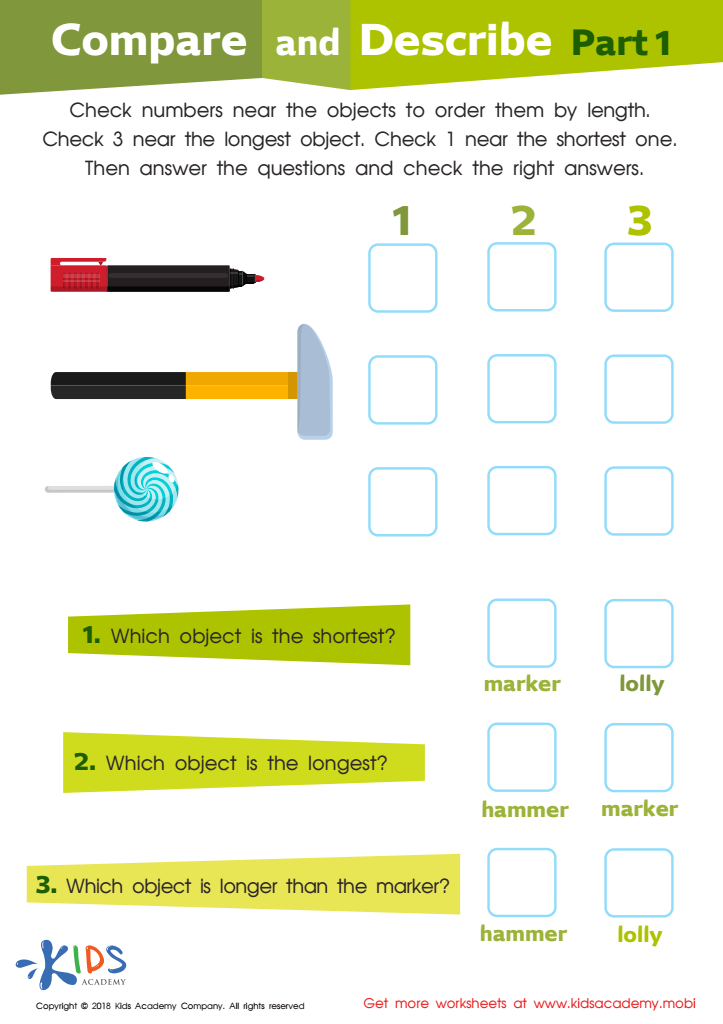
In this worksheet from Kids Academy, kids can start learning measurement in stages. Observe the images, then compare their length - which one is shortest? Which one is longest? Answer the questions at the bottom to complete the sheet. It's an easy way to help kids understand measurement basics.
Compare and Describe: Part 1 Worksheet
Worksheet
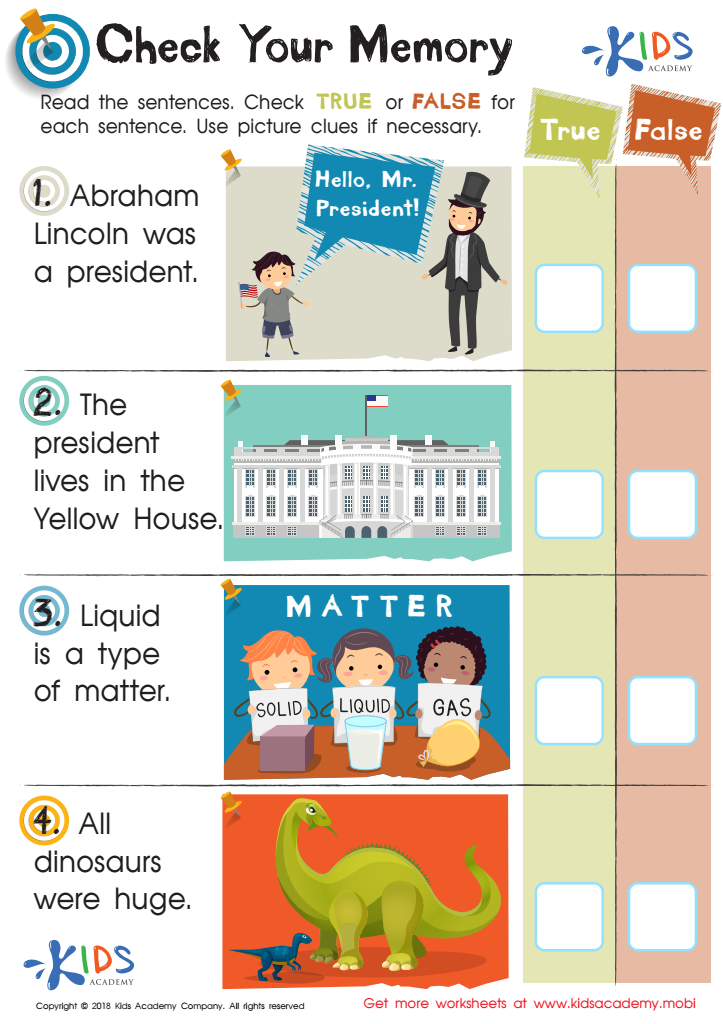
Check Memory Worksheet
Assisting your kids with their homework and using worksheets is a great way for them to learn. The vibrant visuals in this printout can help stimulate the mind and motivate your child. Have them read the sentences and then point to the associated images. Afterwards, ask them to state True or False for each sentence. If they are still uncertain, offer them the picture clues to assist further.
Check Memory Worksheet
Worksheet
Join Kids Academy for Free
Who is primarily going to use this learning content?





.jpg)
.jpg)
Shape identification is a fundamental skill that serves as a building block for many aspects of a child's cognitive development. For children aged 4-6, recognizing and naming shapes is essential for several reasons. Firstly, it enhances their spatial awareness, a crucial component for navigating both physical and educational environments. Knowledge of shapes helps children understand and describe the world around them.
Secondly, early familiarity with shapes lays the groundwork for math concepts they'll encounter later. Patterns, classification, and sequencing in mathematics often start with a basic understanding of shapes. For instance, comprehending that a square has four sides of equal length prepares them for more complex geometric concepts.
Thirdly, shape identification supports language development. As children learn to label shapes, they expand their vocabulary and improve their ability to categorize and communicate effectively. Additionally, shape activities foster fine motor skills. Cutting, tracing, and constructing shapes all contribute to better hand-eye coordination and dexterity.
Moreover, engaging with shapes encourages creativity and problem-solving. Puzzles and building toys that involve shapes challenge kids to think critically and creatively, skills that are invaluable both in and outside of school.
Overall, prioritizing shape identification in early education equips children with the foundational skills necessary for holistic development. Teachers and parents can support this growth through playful and interactive activities, ensuring a strong start in their educational journey.








