Understanding opposites Easy Worksheets for Ages 4-6
4 filtered results
-
From - To
Discover the fun and engaging "Understanding Opposites Easy Worksheets" designed specifically for children ages 4-6! These colorful and educational worksheets help young learners grasp the concept of opposites, building essential cognitive skills. Through delightful visuals and interactive activities, kids will explore contrasting pairs such as hot/cold, big/small, and happy/sad. Perfect for home or classroom use, these worksheets encourage creativity and critical thinking, making learning enjoyable! Whether your child enjoys coloring, matching, or drawing, our worksheets offer a variety of activities to cater to diverse learning styles. Start nurturing your child's understanding of opposites today with these enjoyable and easy-to-use resources!
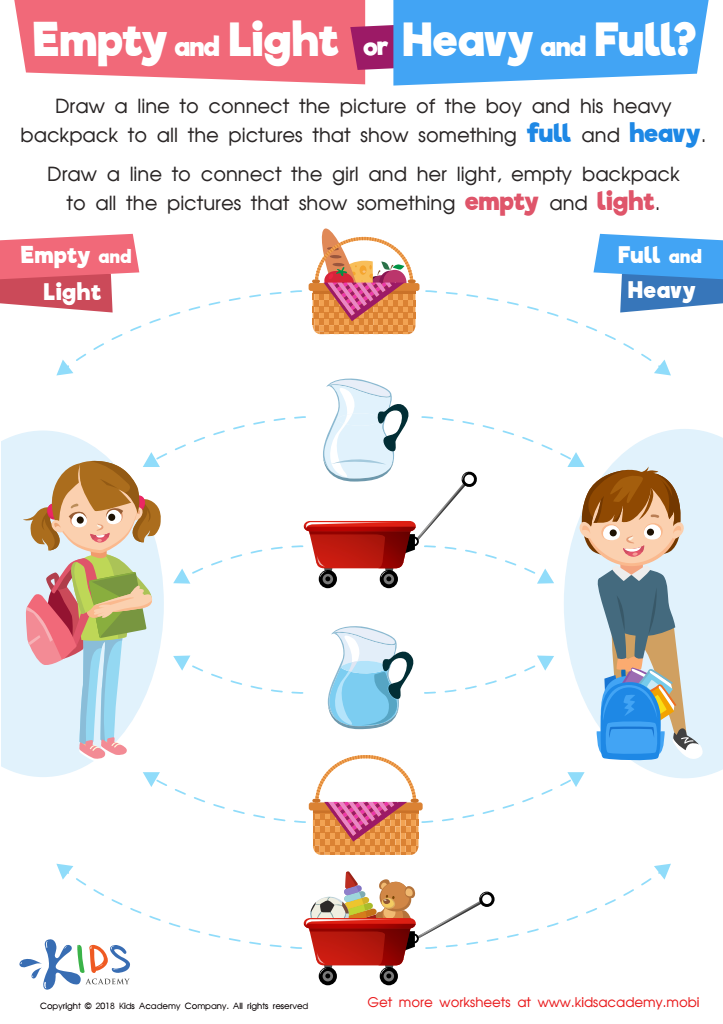
Empty and Light or Heavy and Full? Worksheet
 Assign to My Students
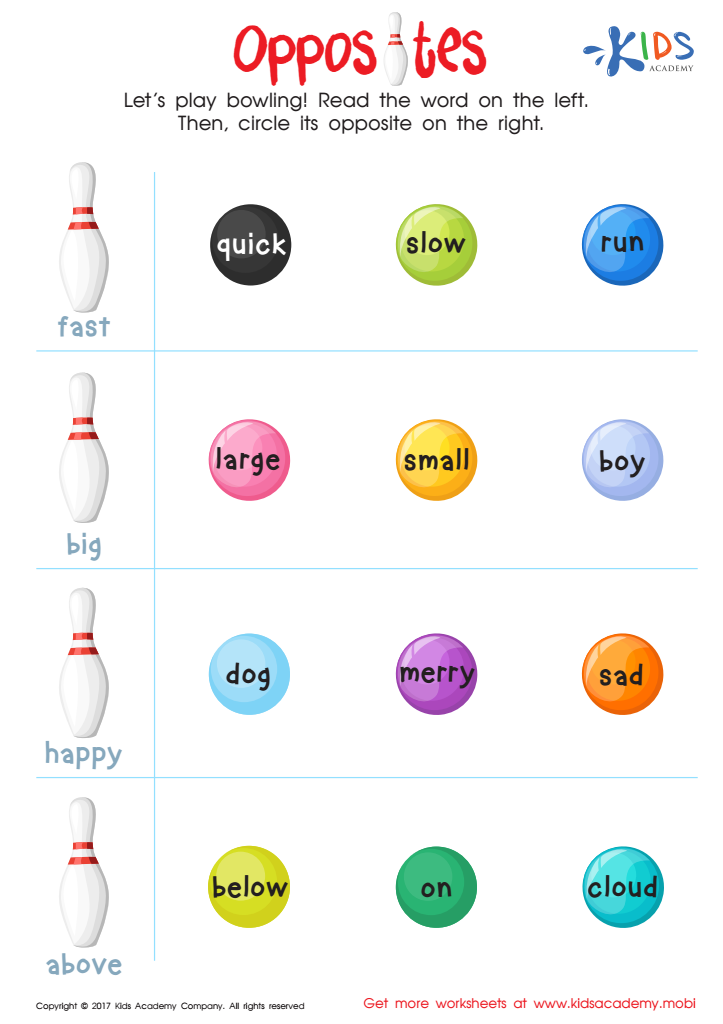
Opposites Worksheet
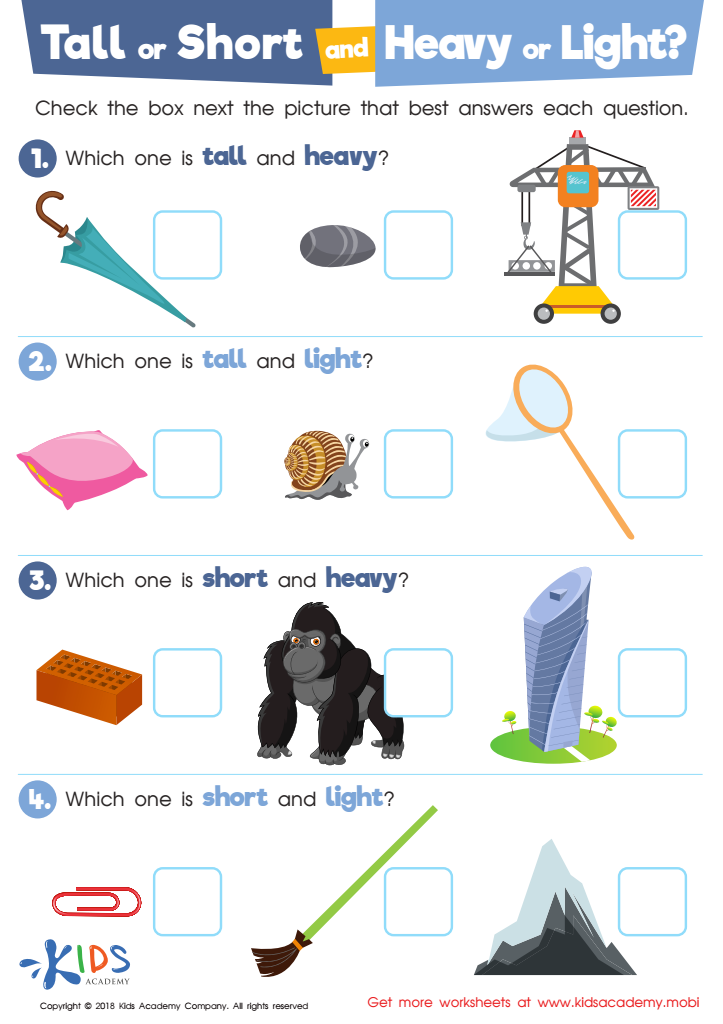
Tall or Short and Heavy or Light? Worksheet
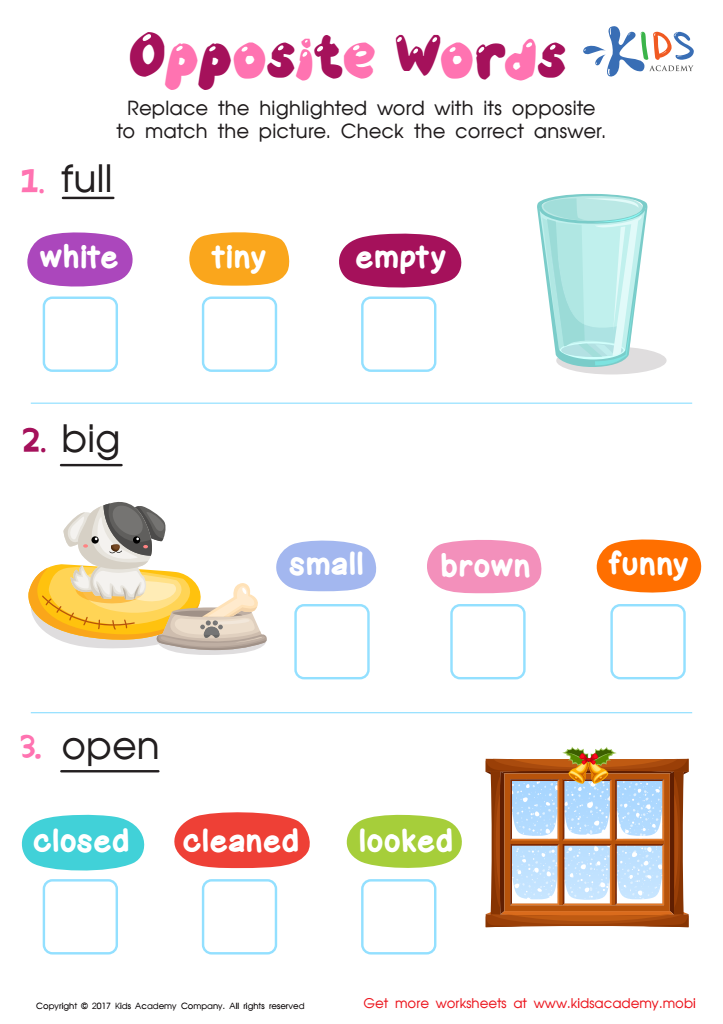
Opposite Words Worksheet






Understanding opposites is crucial for young children aged 4-6, and it holds significant benefits for both parents and teachers. First, grasping the concept of opposites enhances vocabulary development, as children learn new words in relation to their meanings. For instance, understanding "up" and "down" or "hot" and "cold" broadens their ability to express themselves and describe their experiences.
Furthermore, learning about opposites helps children build critical thinking and cognitive skills. By comparing and contrasting concepts, they develop analytical abilities that are foundational for later learning. This skill not only aids in language and literacy but also introduces basic reasoning and categorization, which are essential for effective problem-solving.
Additionally, recognizing opposites can foster emotional intelligence. For example, by exploring the concepts of "happy" and "sad," children learn to identify and articulate their own emotions and those of others, encouraging empathy and resilience.
Finally, engaging activities around opposites—like games, stories, and creative art—promote social interactions and cooperative learning, strengthening relationships among peers. Parents and teachers who prioritize this learning make meaningful contributions to children's overall social, emotional, and cognitive development, setting them up for success in future endeavors.








