Understanding Sequences Easy Numbers Worksheets for Ages 4-6
3 filtered results
-
From - To
Welcome to our "Understanding Sequences Easy Numbers Worksheets" designed specifically for children aged 4-6! These engaging worksheets provide a fun and interactive way for young learners to grasp the concept of number sequences. Suitable for preschool and kindergarten classrooms, the activities focus on recognizing patterns, ordering numbers, and enhancing early math skills. Each colorful worksheet offers step-by-step instructions and captivating visuals to keep children motivated and excited about learning. Perfect for parents and educators alike, our resources aim to build a solid foundation in numeracy, fostering a love of math from an early age. Explore and ignite your child's number journey today!
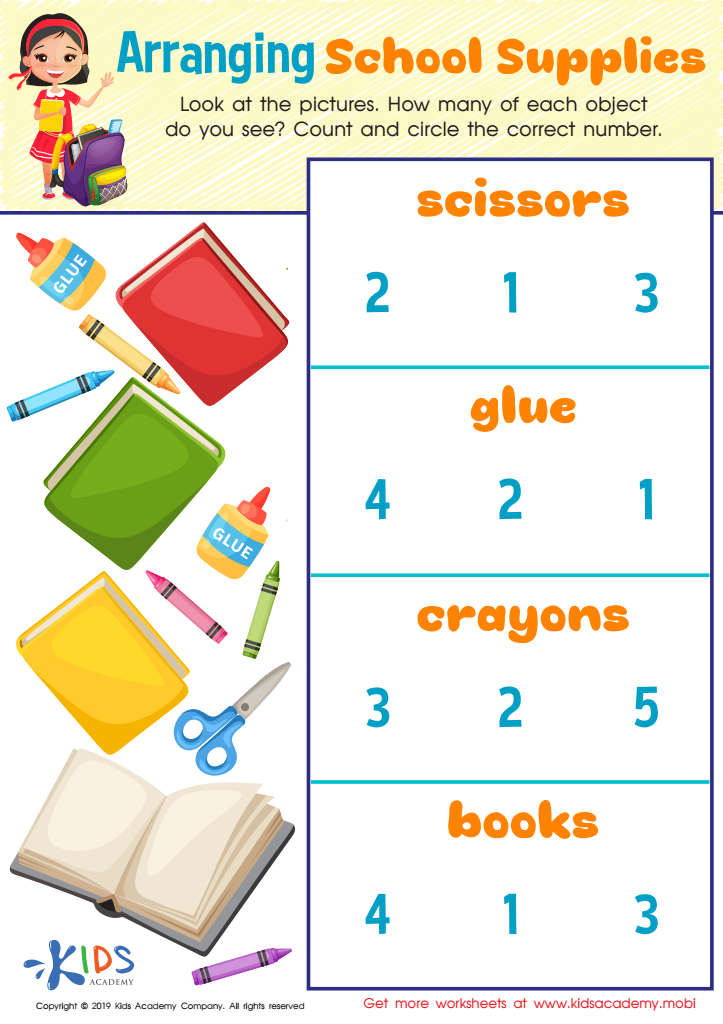
Arranging School Supplies Worksheet
 Assign to My Students
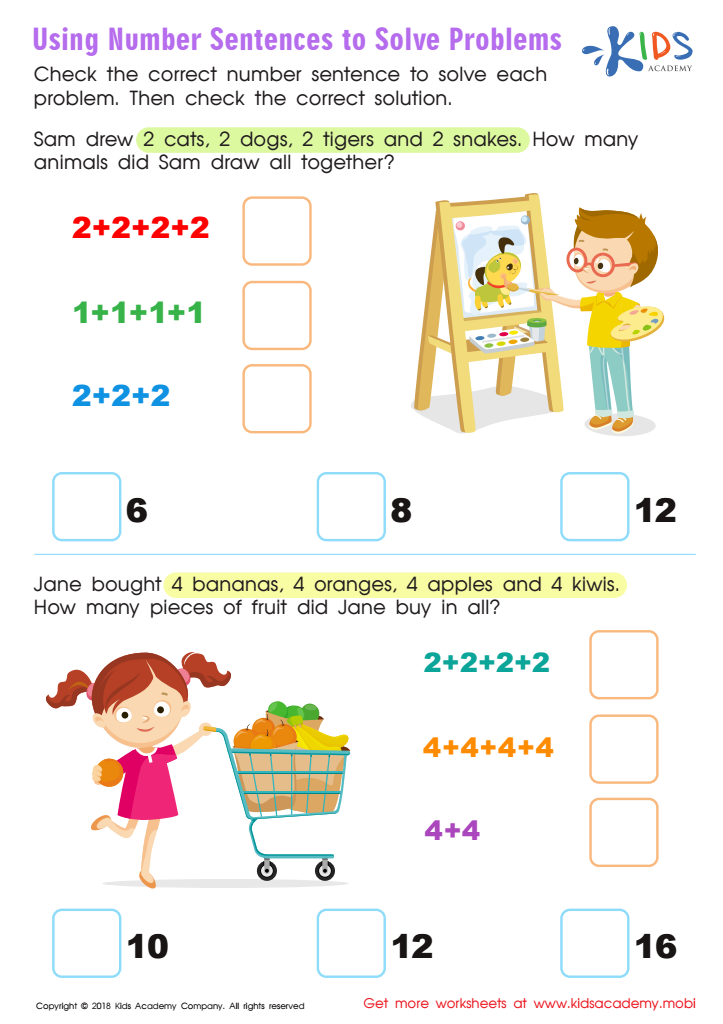
Using Number Sentences to Solve Problems Worksheet
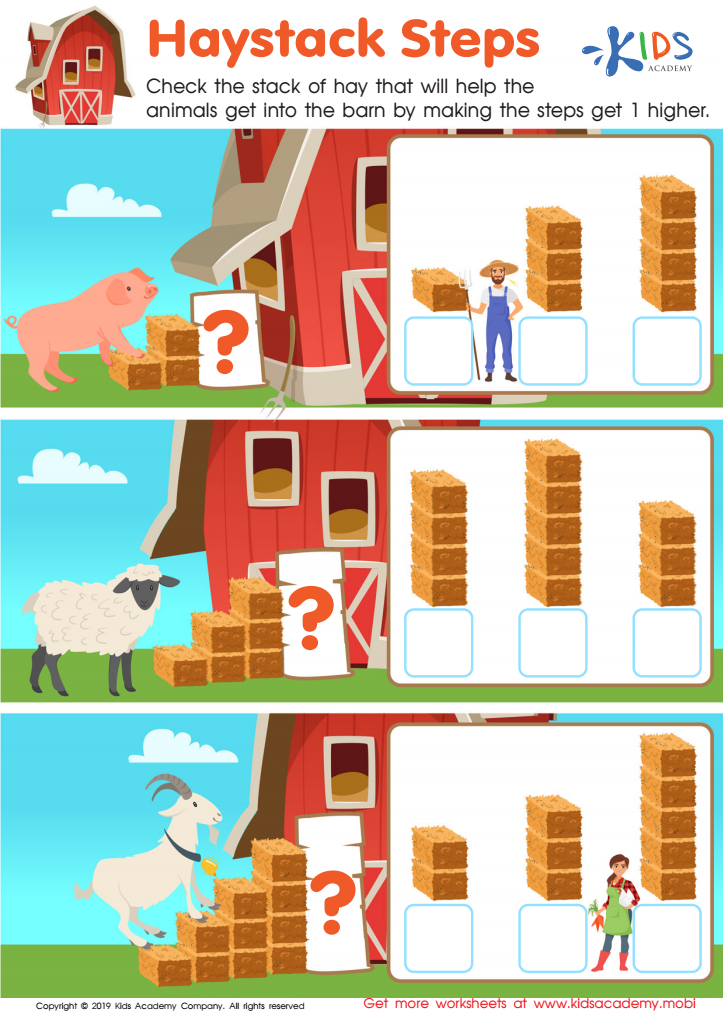
Haystack Steps Worksheet








Understanding sequences and easy numbers is vital for young children aged 4-6, and both parents and teachers play a crucial role in this developmental stage. At this age, children are laying the foundations for mathematical reasoning, critical thinking, and future problem-solving skills. Recognizing patterns and sequences—such as counting, days of the week, or story events—enhances cognitive development, improves memory retention, and fosters logical thinking.
Moreover, sequencing helps children make sense of the world around them, enabling them to organize their thoughts and experiences. It encourages them to predict outcomes, which is essential for reading comprehension and storytelling. For instance, when children understand the sequence of events in a story, they can better grasp the narrative and express their ideas more clearly.
Additionally, foundational skills learned in these early years set the tone for future learning in mathematics and literacy. Engaging in activities that reinforce sequencing, like sorting toys or following simple recipes, also strengthens fine motor skills and social interactions.
In summary, supporting children in grasping sequences and easy numbers equips them with essential skills for academia and real-life problem-solving, making it imperative for parents and teachers to prioritize these early learning concepts.








