Problem-Solving Skills Easy Numbers 0–10 Worksheets for Ages 4-6
3 filtered results
-
From - To
Enhance your child’s problem-solving skills with our engaging Easy Numbers 0-10 worksheets designed for ages 4-6! Tailored to nurture young learners, these printable resources help children grasp basic math concepts while developing critical thinking abilities. Our worksheets feature fun activities involving counting, simple addition, and number recognition, aiding kids in tackling everyday challenges with confidence. Interactive and visually appealing, these exercises promise to captivate your child's interest and make learning enjoyable. Perfect for homeschooling or classroom use, our Problem-Solving Skills worksheets ensure your little ones build a strong foundation in mathematics. Explore our collection and watch your child thrive!

Picking Carrots Worksheet
 Assign to My Students

Haystack Steps Worksheet
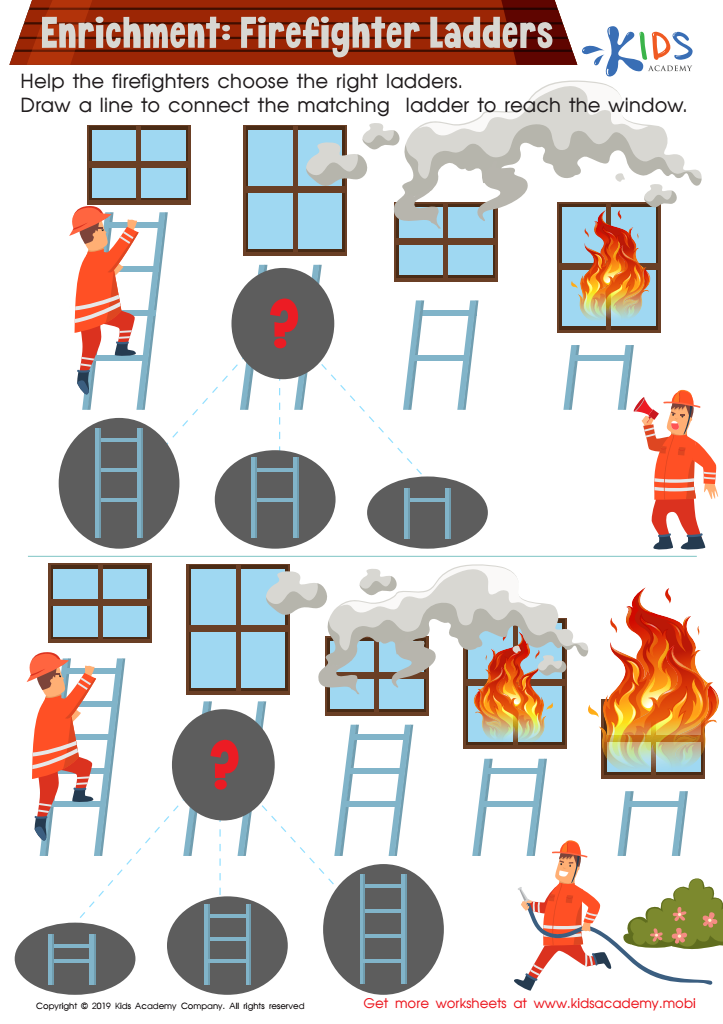
Enrichment: Firefighter Ladders Worksheet








Problem-solving skills are essential for young learners aged 4-6, particularly when working with easy numbers from 0-10. Developing these skills lays the foundation for critical thinking and effective reasoning, helping children to approach challenges with confidence. Engaging with basic numerical problems cultivates a child's capacity to analyze and evaluate situations, ultimately fostering independence and resilience.
For parents and teachers, nurturing problem-solving skills in early childhood sets the stage for broader cognitive development. Young children learn how to break down tasks, identify patterns, and explore various solutions, all crucial for math literacy and beyond. This is not just about numbers; it translates to real-life scenarios, teaching children to navigate everyday issues and collaborate effectively with others.
Furthermore, early engagement with problem-solving enhances a child's excitement for learning. As they successfully tackle challenges, their sense of achievement grows, encouraging a positive attitude towards academics. This enthusiasm can lead to a lifelong passion for learning. Therefore, prioritizing problem-solving skills in the early years creates a strong competency that will serve children throughout their education and into adulthood. In investing in these skills, parents and teachers are shaping capable, confident, and curious thinkers.