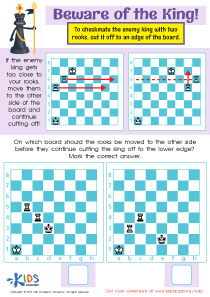
Chess strategy understanding Easy Chess Worksheets for Ages 4-7
3 filtered results
-
From - To
Unlock your child’s potential with our "Chess Strategy Understanding Easy Chess Worksheets" designed for ages 4-7. These engaging worksheets make learning chess fun and accessible, introducing young minds to essential strategies and techniques in a playful way. With a focus on critical thinking and problem-solving, children will develop their cognitive skills while enjoying the classic game of chess. Tailored for early learners, our worksheets feature colorful illustrations and simple instructions that captivate young players. Equip your child with the tools they need for strategic thinking—dive into our chess worksheets today and watch them grow into confident young strategists!
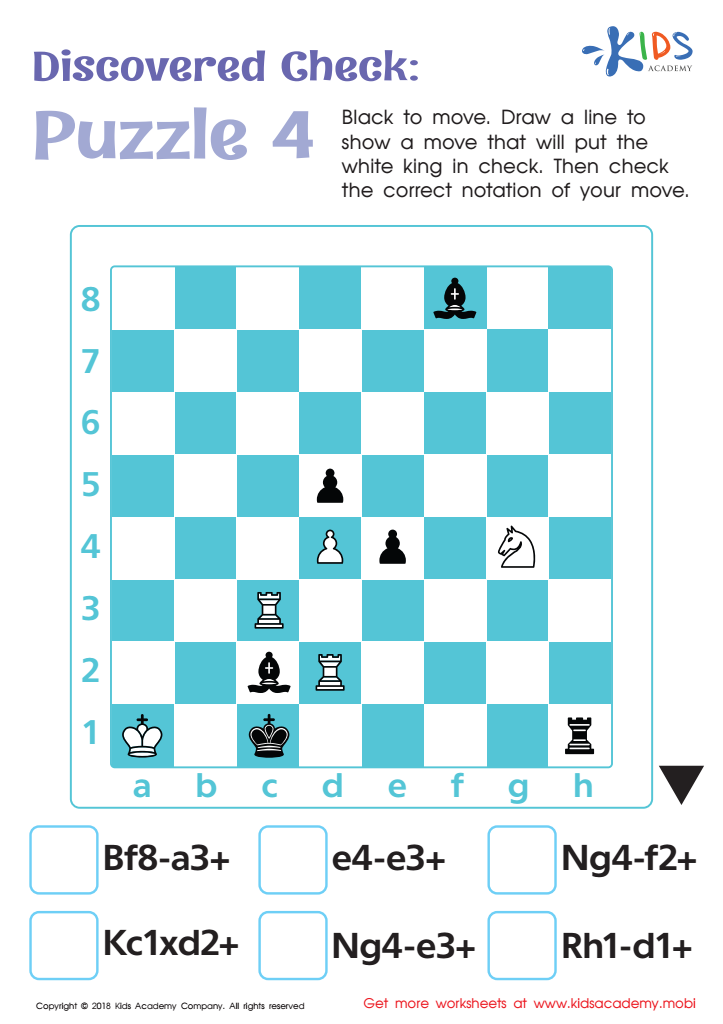
Discovered Check: Puzzle 4 Worksheet

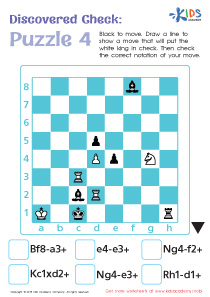
Discovered Check: Puzzle 2 Worksheet
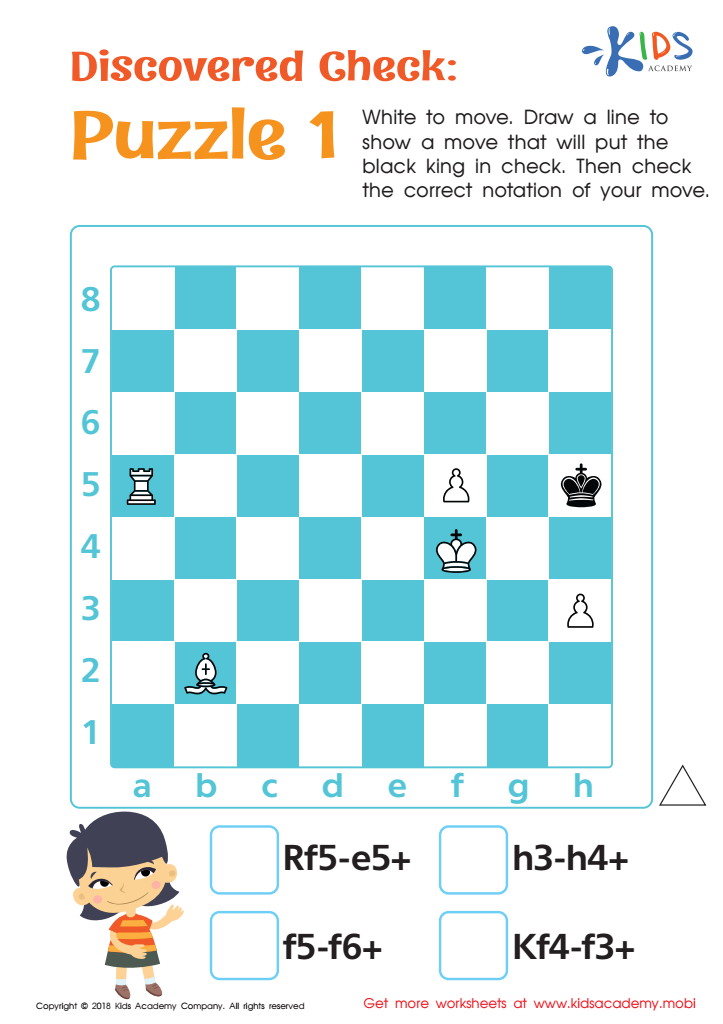
Discovered Check: Puzzle 1 Worksheet






Chess is not just a game; it's a powerful educational tool that encourages critical thinking and cognitive development in young children. For ages 4-7, understanding simple chess strategies can foster essential skills such as problem-solving, decision-making, and focus. Parents and teachers should care about introducing chess to this age group because it nurtures cognitive abilities while providing a fun and engaging way to learn.
When kids grasp basic chess strategies, they learn to anticipate consequences, enhancing their foresight and planning. For instance, while thinking ahead about their own moves, children simultaneously learn to consider their opponent’s potential responses. This dual focus cultivates empathy and a deeper understanding of perspectives.
Moreover, chess supports emotional development. Young players experience wins and losses, teaching them perseverance, resilience, and sportsmanship. The structured environment of a chess game gently introduces children to competition, helping them to manage emotions and build self-regulation skills.
Incorporating easy chess into educational or home settings also promotes social interaction, as children can play together, fostering teamwork and communication. Overall, understanding chess strategy at a young age lays a foundation for lifelong learning and personal growth, making it a valuable pursuit for both parents and teachers.