Comparing heights Easy Worksheets for Ages 4-7
3 filtered results
-
From - To
Discover our "Comparing Heights Easy Worksheets" designed specifically for children aged 4-7! These engaging resources will help young learners grasp fundamental concepts of measurement and comparison in a fun and interactive way. Our worksheets feature colorful illustrations and simple tasks that encourage children to compare the heights of various objects and characters, enhancing their observational and critical thinking skills. Perfect for classroom activities or at-home learning, these worksheets promote understanding of height differences, foster vocabulary development, and build confidence in mathematical concepts. Explore our collection today and make learning about height an exciting adventure for your little ones!
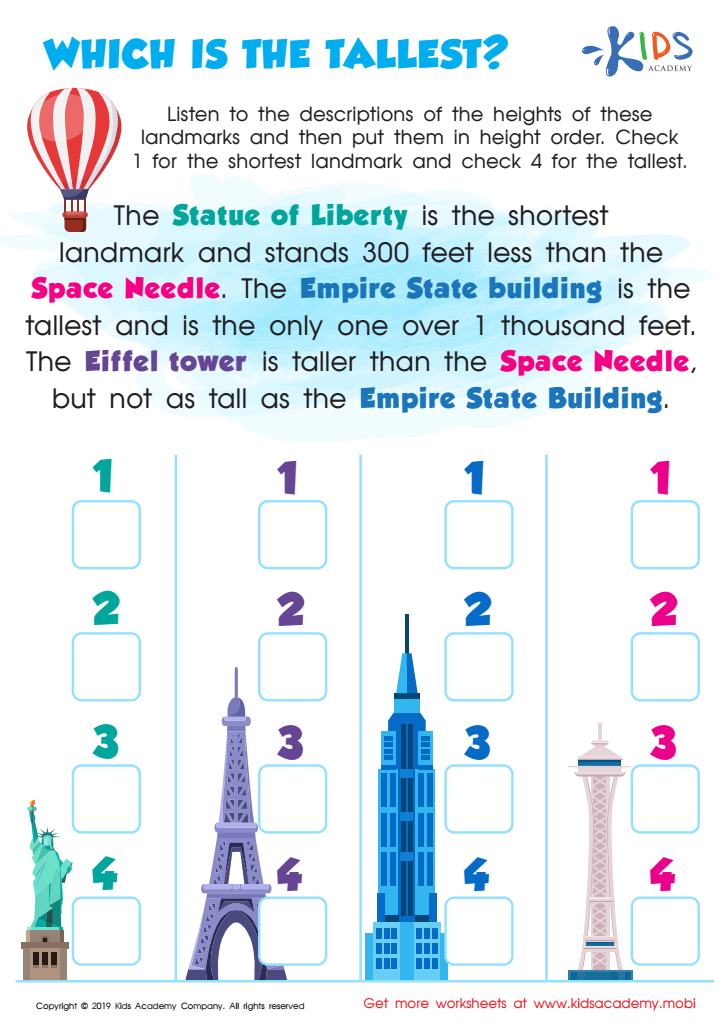
Which is the Tallest? Worksheet
 Assign to My Students
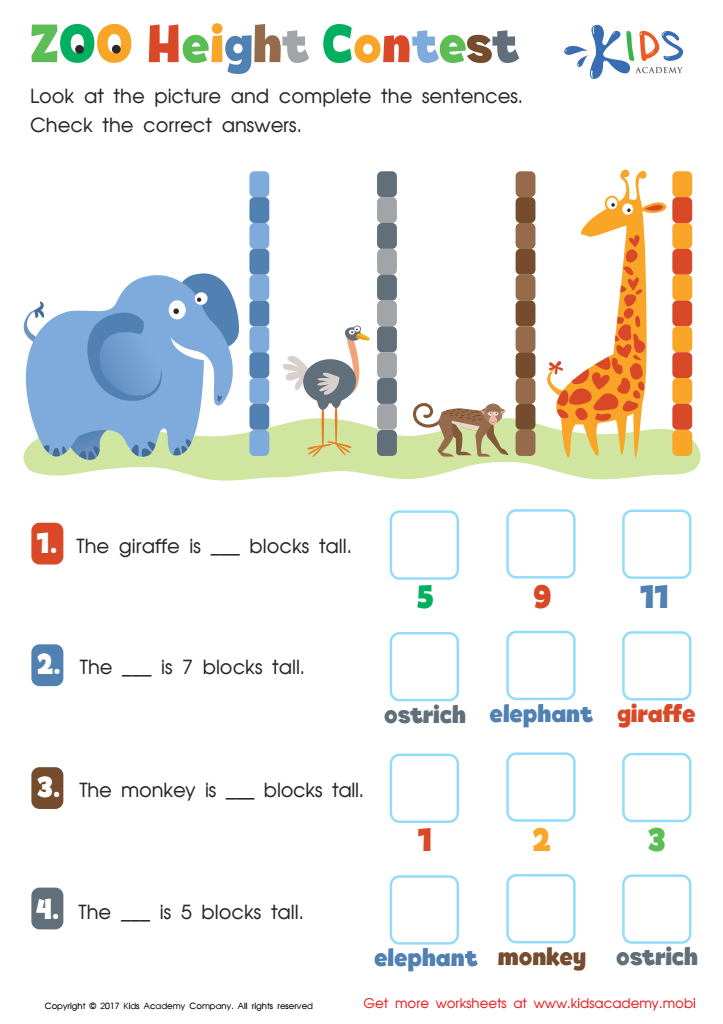
Zoo Height Contest Worksheet
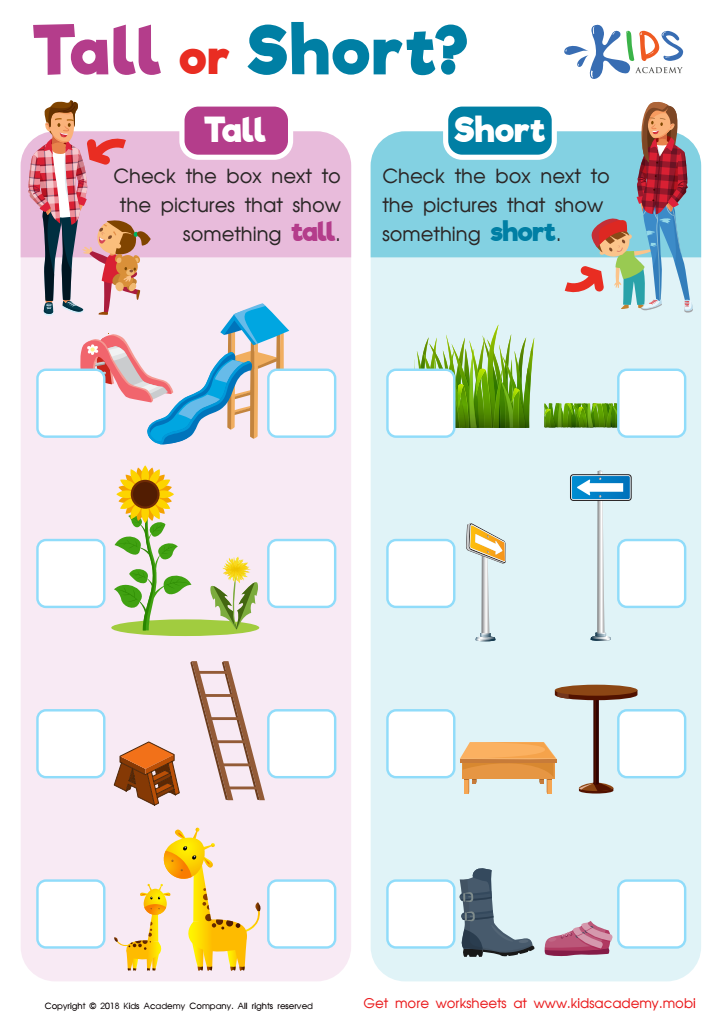
Tall or Short? Worksheet




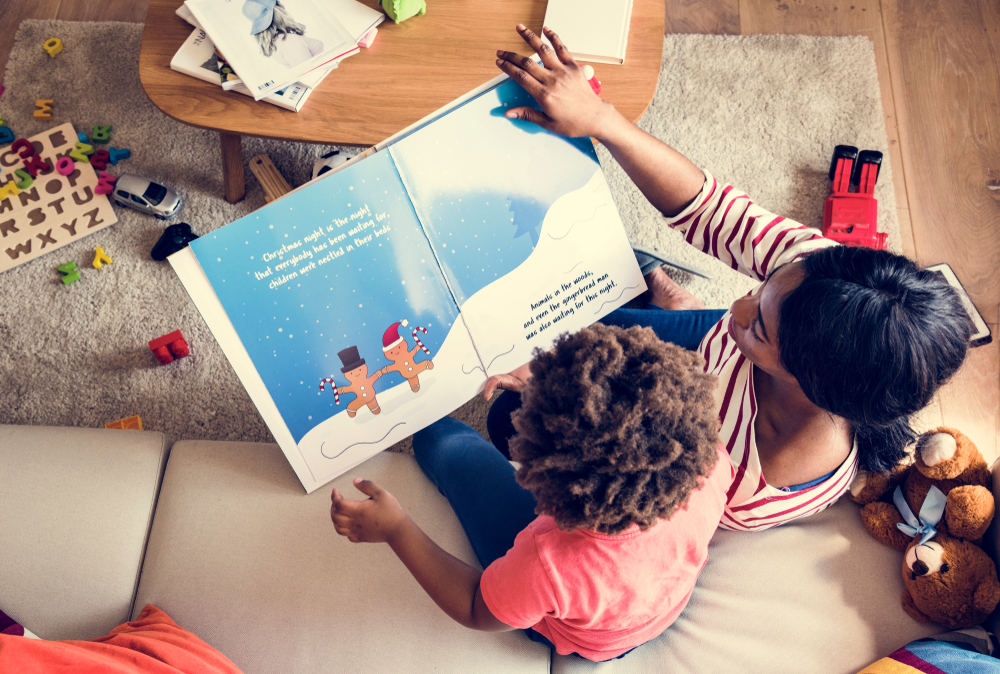



Comparing heights is a valuable activity for children aged 4-7, offering both educational and developmental benefits that parents and teachers should prioritize. First, it enhances critical thinking and observational skills as children engage in hands-on learning. Measuring and comparing heights encourages them to make conclusions based on the data they collect, fostering analytical thinking from an early age.
In addition, this activity introduces basic concepts of measurement, such as longer, shorter, taller, and shortest, thereby laying a foundational understanding of math. It’s also an excellent way to build vocabulary and engage in discussions about comparisons, further boosting language skills.
Socially, comparing heights can foster collaboration and communication as children work together to visualize their findings. This shared experience cultivates teamwork and nurtures interpersonal skills.
Finally, measuring height can help children understand and embrace the concept of differences and diversity, reinforcing that people come in all shapes and sizes. This encourages respect and acceptance, vital values to instill at a young age. Overall, comparing heights is not just a playful activity; it cultivates essential skills that contribute to a child’s cognitive, social, and emotional development, making it an important focus for parents and educators alike.








