Enhancing observation skills Easy Worksheets for Ages 4-7
6 filtered results
-
From - To
Enhancing Observation Skills: Easy Worksheets for Ages 4-7
Boost your child's observation skills with our engaging and easy worksheets, designed for ages 4-7. These printable activities from Kids Academy focus on developing critical learning skills through fun and interactive exercises. Featuring colorful images and simple instructions, each worksheet encourages young learners to identify differences, spot patterns, and improve attention to detail. Perfect for home or classroom use, these worksheets make learning enjoyable while promoting cognitive growth. Help your child build a strong foundation with our carefully crafted resources, available for immediate download. Start enhancing observation skills today with Kids Academy!
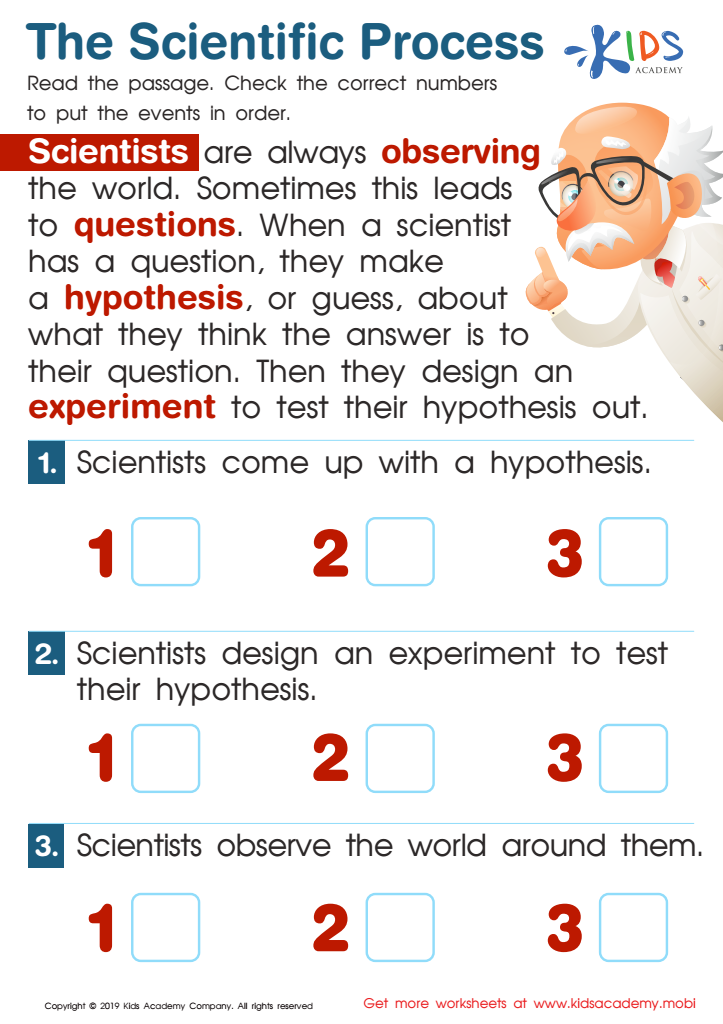
The Scientific Process Worksheet
 Assign to My Students
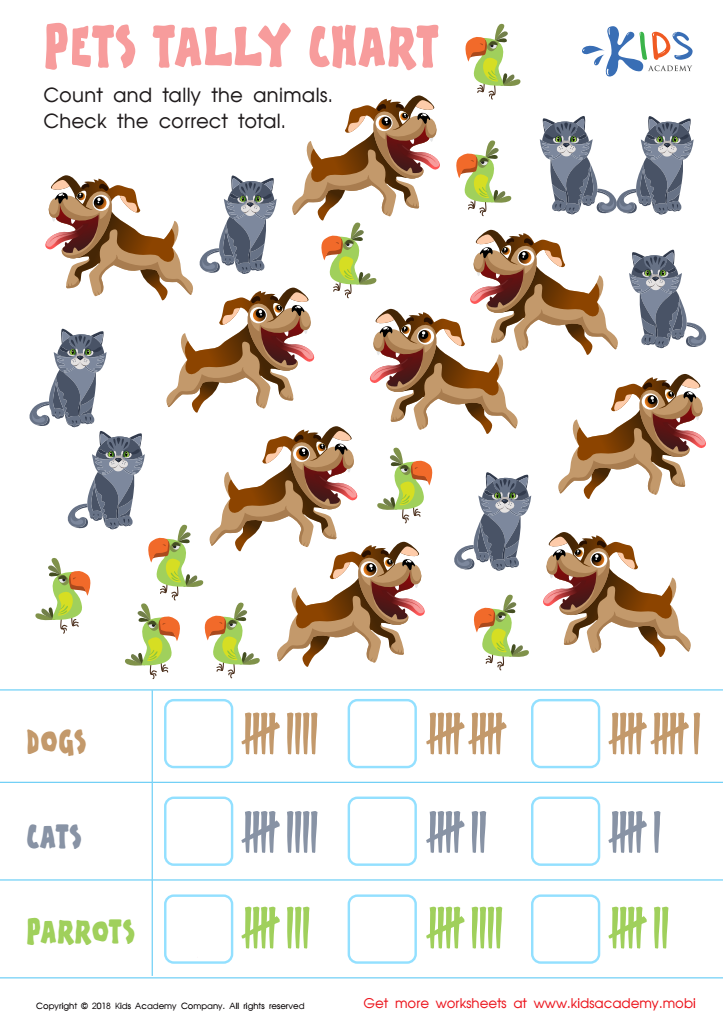
Pets Tally Chart Worksheet
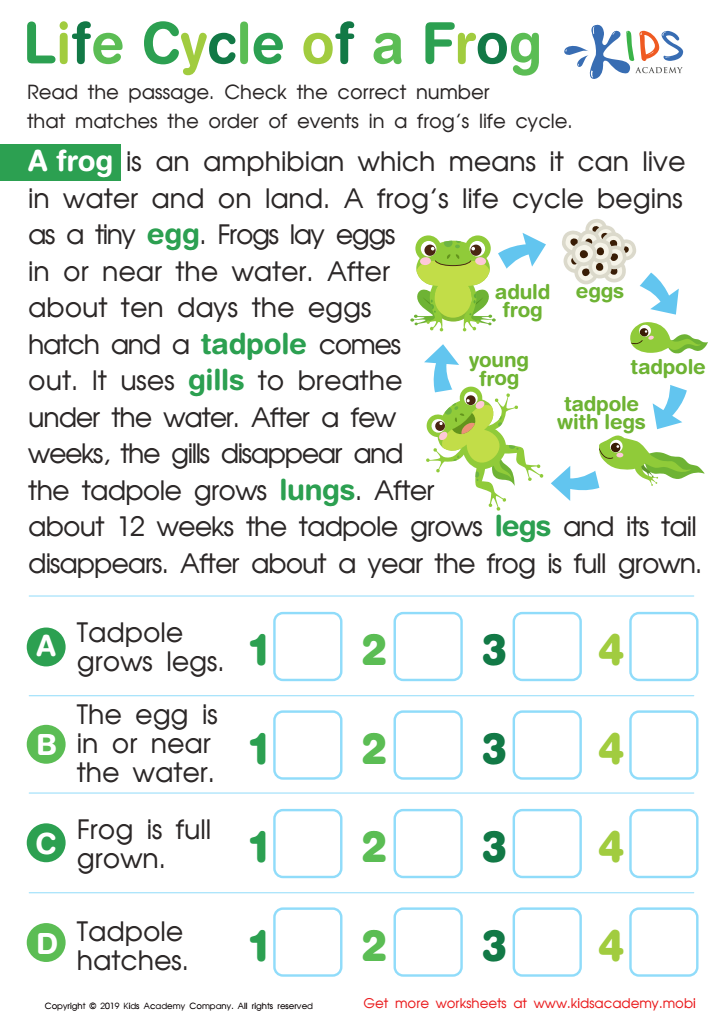
Life Cycle of a Frog Worksheet
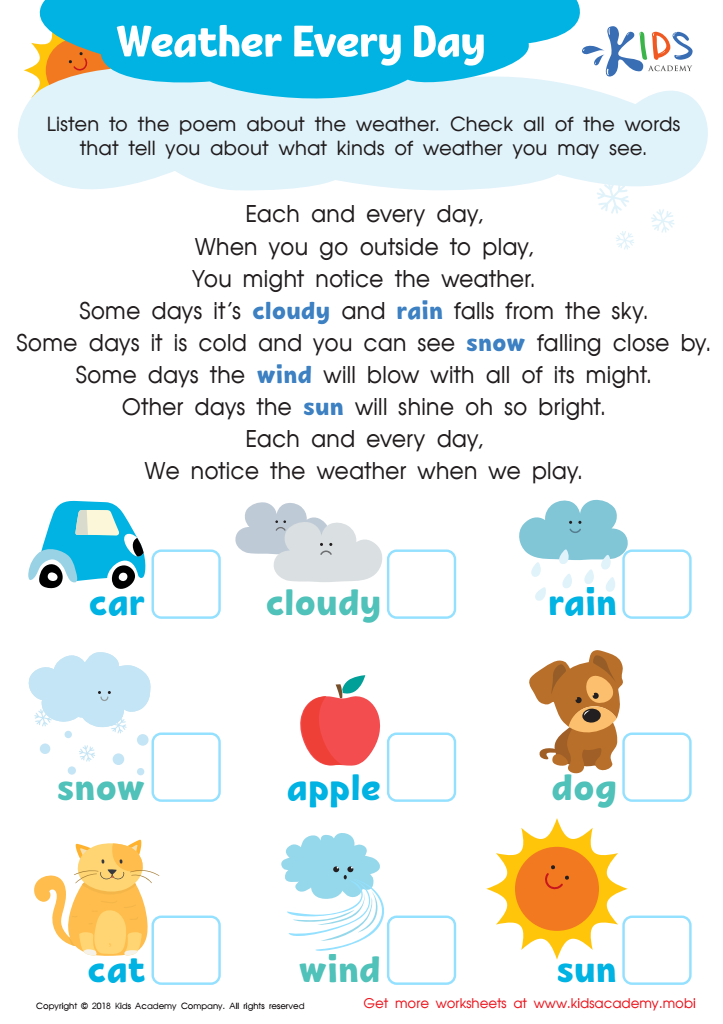
Weather Every Day Worksheet
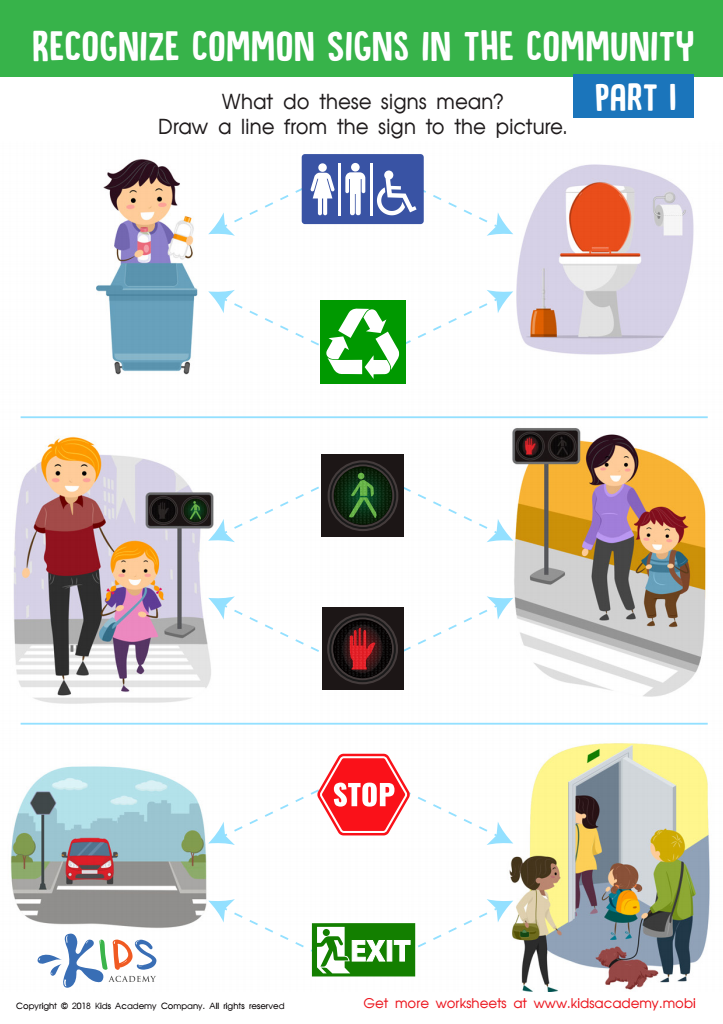
Recognize Common Signs: Part 1 Worksheet
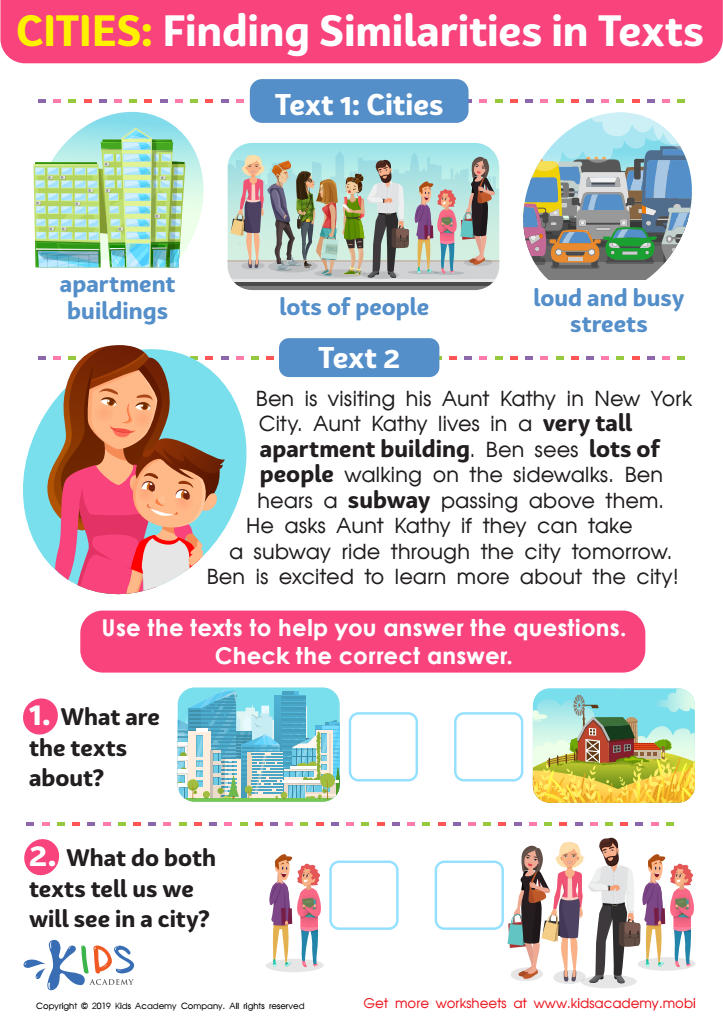
Cities: Finding Similarities Worksheet








Enhancing observation skills in children ages 4-7 is crucial for their overall cognitive and social development. Parents and teachers should prioritize this because these formative years are when children’s brains are highly receptive to learning and absorbing information from their environment.
First, strong observation skills lay the foundation for academic success. Observant children are better at noticing details, which aids in reading comprehension, mathematical problem-solving, and scientific inquiry. They learn to distinguish between similarities and differences, patterns, and sequences, which are critical thinking skills needed for all future learning.
Second, observation skills enrich children’s social development by helping them understand non-verbal cues and contextual clues in social interactions. This understanding fosters empathy, improves communication, and helps them adapt their behavior according to different social contexts.
Third, cultivating these skills early builds curiosity and encourages self-directed learning. Children learn to ask questions and seek out answers, making them more engaged and active learners.
Lastly, enhanced observation skills promote safety. Children who are keenly aware of their surroundings are less likely to engage in risky behaviors because they can recognize potential dangers.
In summary, enhancing observation skills in young children supports academic achievement, social competency, intrinsic motivation to learn, and personal safety, providing a robust foundation for future success.








