Mental arithmetic Easy Worksheets for Ages 4-7
3 filtered results
-
From - To
Discover our engaging "Mental Arithmetic Easy Worksheets for Ages 4-7," designed to foster young learners' math skills while keeping them entertained! Perfect for children in preschool and early elementary grades, these worksheets introduce essential counting, addition, and subtraction concepts through fun and interactive exercises. Ideal for both classroom and home use, our resources encourage children to develop critical thinking and problem-solving abilities at their own pace. Each worksheet blends creativity with education, making math enjoyable for your little ones. Watch as your child gains confidence and proficiency in mental arithmetic, laying a strong foundation for their future learning journey!
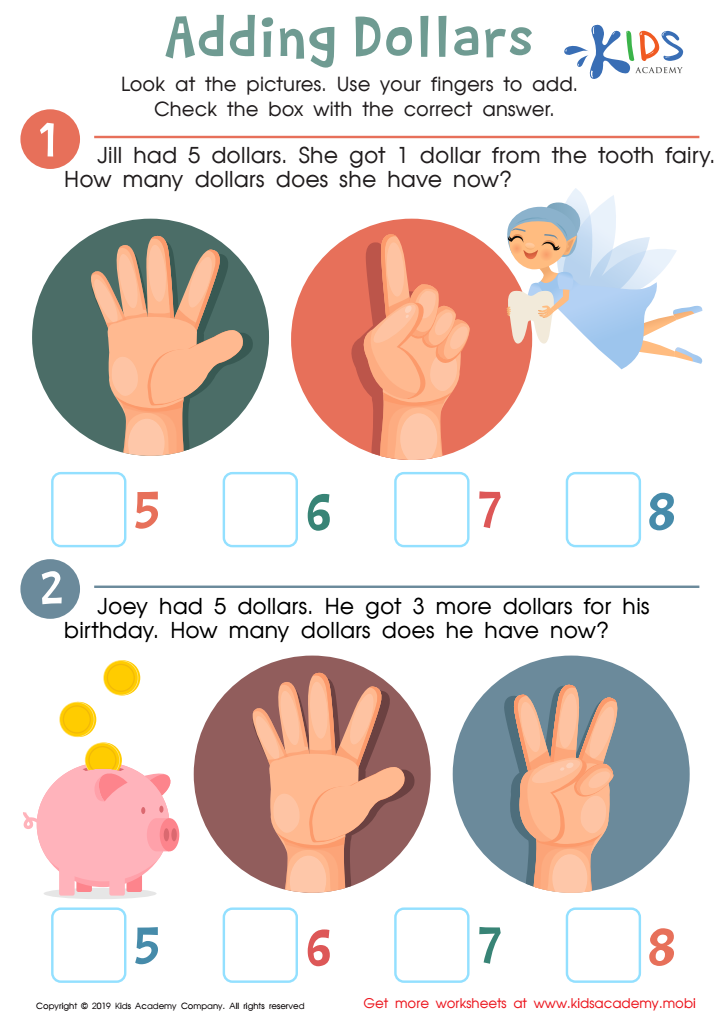
Tooth Fairy Addition Worksheet
 Assign to My Students
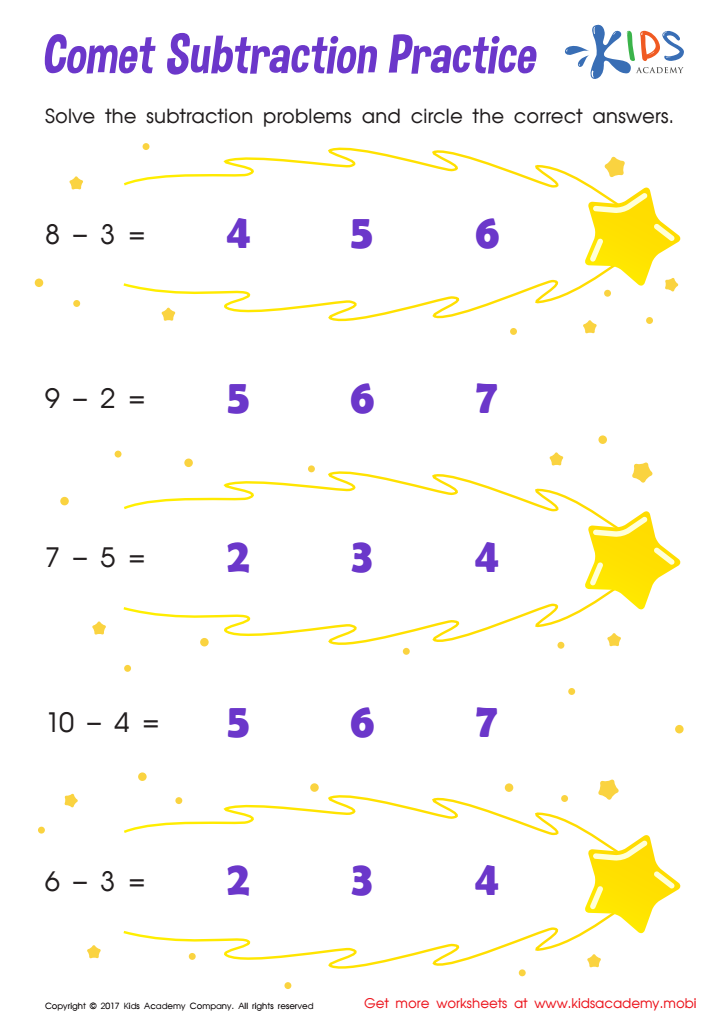
Comet Subtraction Practice Substraction Worksheet
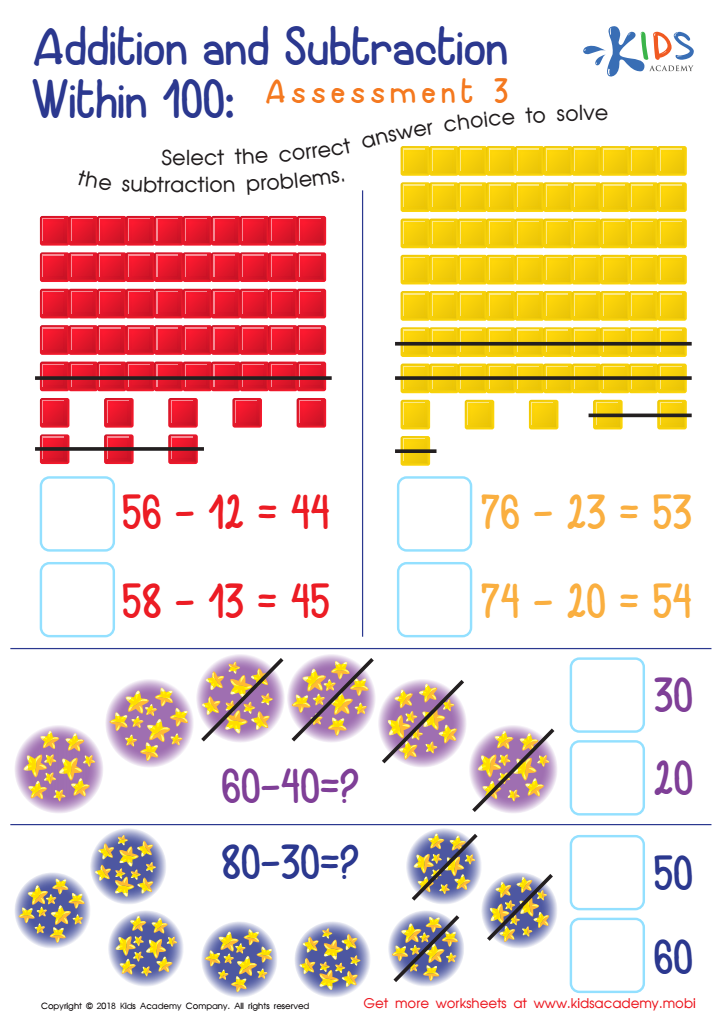
Addition and Subtraction Within 1: Assessment 3 Worksheet








Mental arithmetic is a crucial skill for children aged 4-7, serving as a foundation for their numerical understanding and overall academic success. Parents and teachers should care about this developmental area for several reasons.
Firstly, early math skills help build confidence in young learners. Mastering basic arithmetic concepts, like addition and subtraction, gives children a sense of achievement and enthusiasm for learning, which boosts their confidence in other subjects as well.
Secondly, mental arithmetic fosters critical thinking and problem-solving abilities. When children practice calculating numbers in their heads, they learn to approach problems systematically and develop logical reasoning skills that are useful beyond mathematics.
Moreover, engaging students with mental math activities can enhance their memory and concentration. As children learn to retain and manipulate numbers mentally, they strengthen their cognitive functions, which have wide-reaching implications for their education.
Finally, incorporating activities of mental arithmetic into a child’s routine promotes a positive attitude toward mathematics. By making learning fun and interactive, parents and teachers can lay the groundwork for a lifelong appreciation of math, preparing children for future academic challenges and real-world financial literacy. Investing in this skill ensures kids develop resilient, capable learning habits from a young age.








