Understanding opposites Easy Worksheets for Ages 4-7
4 filtered results
-
From - To
Explore our engaging "Understanding Opposites Easy Worksheets" designed specifically for children ages 4-7! These worksheets are a fun and interactive way for young learners to grasp the concept of opposites. Through colorful illustrations and relatable examples, students will develop their vocabulary and critical thinking skills while recognizing pairs such as hot/cold, big/small, and more. Ideal for both classroom and home use, these worksheets provide a great supplement to early education. Foster your child’s comprehension and make learning enjoyable with our thoughtfully crafted materials. Get started today and help your child master the world of opposites!
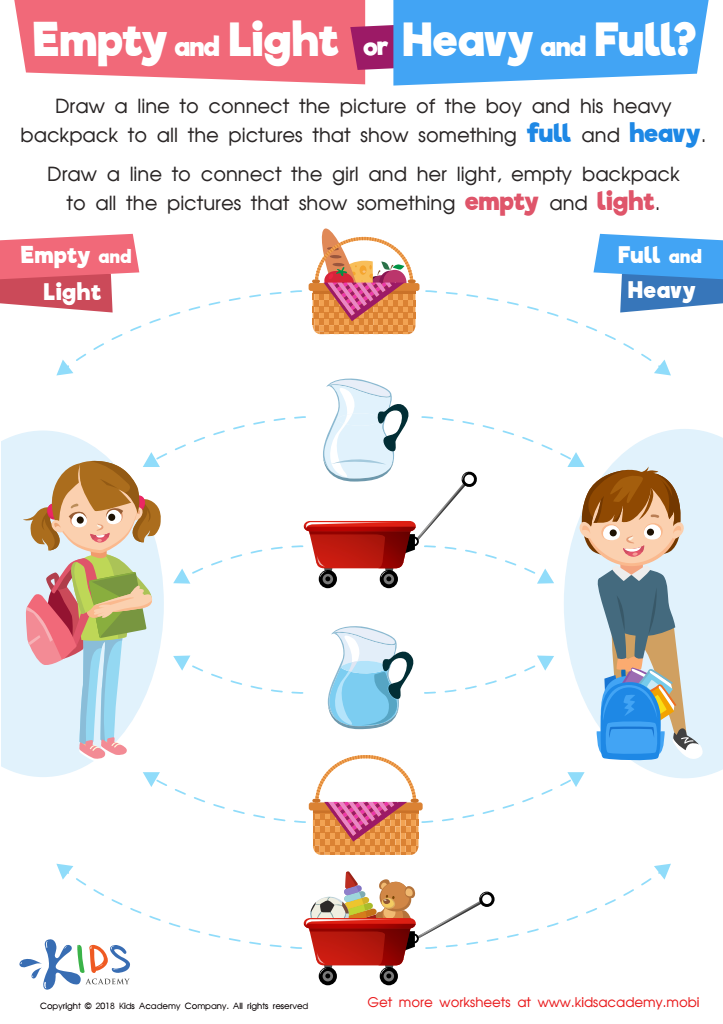
Empty and Light or Heavy and Full? Worksheet
 Assign to My Students
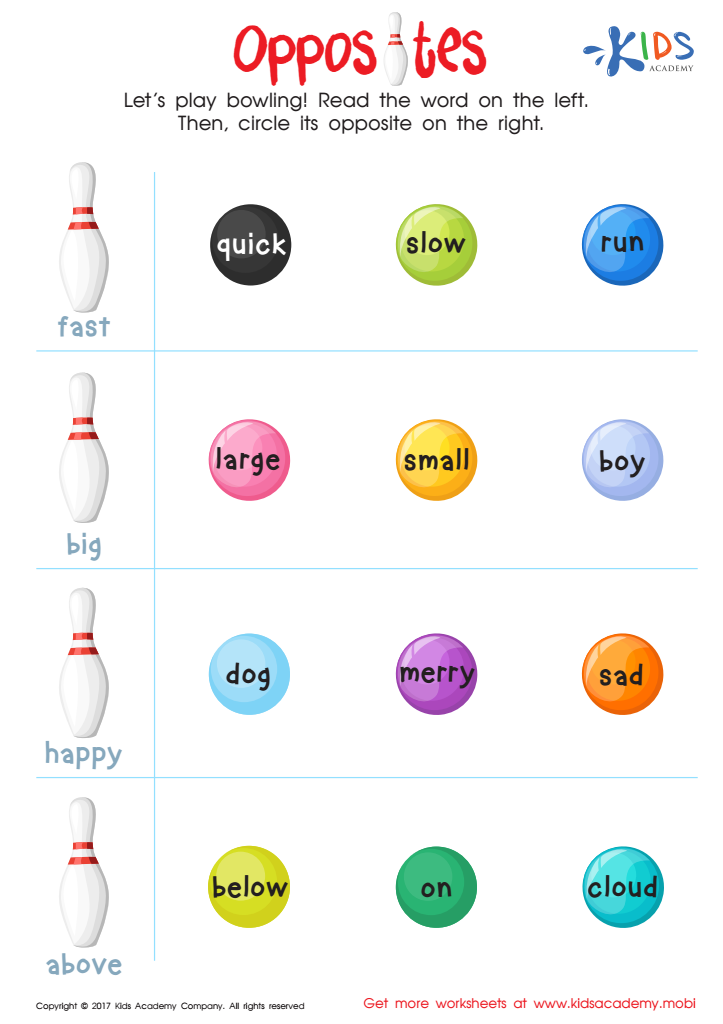
Opposites Worksheet
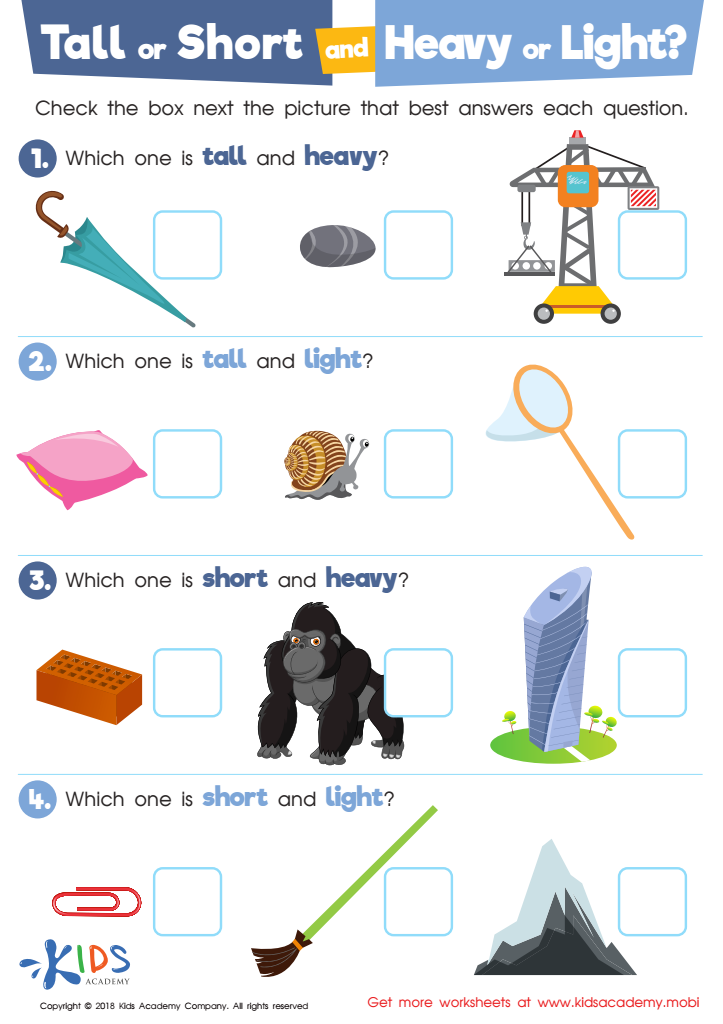
Tall or Short and Heavy or Light? Worksheet
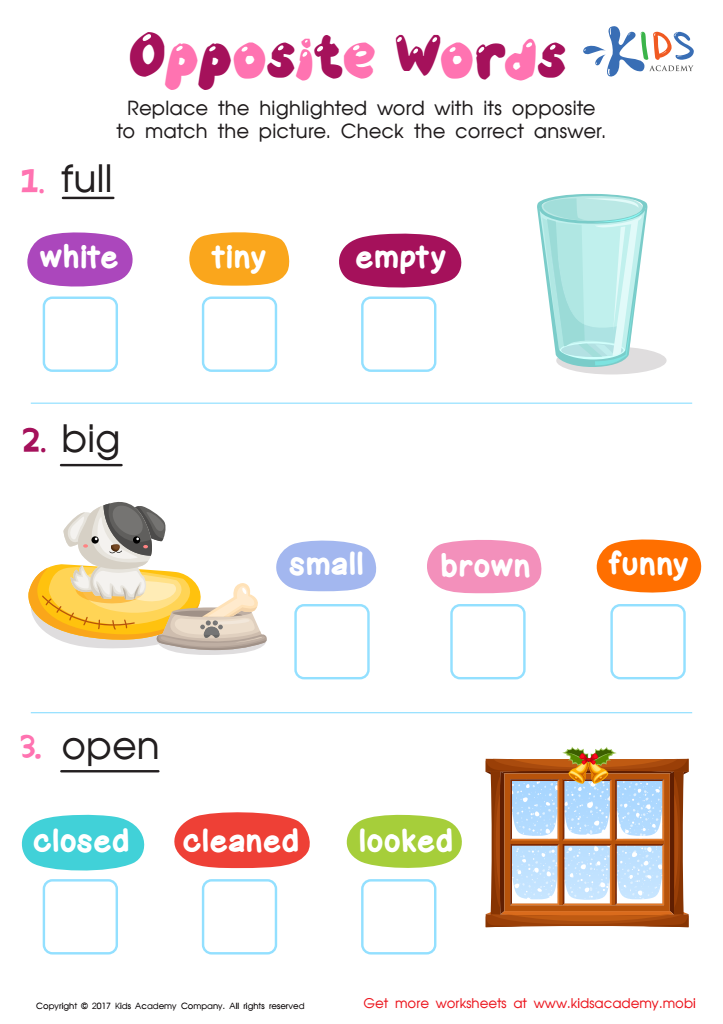
Opposite Words Worksheet






Understanding opposites is vital for children ages 4-7 as it enhances their cognitive and linguistic skills. At this stage, children are at a critical developmental phase, and grasping the concept of opposites helps them to make sense of the world around them. For example, knowing that "hot" is the opposite of "cold" helps them understand temperature differences, while recognizing "big" versus "small" aids in spatial awareness and comparison.
From a linguistic perspective, learning opposites enriches vocabulary. When children understand that words can have contrasting meanings, it fosters better communication skills and encourages them to express their thoughts more clearly. This development supports literacy as they begin to read and comprehend stories that often incorporate oppositional concepts to convey themes and characters.
Moreover, learning about opposites promotes critical thinking. It encourages children to categorize and differentiate, which is essential for more complex problem-solving later on. It also aids in social-emotional development, as children learn to navigate feelings by contrasting emotions like happy/sad. Overall, emphasizing opposites in learning is essential for providing a well-rounded foundation that benefits children in various aspects of their growth and learning.








