Cognitive Development Easy Addition & Subtraction Worksheets for Ages 4-7
4 filtered results
-
From - To
Discover our "Cognitive Development Easy Addition & Subtraction Worksheets" designed specifically for children ages 4 to 7. These engaging worksheets provide a fun and interactive way to strengthen essential math skills while promoting cognitive growth. Each worksheet aims to reinforce number concepts, problem-solving abilities, and critical thinking through age-appropriate exercises. Perfect for parents and educators alike, these resources will support early learners in mastering basic addition and subtraction in a playful manner. Enhance your child’s math competence and watch them thrive academically with our thoughtfully designed activities that nurture both their cognitive and numerical skills. Start exploring today!
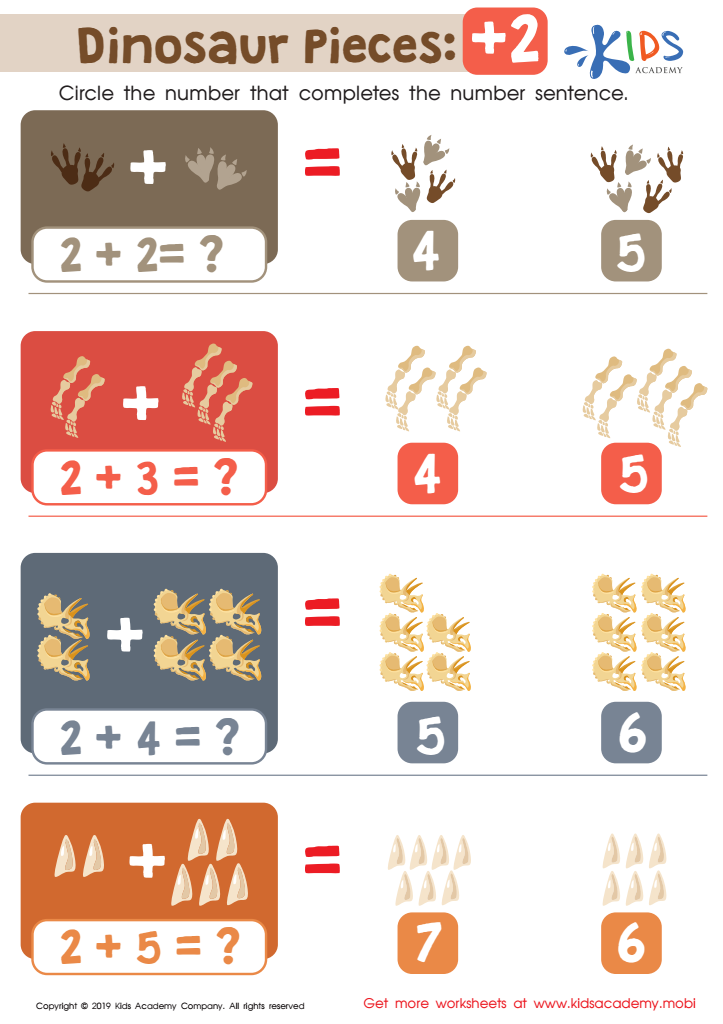
Dinosaur Pieces: +2 Worksheet
 Assign to My Students
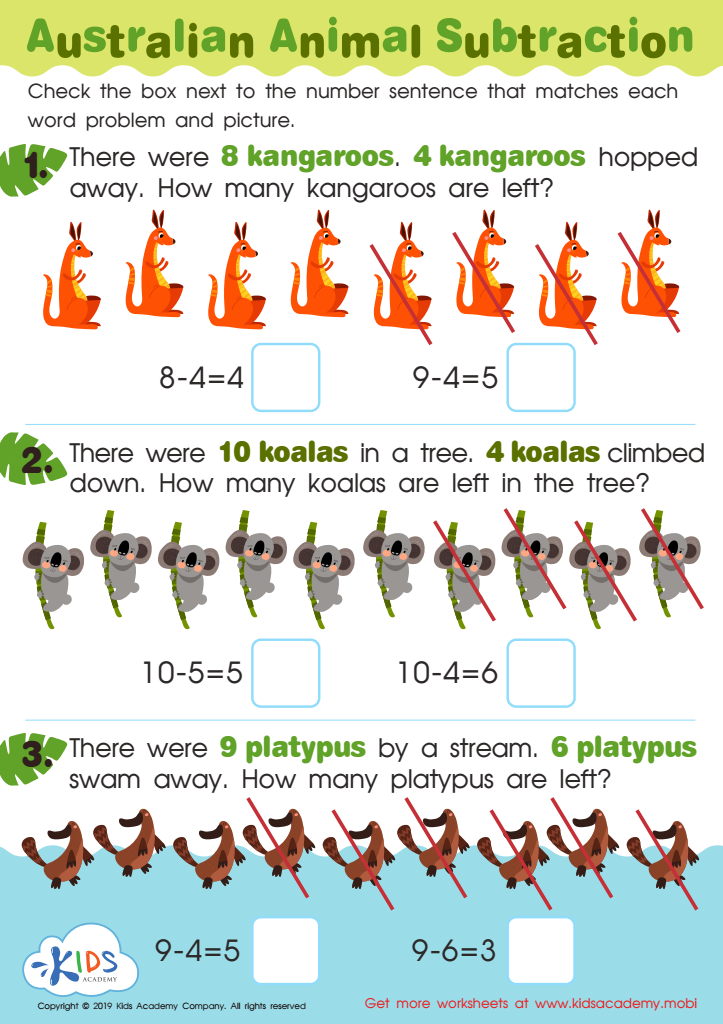
Australian Animal Subtraction Worksheet
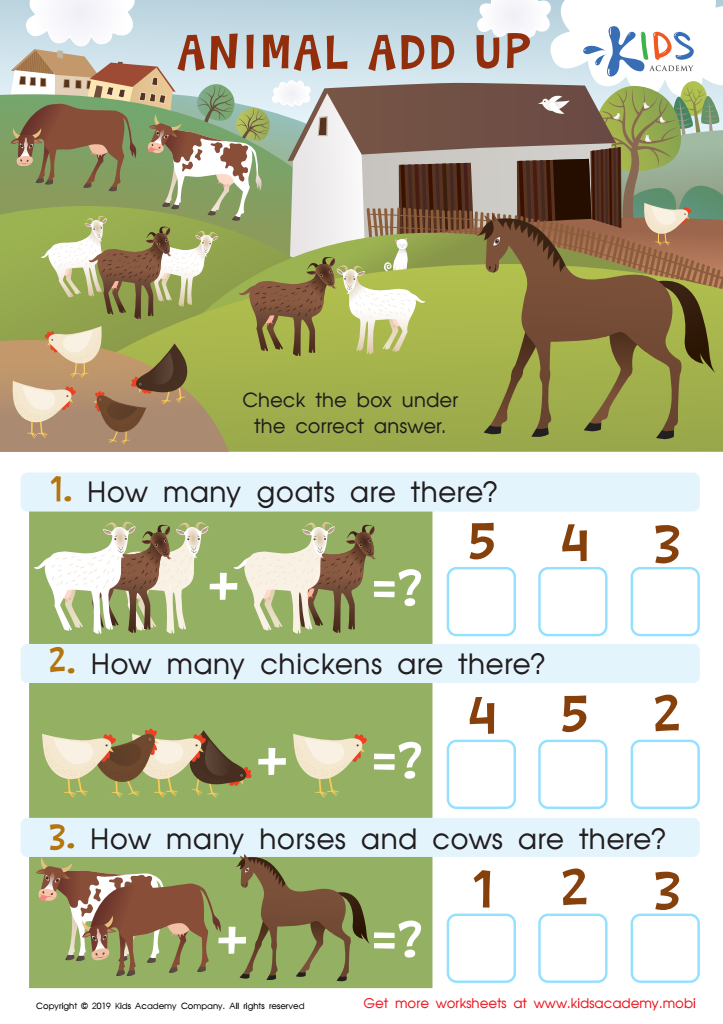
Animal Add Up Worksheet
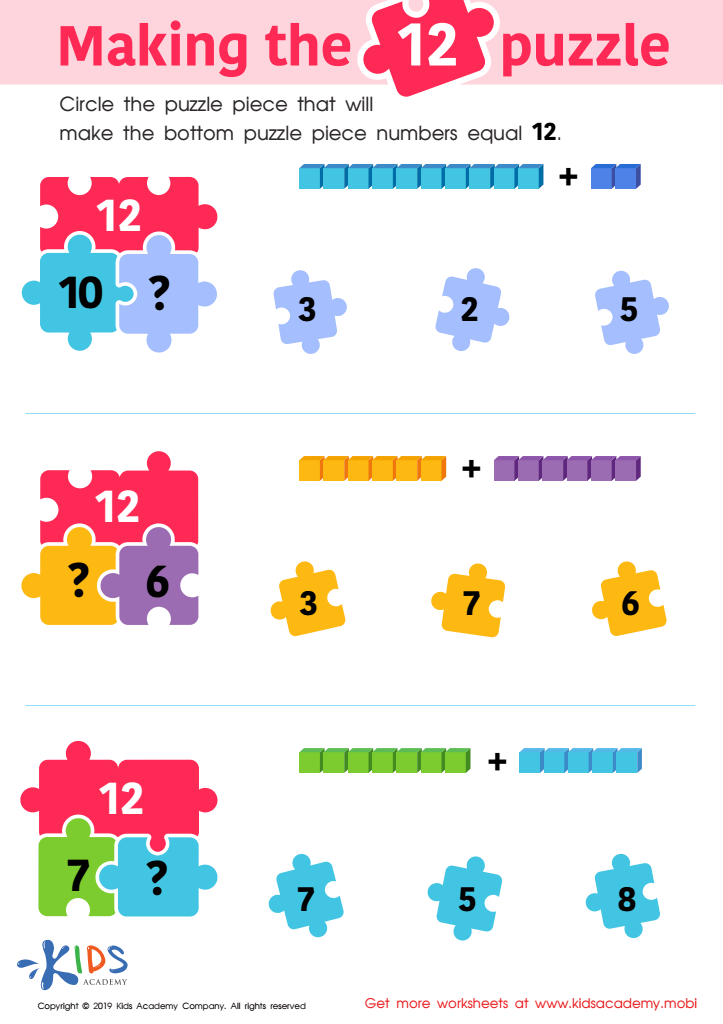
Making the 12 Puzzle Worksheet








Cognitive development during early childhood is crucial for building a strong foundation in mathematics, specifically in skills related to easy addition and subtraction for children aged 4-7. During this stage, children's brains undergo significant growth, enhancing their ability to think logically, solve problems, and understand abstract concepts. Engaging with basic arithmetic helps cultivate these cognitive abilities.
Parents and teachers should prioritize teaching addition and subtraction at this age because mastery of these skills plays a pivotal role in later academic success. Developing numeracy skills supports not only mathematics but also strengthens critical thinking and reasoning skills applicable across various subjects. Furthermore, early engagement with math fosters confidence, encourages a positive attitude towards learning, and helps children recognize the relevance of math in everyday life.
Moreover, activities that enhance cognitive development in math instill perseverance as children learn to overcome challenges and work through problems. Early exposure to these concepts can motivate students and prevent math anxiety, paving the way for a lifelong appreciation of mathematics. By investing in children's cognitive and mathematical development now, parents and teachers prepare them for future success both in school and in their daily lives.








