Understanding Quantities Easy Numbers Worksheets for Ages 4-7
3 filtered results
-
From - To
Welcome to our "Understanding Quantities Easy Numbers Worksheets" tailored for children aged 4-7! These engaging worksheets are designed to help young learners grasp the concept of quantities through interactive and fun activities. Each worksheet features colorful illustrations and age-appropriate challenges that make learning about numbers enjoyable. Children will develop essential skills such as counting, comparing quantities, and recognizing number relationships in a playful, stress-free environment. Perfect for parents, teachers, or caregivers, these resources will support early childhood education and foster a love for math. Start exploring our worksheets today and watch your child thrive in understanding quantities!
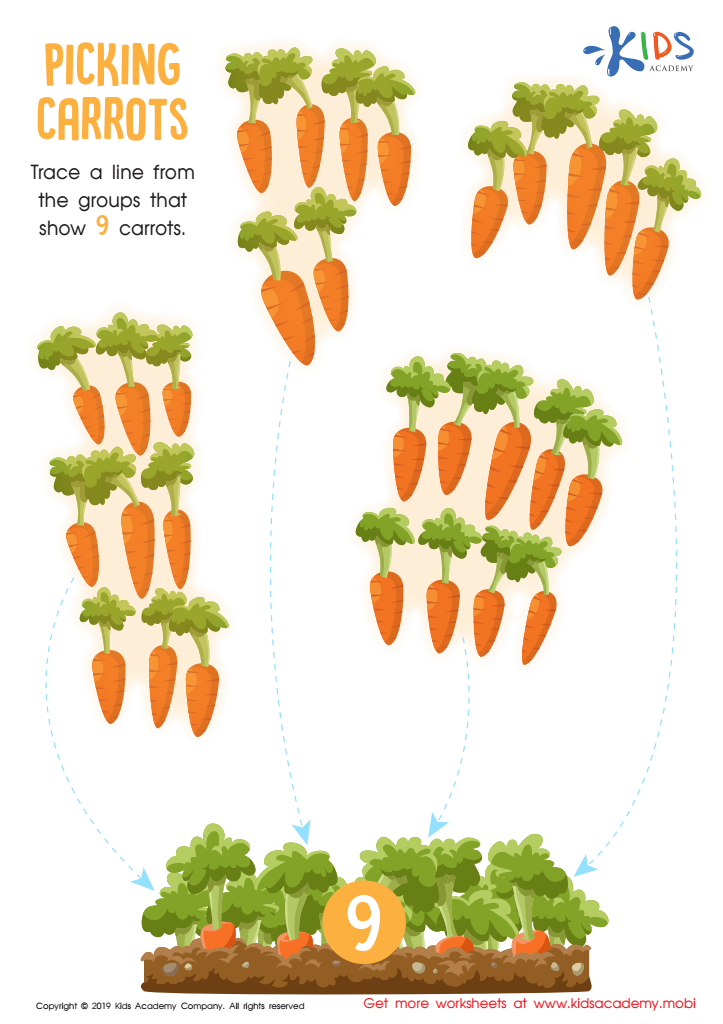
Picking Carrots Worksheet
 Assign to My Students
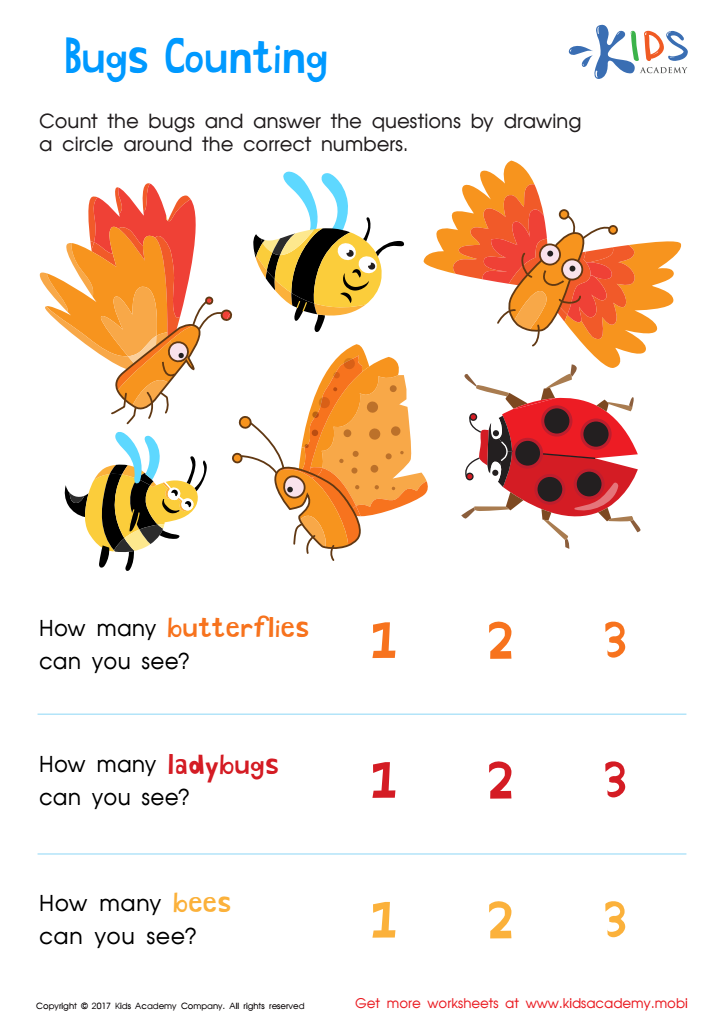
Bugs Counting Worksheet
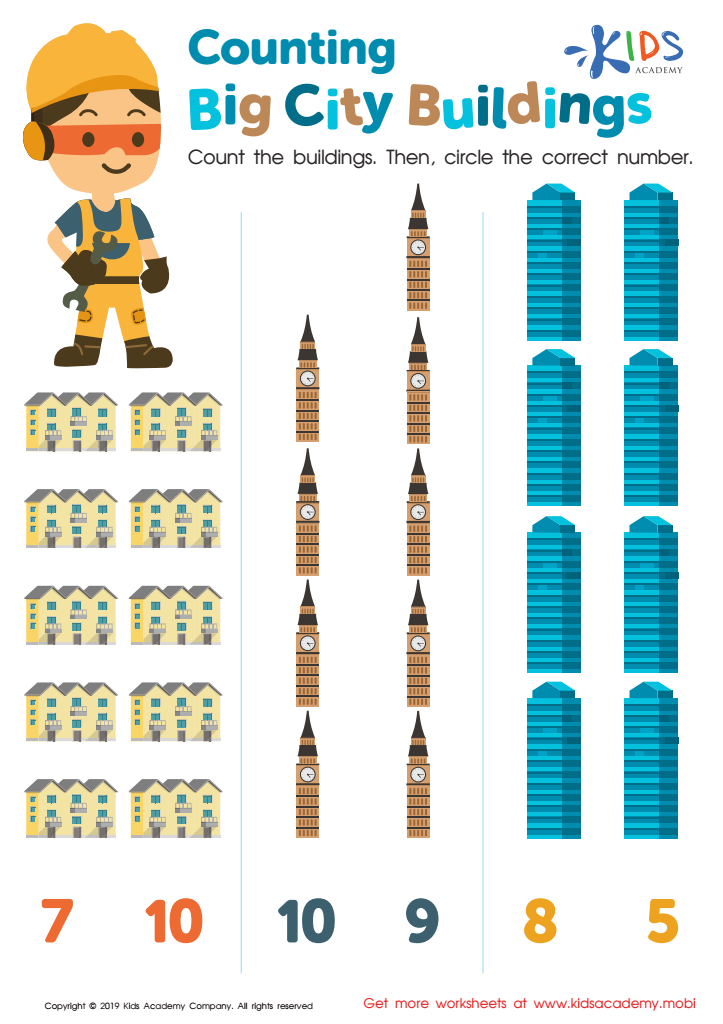
Counting Big City Buildings Worksheet








Understanding quantities and easy numbers is crucial for children aged 4-7, as it sets the foundational skills necessary for their mathematical and overall cognitive development. At this age, children are naturally curious and learn effectively through hands-on experience. Teaching them about quantities helps them recognize and differentiate between numbers, fostering a sense of numeracy that is vital for more complex math concepts later on.
Engaging with quantities enhances critical thinking and problem-solving skills, encouraging children to explore relationships between numbers in practical contexts, such as grouping objects or counting items. It also supports language development, as children learn vocabulary related to numbers and quantities, like "more," "less," "equal," and "count."
For parents and teachers, fostering an understanding of quantities can significantly impact children’s confidence in math, making the subject less intimidating as they grow. Additionally, these skills control behaviors and decision-making processes in daily life activities, from sharing snacks to understanding time and money. By recognizing the importance of easy numbers, parents and educators can effectively support children's mathematical growth, laying the ground for a robust educational trajectory and lifelong learning habits.








