Understanding life cycles Easy Reading Comprehension Worksheets for Ages 4-7
3 filtered results
-
From - To
Introduce young learners to the fascinating world of life cycles with our "Understanding Life Cycles" Easy Reading Comprehension Worksheets for ages 4-7. Designed to inspire curious minds, these engaging worksheets help kids explore the stages of growth and development in plants, animals, and insects. Each activity is thoughtfully crafted to combine fun and learning, enhancing reading comprehension skills while teaching valuable scientific concepts. Ideal for both classroom and home use, our worksheets build foundational knowledge through interactive exercises and vivid illustrations, fostering a love for reading and science in every young reader. Start their discovery journey today!
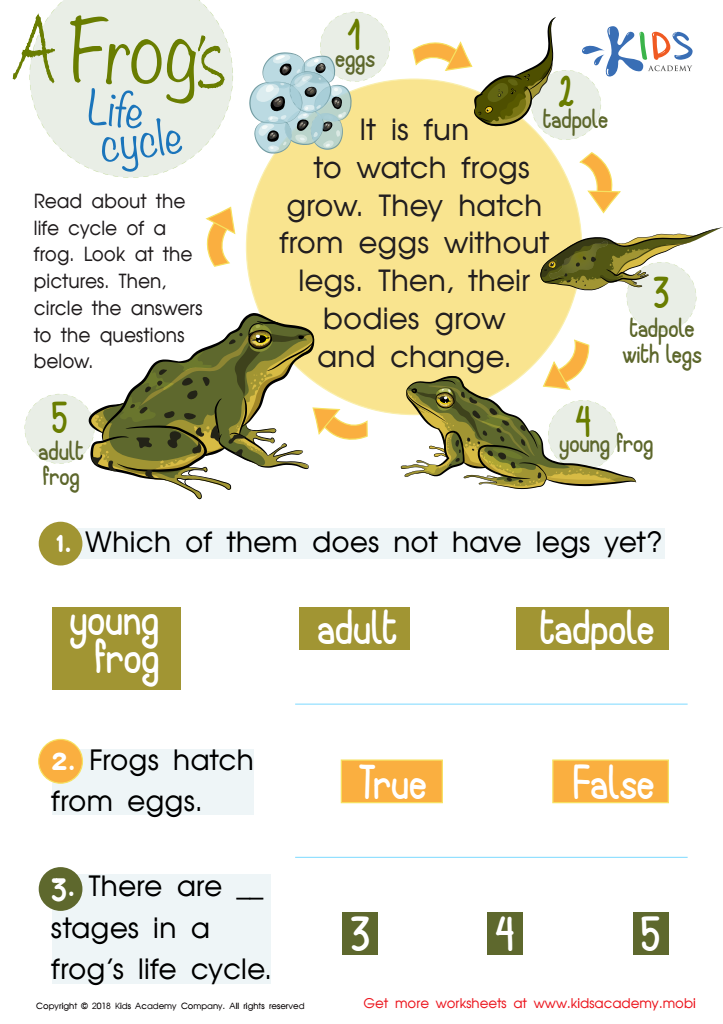
A Frog’s Life Cycle Worksheet
 Assign to My Students
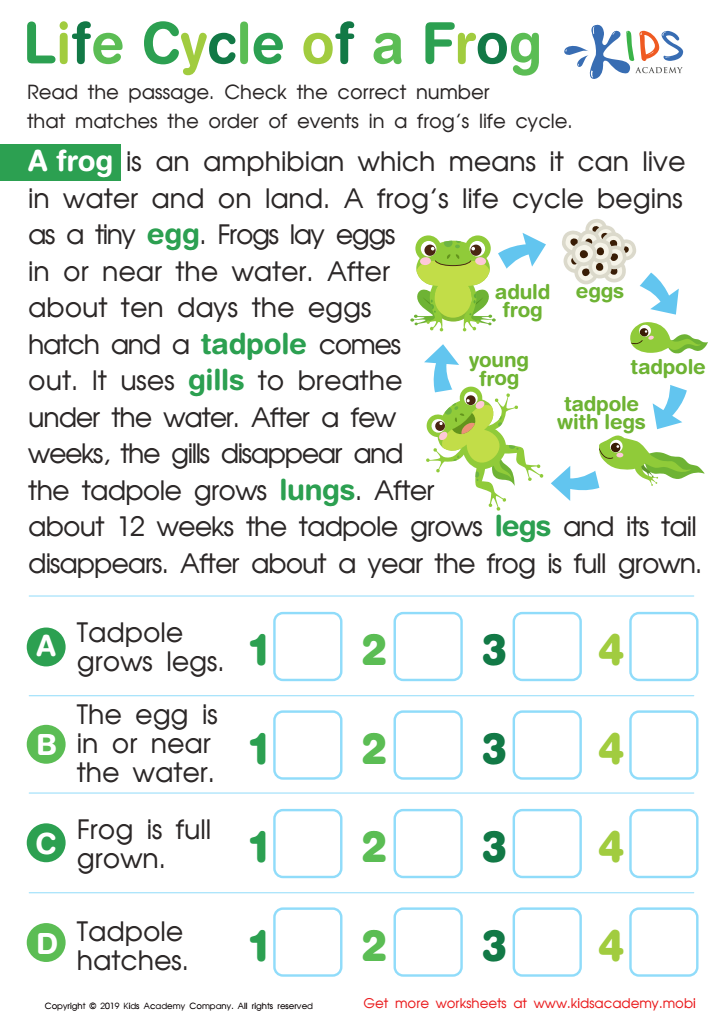
Life Cycle of a Frog Worksheet
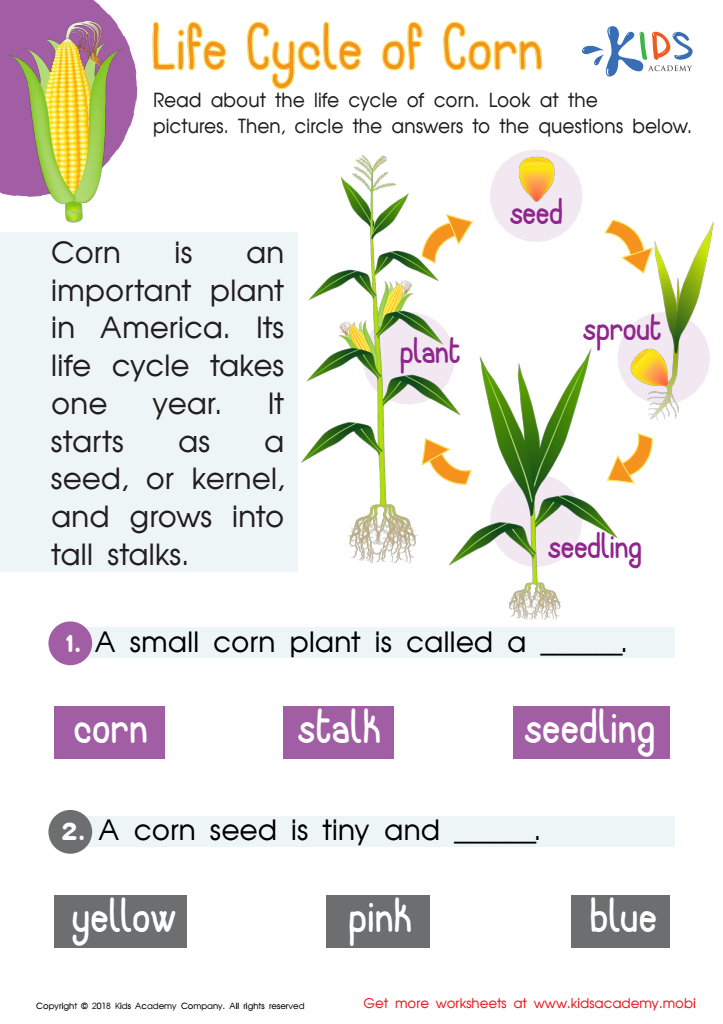
Life Cycle of Corn Worksheet








Understanding life cycles is an essential concept for young children because it lays the foundation for scientific literacy and helps them appreciate the natural world. For parents and teachers, emphasizing life cycles in early education is crucial because it enhances curiosity, comprehension, and connectivity with nature. When children learn about how butterflies emerge from caterpillars or how plants grow from seeds, they begin to grasp the concept of growth, change, and transformation in their environments.
Life cycles are relatable and observable, making them ideal for engaging young minds. When children see flowers bloom in the garden or chick hatch from eggs, they witness firsthand the processes of development and renewal. This understanding fosters a sense of wonder and encourages children to ask questions and develop critical thinking.
Moreover, learning about life cycles complements reading comprehension. Engaging with stories and informational texts about the life cycles of different organisms improves vocabulary, reading skills, and knowledge recall—all while igniting their natural curiosity. Teaching life cycles to children ages 4-7 also supports emotional growth. Recognizing that all living things follow a life cycle could help them deal with concepts such as change and loss in a more nuanced way
For these reasons, parents and teachers should prioritize teaching life cycles in a manner that's accessible and exciting for young learners.