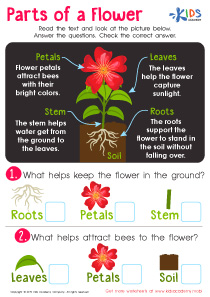
Story sequencing Easy Reading Fiction Worksheets for Ages 4-7
3 filtered results
Difficulty Level
Grade
Age
-
From - To
Subject
Activity
Standards
Discover our "Story Sequencing Easy Reading Fiction Worksheets" designed specifically for ages 4-7! These engaging and interactive worksheets help young learners develop crucial reading comprehension skills while enhancing their understanding of story structure. Children will practice sequencing events, identifying key details, and retelling stories in the correct order, all through colorful illustrations and age-appropriate narratives. Perfect for classroom activities or at-home practice, our worksheets aim to make learning fun and effective! Foster a love for reading in your child and provide them with the tools they need for success in literacy. Visit our website to start your child's reading adventure today!
Favorites
With answer key
Interactive
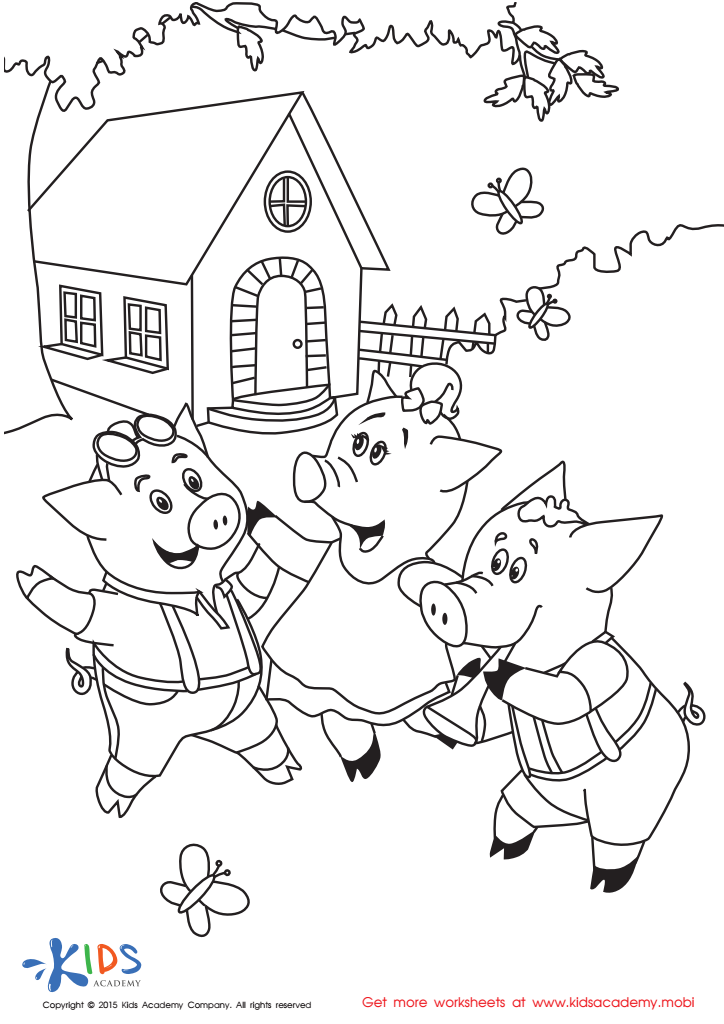
Folktales Printable PDF Worksheet: The 3 Little Pigs
Then, help your child to color the scene with pink piglets, blue sky and green grass. Make the brick house bright and vivid. Enjoy!
Download (PDF)
 Assign to My Students
Assign to My Students
Folktales Printable PDF Worksheet: The 3 Little Pigs
Worksheet
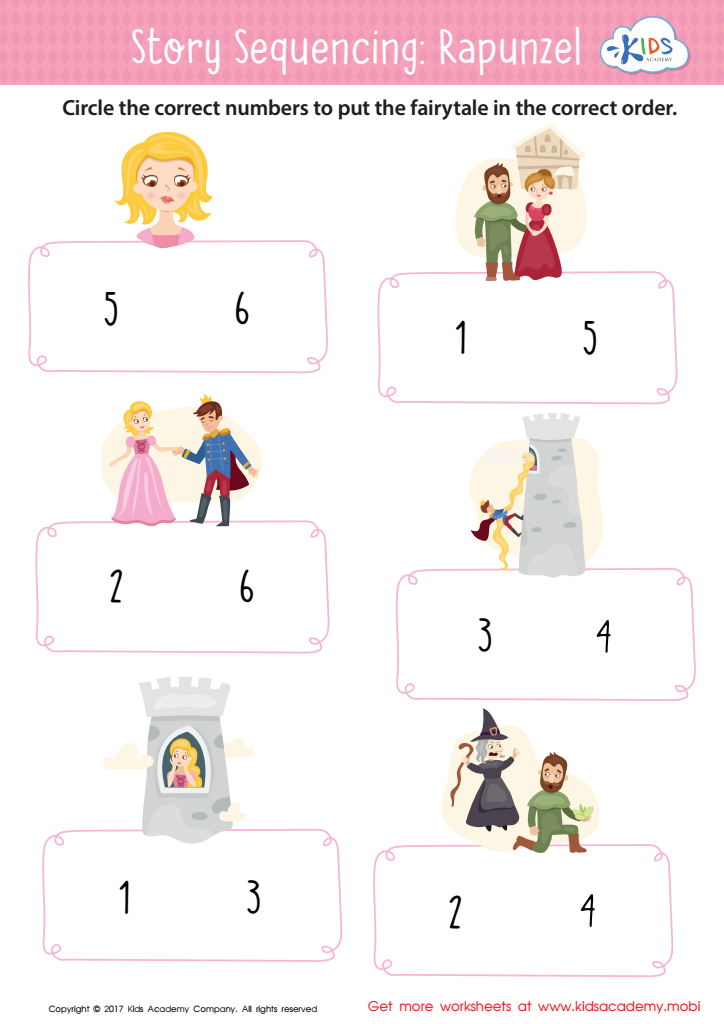
Rapunzel Story Sequencing Worksheet
Enhance your child's reading comprehension and help them sequence story events with this Rapunzel worksheet – it's thrilling and educational! Max 80 words.
Help your child develop their reading comprehension with this exciting Rapunzel story sequencing worksheet! Kids view pictures from the classic fairytale and number them in the right order, reinforcing their understanding of story events. Educational and entertaining!
Rapunzel Story Sequencing Worksheet
Worksheet
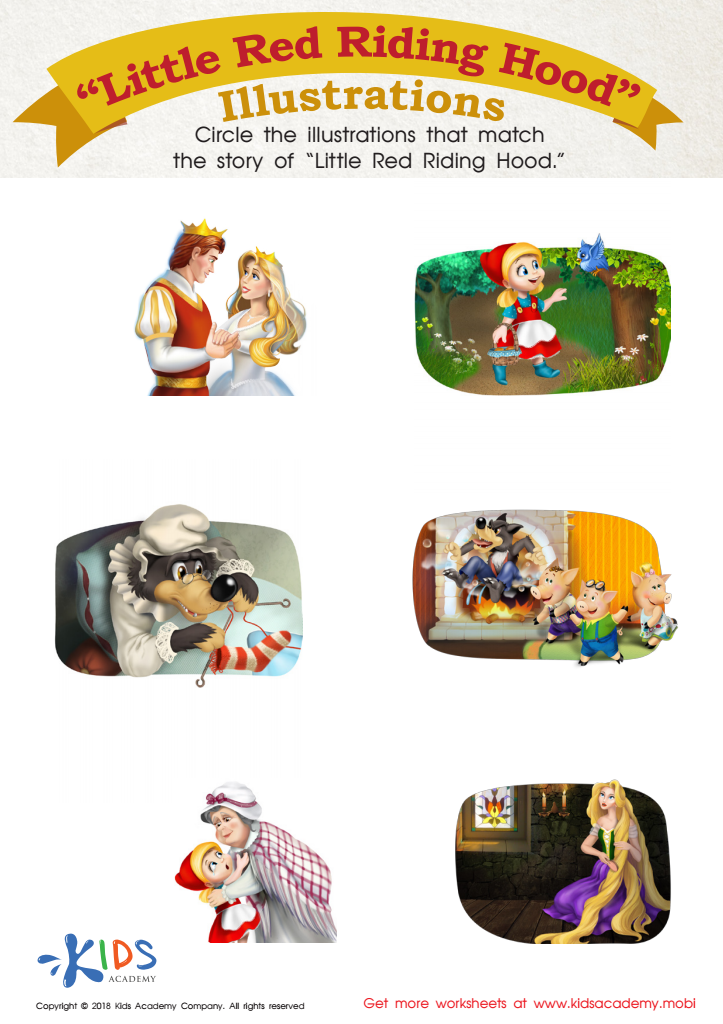
Little Red Riding Hood: Illustrations Worksheet
This worksheet encourages children to analyze illustrations from familiar fairy tales, such as Little Red Riding Hood, and decide which ones match the story and which don't. It's a great way to help them recall and retell stories they've heard or read. Illustrations are important elements that help children comprehend advanced readings.
Little Red Riding Hood: Illustrations Worksheet
Worksheet
Join Kids Academy for Free
Who is primarily going to use this learning content?



.jpg)




Story sequencing in easy reading fiction is essential for children aged 4-7 as it forms a foundational skill in developing their literacy and cognitive abilities. This age group is particularly receptive to narrative structures, making it an ideal time for introducing story sequencing. By engaging with sequenced stories, children learn to identify the beginning, middle, and end of a narrative, which enhances comprehension and retention.
Parents and teachers should care because sequencing reinforces critical thinking and organizational skills. Children learn to analyze events, understand cause and effect, and predict outcomes based on narrative progression. Additionally, story sequencing aids in vocabulary development as children become familiar with the vocabulary used in context and repetition.
Participating in story sequencing activities promotes collaboration between parents, teachers, and children, fostering a love for reading and storytelling. It serves as a gateway for children to express themselves, exercise creativity, and develop a sense of structure in their thought processes. Ultimately, by prioritizing story sequencing, adults contribute immensely to a child’s overall literacy development and experiential learning, laying a strong foundation for future academic success and lifelong skills in communication and comprehension.