Critical Thinking Easy Plants and Animals Worksheets for Ages 4-7
3 filtered results
-
From - To
Discover our "Critical Thinking Easy Plants and Animals Worksheets" designed specifically for children ages 4-7. These engaging resources aim to enhance young learners' understanding of the natural world, fostering curiosity and analytical skills. Young minds explore fascinating plant and animal facts through fun activities that challenge them to think critically and make connections. Perfect for classrooms or at-home learning, these worksheets are a valuable tool for developing foundational science skills. Stimulate your child's intellect and love for nature with age-appropriate, expertly crafted content that makes learning both enjoyable and educational.
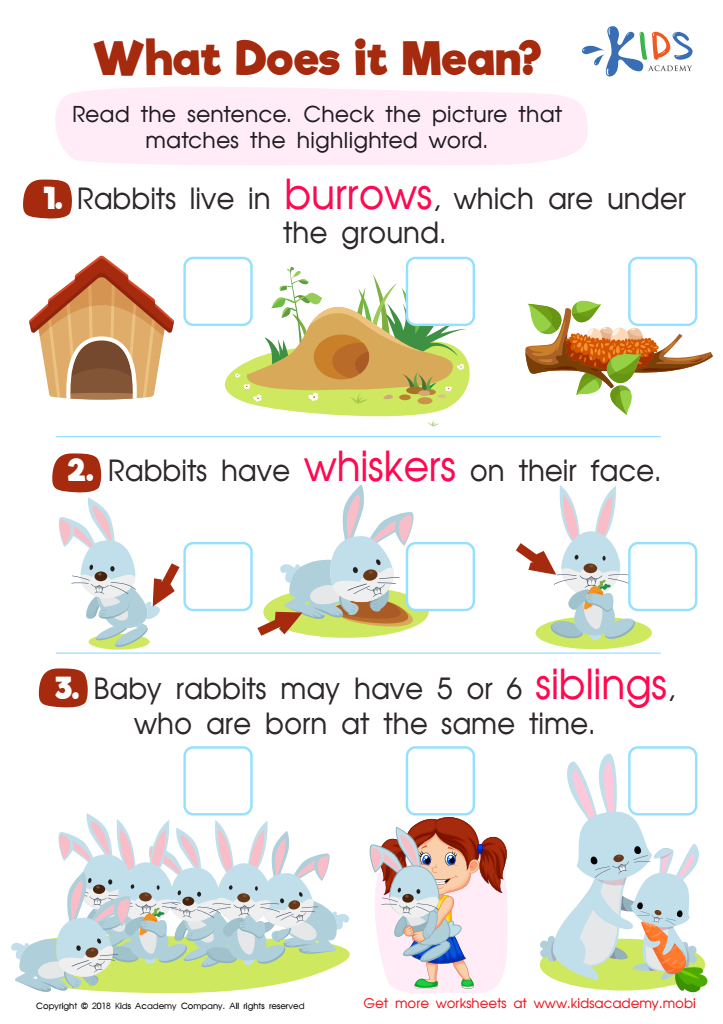
What Does It Mean? Worksheet
 Assign to My Students











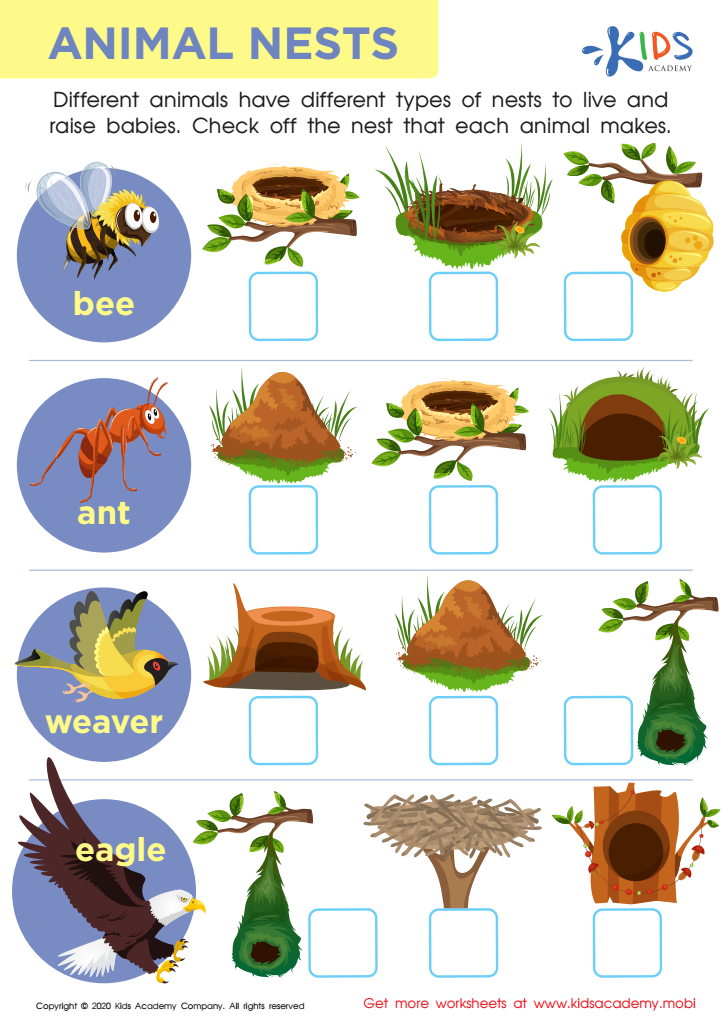
Animal Nests Worksheet
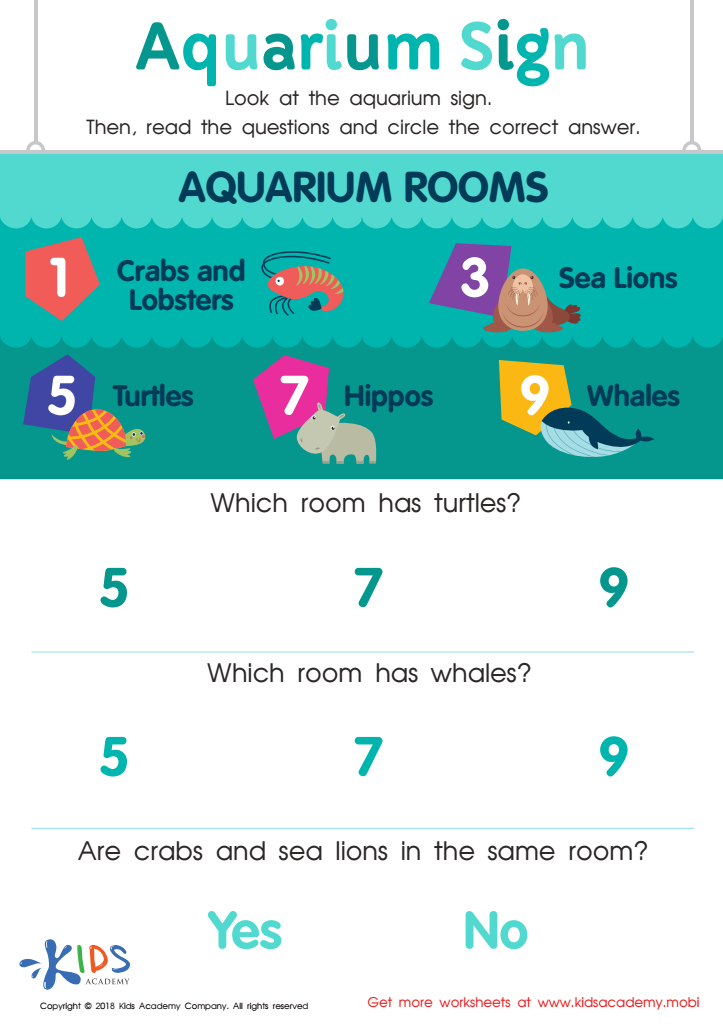
Assessment: Aquarium Sign Worksheet








Parents and teachers should care about fostering critical thinking skills in young children, particularly through engaging topics like plants and animals, because these skills form the foundation for lifelong learning and problem-solving. For ages 4-7, children are naturally curious and eager to explore the world around them. Introducing them to critical thinking through hands-on, relatable subjects such as plants and animals captivates their interest and encourages observational skills, asking questions, and making connections.
At this developmental stage, children start to understand the cause-and-effect relationships and basic logic, making it the perfect time to nurture their critical thinking abilities. Engaging with plants and animals helps children learn to classify and compare different species, understand life cycles, and appreciate biodiversity. These activities not only boost their academic knowledge but also enhance their cognitive flexibility and creative thinking.
Additionally, by fostering a sense of wonder and encouraging critical inquiry about the natural world, parents and teachers can help children develop empathy and responsibility towards the environment. These concepts are crucial for shaping informed, thoughtful individuals who are capable of making reasoned decisions and solving complex problems in the future. Therefore, incorporating critical thinking skills into early education, using captivating topics like plants and animals, is invaluable for children’s overall development.