Color recognition Easy Color Words Worksheets for Ages 4-8
5 filtered results
-
From - To
Help your child learn and recognize colors with our "Color Recognition Easy Color Words Worksheets for Ages 4-8". Each engaging worksheet is designed to strengthen color identification and vocabulary through fun activities, ideal for early learners and ESL students. Your kids will love the vibrant images, matching exercises, and coloring tasks that make learning enjoyable. Perfect for classrooms or home use, these worksheets support essential skills in language development and visual discrimination. Promote confidence and academic success with our easy-to-use printable resources, tailored to enhance your child's educational journey.
Upgrade to paubox to unlock premium features
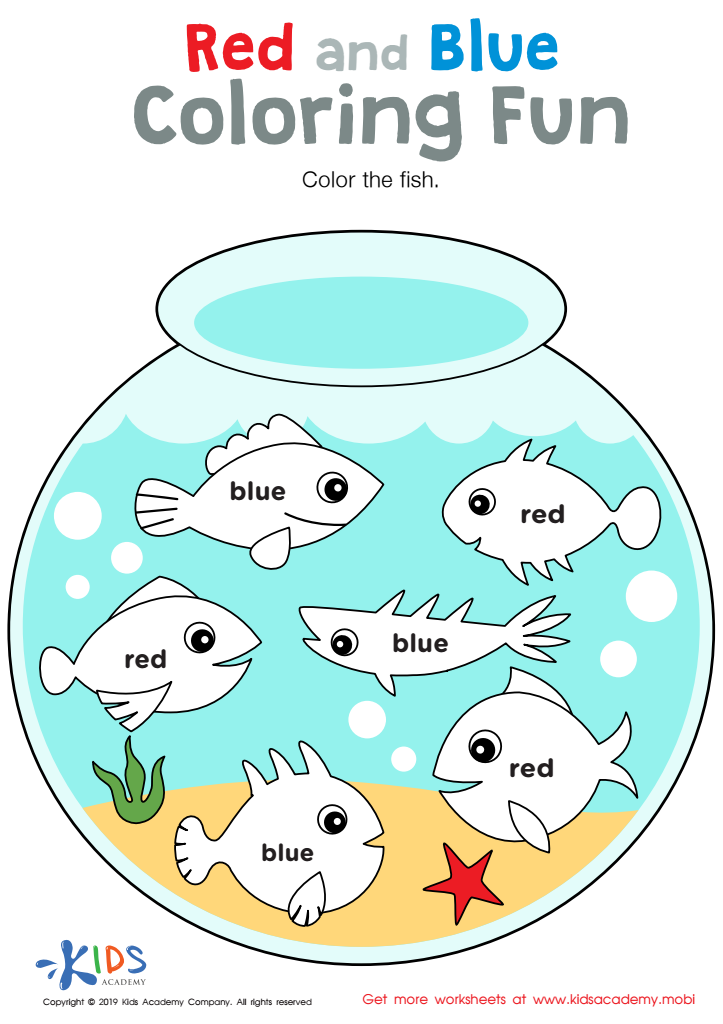
Red and Blue Coloring Fun Worksheet
 Assign to My Students
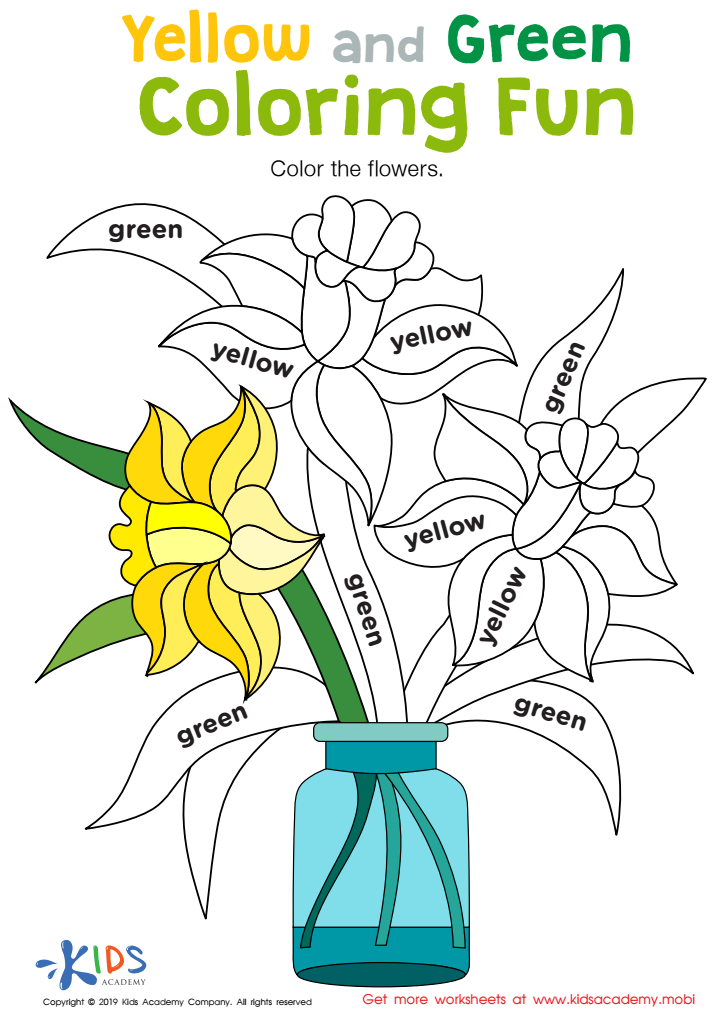
Yellow and Green Coloring Fun Worksheet
Assign to My Students
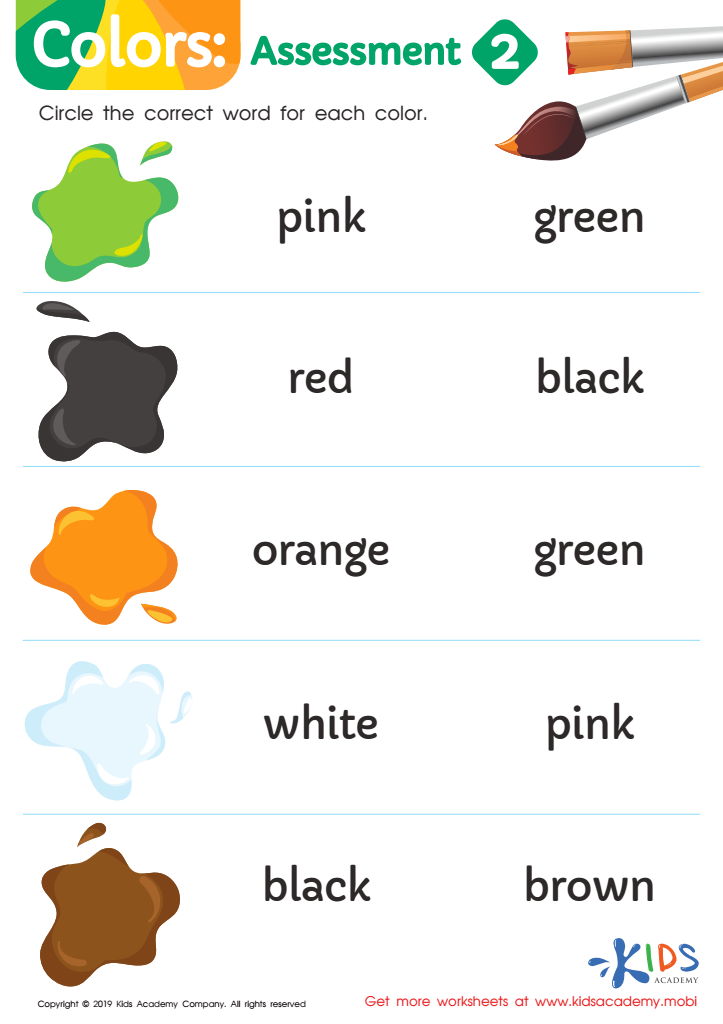
Colors: Assessment 2 Worksheet
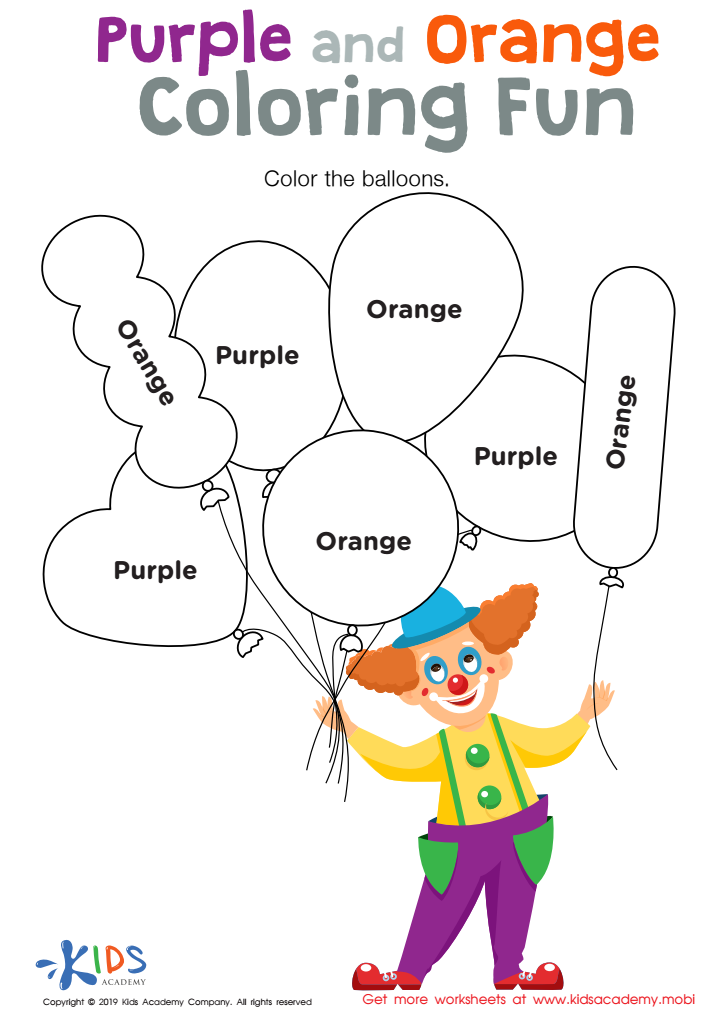
Purple and Orange Coloring Fun Worksheet
Assign to My Students
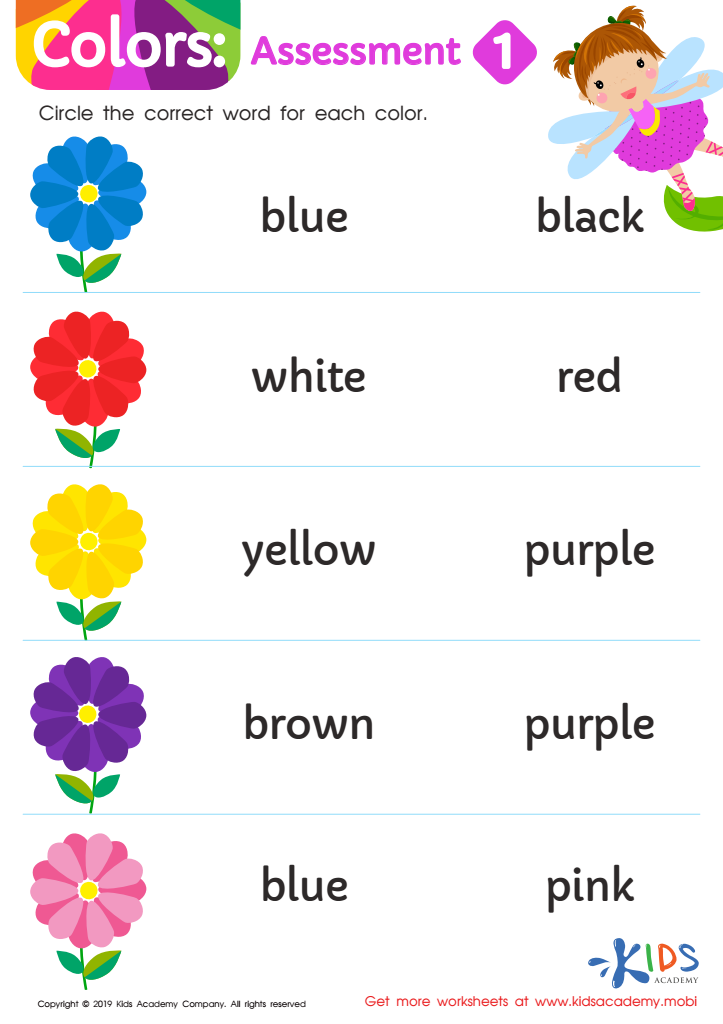
Colors: Assessment 1 Worksheet



Color recognition is a foundational skill with far-reaching implications for children's development, particularly for ages 4-8. Parents and teachers should prioritize this milestone because it not only enhances cognitive and language skills but also supports overall academic readiness. Identifying and naming colors enriches children's vocabulary, enabling them to better articulate their environment, emotions, and ideas. This skill boosts communication capabilities crucial for social interactions and future learning.
Additionally, color recognition exercises refine visual discrimination, aiding in distinguishing shapes, sizes, and patterns. Such perceptual skills are vital for tasks like reading and math, where distinguishing between different symbols and aligning them correctly is necessary. For instance, differentiating between similarly shaped letters and numbers (such as 'b' and 'd' or '6' and '9') becomes more manageable when children are adept at color differentiation.
Moreover, recognizing basic color words fosters early literacy. As children grasp simple color-based vocabulary, they build confidence and interest in learning more complex words. The ability to identify colors also aids in understanding and following instructions, as many directives in both classroom activities and daily life involve color-based cues.
In sum, nurturing color recognition skills equips children with cognitive, language, and perceptual tools that form the cornerstone of their educational journey and everyday experiences.








