Color recognition Easy Color Words Worksheets for Ages 6-9
5 filtered results
-
From - To
Enhance your child's color recognition skills with our engaging "Easy Color Words Worksheets," designed specifically for kids aged 6-9. These worksheets use vibrant visuals and simple activities to help young learners identify colors and associate them with everyday objects. By practicing color words through tracing, matching, and coloring exercises, children will not only improve their vocabulary but also boost their observation and cognitive abilities. Perfect for early grade teachers and parents alike, these accessible resources make learning fun and interactive, encouraging creativity and exploration. Download our worksheets today to give your child a colorful head start in their educational journey!
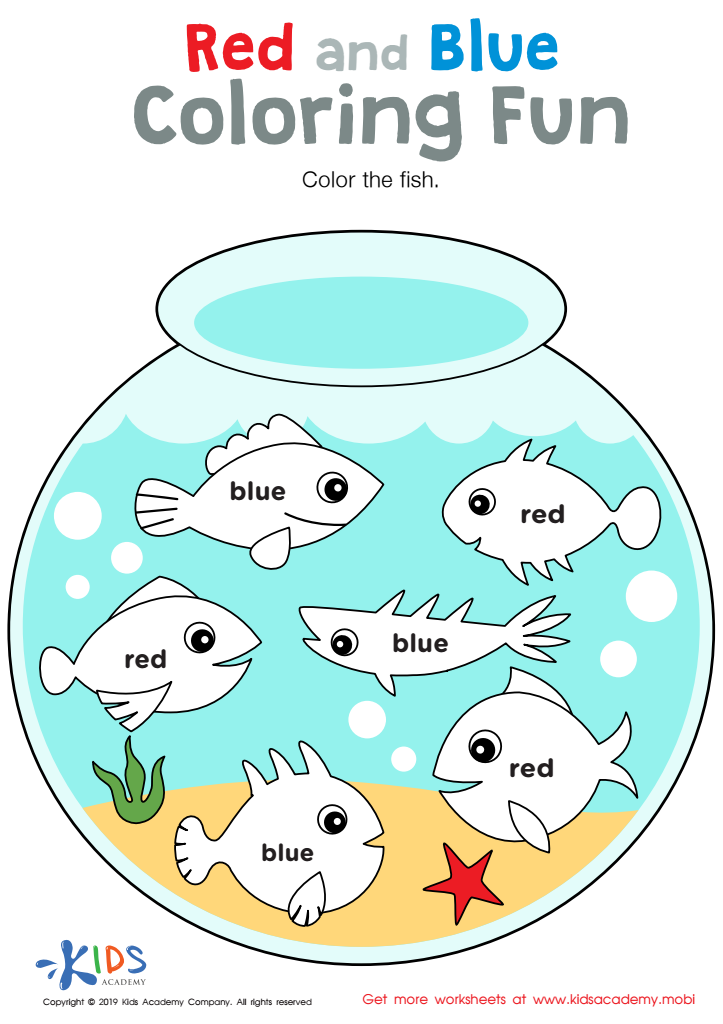
Red and Blue Coloring Fun Worksheet
 Assign to My Students
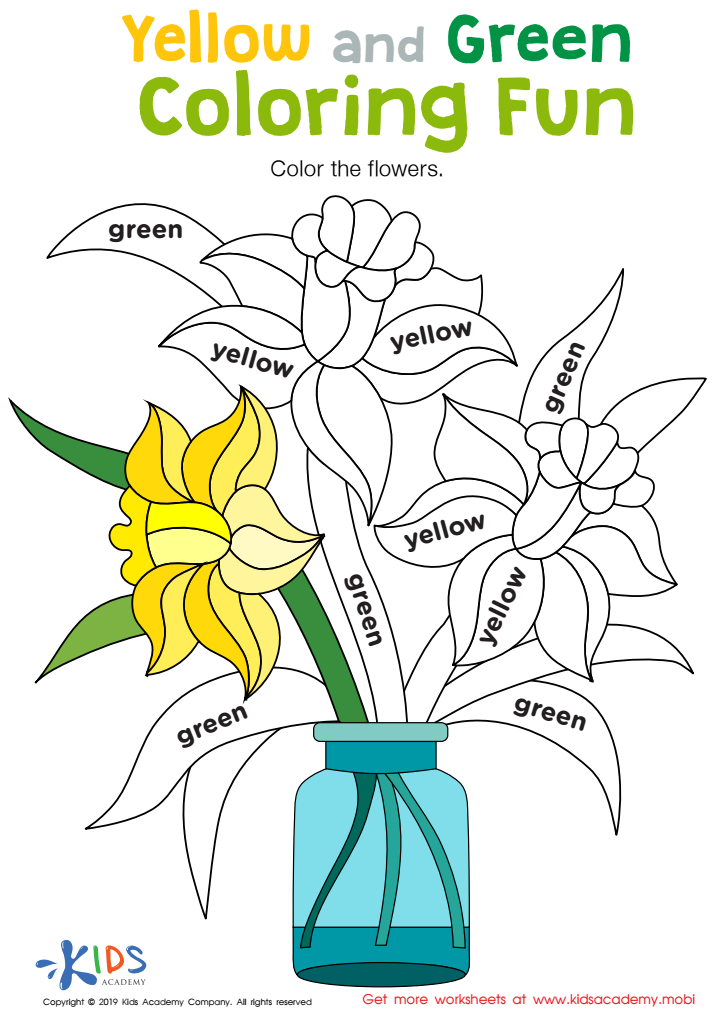
Yellow and Green Coloring Fun Worksheet
Assign to My Students
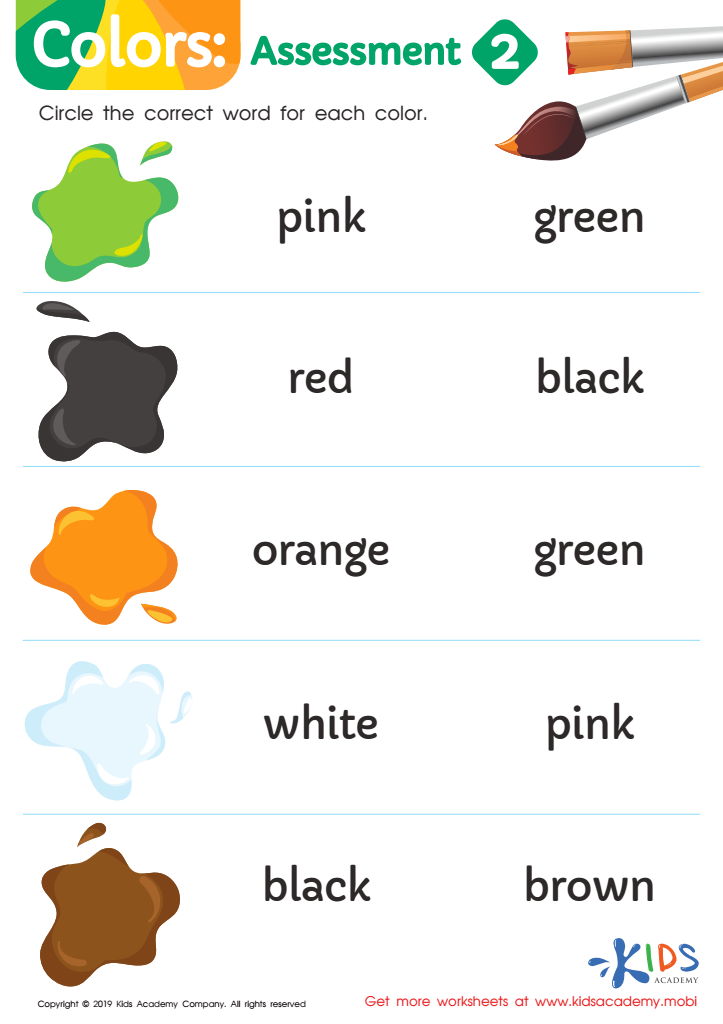
Colors: Assessment 2 Worksheet
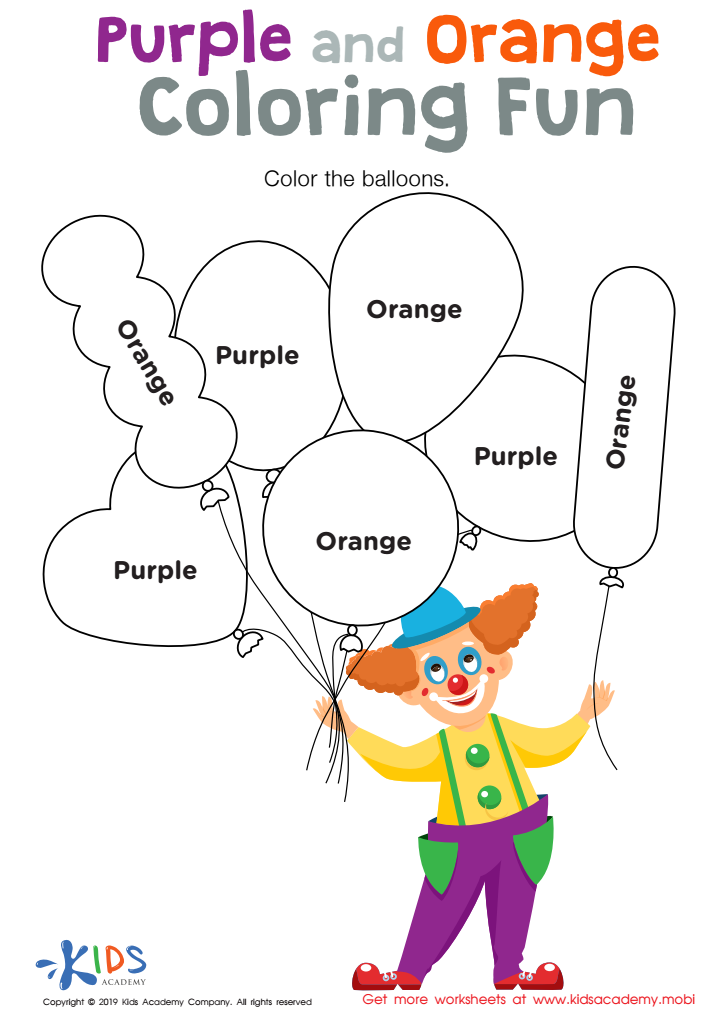
Purple and Orange Coloring Fun Worksheet
Assign to My Students
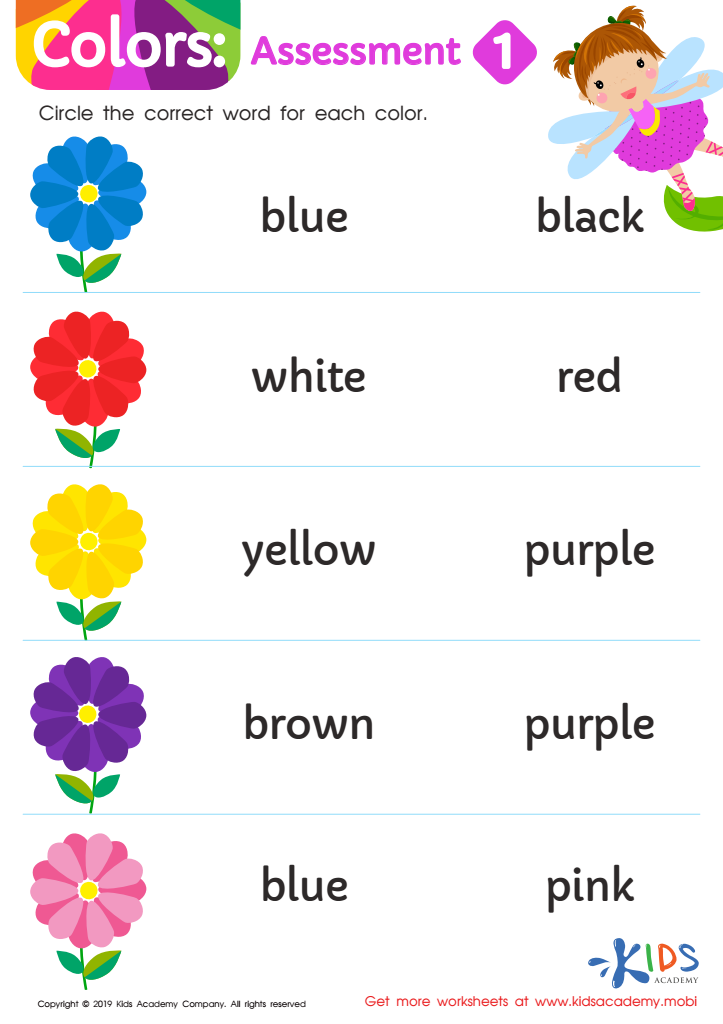
Colors: Assessment 1 Worksheet



Color recognition is a fundamental skill for children aged 6-9, and it offers much more than merely naming hues. At this stage of development, recognizing and naming colors is crucial for cognitive growth, language development, and social interaction. Parents and teachers should care about color recognition because it lays the groundwork for critical skills in mathematics, reading, and art.
Firstly, colors serve as the building blocks for various subjects. Understanding colors enhances a child’s ability to categorize and compare objects, fostering early mathematical skills such as sorting, patterns, and counting. Additionally, color words enrich vocabulary, helping children describe their world, thereby improving verbal skills and comprehension.
Moreover, color recognition plays a significant role in social interactions. Children use colors in play, art, and games, enabling them to express creativity and communicate preferences. Identifying colors can also improve focus and attentiveness during learning activities, as they engage with visual materials in a more meaningful way.
Furthermore, recognizing colors can instill confidence, allowing children to make choices in creative pursuits and develop a sense of belonging in group activities. By investing in color recognition, parents and teachers facilitate holistic development that enhances not only learning but also emotional and social growth.








