Alphabet Recognition Easy English for Beginners Worksheets for Ages 4-8
6 filtered results
-
From - To
Introduce your children to the foundational world of English with our "Alphabet Recognition Easy English for Beginners Worksheets" tailored for ages 4-8. These engaging worksheets are designed to help young learners, including those for whom English is a second language, master the ABCs in a fun and interactive manner. Each worksheet features colorful illustrations and enjoyable activities that keep kids motivated and excited to learn. Through tracing, matching, and simple exercises, children will build essential pre-reading skills. Foster a love for learning with our expertly crafted resources, perfect for early education and home practice. Empower your child’s alphabet journey today!
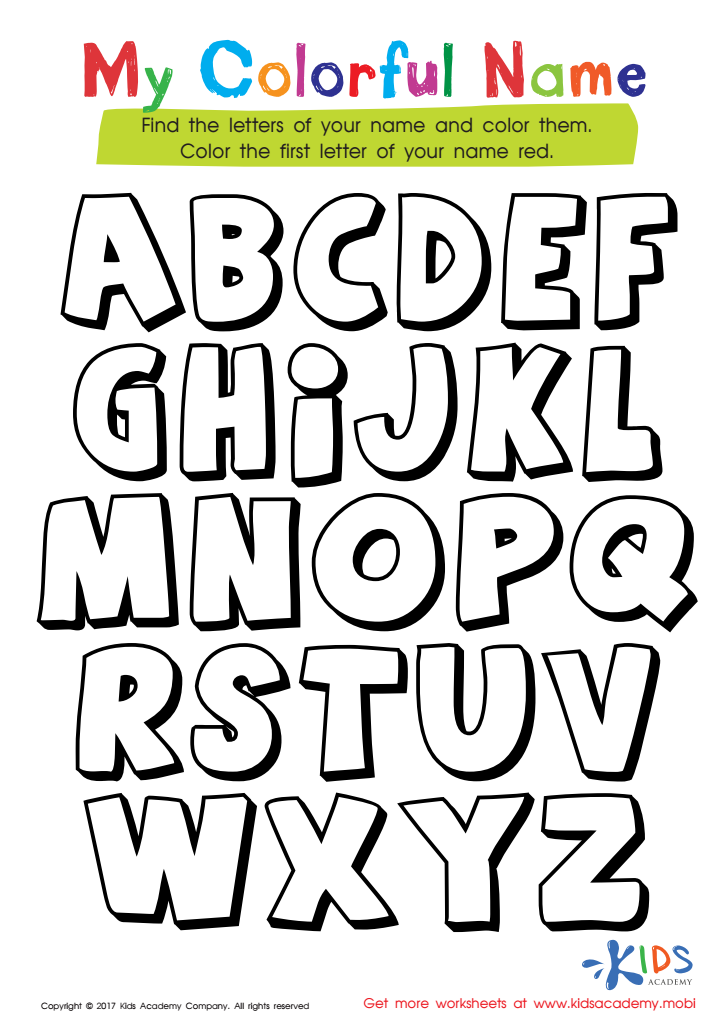
My Colorful Name Worksheet
 Assign to My Students
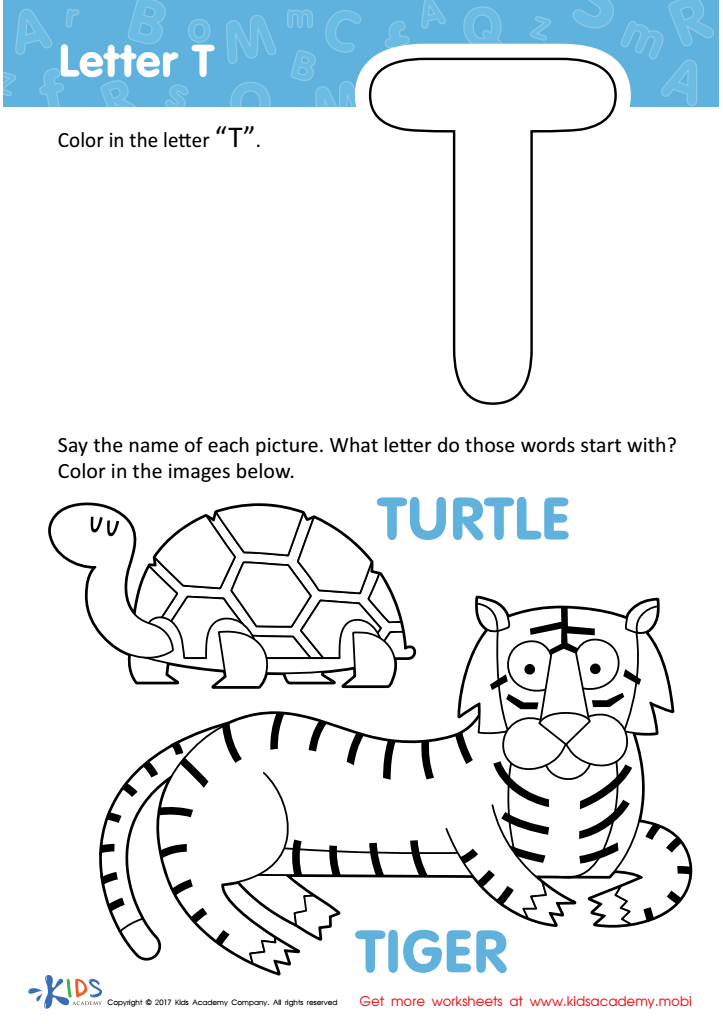
Letter T Coloring Sheet
Assign to My Students
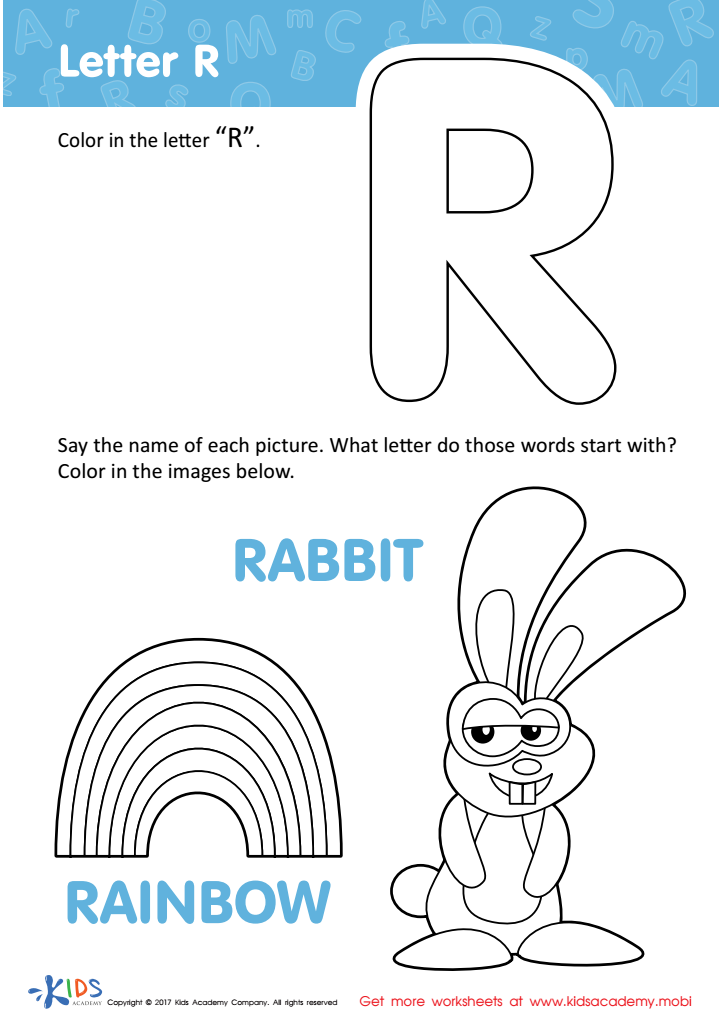
Letter R Coloring Sheet
Assign to My Students
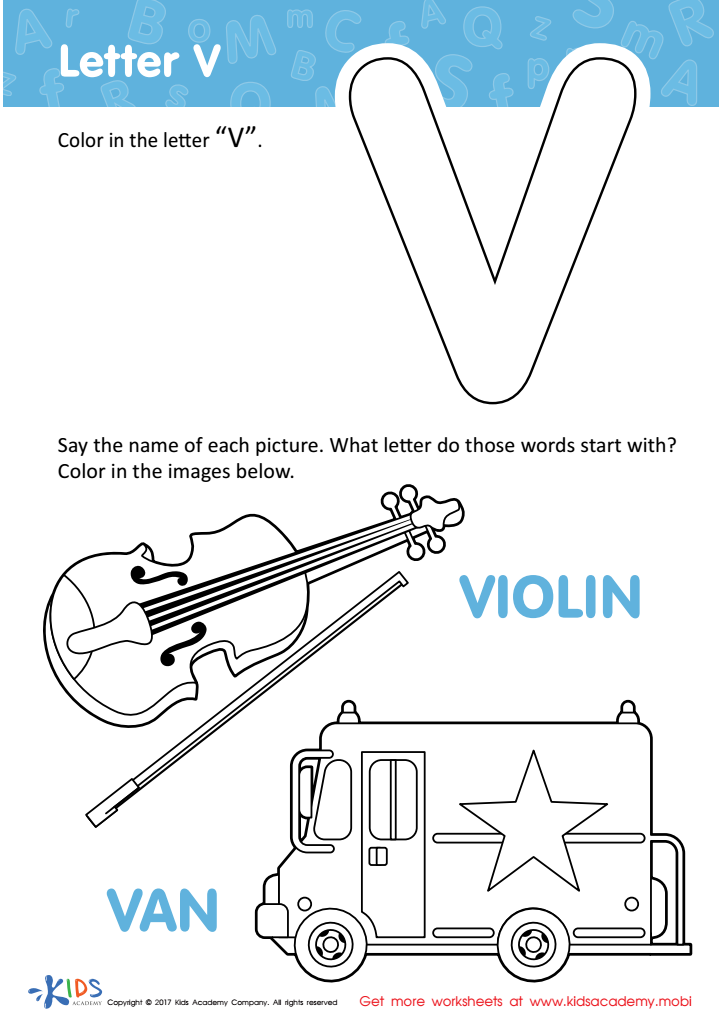
Letter V Coloring Sheet
Assign to My Students
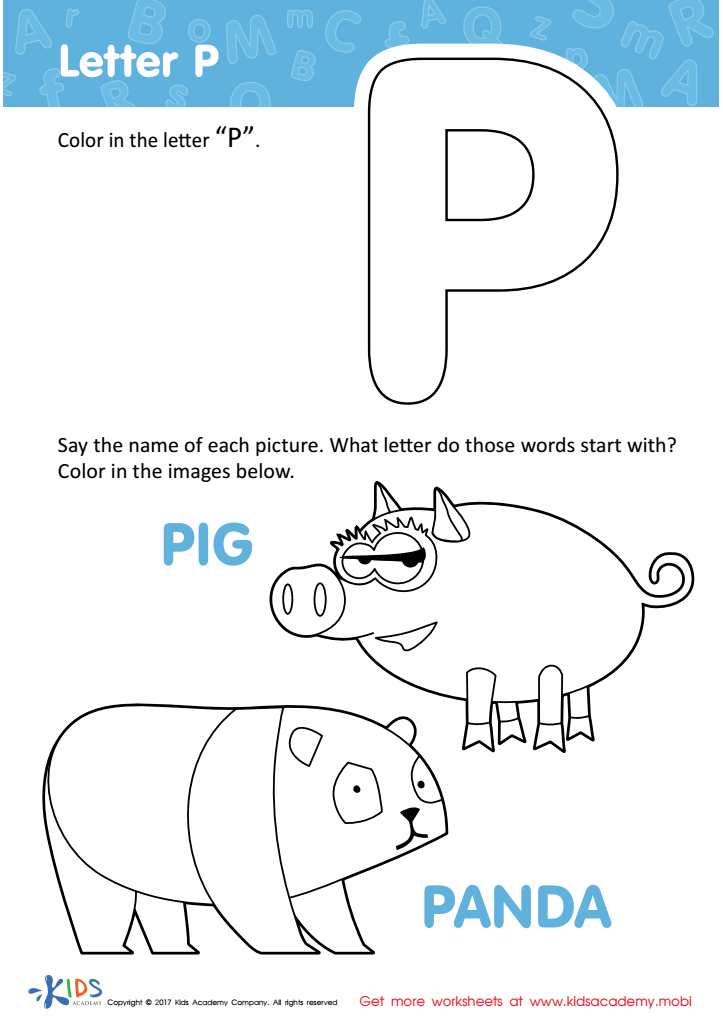
Letter P Coloring Sheet
Assign to My Students
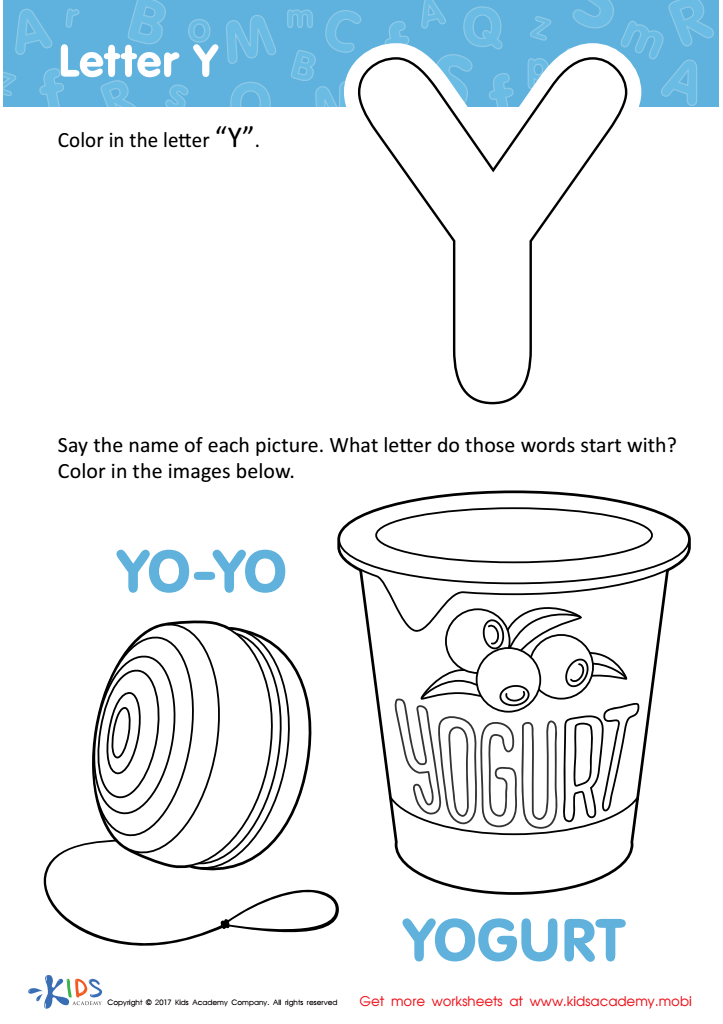
Letter Y Coloring Sheet
Assign to My Students




Alphabet recognition is a pivotal milestone for young children aged 4-8, laying the foundation for successful reading and writing skills. Parents and teachers should prioritize this early literacy skill for several key reasons.
Firstly, alphabet recognition is the gateway to phonemic awareness, which is the ability to hear, identify, and manipulate individual sounds (phonemes) in spoken words. This skill is crucial for decoding words during reading and improving spelling during writing. When children can easily identify letters, they are better prepared to connect these letters with their corresponding sounds, easing the learning of more complex literacy skills.
Secondly, recognizing letters builds a child’s confidence and enthusiasm towards learning. Early successes with alphabet recognition can motivate children to engage more with books and writing activities, fostering a lifelong love for reading.
Additionally, early alphabet recognition supports language development. By associating letters with sounds, children expand their vocabulary and improve their ability to communicate effectively. This skill is also linked to better comprehension abilities, setting the stage for academic success across various subjects.
Lastly, engaging with alphabet activities can strengthen fine motor skills as children practice writing letters. It further encourages cognitive activities like memory and attention, which are essential for overall learning.
In essence, investing time and resources in alphabet recognition during these formative years builds a robust foundation for future learning and personal development.