Basic measurement concepts Easy Worksheets for Ages 4-8
4 filtered results
-
From - To
Explore our collection of Basic Measurement Concepts Easy Worksheets, perfect for ages 4-8! These printable activities are designed to introduce young learners to fundamental measurement skills, making learning fun and engaging. Each worksheet features a variety of colorful and interactive exercises that teach essential concepts like length, weight, and volume through hands-on activities and relatable scenarios. Created to align with early childhood education standards, our worksheets provide a solid foundation in measurement, building confidence and excitement in young mathematicians. Ideal for both classroom and home use, these resources will spark curiosity and foster a love for learning.
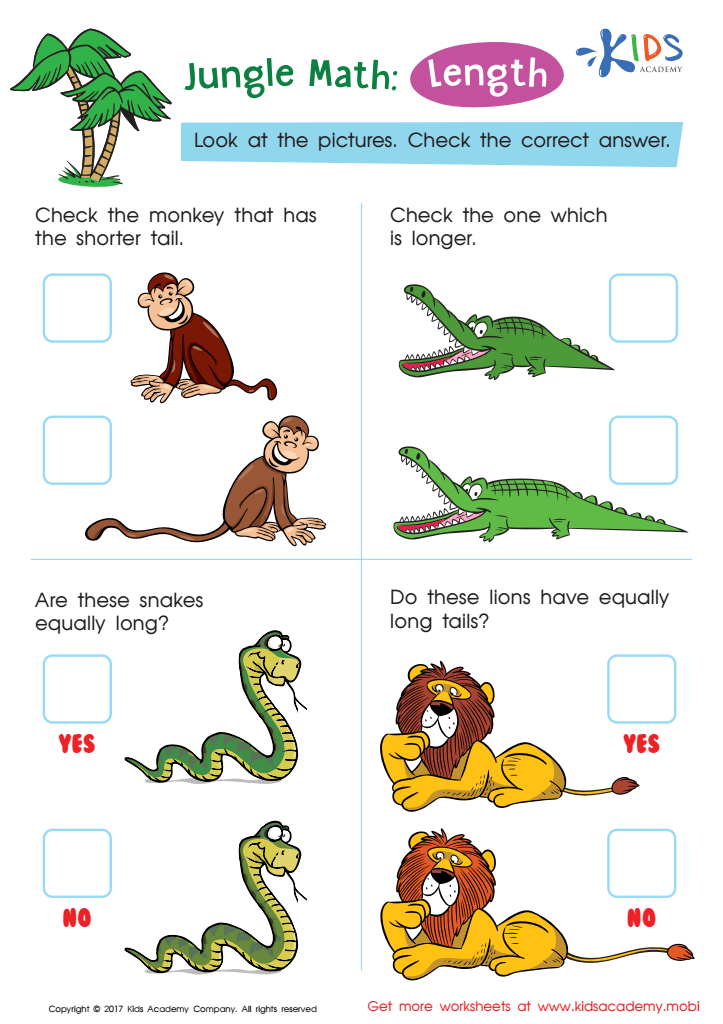
Which One Is Longer - Length Worksheet
 Assign to My Students
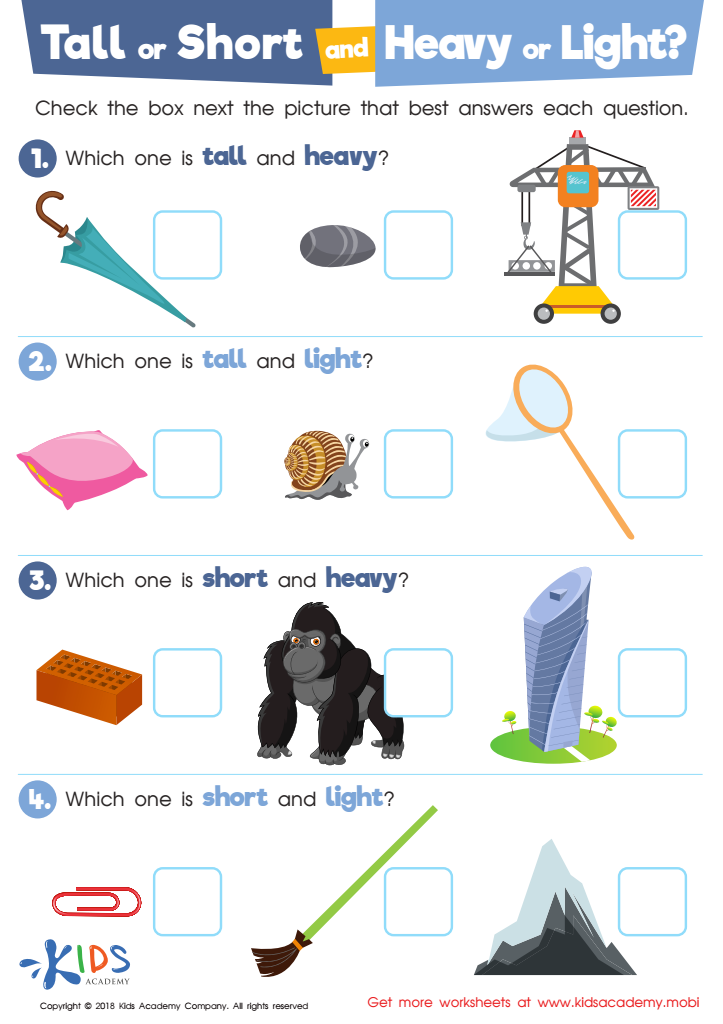
Tall or Short and Heavy or Light? Worksheet
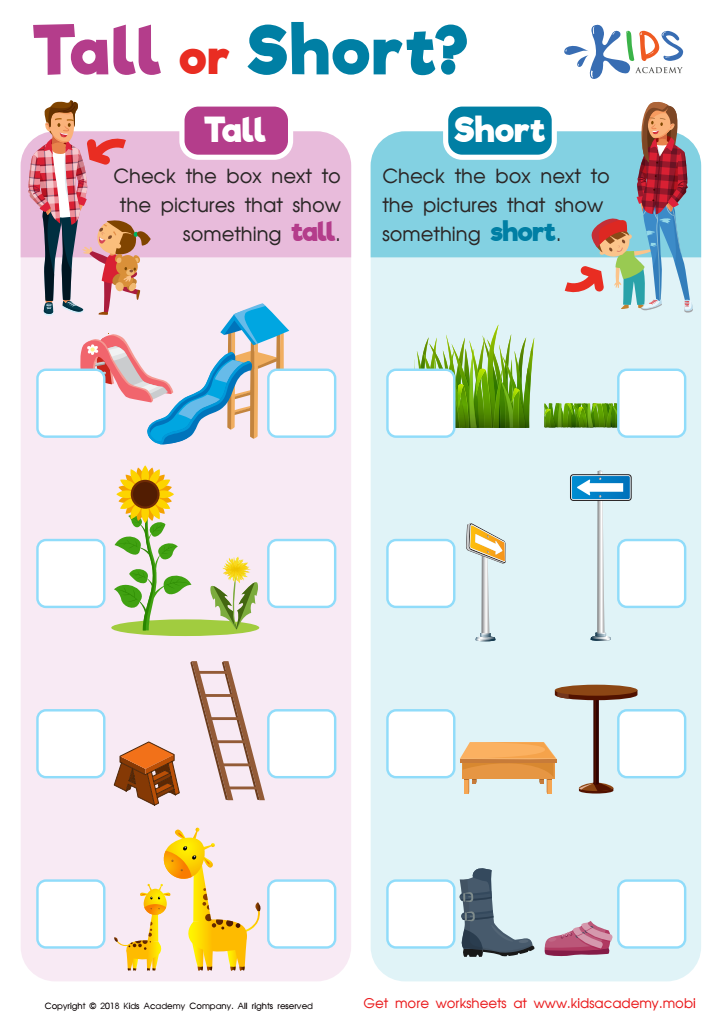
Tall or Short? Worksheet
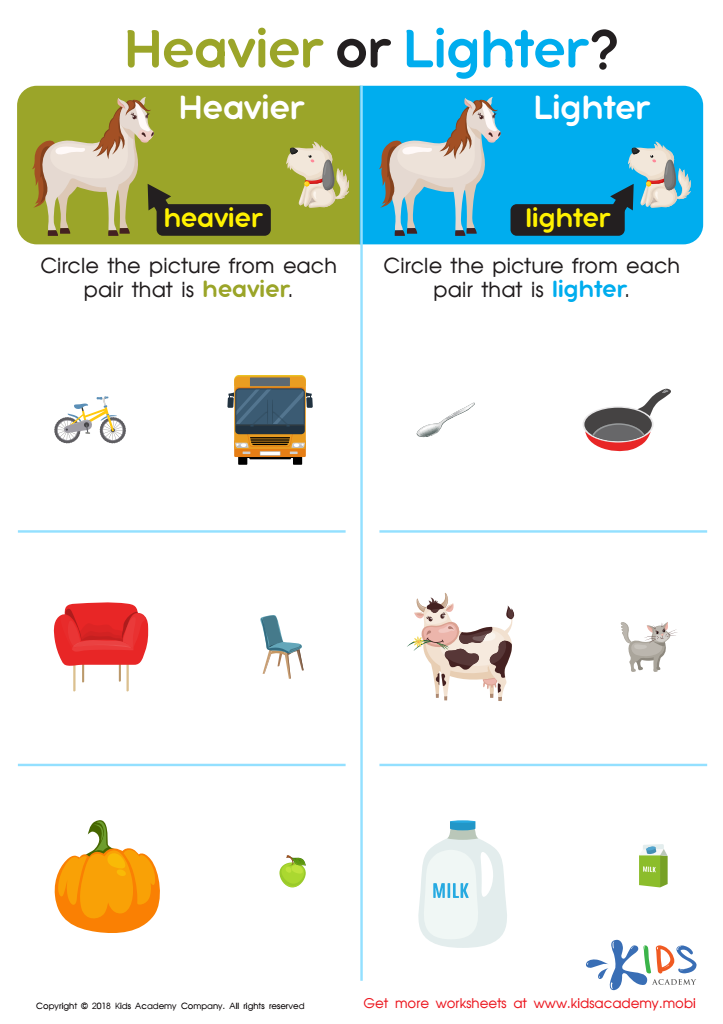
Heavier or Lighter? Worksheet





.jpg)


Basic measurement concepts such as length, weight, volume, and time are essential building blocks for young children ages 4-8, helping them understand and interact with the world around them. Introducing these concepts early lays a crucial foundation for more advanced math and science skills in later grades, fostering academic growth and problem-solving abilities.
Parents and teachers should care about teaching these concepts because they nurture critical thinking and observational skills. When children measure objects, they begin to grasp the idea of size comparisons, spatial awareness, and numerical relationships. For instance, sorting toys by size or comparing the weight of different items introduces practical applications of measurement, making learning both fun and relevant.
Moreover, these early measurement experiences help develop fine motor skills through hands-on activities like pouring water into different-sized containers, using rulers or tape measures, and balancing items on a scale. These activities link kinesthetic learning—learning by doing—with cognitive development, making concepts easier to grasp and remember.
Parents and teachers create learning opportunities everywhere: cooking in the kitchen, playing in the garden, or setting a bedtime routine. Engaging young minds with basic measurement lays the groundwork for lifelong learning and shows children the real-world importance of math skills. This encouragement boosts confidence and curiosity, setting children up for future success.








