Enhancing observation skills Easy Worksheets for Ages 4-8
6 filtered results
-
From - To
Enhance your child's observation skills with our engaging worksheets specially designed for ages 4-8. Our easy-to-follow activities encourage young learners to focus, analyze, and interpret their surroundings. With colorful illustrations and diverse challenges, these worksheets aid in developing critical thinking and attention to detail. From spotting differences to completing visual puzzles, each activity is crafted to stimulate curiosity and promote cognitive growth. Perfect for parents and teachers alike, our printable resources are user-friendly and can be seamlessly integrated into home or classroom learning. Explore the fun way to sharpen observation skills and watch your child's confidence soar!
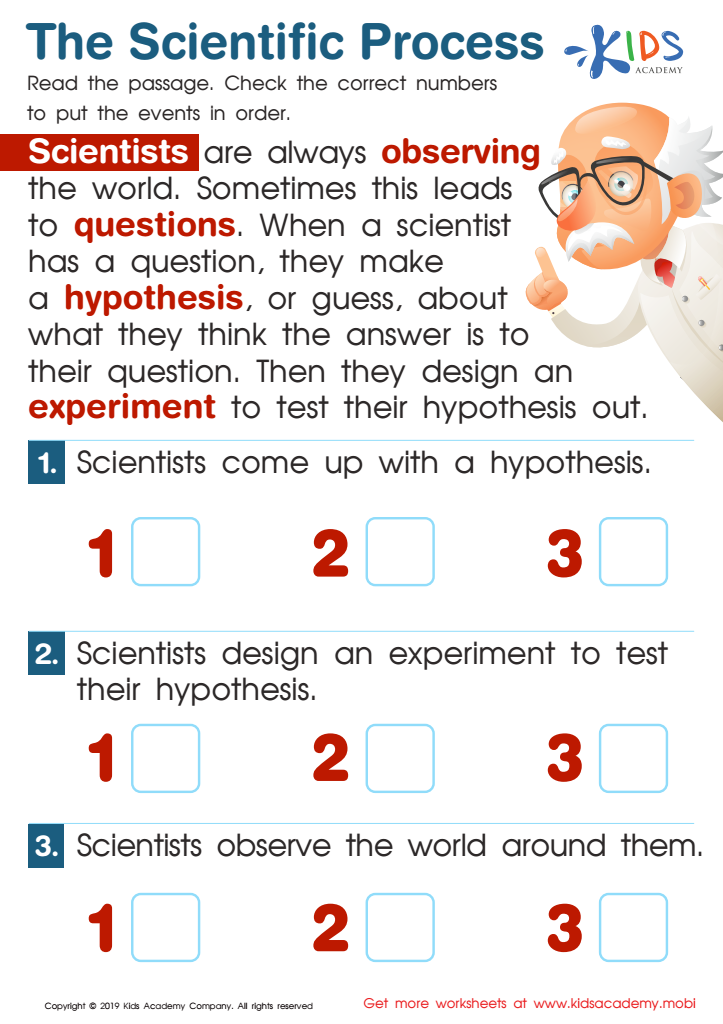
The Scientific Process Worksheet
 Assign to My Students
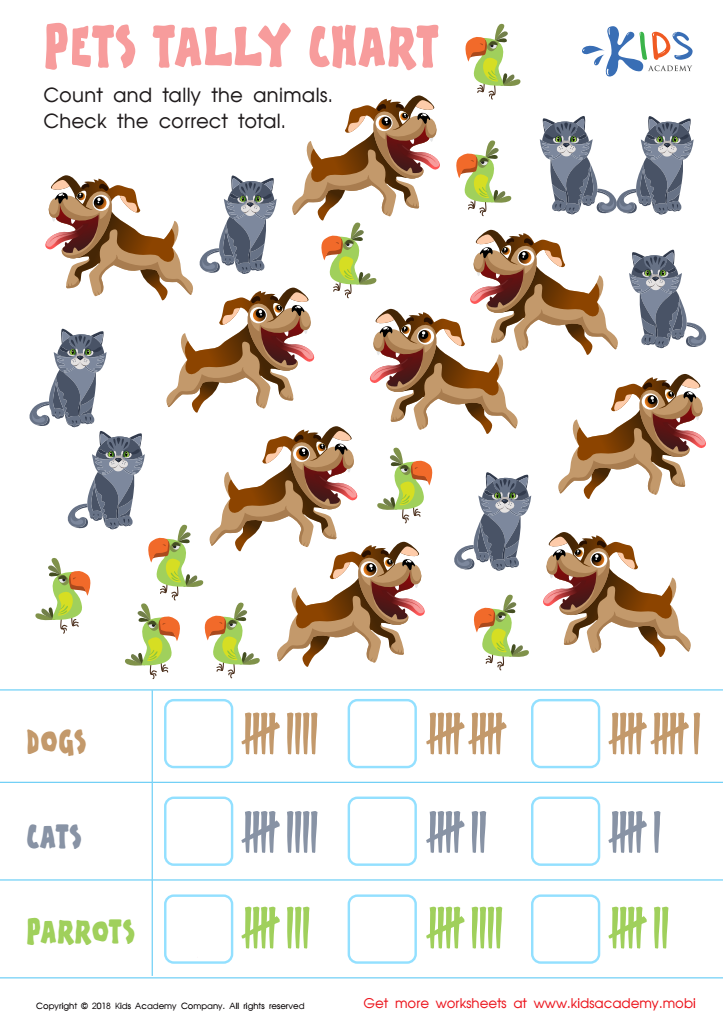
Pets Tally Chart Worksheet
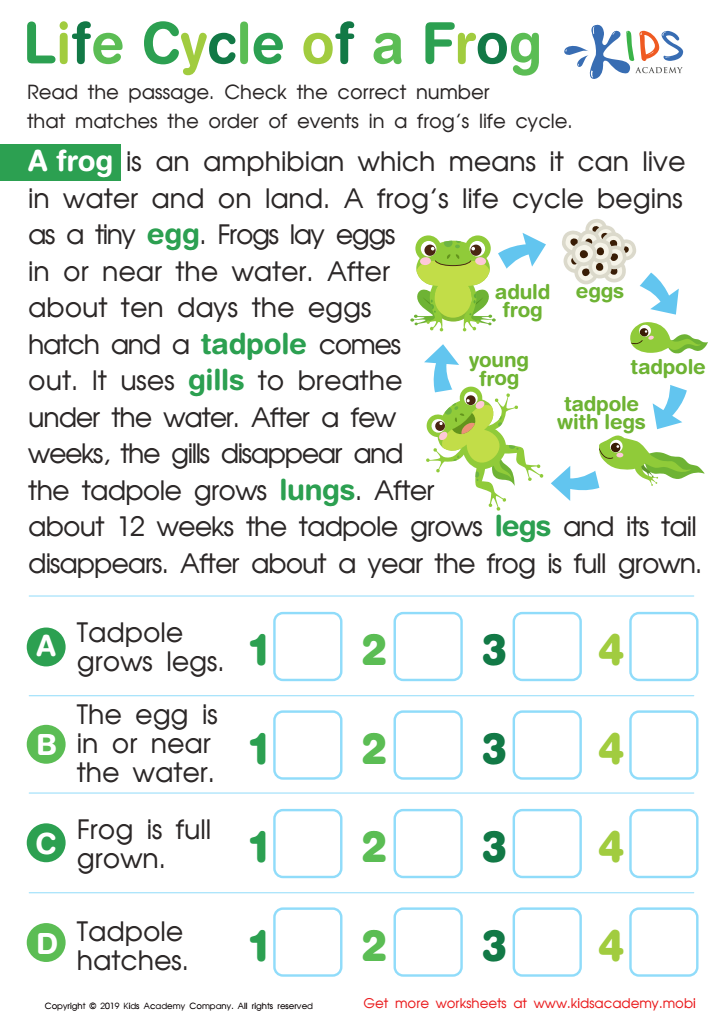
Life Cycle of a Frog Worksheet
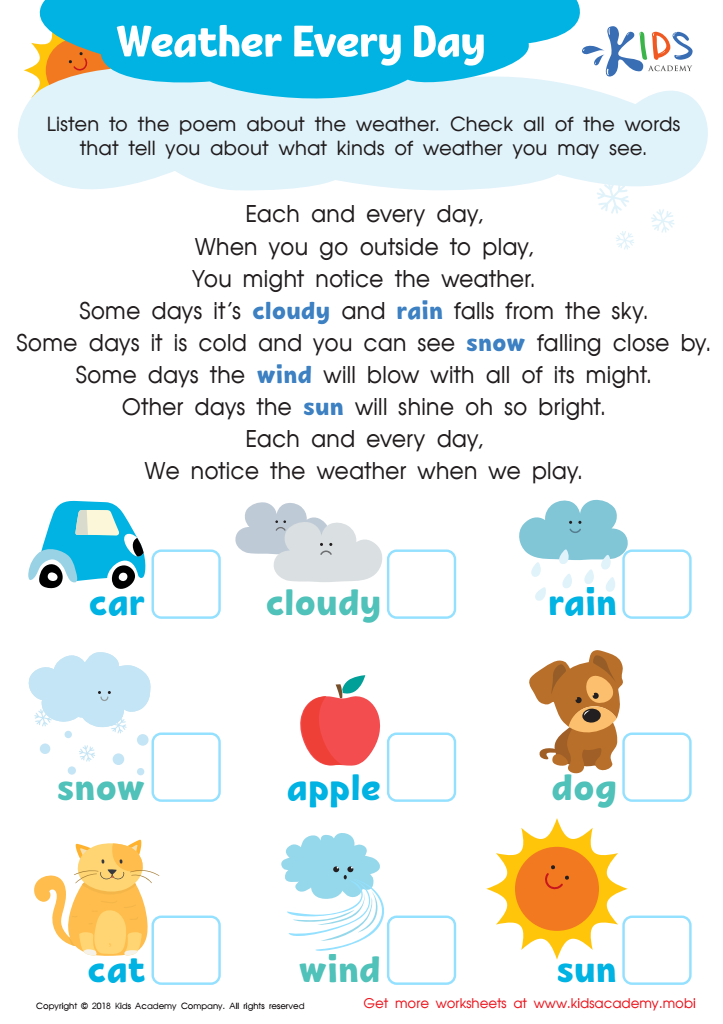
Weather Every Day Worksheet
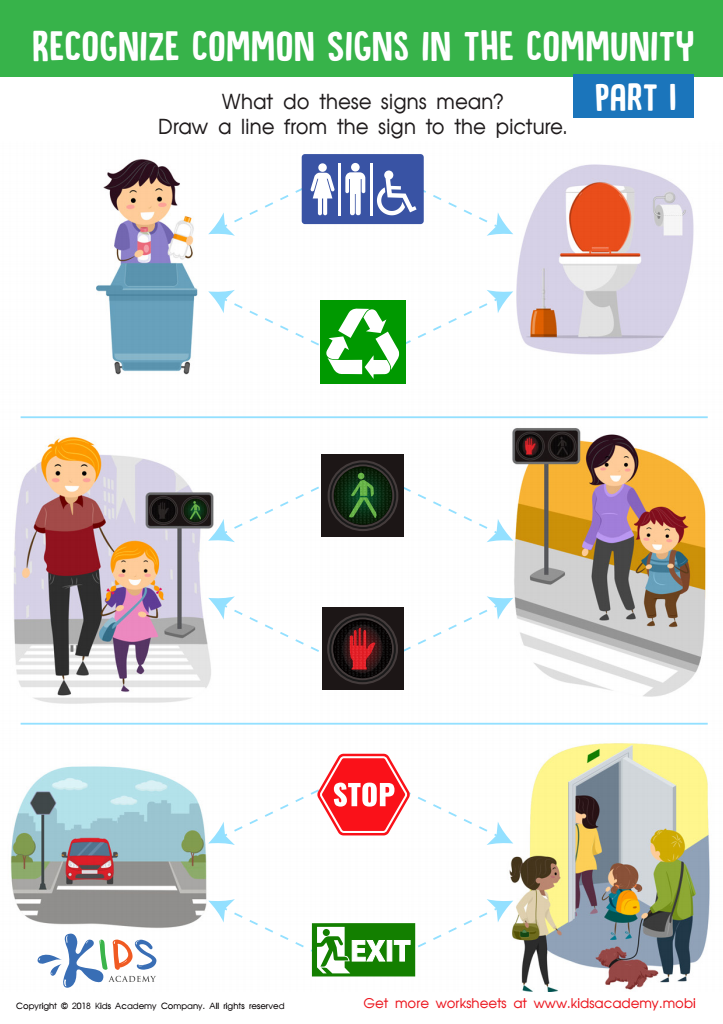
Recognize Common Signs: Part 1 Worksheet
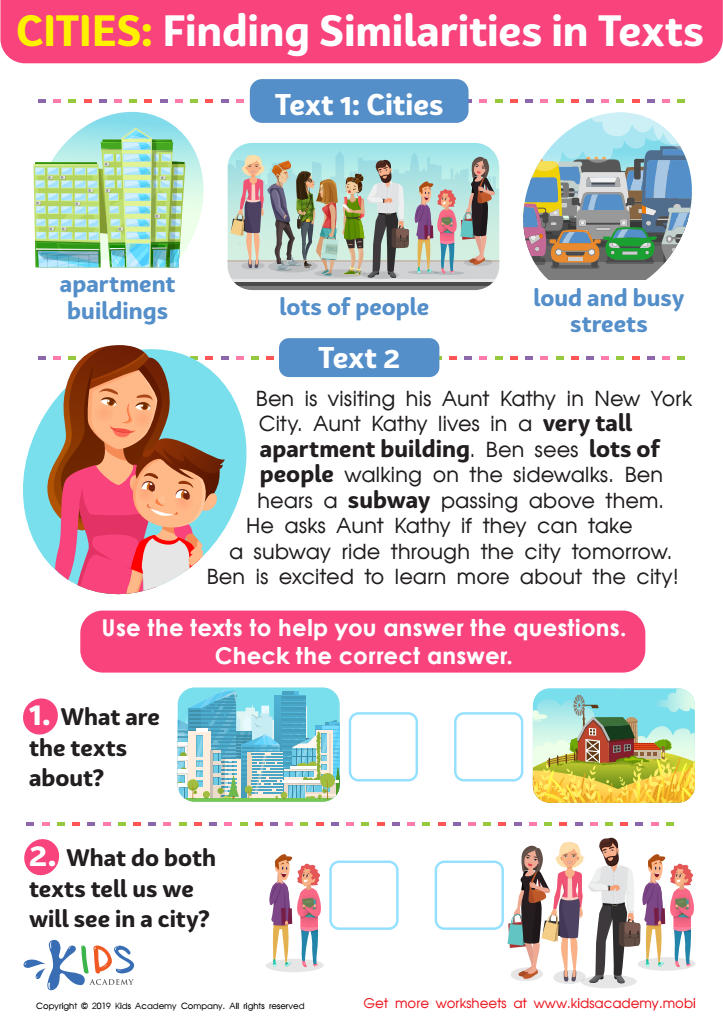
Cities: Finding Similarities Worksheet







Enhancing observation skills in children aged 4-8 is crucial for their overall development and learning. Observation skills form the foundation for critical thinking, problem-solving, and emotional intelligence. When parents and teachers focus on improving these skills, they empower children to engage with their environment more effectively, notice details, and make connections between different concepts.
Children with strong observation skills can better interpret social cues, leading to improved communication and relationship-building with peers. This age group is naturally curious, and fostering their observational abilities helps satisfy this curiosity, promoting exploration and experiential learning. By encouraging children to pay attention to their surroundings—including colors, shapes, and behaviors—parents and teachers can enhance creativity and imagination.
Moreover, enhancing observation skills can improve academic performance. For instance, children who notice patterns and details in math and reading are more adept at grasping complex concepts. It also enables them to ask thoughtful questions, leading to deeper learning and understanding.
In essence, supporting the development of observation skills equips children with essential tools that have long-lasting effects, influencing their academic success and personal growth. By nurturing these skills, adults play a pivotal role in shaping well-rounded, engaged, and empathetic individuals.








