Object identification Easy Worksheets for Ages 4-8
3 filtered results
-
From - To
Enhance your child's learning journey with our "Object Identification Easy Worksheets for Ages 4-8," thoughtfully designed to build foundational skills in young learners. These engaging worksheets from Kids Academy help children visually identify and categorize everyday objects. By promoting focus, observation, and critical thinking, they provide an enjoyable and educational experience. Perfect for preschool to early elementary students, each worksheet is crafted to support cognitive development and encourage independent learning. Download today to make learning fun and effective for your child! Visit our page to explore more and help your child achieve new milestones in their learning adventure.
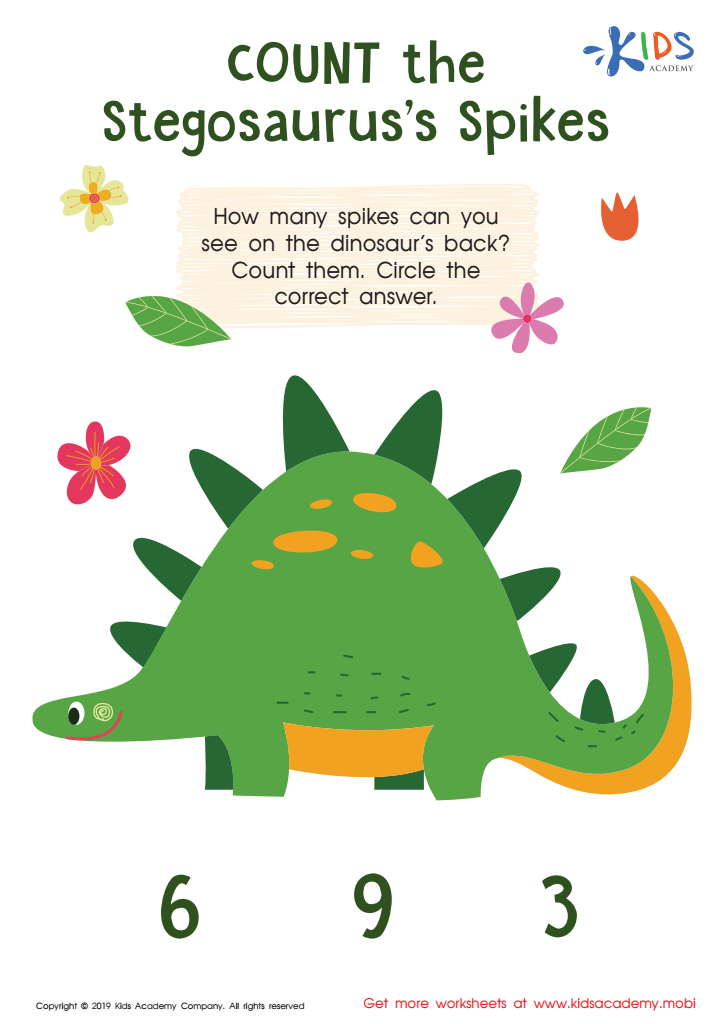
Count the Stegosaurus's Spikes Worksheet
Picnic Time Coloring Page
 Assign to My Students
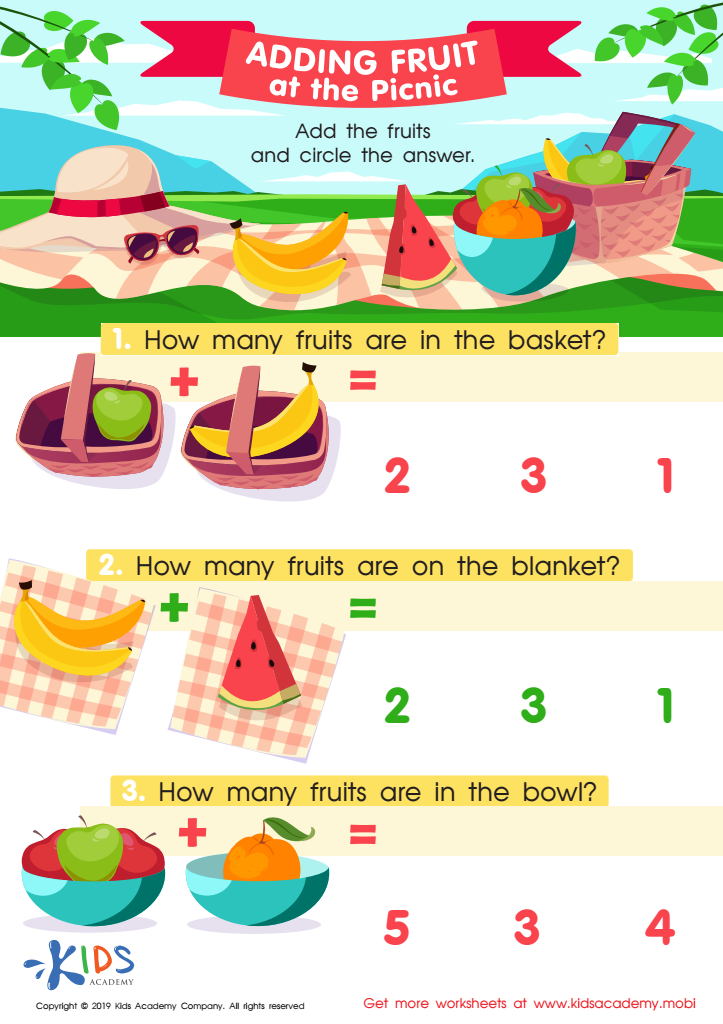
Adding Fruit at the Picnic Worksheet




.jpg)


Parents and teachers should prioritize Object Identification for children ages 4-8 because this foundational skill significantly impacts cognitive and social development. During early childhood, kids learn to categorize and recognize objects, which enhances their understanding of the world around them. This early skill is crucial for building vocabulary, as identifying objects by name strengthens language acquisition and communication abilities.
Moreover, object identification fosters critical thinking. When children learn to distinguish between different items, such as fruits, animals, or shapes, they enhance their memory and attention to detail. This skill lays the groundwork for future learning, including more complex classification tasks in science and math.
In social contexts, knowing how to identify objects clearly helps children communicate more effectively with peers and adults. For instance, being able to accurately describe or request specific items can prevent misunderstandings and build confidence in their expressive abilities.
Additionally, early competency in object identification is linked with higher self-esteem. When children can successfully recognize and name objects, they feel a sense of accomplishment that motivates them to tackle more challenging tasks. Therefore, incorporating object identification activities into daily routines provides a supportive structure for continuous learning and personal growth.








