Shape Recognition Easy 2D Shapes Worksheets for Ages 4-8
9 filtered results
-
From - To
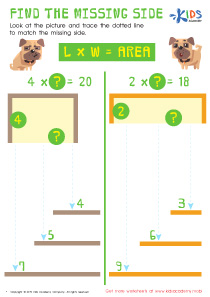
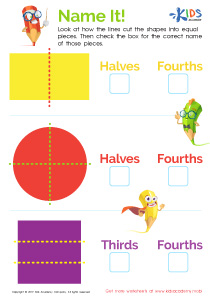
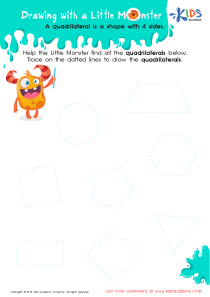
Discover our engaging "Shape Recognition Easy 2D Shapes Worksheets" designed for children aged 4-8! These fun and colorful worksheets provide young learners with the opportunity to explore and identify basic 2D shapes, such as circles, squares, triangles, and rectangles. Perfect for preschool and early grade classrooms, our resources encourage shape recognition through interactive activities, matching games, and creative tasks that foster critical thinking and fine motor skills. Each worksheet is thoughtfully crafted to support early math learning in a playful way, ensuring kids stay motivated while gaining a solid foundation in geometric understanding. Start shaping their learning journey today!
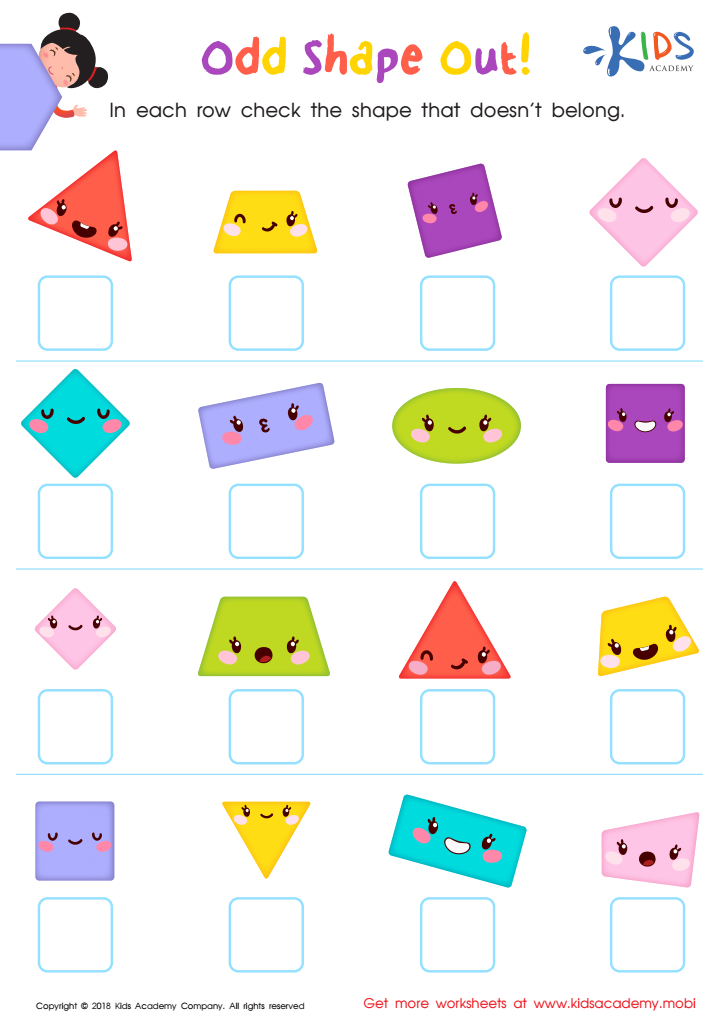
Odd Shape Out Worksheet for Grade 3
 Assign to My Students











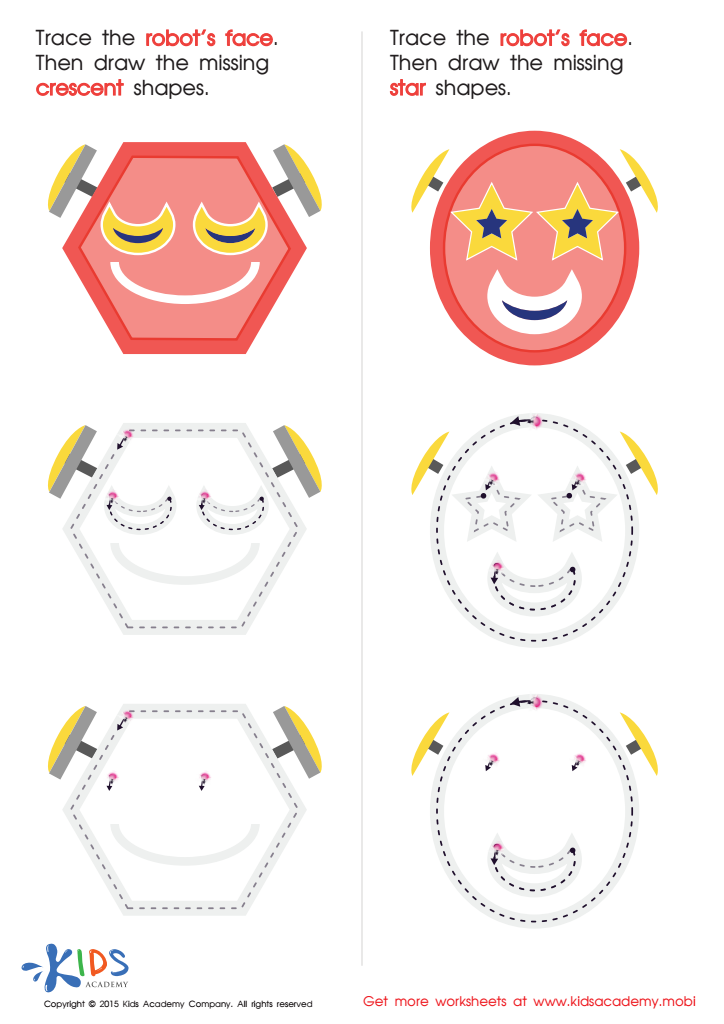
Composing a Robot's Face of Crescents And Stars Worksheet
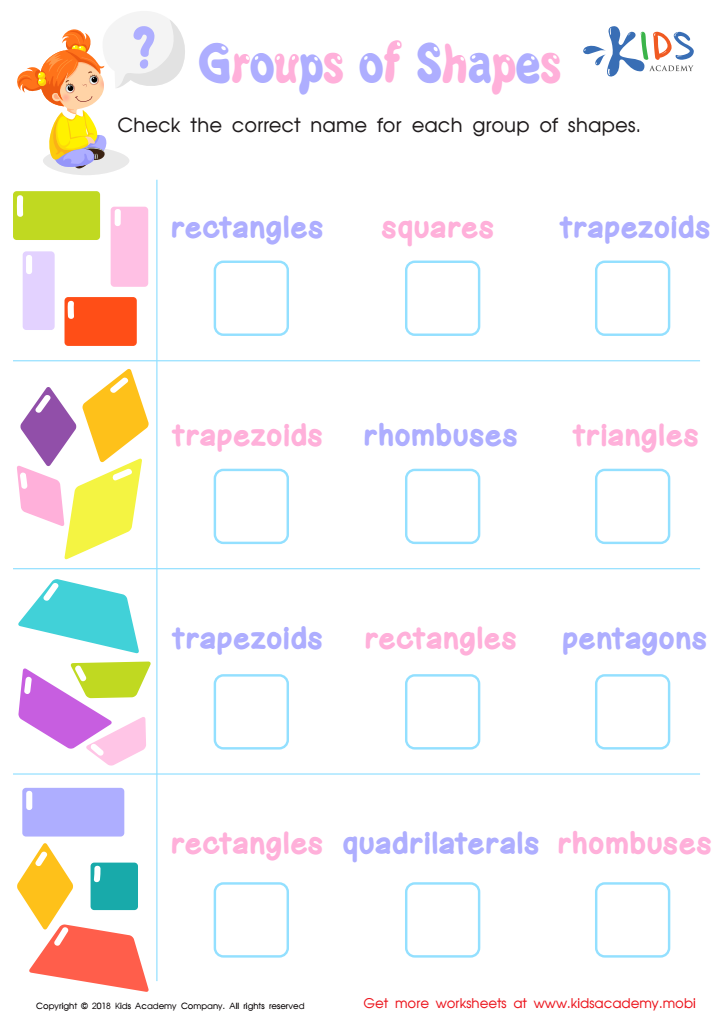
Groups of Shapes Worksheet
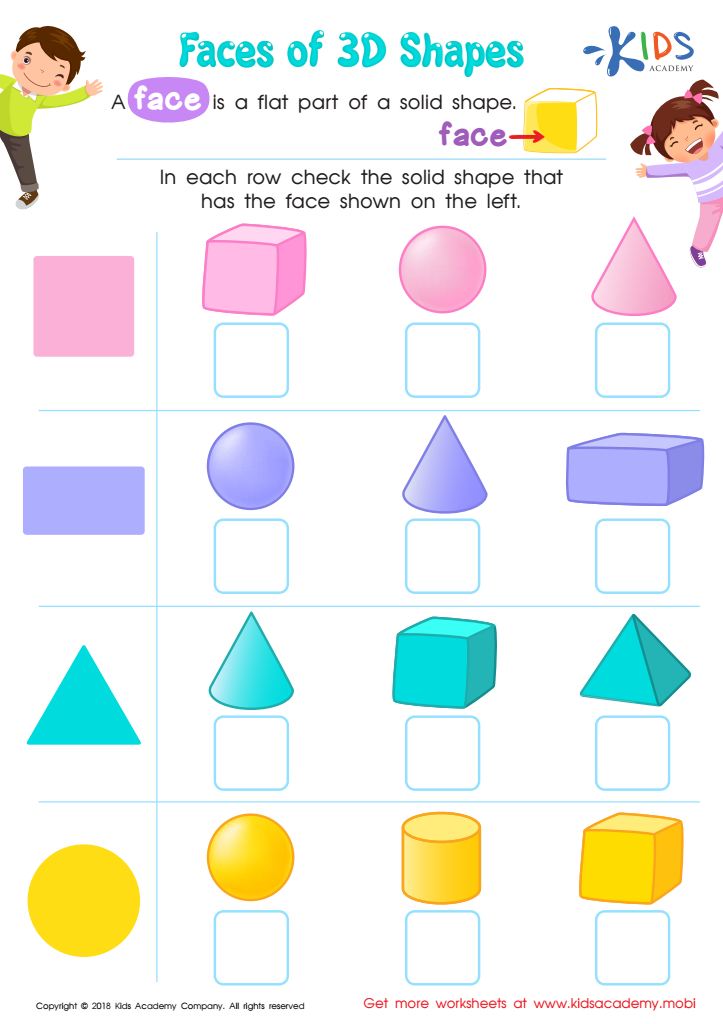
Faces of 3D Shapes Worksheet
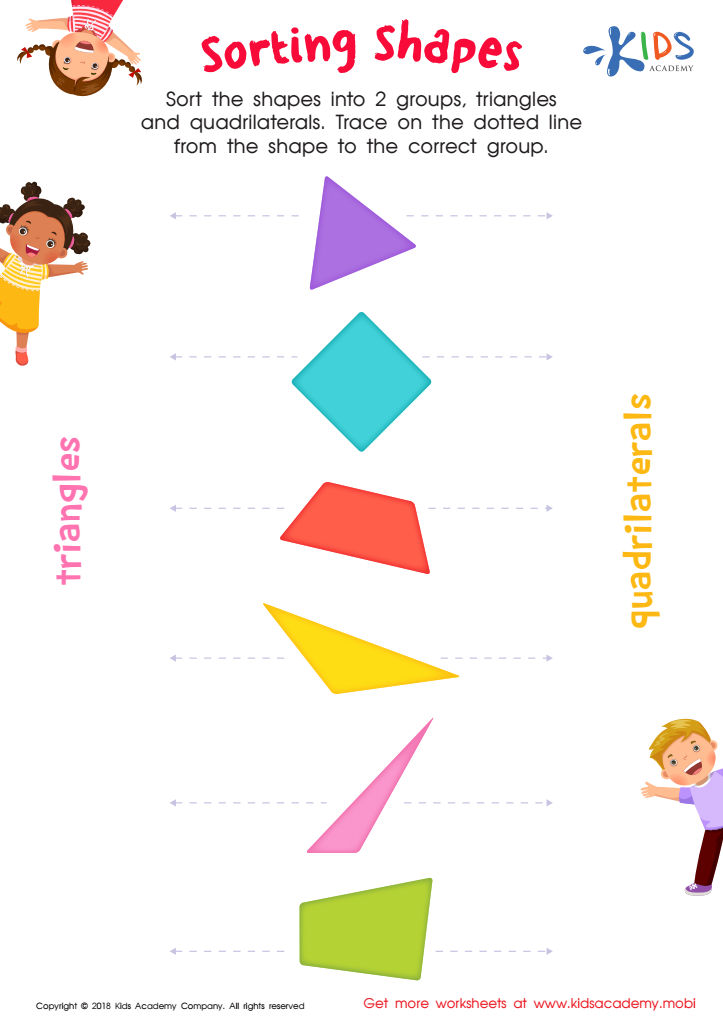
Sorting Shapes Worksheet
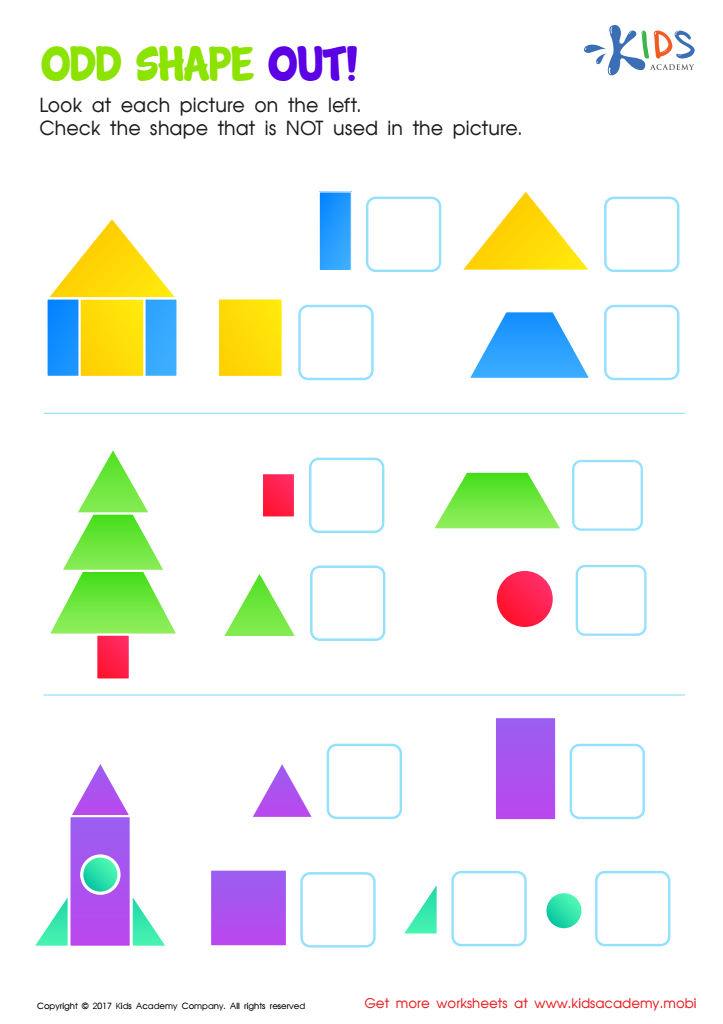
Odd Shape Out Worksheet for Grade 1
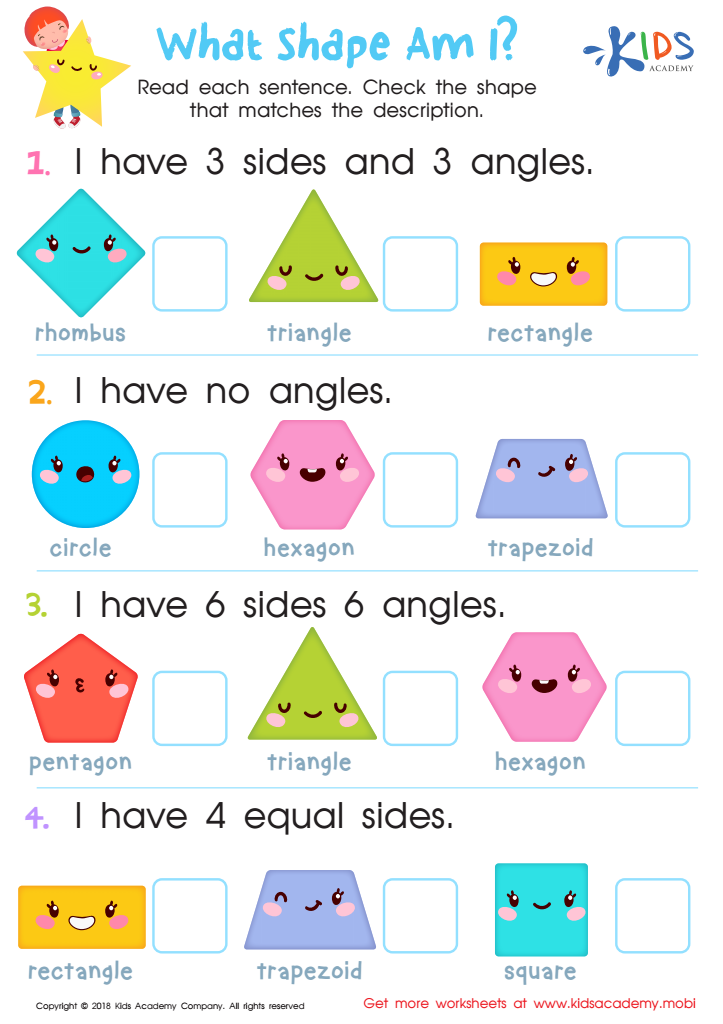
What Shape Am I? Worksheet
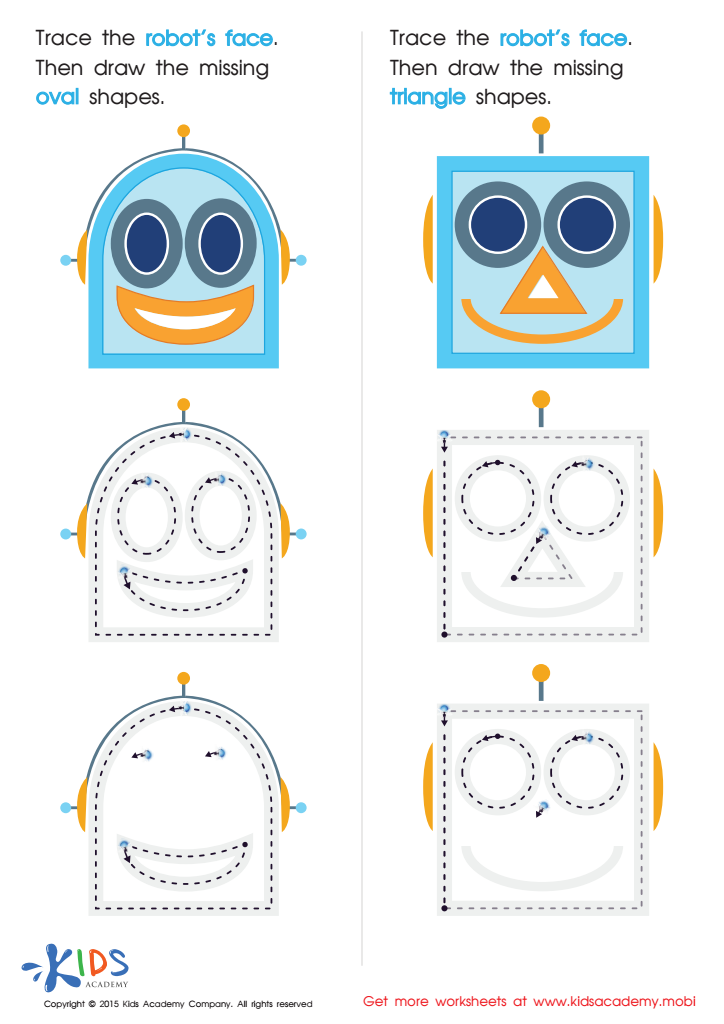
Drawing Ovals And Triangles with Fun Printable
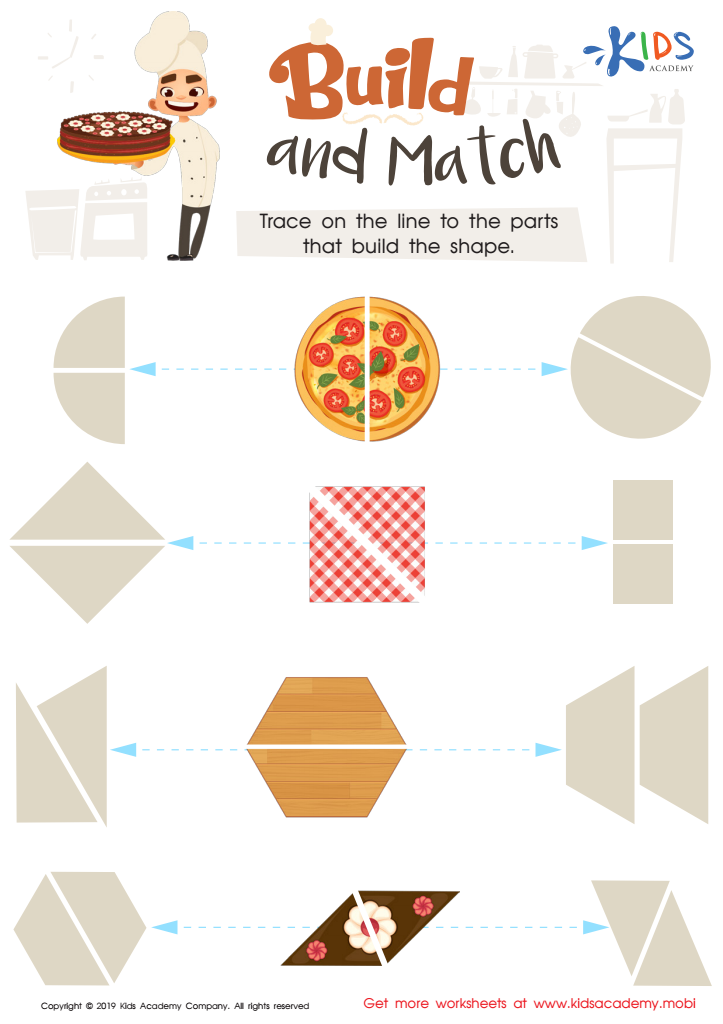
Build and Match Worksheet








Shape recognition is a fundamental skill that lays the groundwork for essential cognitive development in children aged 4-8. It enhances spatial awareness and problem-solving abilities, key components in math and science understanding. When parents and teachers focus on introducing 2D shapes, they help children learn to categorize and differentiate objects around them, which supports their critical thinking skills.
Beyond academics, shape recognition encourages creativity and artistic expression. Recognizing and understanding shapes enable children to engage in activities such as drawing, crafting, and constructing, which are crucial for physical and motor skill development. This foundational knowledge also enhances their ability to follow instructions and engage in cooperative play with peers, thereby fostering social skills.
Moreover, early mastery of shapes often correlates with later success in mathematics, where geometry plays a significant role. By caring about shape recognition, parents and teachers equip children with the necessary tools for academic achievement and daily life navigation. It sets the stage for a lifelong love of learning, exploration, and an ability to recognize connections in the world around them. Encouraging this skill at an early age ensures children have the confidence and capability to tackle more complex subjects later on.