Shape Recognition Easy Fractions of Shapes Worksheets for Ages 4-8
5 filtered results
-
From - To
Introduce your child to the exciting world of shapes and fractions with our "Shape Recognition Easy Fractions of Shapes Worksheets" designed for ages 4-8. These engaging worksheets help young learners recognize common shapes while understanding basic fractions in a fun and interactive way. Ideal for early grade students, these activities blend geometry and arithmetic fundamentals to enhance learning. Each worksheet fosters critical thinking and visual skills, making math enjoyable. Perfect for classroom or at-home use, these resources are a fantastic tool to build a strong foundation in math. Start your child’s educational journey today with Kids Academy!
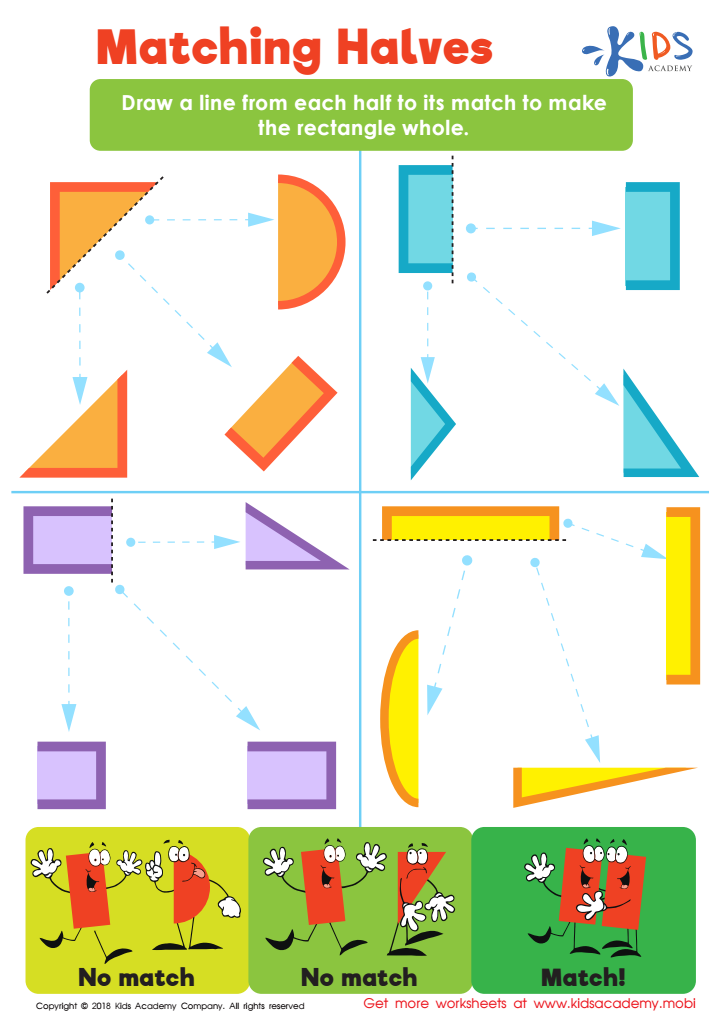
Matching Halves Worksheet
 Assign to My Students
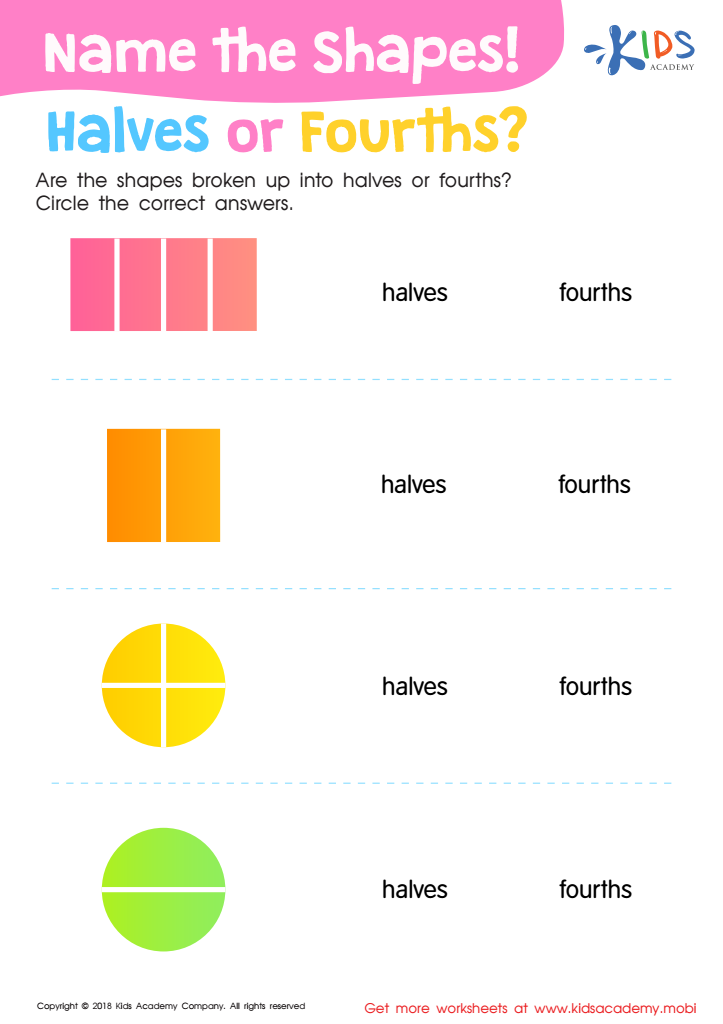
Name the Shapes Halves or Fourths? Worksheet
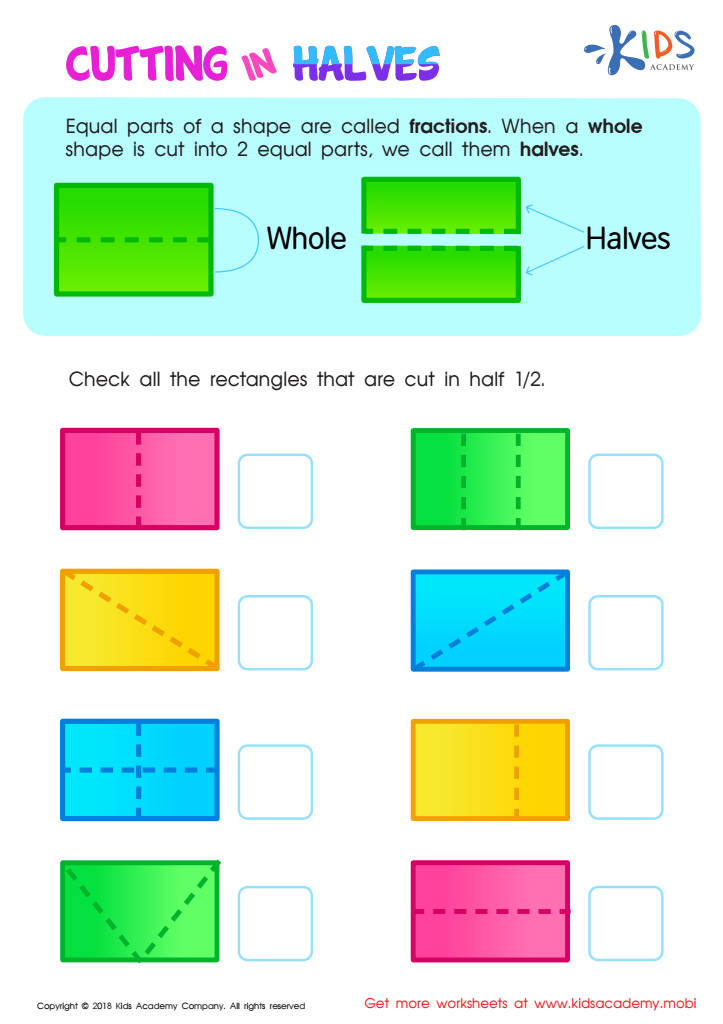
Cutting in Halves Worksheet
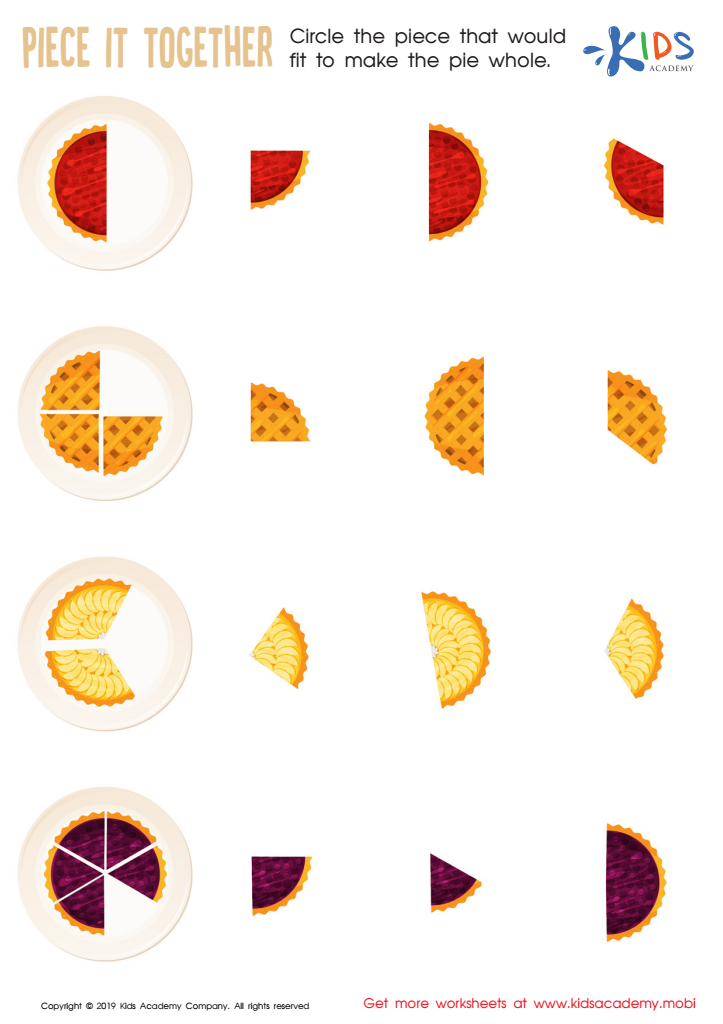
Piece it together Worksheet
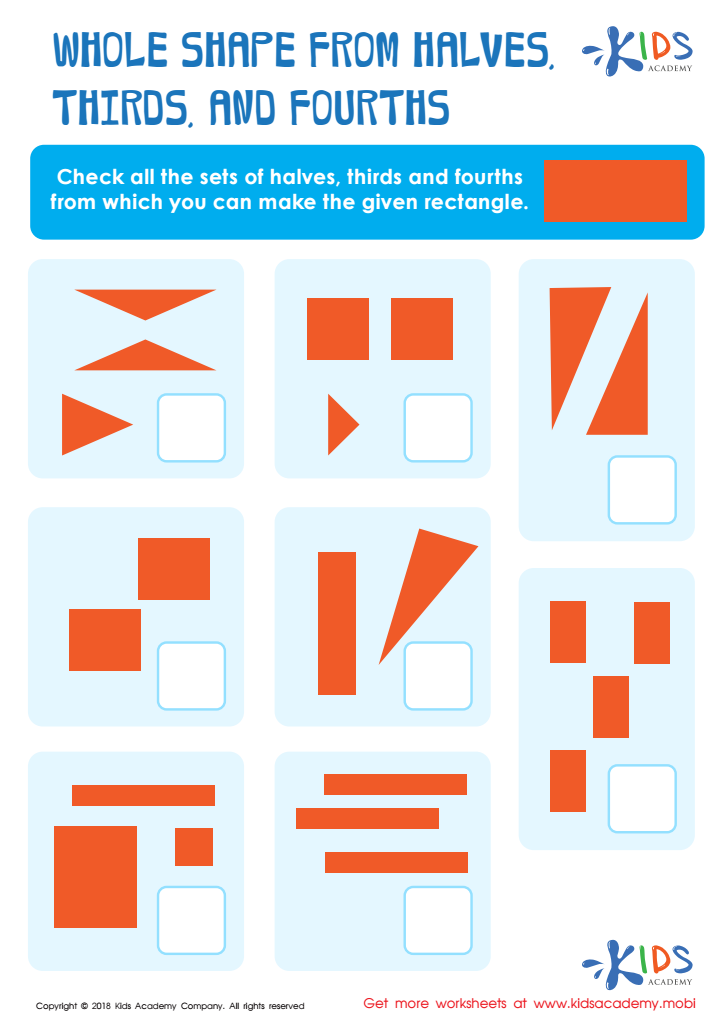
Whole Shape from Halves, Thirds and Fourths Worksheet








Shape recognition and understanding simple fractions of shapes are fundamental skills for young children aged 4-8. These concepts serve as critical building blocks for various aspects of their cognitive and academic development.
First, mastering shape recognition enhances children's ability to observe and classify the world around them. It teaches them to identify patterns, differentiate between objects, and develop spatial awareness. Recognizing shapes like circles, squares, and triangles lays the groundwork for more complex forms of geometry encountered later in school.
Understanding fractions of shapes is equally important, as it introduces children to basic arithmetic and proportional reasoning. By learning that a half of a circle is different from a quarter of a circle, children grasp the concept of dividing wholes into parts—this skill is essential for tackling more advanced mathematical problems in the future.
Moreover, early exposure to these ideas fosters critical thinking and problem-solving abilities. These skills extend beyond the math curriculum, influencing areas like logical reasoning and literacy. For example, drawing and dissecting shapes requires fine motor skills, aiding in activities such as writing and art.
Ultimately, parents and teachers who emphasize shape recognition and simple fractions equip their children with necessary cognitive tools for lifelong learning, making everyday activities more comprehensible and enhancing their overall educational experience.