Understanding fractions Easy Geometry Worksheets for Ages 4-8
16 filtered results
-
From - To
Introduce your child to the exciting world of geometry with our "Understanding Fractions Easy Geometry Worksheets for Ages 4-8." These specially designed worksheets make learning fractions fun and accessible for young minds. Through colorful visuals and engaging exercises, children will explore basic fraction concepts and develop foundational math skills. Ideal for early learners, these worksheets support hands-on practice and boost confidence in understanding halves, quarters, and more. Perfect for parents and teachers who aim to make learning fractions a joyful journey, our printable resources offer an engaging approach to mastering essential geometry skills. Make fractions fun with easy-to-follow, interactive content!
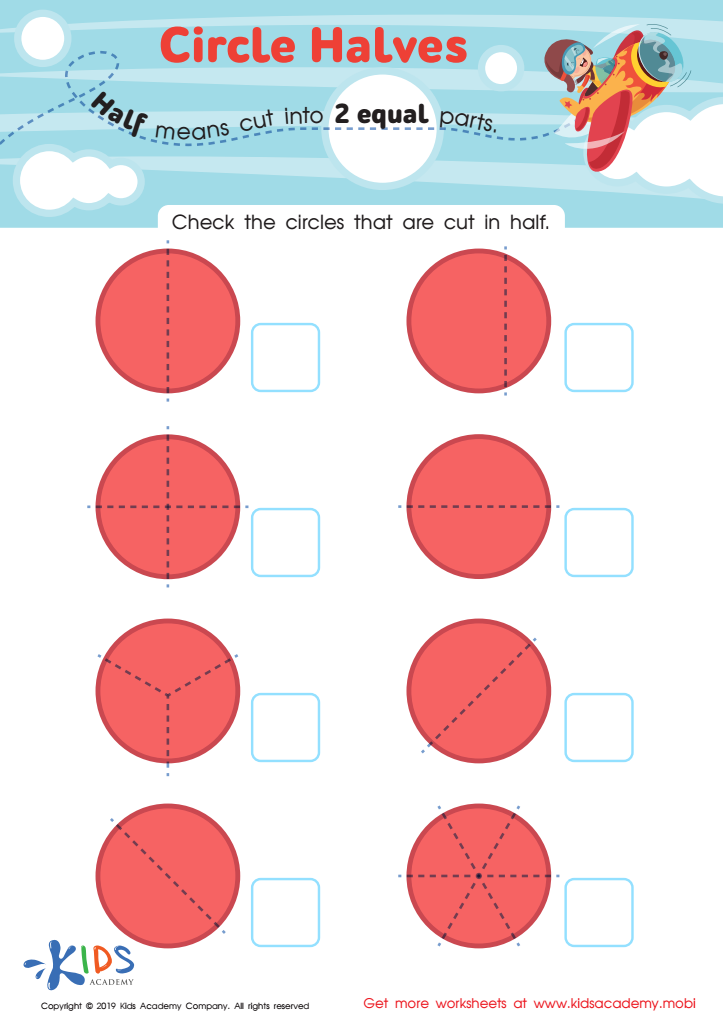
Circle Halves Worksheet
 Assign to My Students











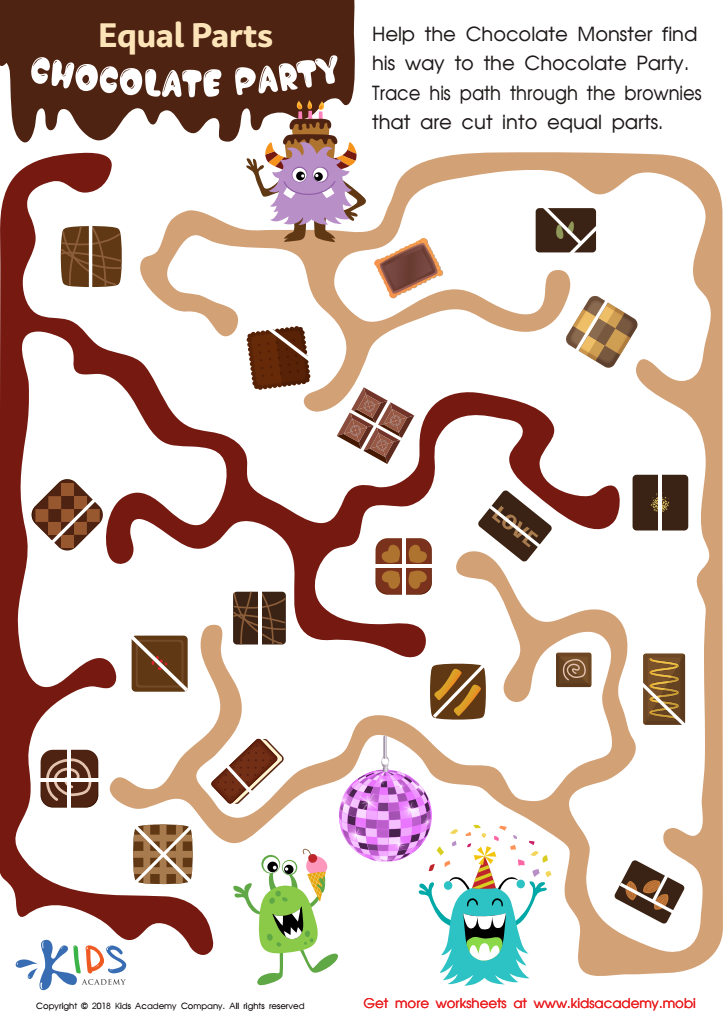
Equal Parts: Chocolate Party Worksheet
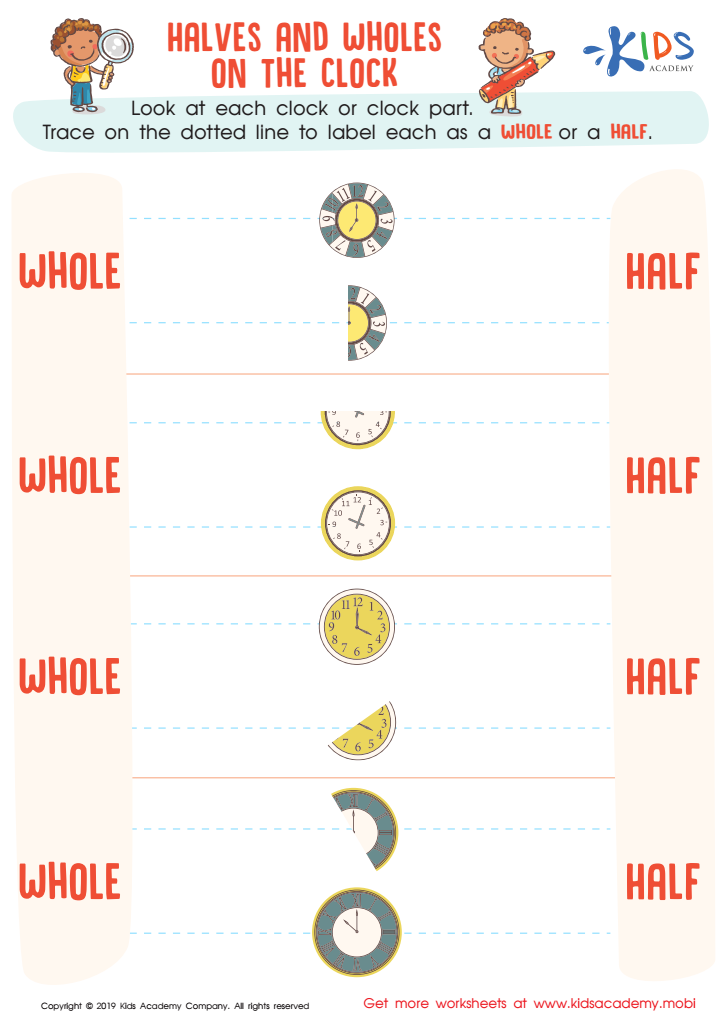
Halves and Wholes on the Clock Worksheet
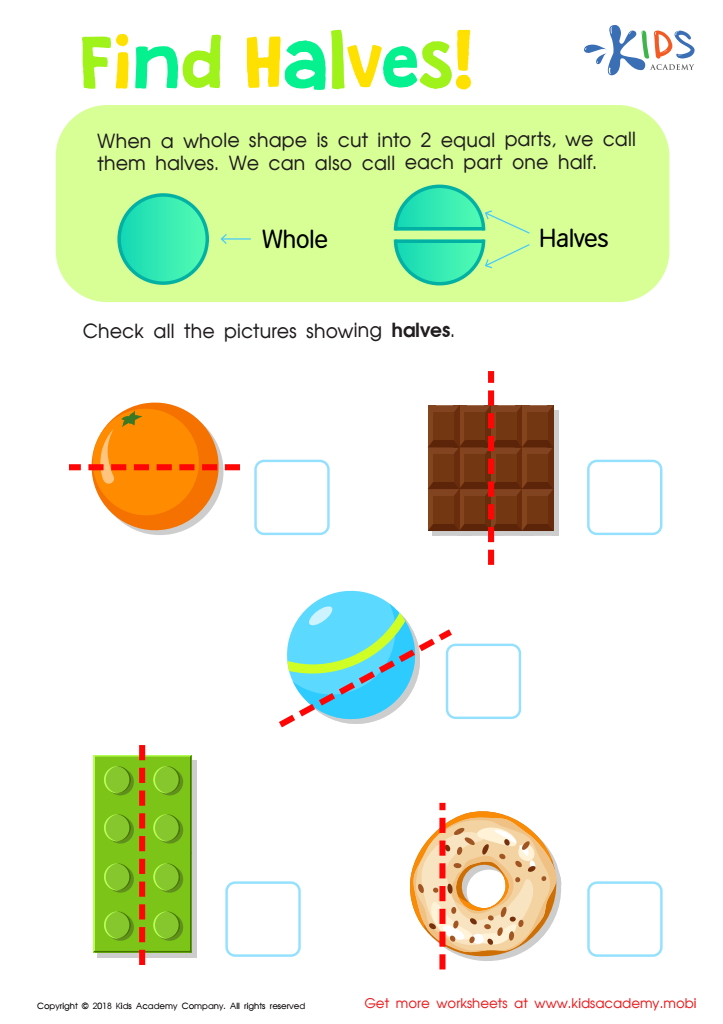
Find Halves Worksheet
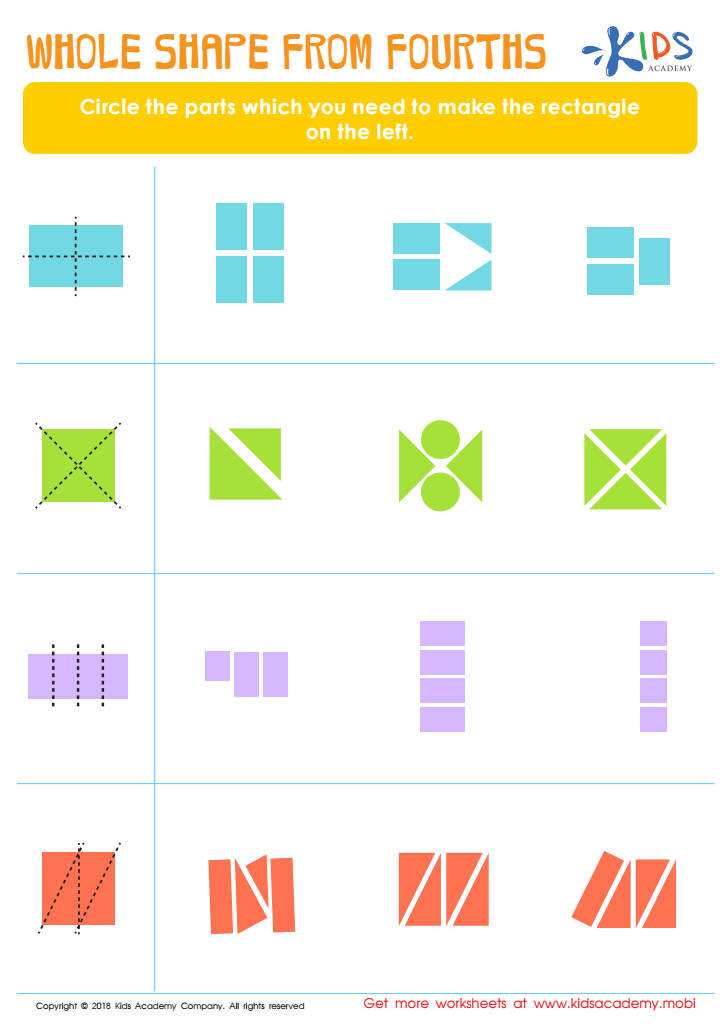
Whole Shape from Fourths Worksheet
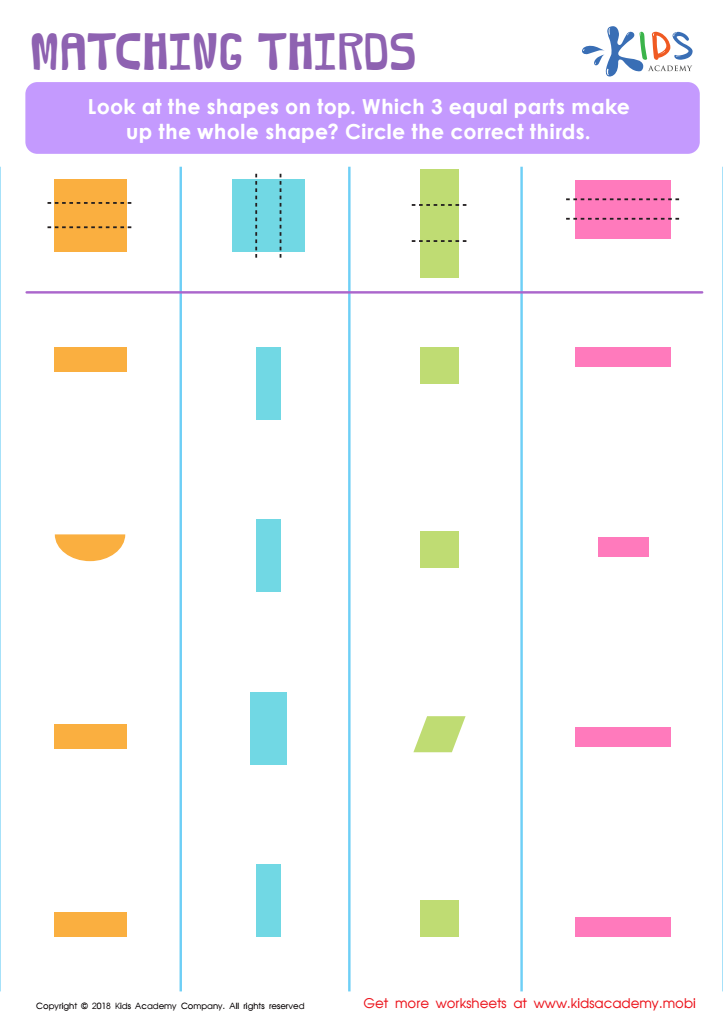
Matching Thirds Worksheet
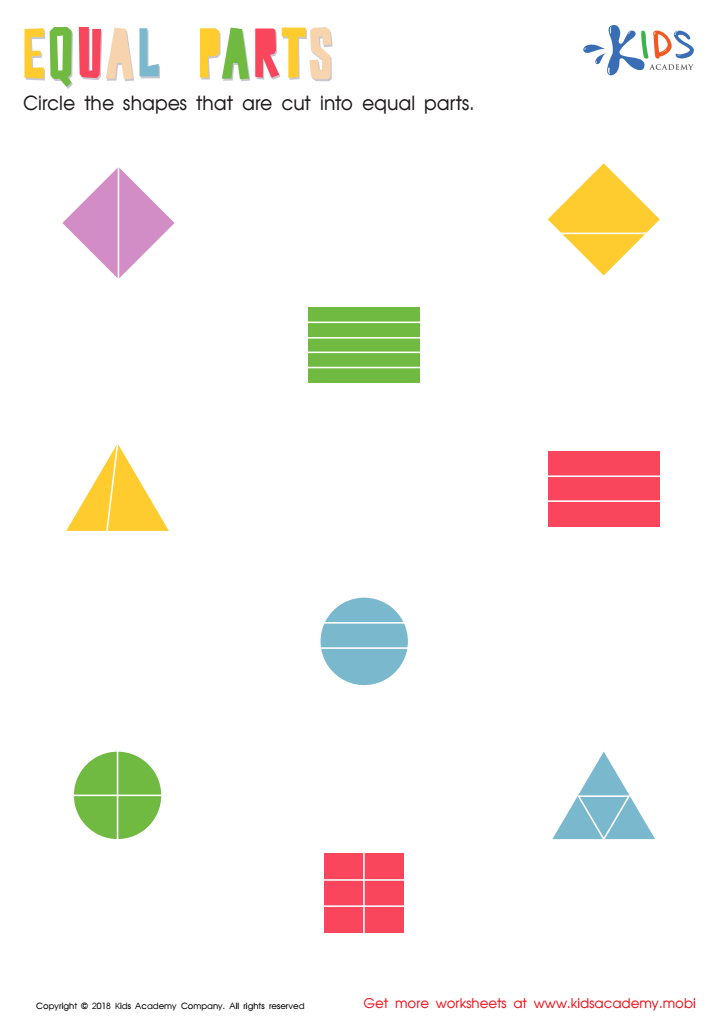
Equal Parts: Shapes Worksheet
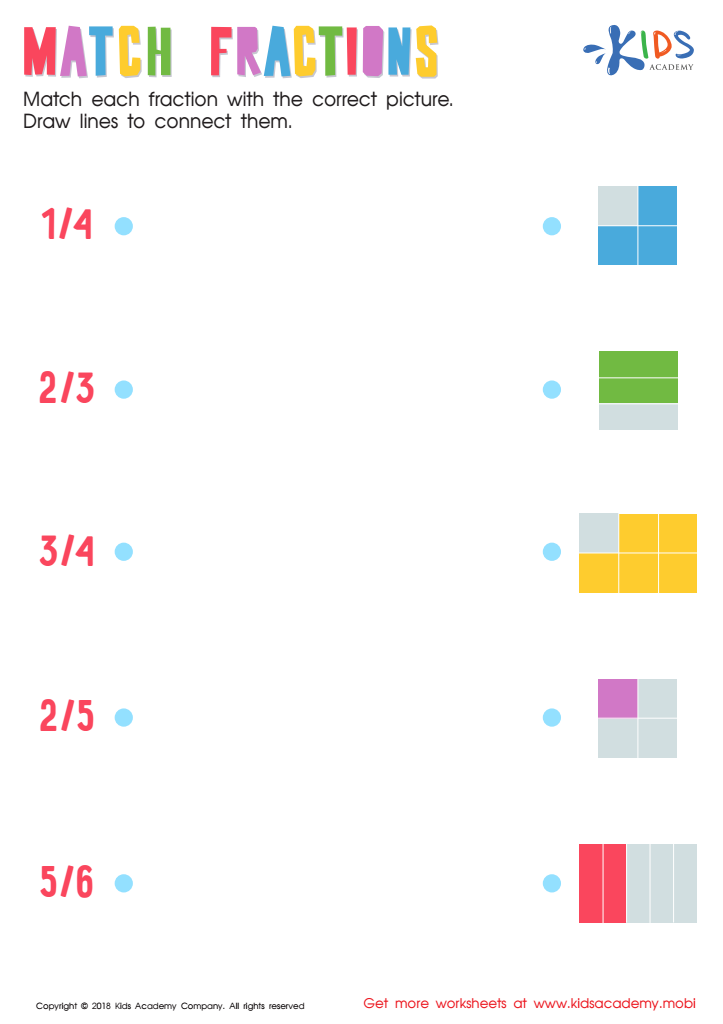
Match Fractions Worksheet
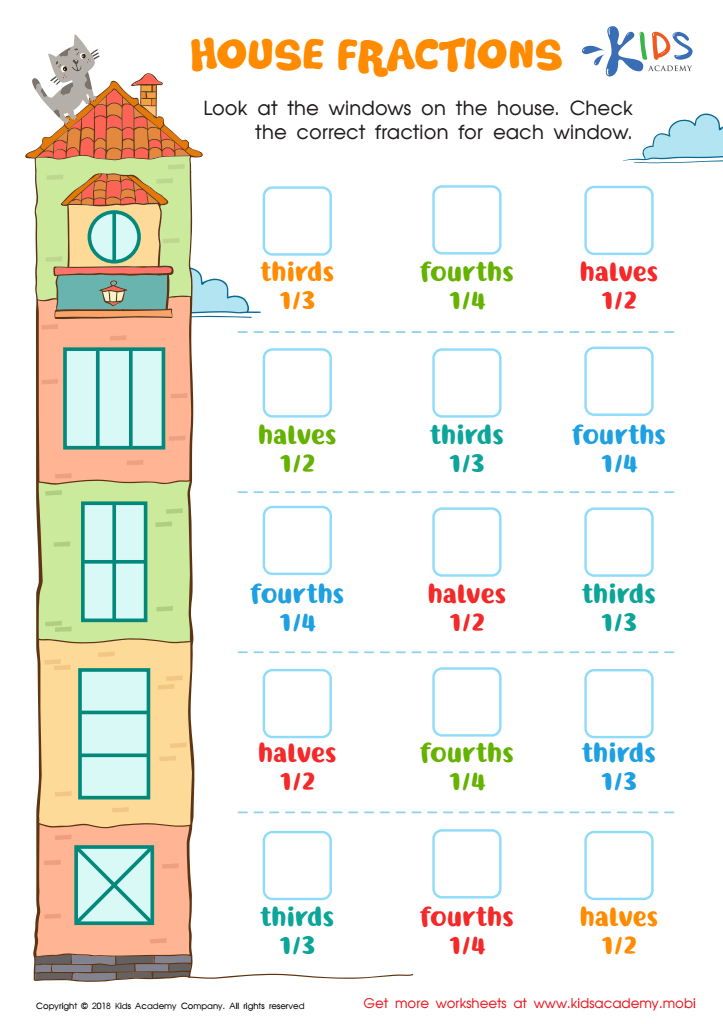
House Fractions Worksheet
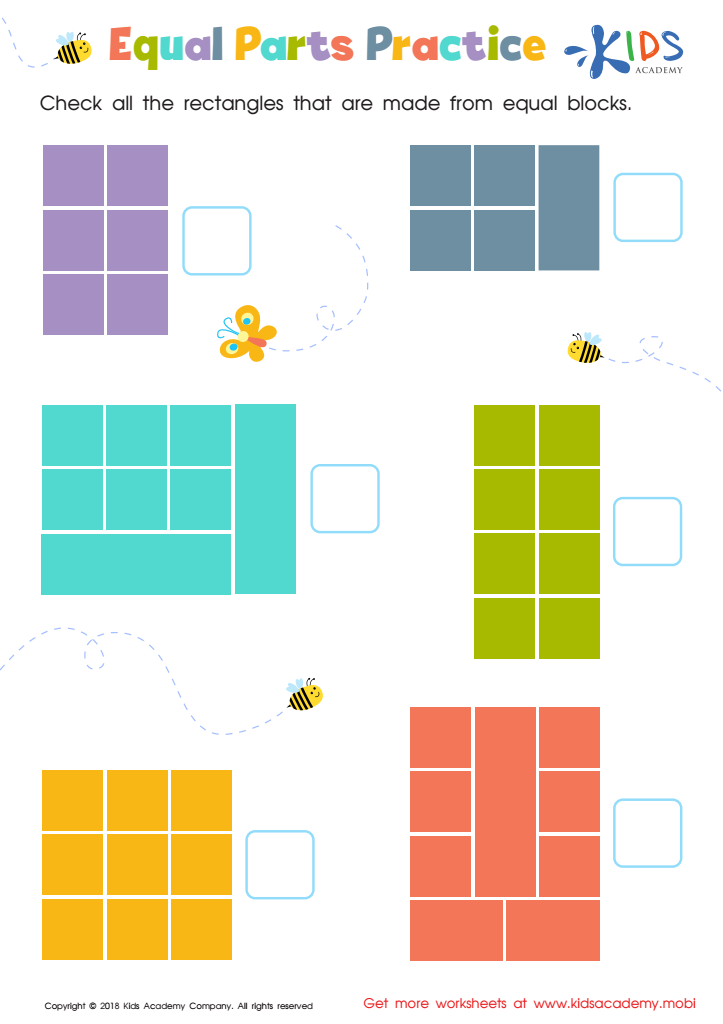
Equal Parts Practice Worksheet
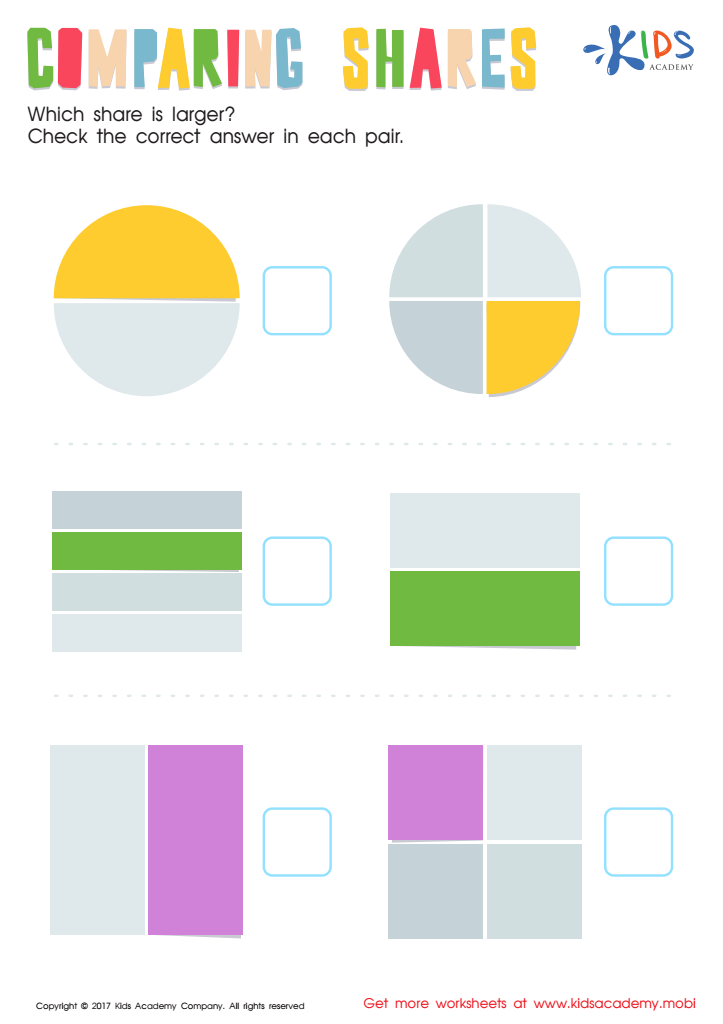
Comparing Shares Worksheet
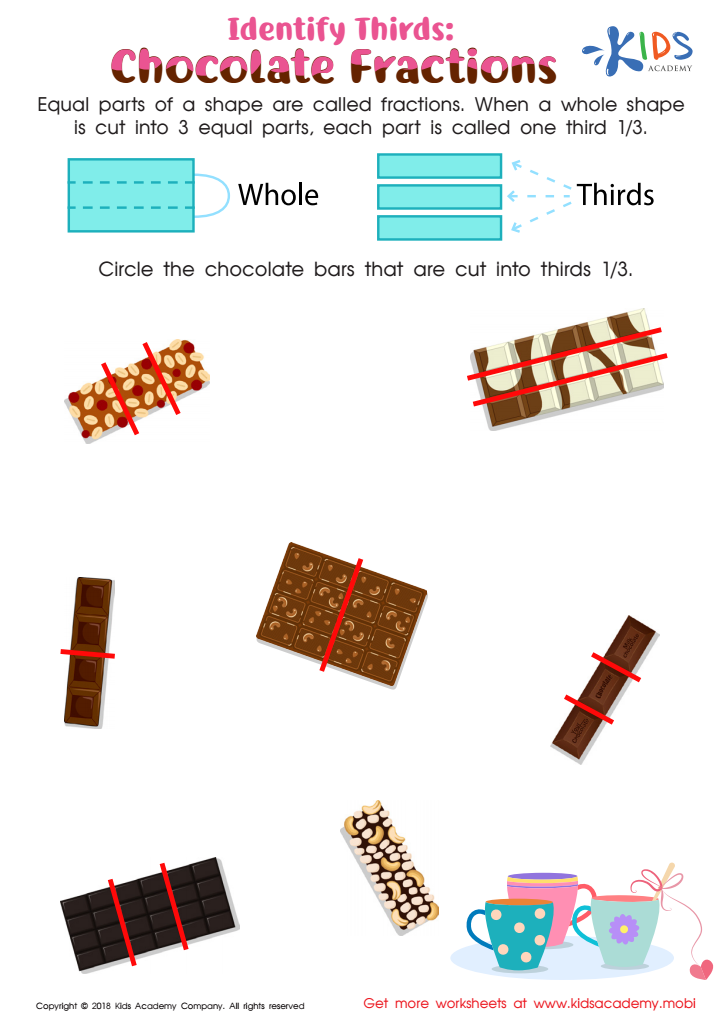
Identify Thirds: Chocolate Fractions Worksheet
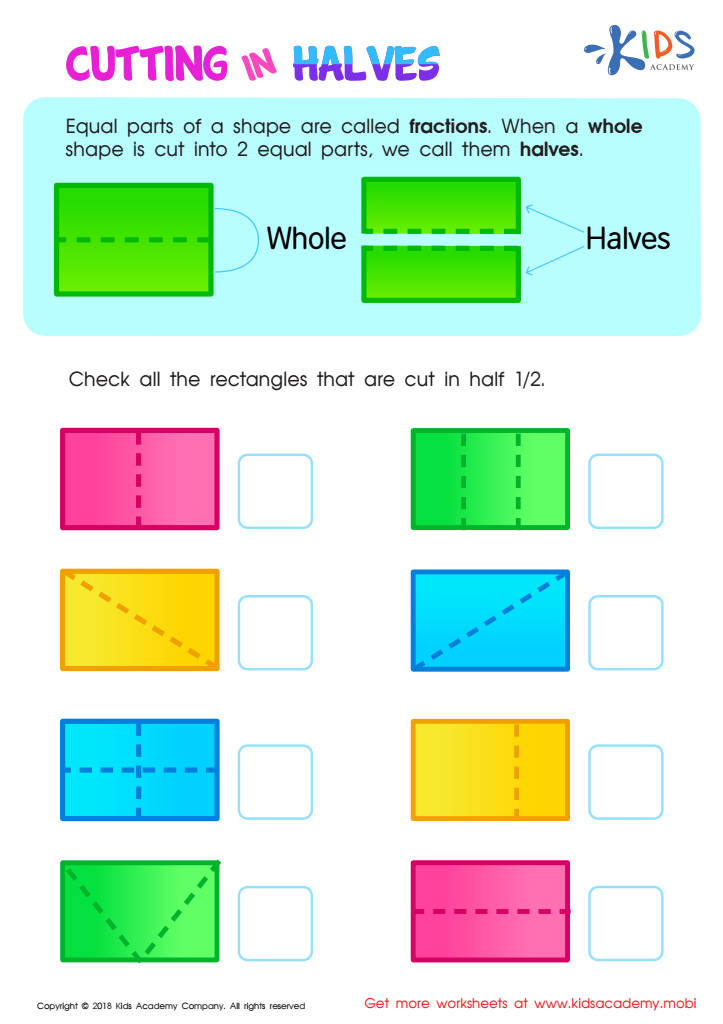
Cutting in Halves Worksheet
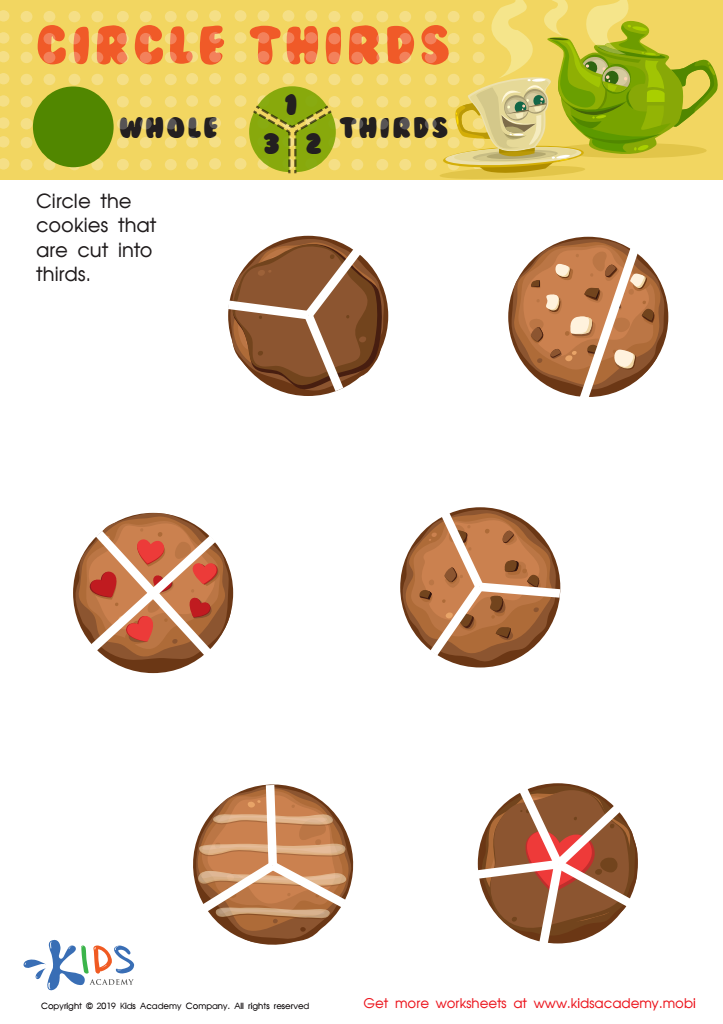
Circle Thirds Worksheet
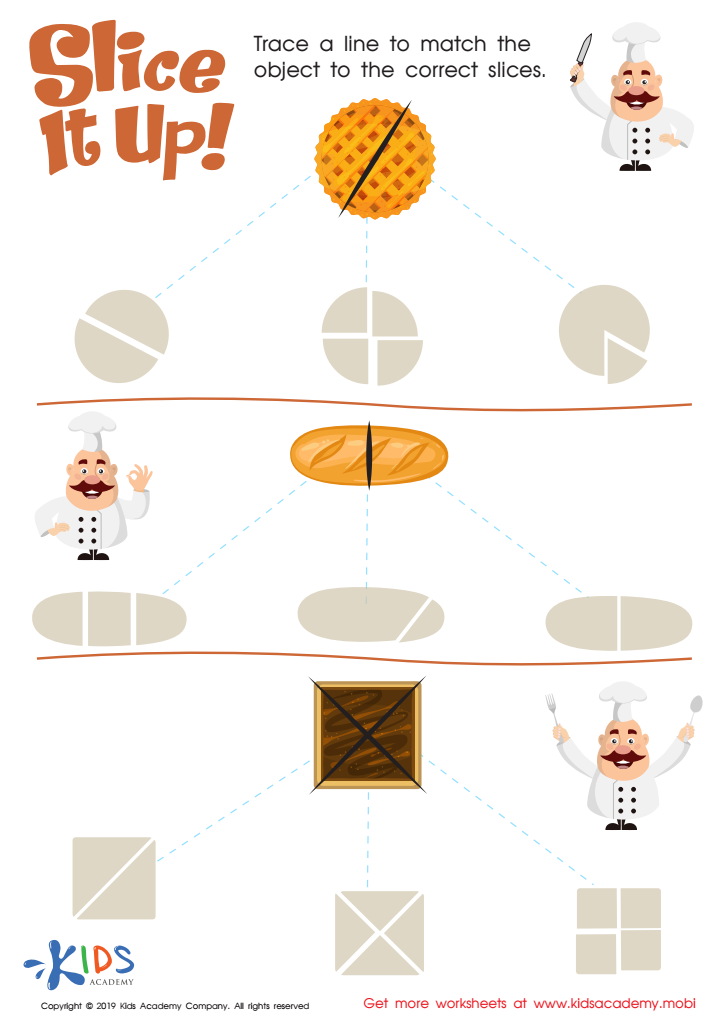
Slice It Up Worksheet
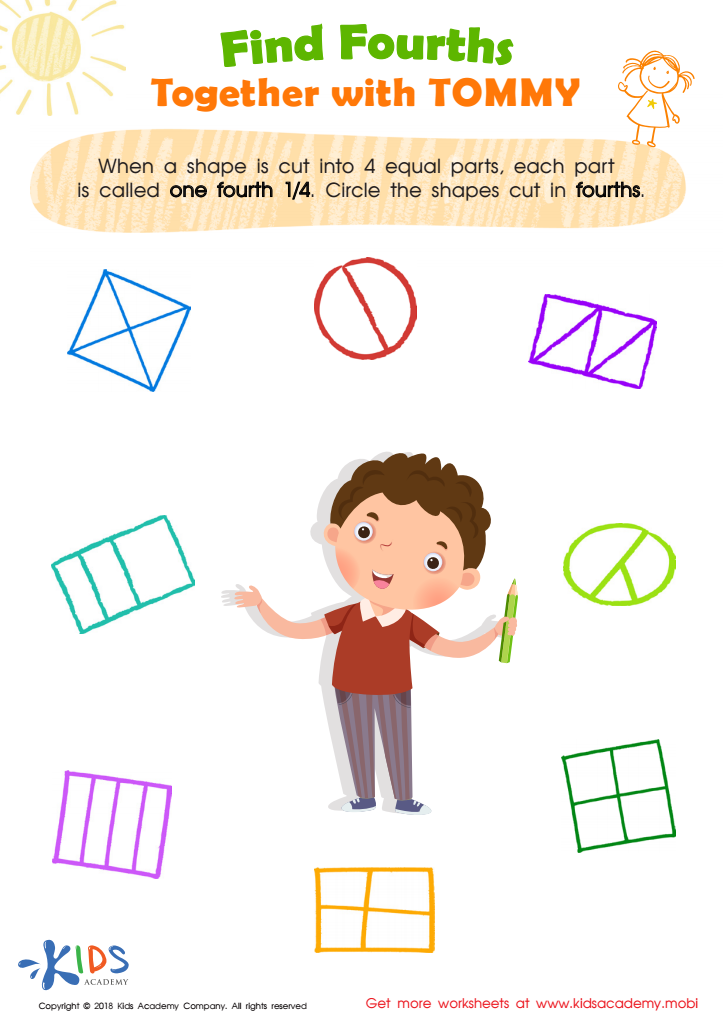
Find Fourths Together with Tommy Worksheet








Understanding fractions and basic geometry at an early age is crucial for children, as it sets the foundation for their future mathematical learning. For children aged 4-8, learning these concepts can initially be introduced through simple activities and visual aids, which make the abstract idea of fractions and geometric shapes tangible.
Firstly, early exposure to fractions—like recognizing halves, thirds, and fourths—helps children grasp the concept of part-whole relationships. This understanding is not only fundamental in advanced mathematics but also applicable in daily activities, such as sharing and dividing objects equally.
Secondly, basic geometry helps children become familiar with shapes, both two-dimensional and three-dimensional, improving their spatial awareness. Recognizing shapes and understanding their properties foster logical thinking and problem-solving skills. These skills carry over to other subjects as well, aiding in their overall cognitive development.
Finally, early proficiency in math builds confidence and enthusiasm towards learning. Instilling a positive attitude during these formative years can lead to better performance in later schooling and a lasting interest in academic pursuits.
Parents and teachers play a pivotal role in fostering these skills, making early education enjoyable and effective. Simple games, drawing, cutting shapes, and using everyday items for fractions can make learning fractions and geometry both fun and impactful for young children.








