Color recognition Easy Numbers Worksheets for Ages 4-8
4 filtered results
-
From - To
Discover our engaging "Color Recognition Easy Numbers Worksheets" designed for children aged 4 to 8! These worksheets help young learners develop essential color recognition skills while introducing foundational number concepts. With vibrant illustrations and interactive activities, children will explore colors through fun number exercises, enhancing both their cognitive and creative abilities. Perfect for parents and teachers alike, these resources support early childhood learning in a playful way. Ideal for print or online use, they promote fine motor skills as kids color, trace, and identify numbers. Help your little ones thrive in their early education with our captivating color recognition worksheets today!
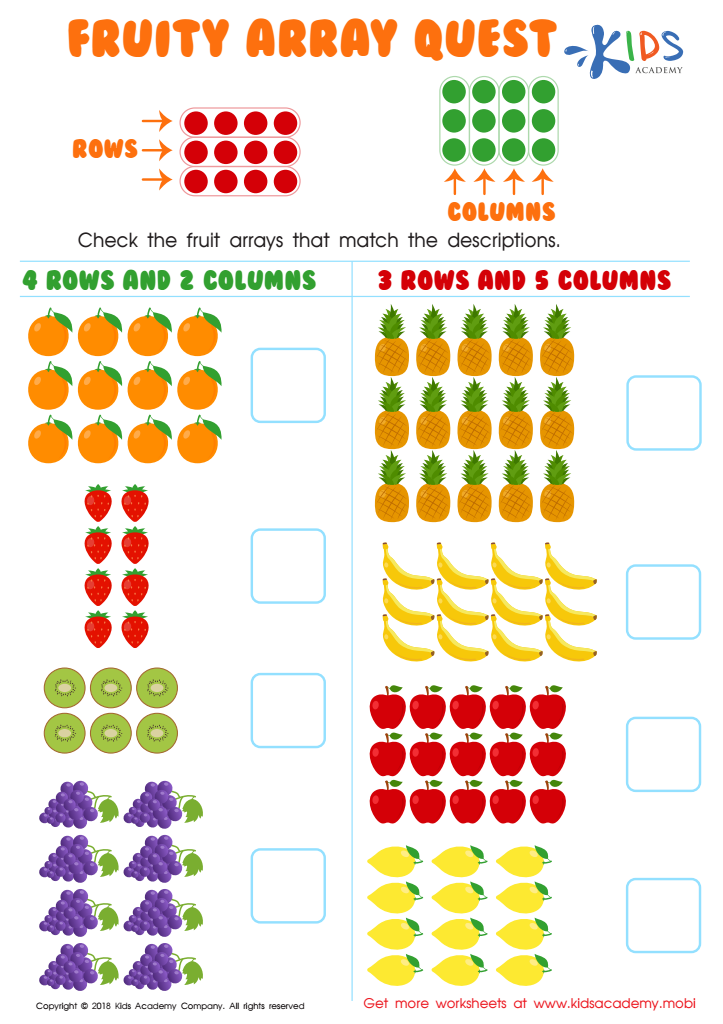
Fruity Array Quest Worksheet
 Assign to My Students
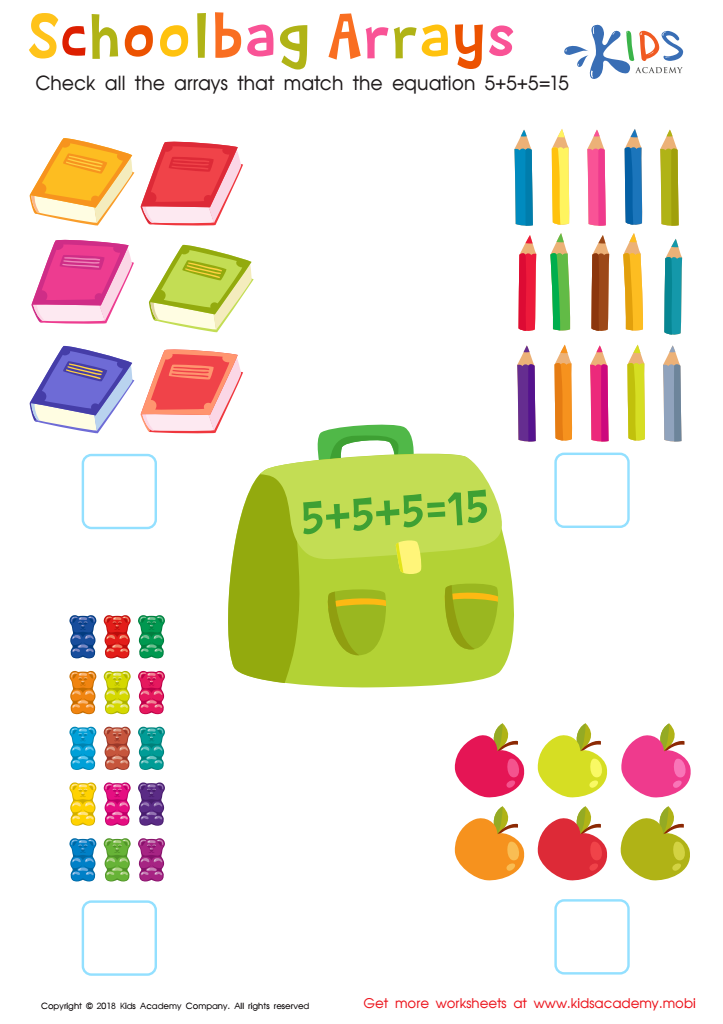
Schoolbag Arrays Worksheet
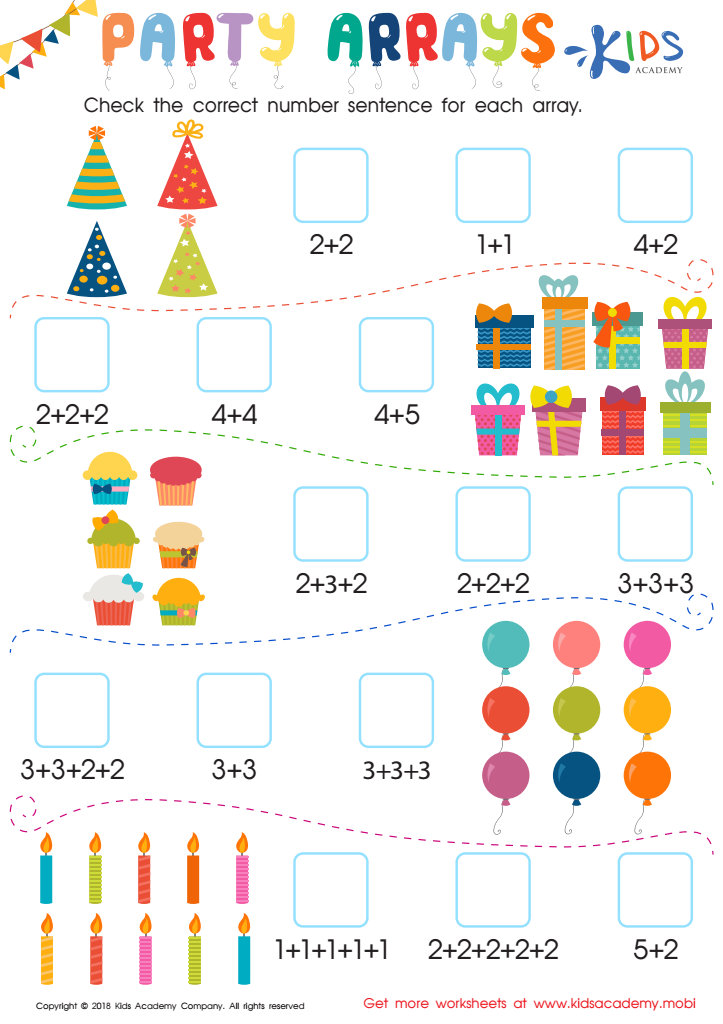
Party Arrays Worksheet
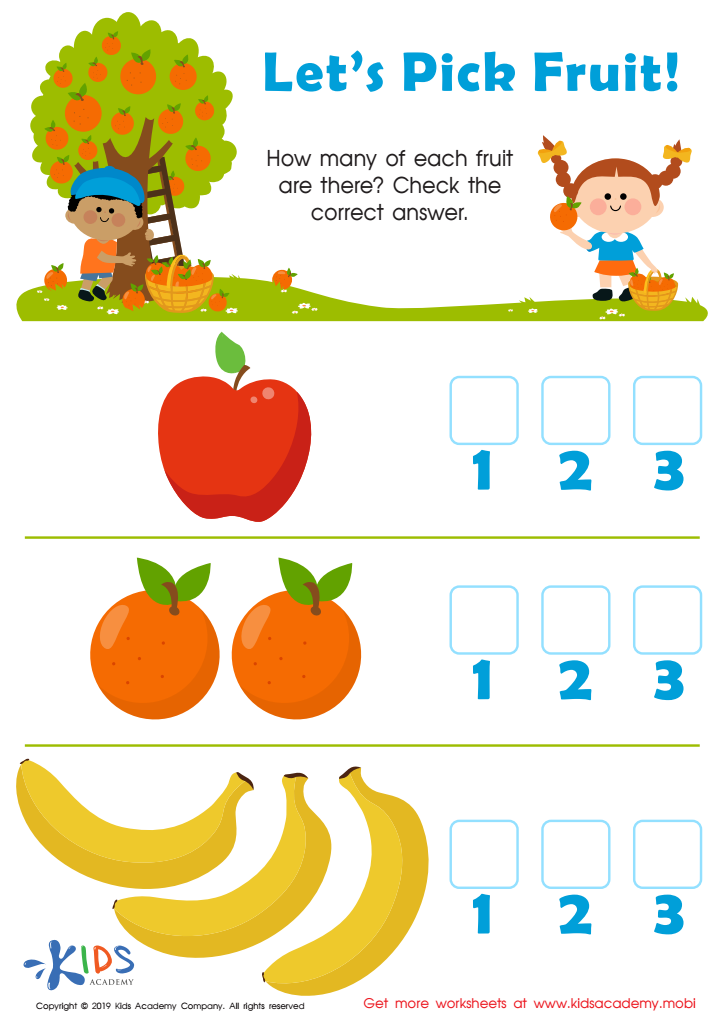
Let's Pick Fruit Worksheet








Color recognition is a foundational skill for children aged 4-8 that goes beyond simply naming hues. Parents and teachers should prioritize developing this skill for several reasons. Firstly, color recognition helps enhance children's cognitive abilities, aiding in their growth in areas such as categorization, memory, and problem-solving. By learning to identify and differentiate colors, children can improve their observational skills—an essential part of their early education.
Moreover, engaging with colors provides opportunities for creative expression and communication. Through activities involving colors, children can articulate their thoughts and feelings in a more vivid manner, fostering both artistic and emotional development. Additionally, recognizing colors aids in developing basic math skills. For example, when children count or group colored objects, they not only reinforce number recognition but also understand the concept of sorting and classifying.
Lastly, color recognition can enhance daily life skills. From dressing themselves to following instructions requiring awareness of colors, this skill is essential for independence. Overall, nurturing color recognition builds a child's confidence and lays the groundwork for academic success, making it crucial for parents and teachers to prioritize this essential element of early childhood education.








