Color recognition Easy Math Worksheets for Ages 4-8
6 filtered results
-
From - To
Welcome to our "Color Recognition Easy Math Worksheets" designed for kids ages 4-8! These engaging worksheets combine fun with learning, helping young learners easily identify colors while practicing essential math skills. Our carefully crafted activities encourage creativity and critical thinking, making early education enjoyable. Perfect for home or classroom settings, these worksheets feature colorful images and scenarios that captivate children's attention, reinforcing knowledge through interactive exercises. Ideal for parents and teachers seeking effective resources, our worksheets promote color recognition, enhance cognitive development, and build a strong foundational understanding of math. Explore our collection today to inspire a love for learning in your child!
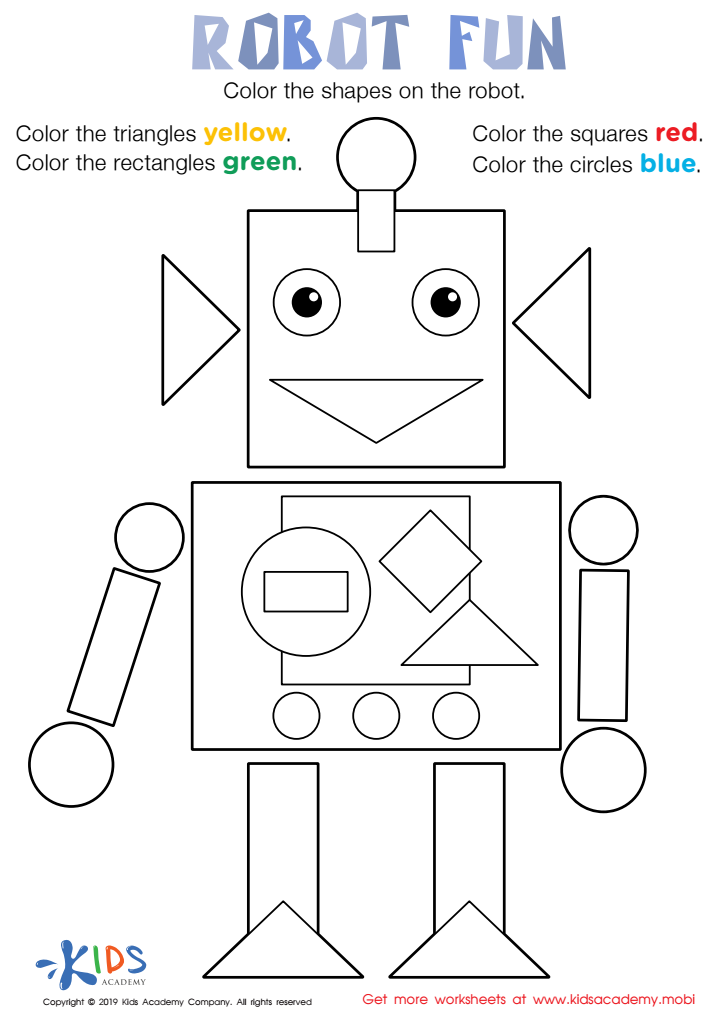
Robot Fun Worksheet
 Assign to My Students
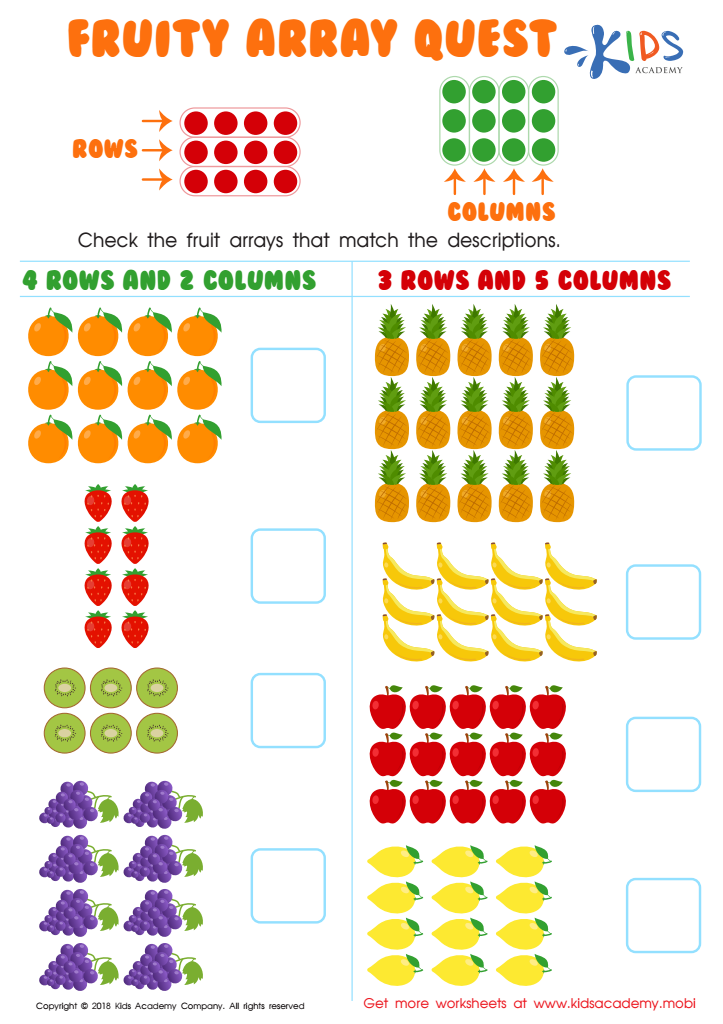
Fruity Array Quest Worksheet
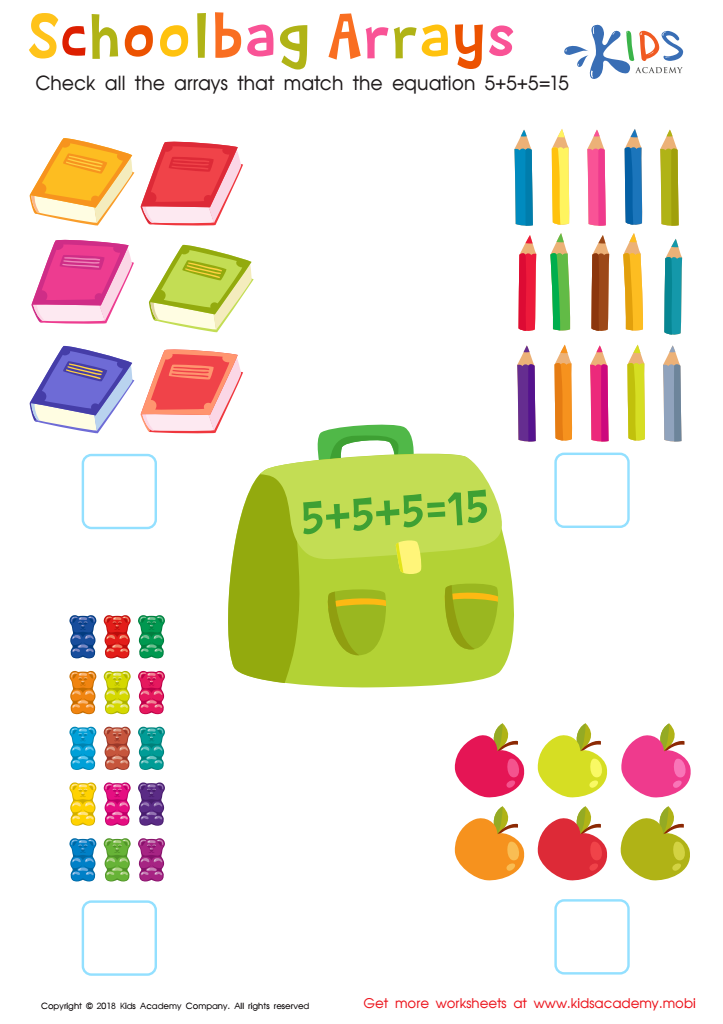
Schoolbag Arrays Worksheet
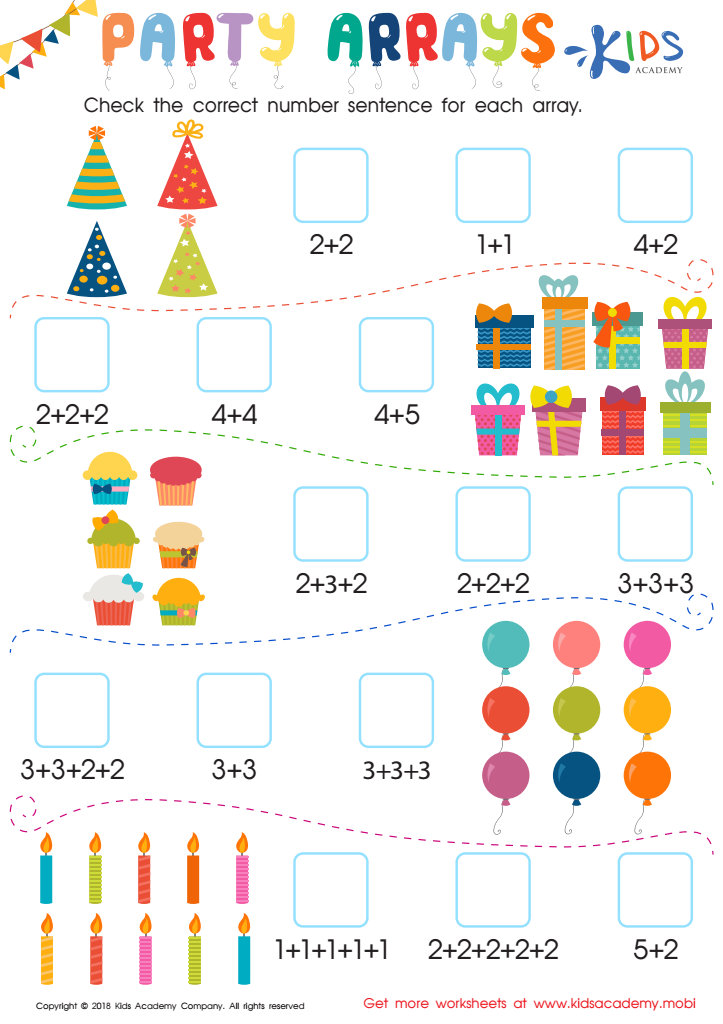
Party Arrays Worksheet
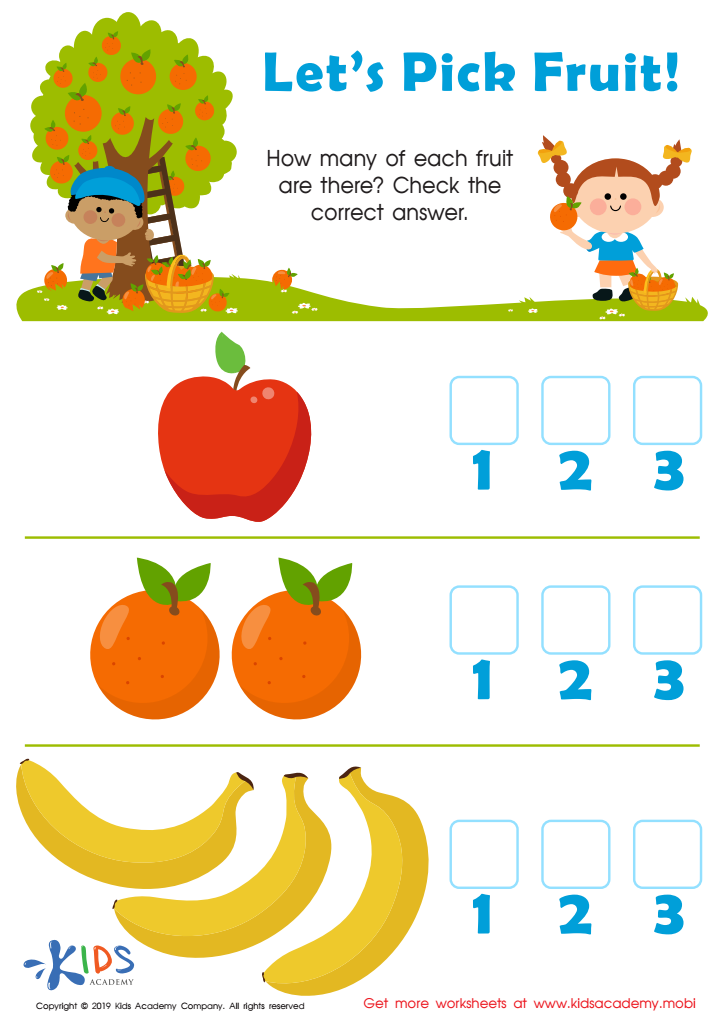
Let's Pick Fruit Worksheet
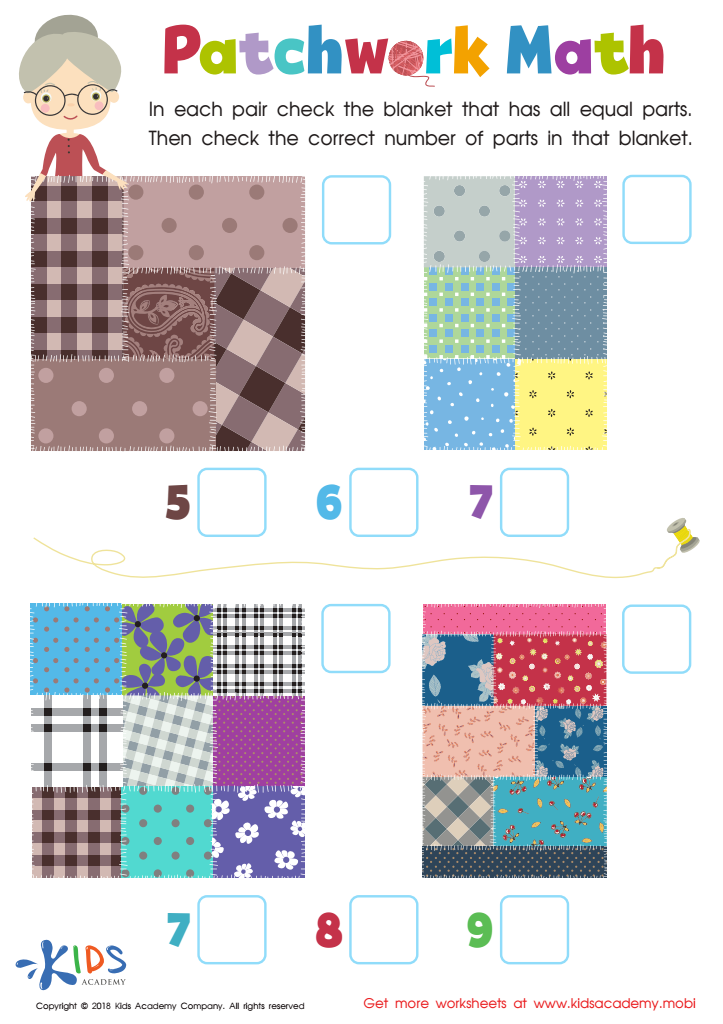
Patchwork Math Worksheet






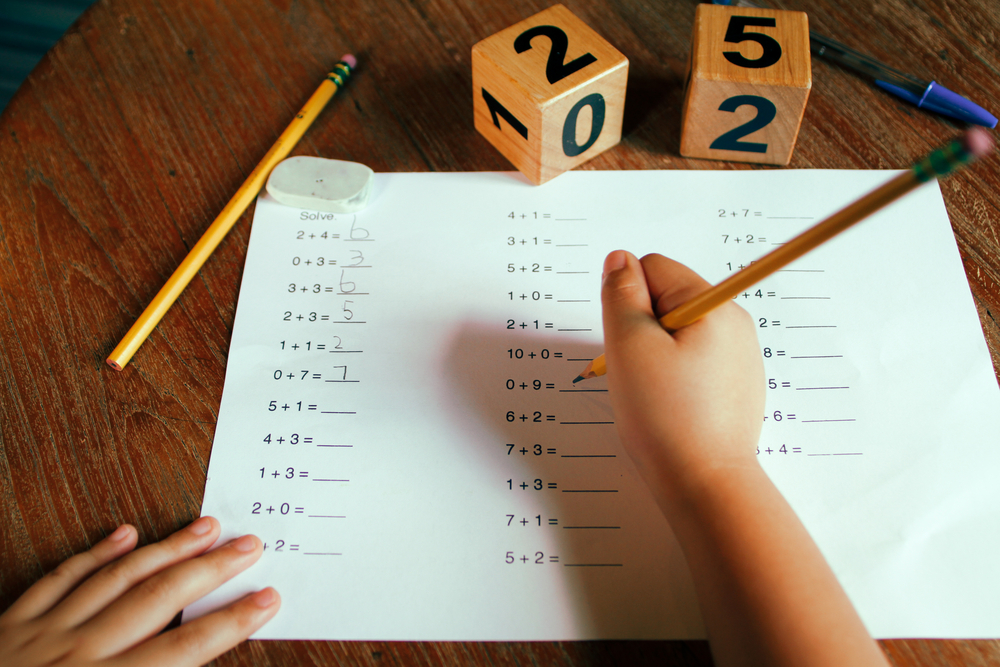
Color recognition and foundational math skills are essential components of early childhood education that significantly impact a child's cognitive development. For ages 4 to 8, mastering color identification is a vital skill that not only enhances visual perception but also aids in language development and categorization. When children can recognize and differentiate colors, they build a strong awareness of their environment, enriching their communication and sensory experiences.
Easy math activities, particularly those integrated with color learning, engage young learners effectively. By using colorful counting blocks, sorting games, or color-coded addition and subtraction exercises, teachers and parents can create an interactive and enjoyable learning experience. This hands-on approach helps solidify mathematical concepts in a fun way, allowing kids to see math as an exciting challenge rather than a chore.
Furthermore, grasping these skills early on sets a solid foundation for future academic success. Color recognition improves attention to detail and enhances problem-solving skills, vital for mathematical reasoning. When parents and teachers prioritize these areas, they cultivate a love for learning and empower children with the confidence they need as they progress in their education. Ultimately, attention to color recognition and easy math boosts overall development and prepares children for lifelong learning adventures.








