Data interpretation Easy Measurement Worksheets for Ages 4-8
7 filtered results
-
From - To
Discover our engaging Data Interpretation Easy Measurement Worksheets, designed specifically for children aged 4 to 8. These worksheets introduce young learners to basic concepts of measurement and data interpretation in a fun and accessible way. With colorful visuals and interactive activities, kids will practice collecting, organizing, and analyzing data using simple graphs and charts. Perfect for early education, these resources help enhance critical thinking and strengthen mathematical skills. Support your child's learning journey with our user-friendly worksheets that cater to diverse learning styles, making math both enjoyable and educational. Start inspiring your little ones today with our carefully crafted measurement activities!
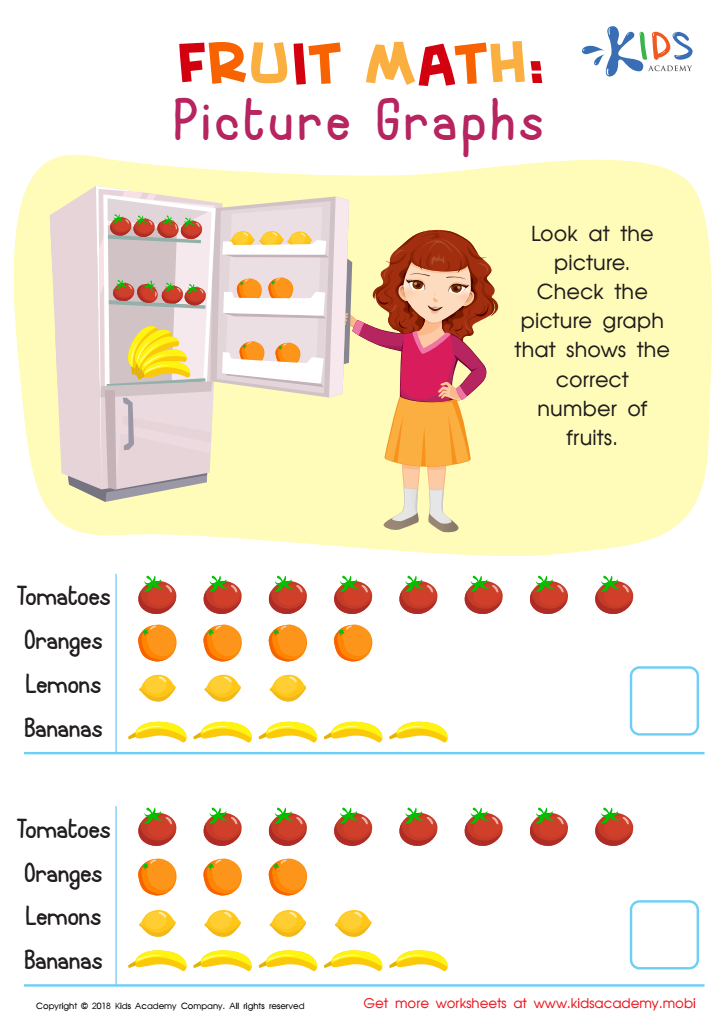
Fruit Math: Picture Graphs Worksheet
 Assign to My Students
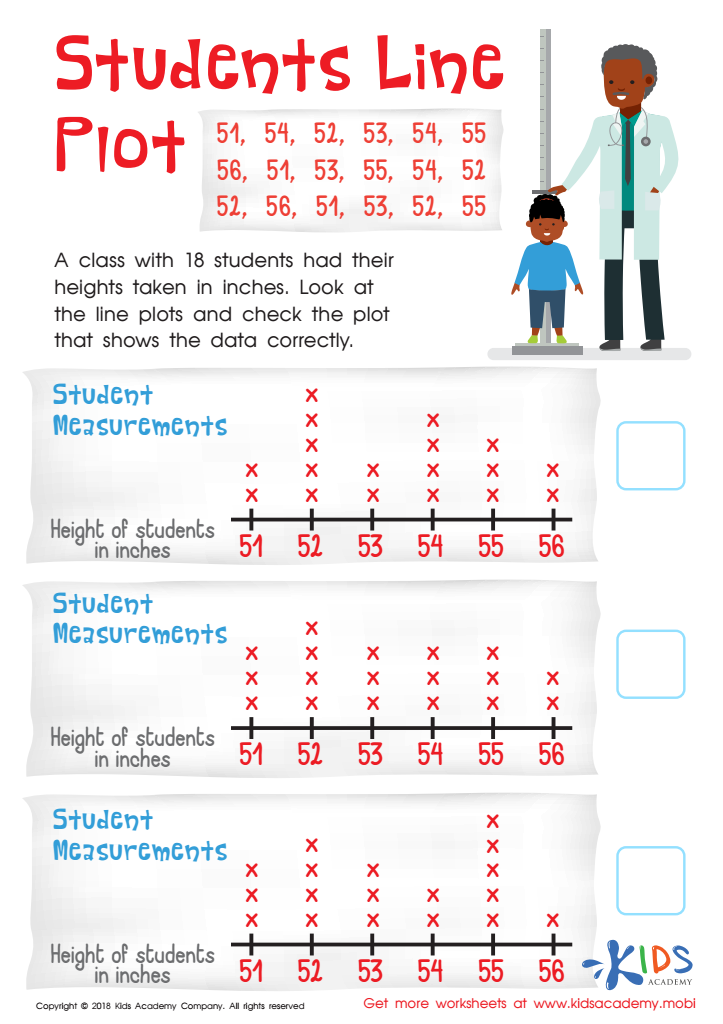
Students Line Plot Worksheet
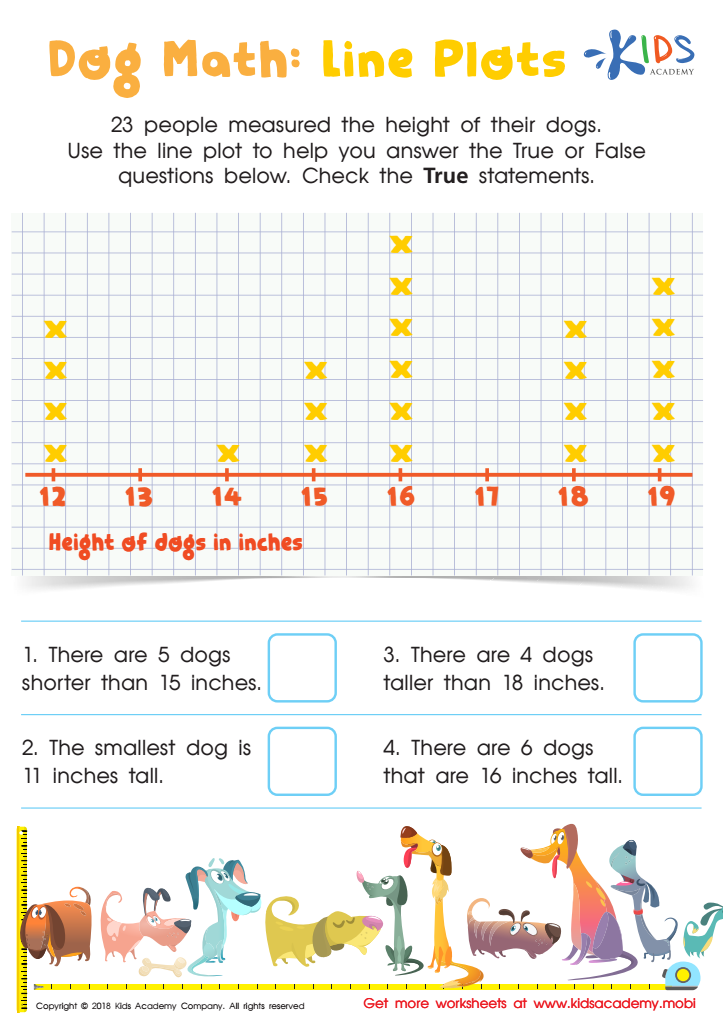
Dog Math: Line Plots Worksheet
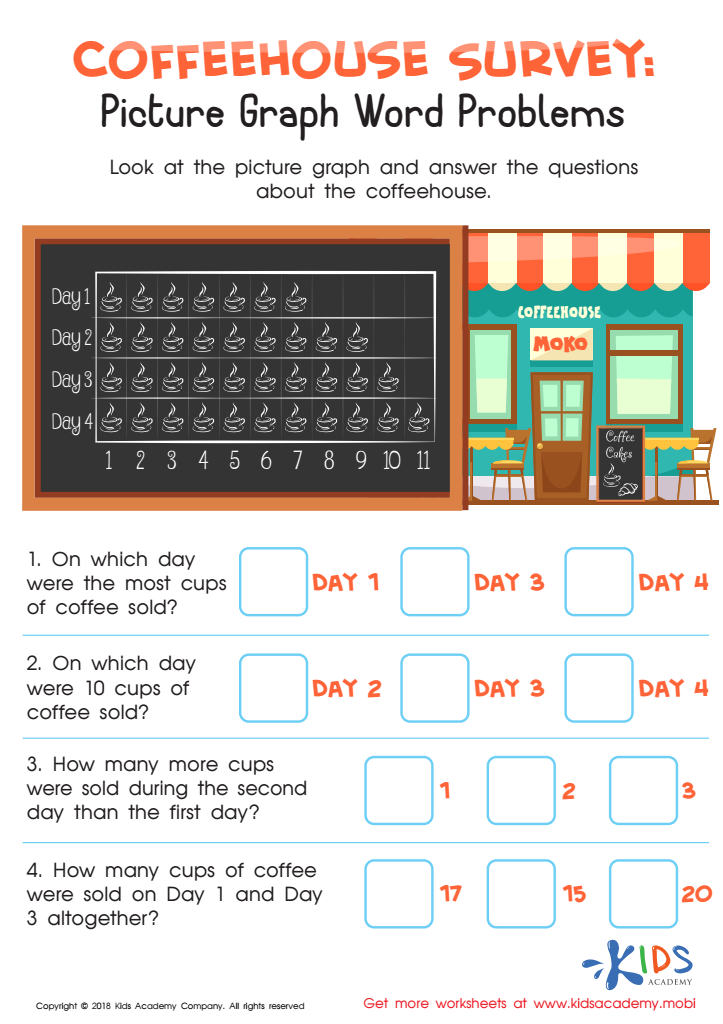
Coffeehouse Survey: Picture Graph Word Problems Worksheet
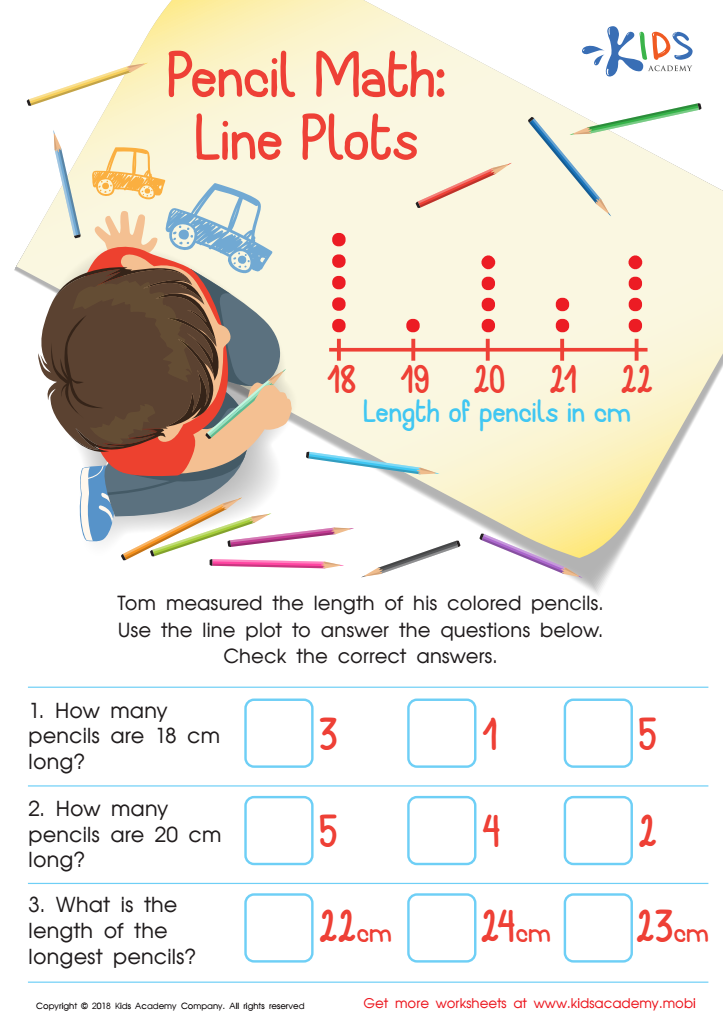
Pencil Math: Line Plots Worksheet
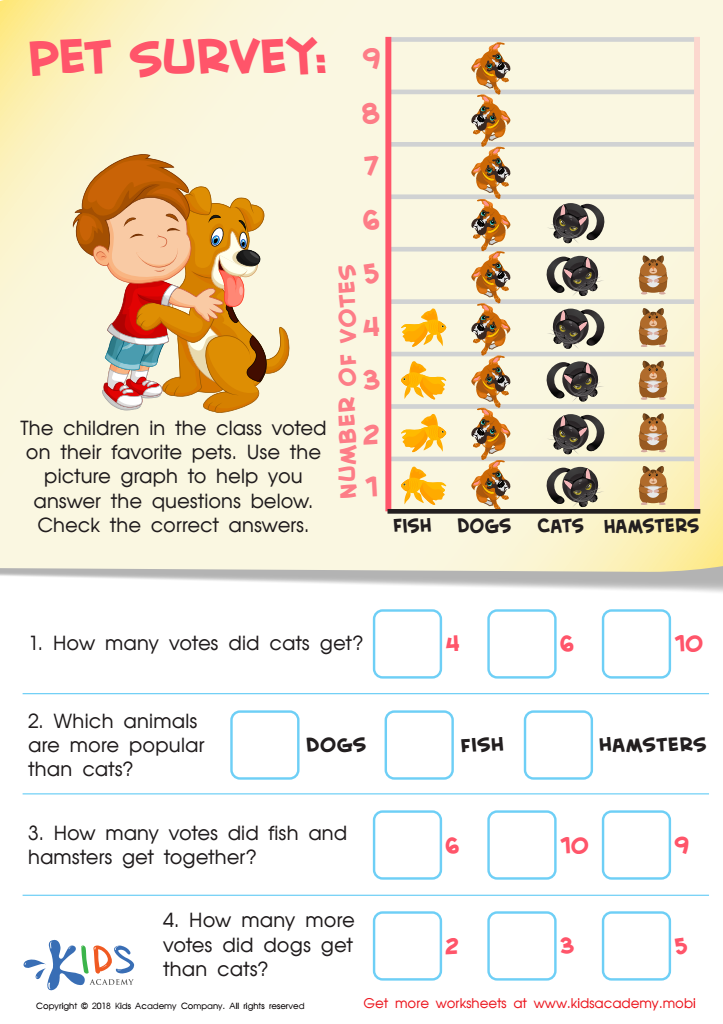
Pet Survey Worksheet
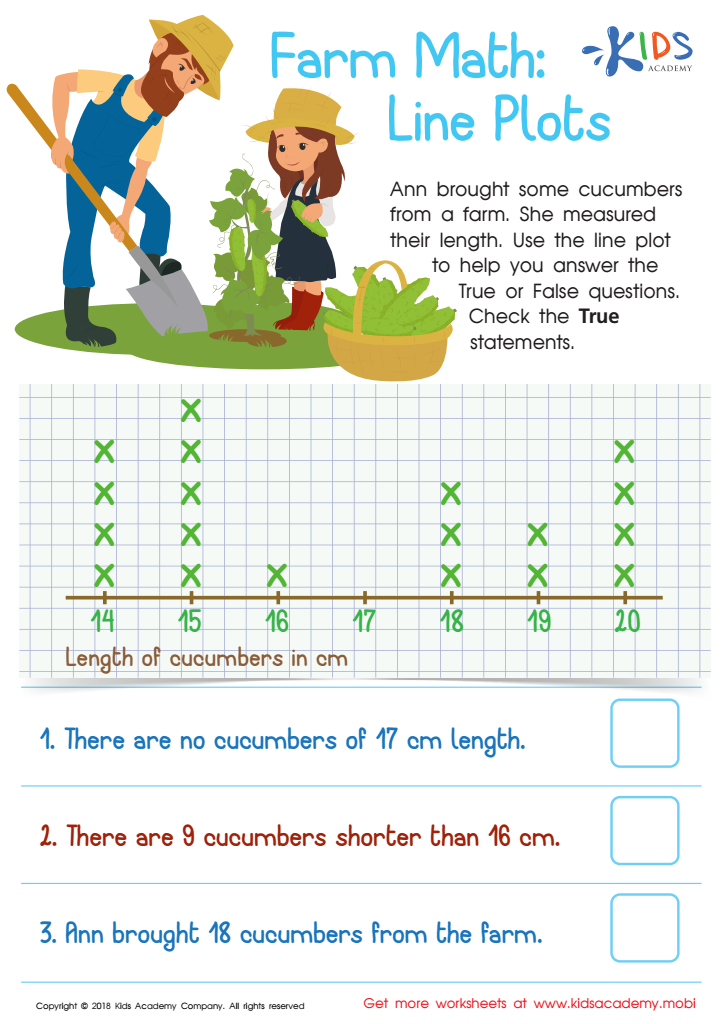
Farm Math: Line Plots Worksheet








Data interpretation and easy measurement skills are crucial for children aged 4-8 as they lay the foundation for critical thinking and analytical abilities. By introducing young learners to these concepts, parents and teachers can equip them with essential life skills that go beyond mathematics. Understanding how to collect, analyze, and interpret data fosters curiosity, allowing children to engage with the world more meaningfully. For instance, by measuring objects or tracking their daily activities, children learn to recognize patterns, make comparisons, and draw conclusions.
Furthermore, integrating data interpretation into practical activities helps make learning relatable and fun. Utilizing everyday experiences—such as counting fruits, measuring playground time, or tracking weather patterns—turns abstract concepts into tangible experiences. This hands-on approach not only enhances engagement but also reinforces a child’s ability to communicate findings, promoting language skills.
Moreover, as students progress in their education, the ability to interpret data becomes increasingly vital. Many subjects, including science, social studies, and mathematics, require a foundational understanding of trends and statistics. By nurturing these skills early, parents and teachers can help build confidence and competence in young learners, ultimately preparing them for more advanced academic challenges in the future.








