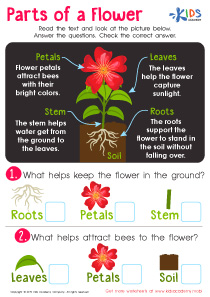
Vocabulary expansion Easy Reading Fiction Worksheets for Ages 4-8
5 filtered results
-
From - To
Unlock the wonders of reading with our "Vocabulary Expansion Easy Reading Fiction Worksheets" designed for children ages 4-8! These engaging worksheets enhance literacy through fun, interactive activities that encourage vocabulary growth. Each worksheet combines captivating fiction stories with exercises tailored to introduce new words in context, aiding comprehension and retention. Ideal for early learners, our resources foster a love for reading while steadily building essential language skills. Parents and educators will find these worksheets perfect for classroom or home use, making learning enjoyable and effective. Start your child's literacy journey today with our enriching, easy-to-follow reading materials!
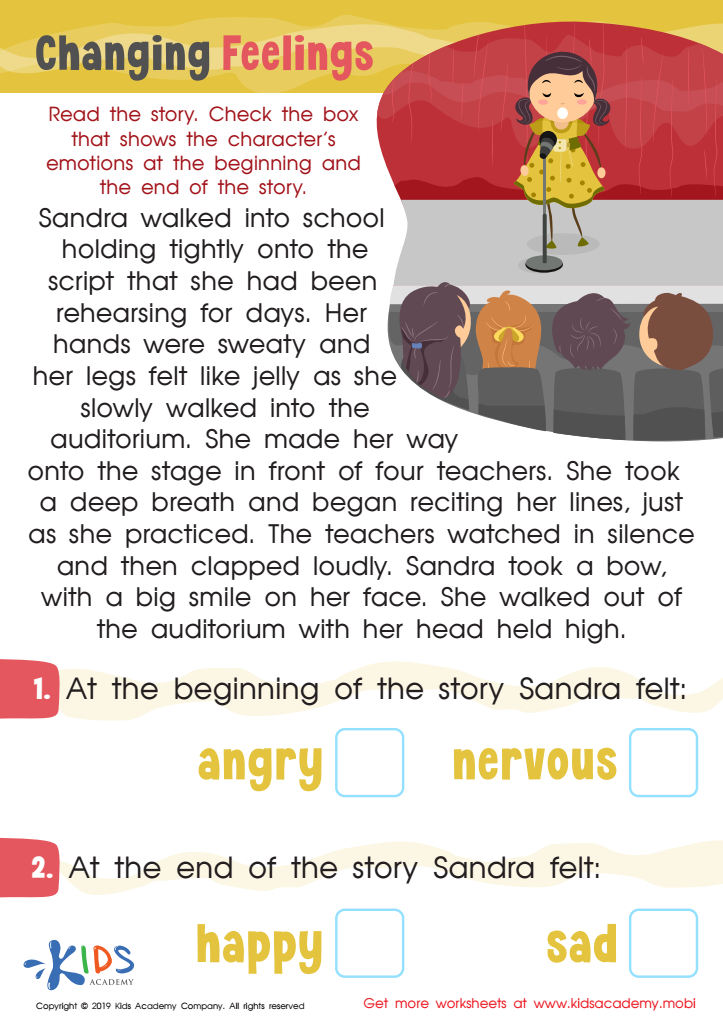
Changing Feelings Worksheet
 Assign to My Students
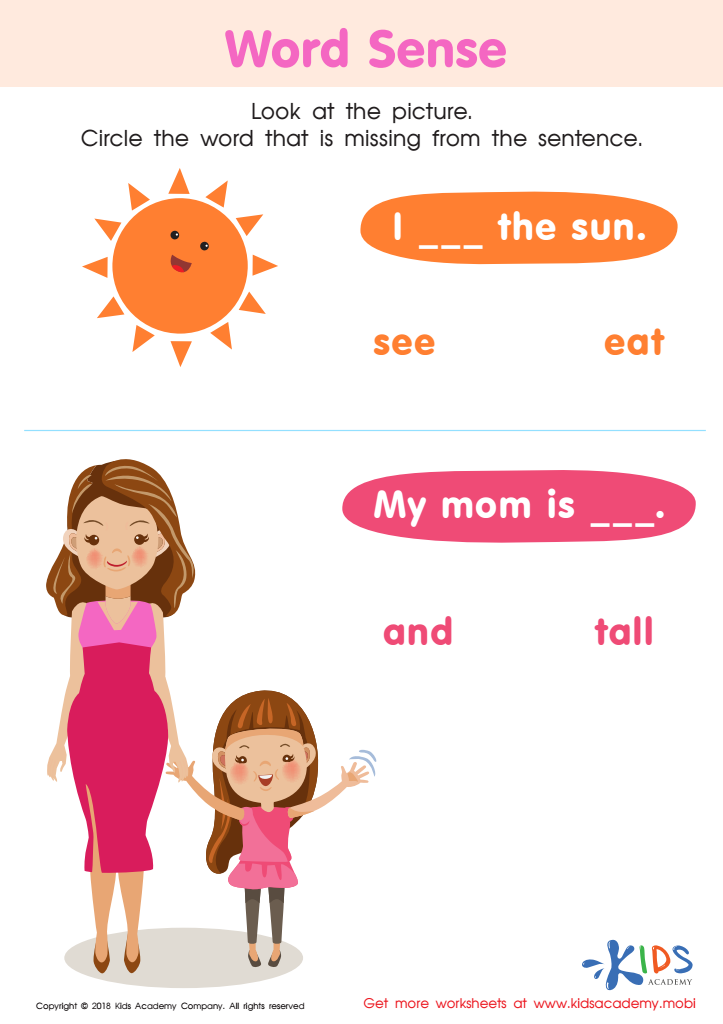
Word Sense Worksheet
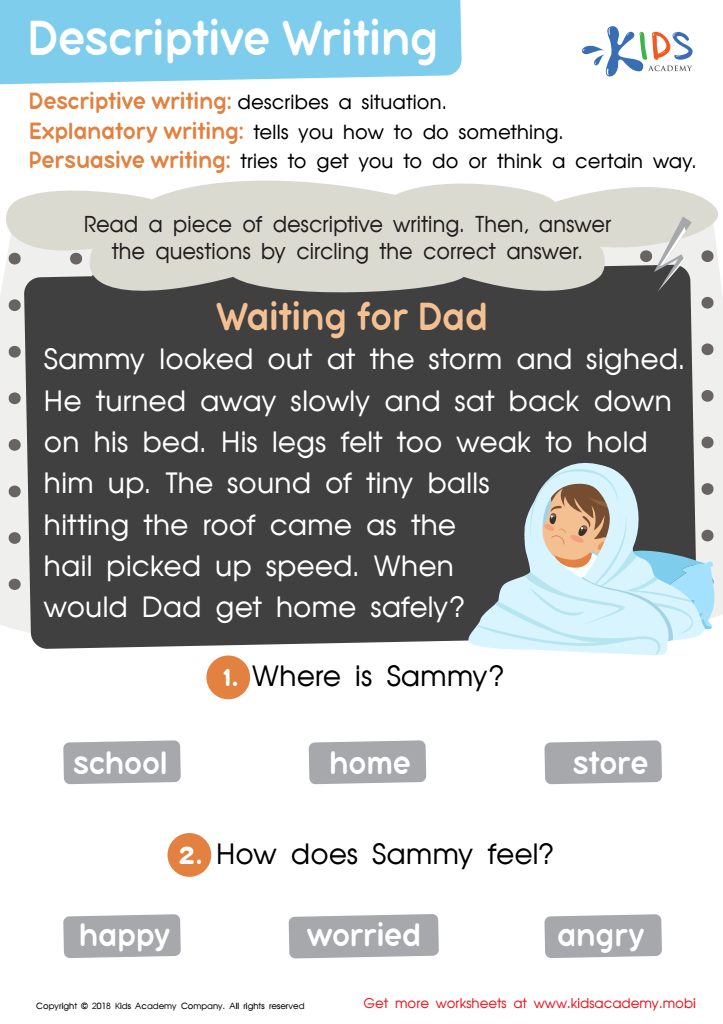
Descriptive Writing Worksheet: Part 2
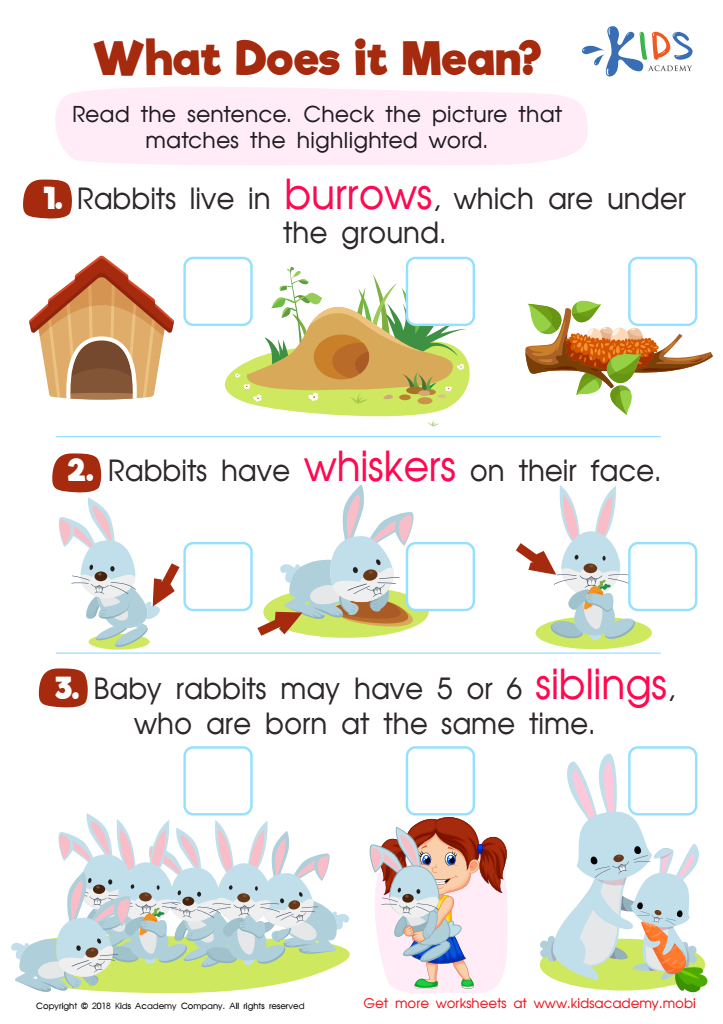
What Does It Mean? Worksheet
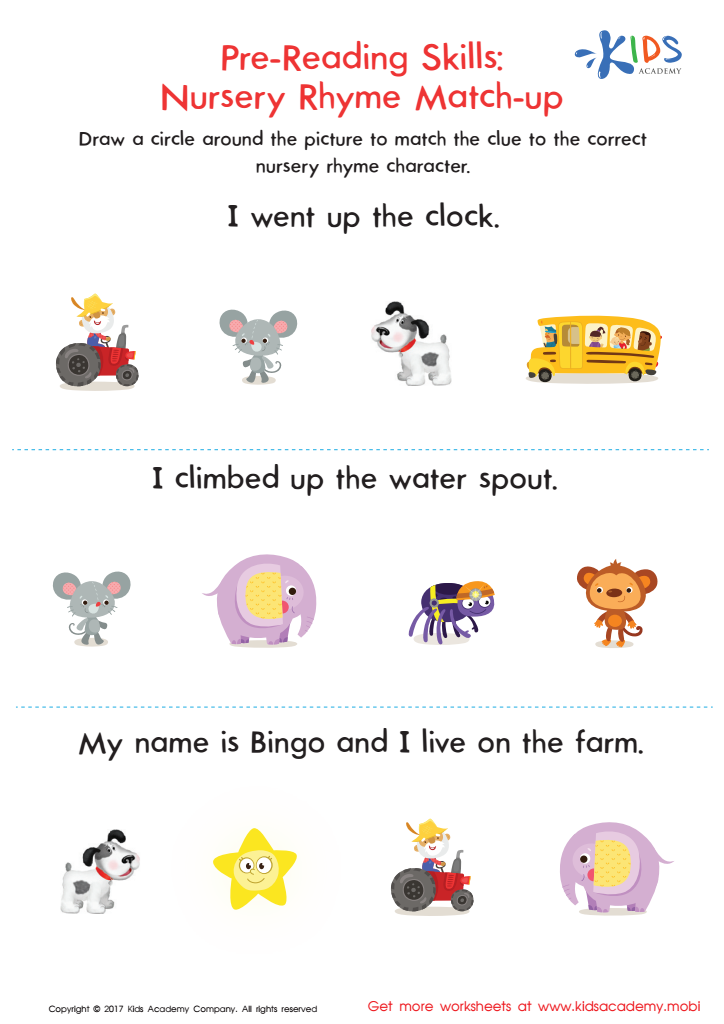
Nursery Rhyme Match–Up Worksheet





.jpg)

.jpg)
Parents and teachers should prioritize vocabulary expansion through easy reading fiction for children aged 4-8, as it significantly impacts their language development and cognitive growth. At this developmental stage, children are rapidly acquiring language skills, and exposure to rich, diverse vocabulary enhances their ability to express thoughts, ideas, and emotions effectively.
Easy reading fiction presents age-appropriate narratives that engage young readers while providing contextualized vocabulary learning. With imaginative stories and relatable characters, these books promote enjoyment in reading, making it more likely that children will develop a lifelong love for literature. Encountering new words within context hones comprehension skills, fostering better understanding and retention.
Moreover, a strong vocabulary foundation is linked to improved literacy skills and academic performance in later years. Children with rich vocabularies are better equipped to tackle complex subjects in school, enhancing overall learning experiences. Additionally, reading fiction helps develop empathy and social skills by exposing children to different perspectives and cultures.
In summary, investing time in easy reading fiction not only enriches children's vocabulary but also nurtures their emotional, social, and intellectual growth, setting them on a path for success in school and beyond. Engaging with stories allows children to explore language in a fun, meaningful context.