
Color Identification Easy Worksheets for Ages 4-9
6 filtered results
Difficulty Level
Grade
Age
-
From - To
Subject
Activity
Standards
Explore our Color Identification Easy Worksheets designed for children aged 4-9! These engaging worksheets help kids recognize and name colors through interactive activities, such as coloring, matching, and identifying objects. Perfect for early learners, our resources strengthen visual discrimination, enhance fine motor skills, and boost confidence. With vibrant illustrations and age-appropriate exercises, children will enjoy every learning moment. Ideal for preschool and elementary students, our easy-to-use printables are great for at-home practice or classroom enrichment. Spark your child's creativity and support their developmental milestones with our fun and educational color identification worksheets! Visit us to download your free copies today.
Favorites
With answer key
Interactive
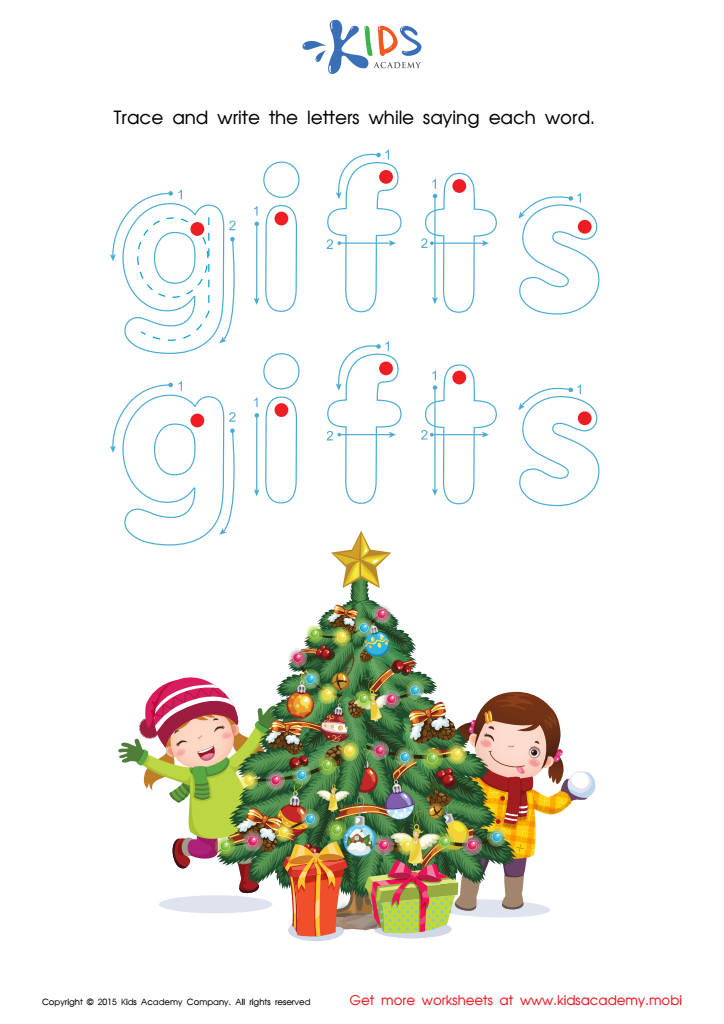
Christmas Tree Tracing Winter Words Worksheet
Print it and let your child trace the word and follow the arrows. Red dots mark the starting points. Have a blast!
Christmas Tree Tracing Winter Words Worksheet
Worksheet
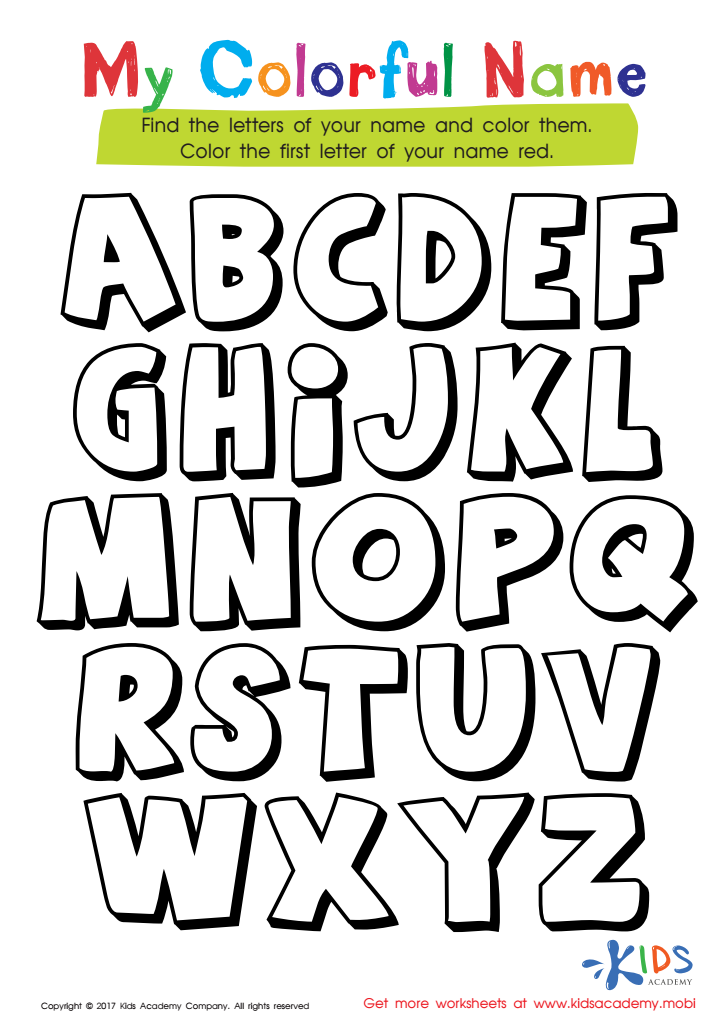
My Colorful Name Worksheet
Writing their names is a milestone for children. With this worksheet, they recall the letters in their name and color the letters one at a time. Spelling and alphabet order are reinforced as they find each letter. Use this fun printable to help kids learn to write their names!
Download (PDF)
 Assign to My Students
Assign to My Students
My Colorful Name Worksheet
Worksheet
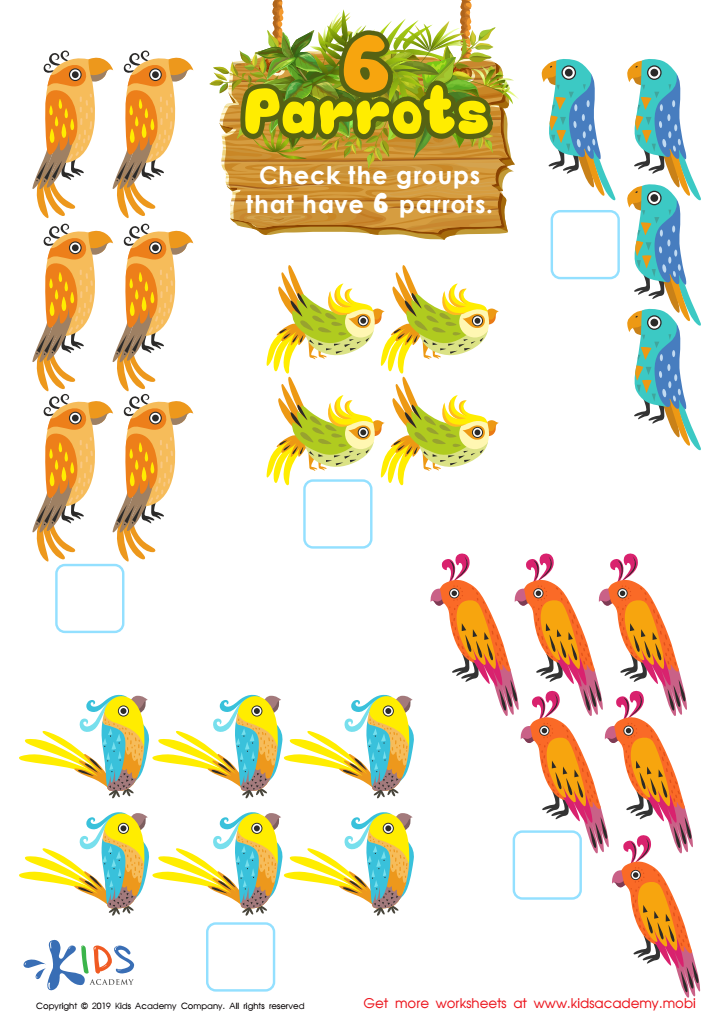
6 Parrots Worksheet
Love parrots? Here's a free worksheet to help your children practice counting to six with colorful parrot representations! Kids will adore counting the parrots and checking off groups of six - and it won't even feel like math! Just a fun way to make some new and exciting friends.
6 Parrots Worksheet
Worksheet
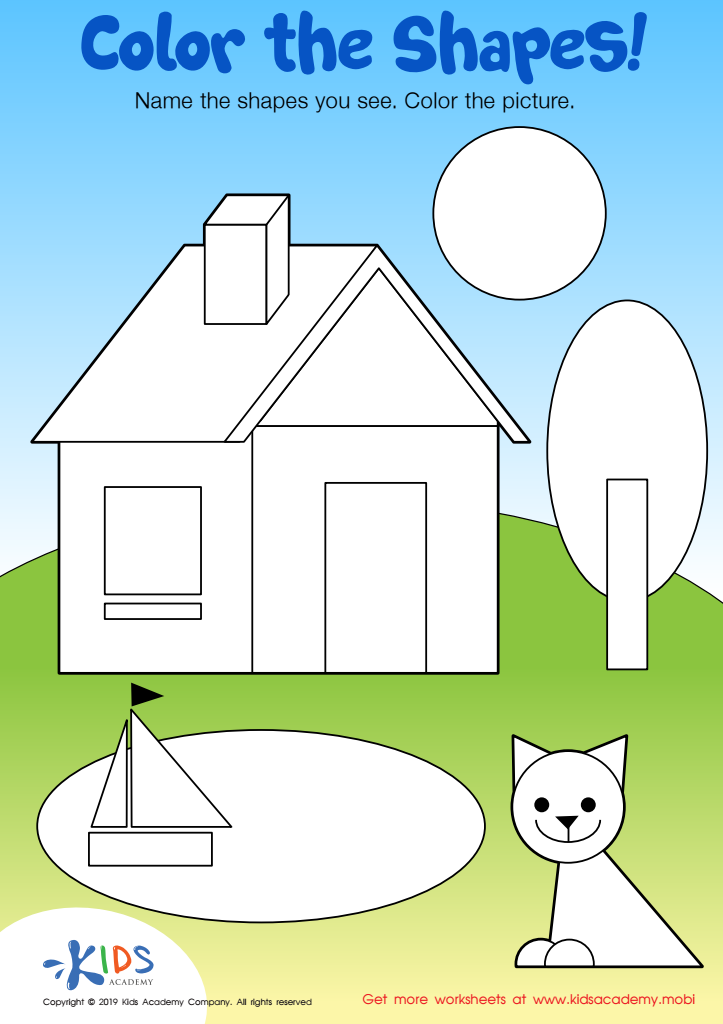
Color the Shapes Worksheet
Help your student master shape identification with this fun worksheet. Ask them to name the shapes in the picture, then color it! Ask questions like "How many squares do you see?" and "How many triangles?" to extend the learning. Identify squares, circles, triangles and rectangles with this enjoyable coloring page.
Download (PDF)
Assign to My Students
Assign to My Students
Color the Shapes Worksheet
Worksheet
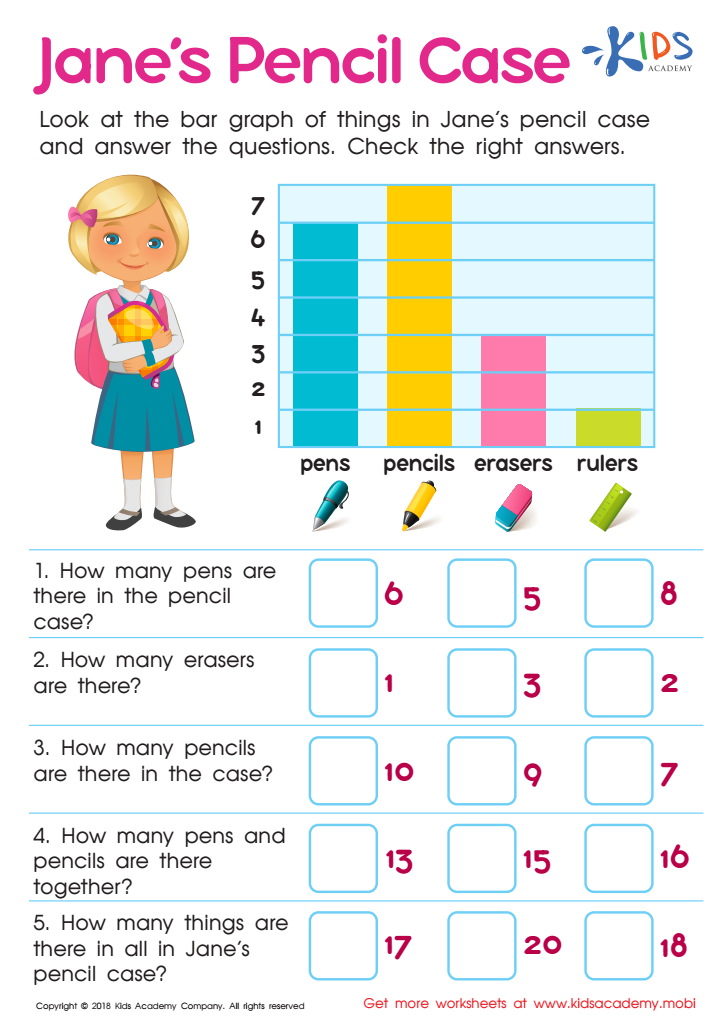
Jane's Pencil Case Worksheet
Help Jane organize her pencil case! Have your child look and the bar graph on the worksheet and interpret the data. Ask them to read each problem, then check the box next to the correct number. It's a fun way to practice reading graphs and reporting data.
Jane's Pencil Case Worksheet
Worksheet
Join Kids Academy for Free
Who is primarily going to use this learning content?








Color identification is a foundational skill for young children, particularly those aged 4-9. Parents and teachers should care about this skill because it plays a significant role in various aspects of a child's early development.
Firstly, color identification enhances cognitive development. Recognizing and naming colors requires children to use their memories and apply their understanding consistently, which strengthens their cognitive processes. It also paves the way for higher-level thinking skills, such as classification and comparison, which are crucial in later academic learning.
Secondly, learning colors is integral to language development. When children learn to identify and articulate different colors, they expand their vocabulary and improve their communication skills. They will be able to describe objects, differentiate between items, and express themselves more clearly.
Socially and emotionally, color knowledge helps children describe and understand the world around them. For instance, red often denotes stop and green means go, which are essential cues in everyday life. Moreover, colors can be associated with emotions and feelings, aiding children in social interactions and emotional expression.
Lastly, colors are ubiquitous in reading and mathematics for key learning concepts, such as in identifying numbers, shapes, and patterns. Strong color knowledge supports academic readiness and fosters enthusiasm for learning, making it a critical element for early education.








