Understanding patterns Easy Basic Times Tables up to 12 Worksheets for Ages 4-9
3 filtered results
-
From - To
Unlock the world of math with our "Understanding Patterns: Easy Basic Times Tables up to 12 Worksheets" designed for children aged 4-9! These engaging worksheets simplify multiplication by helping young learners recognize patterns within times tables. By exploring relationships between numbers, children can boost their math skills and confidence. Our user-friendly resources combine fun visuals and activities, catering to various learning styles. Perfect for classrooms, homeschooling, or independent practice, these worksheets offer a foundation for understanding multiplication concepts. Equip your child with essential skills today and make learning math enjoyable and rewarding! Dive into the adventure of numbers and discover the joy of learning!
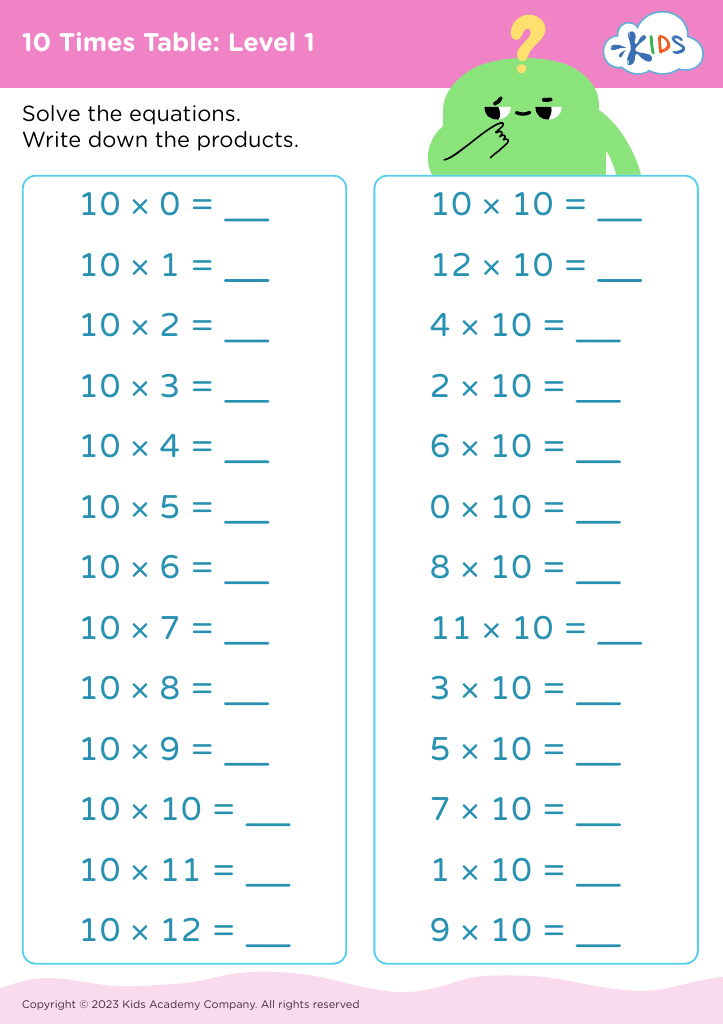
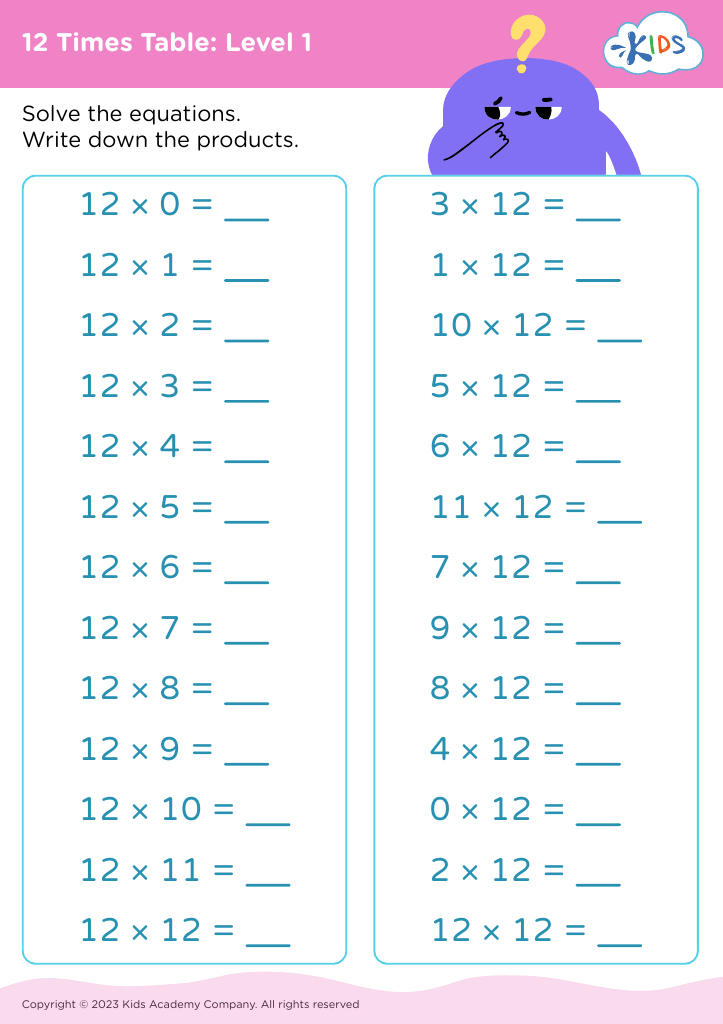
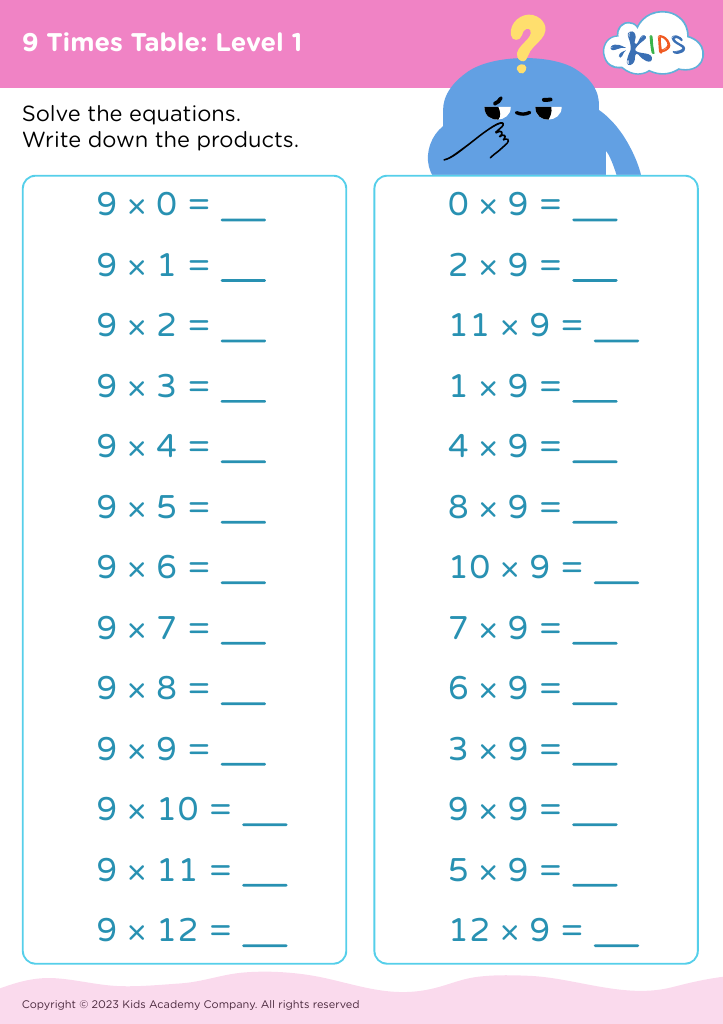


Understanding patterns, especially when teaching basic times tables up to 12, is crucial for children aged 4-9 due to multiple interconnected reasons. First, recognizing numerical patterns fosters a strong foundation in mathematical concepts, enhancing cognitive skills and logical reasoning. Times tables exhibit clear patterns; for instance, the multiples of 2, 5, and 10 reveal distinct visual and auditory sequences that can anchor understanding.
Second, mastery of these patterns can boost confidence, making math feel less intimidating for young learners. When children see the relationships and sequences in their multiplication tables, they become more engaged and willing to tackle more complex problems later on. Additionally, an early understanding of patterns lays the groundwork for lifelong mathematical literacy, critical thinking, and problem-solving skills, which are essential in everyday life and future academic success.
Lastly, teachers and parents play a pivotal role in reinforcing these concepts through interactive games and playful activities, making the learning process fun. Engaging children in pattern recognition as they learn their times tables not only enhances their math capabilities but also instills a love for learning, overcoming the common phobia many associate with math. Prioritizing this foundation paves the way for children to excel in mathematics in the years to come.








