Color recognition Easy Numbers Worksheets for Ages 4-9
4 filtered results
-
From - To
Introducing our Color Recognition Easy Numbers Worksheets, designed for children ages 4-9. These vibrant, engaging worksheets combine the fundamentals of learning numbers with the joy of color recognition to create an enjoyable learning experience. The activities encourage young learners to practice counting, identify numbers, and understand basic math concepts while enhancing their ability to recognize and distinguish colors. Perfect for preschool through early elementary, these worksheets provide a well-rounded approach to early math skills, fostering confidence through interactive, playful learning. Perfect for parents and educators, these worksheets lay a foundational understanding of both numbers and colors.
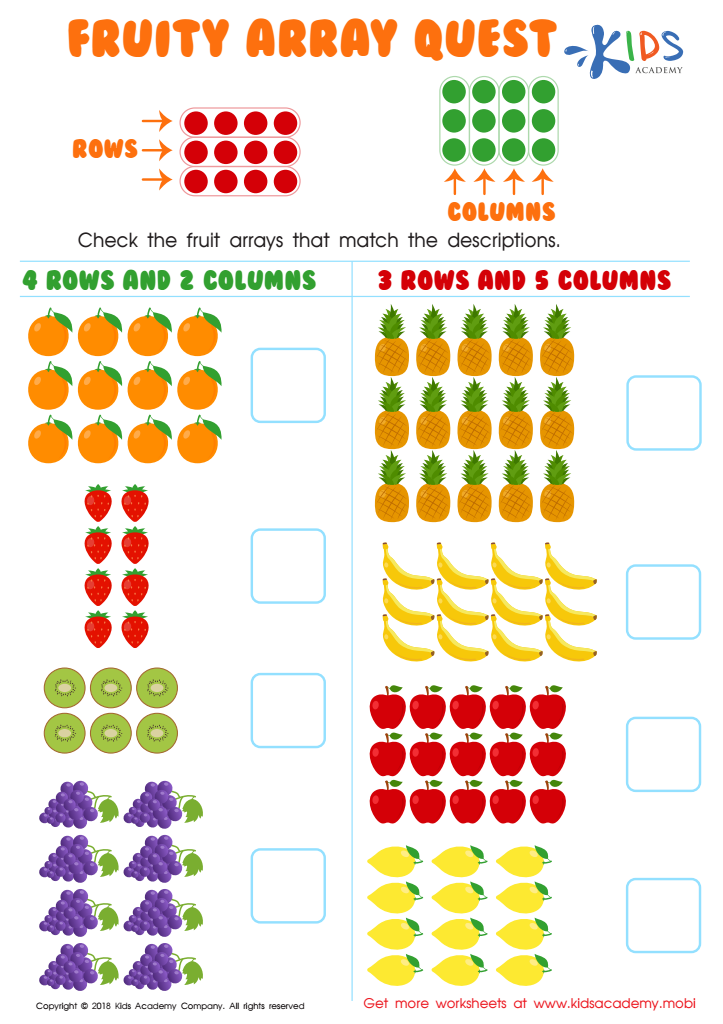
Fruity Array Quest Worksheet
 Assign to My Students
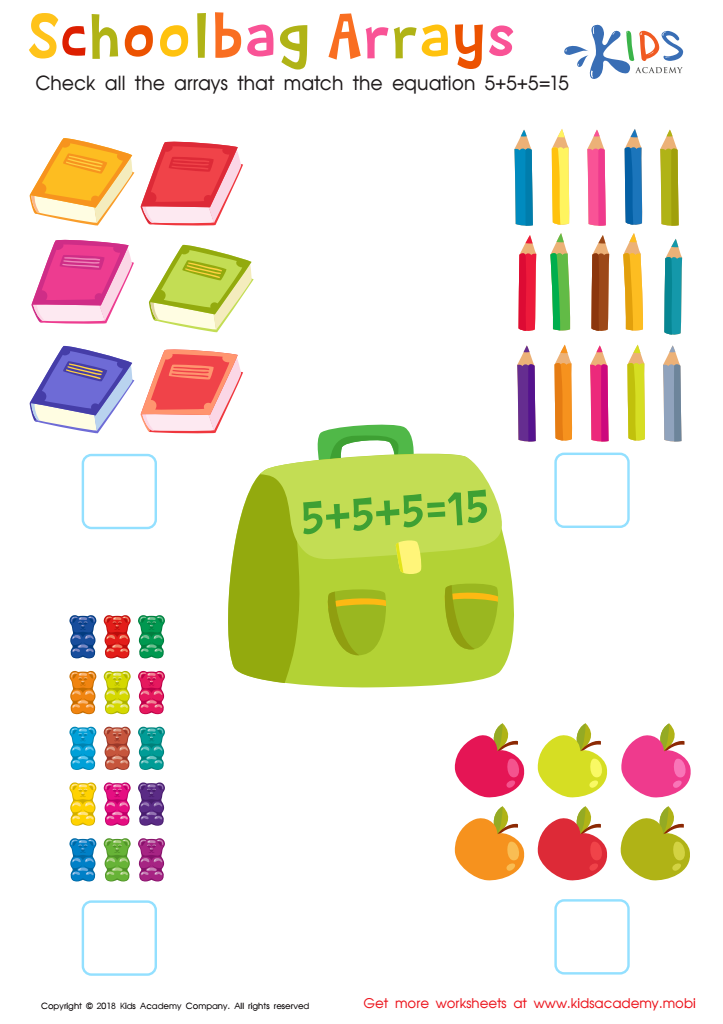
Schoolbag Arrays Worksheet
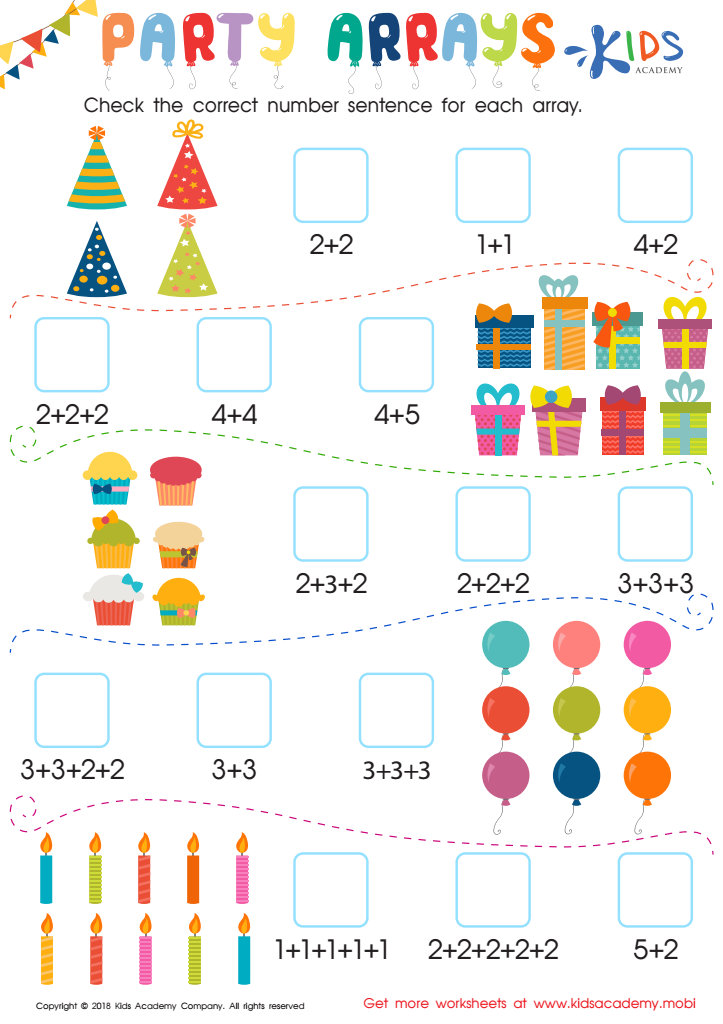
Party Arrays Worksheet
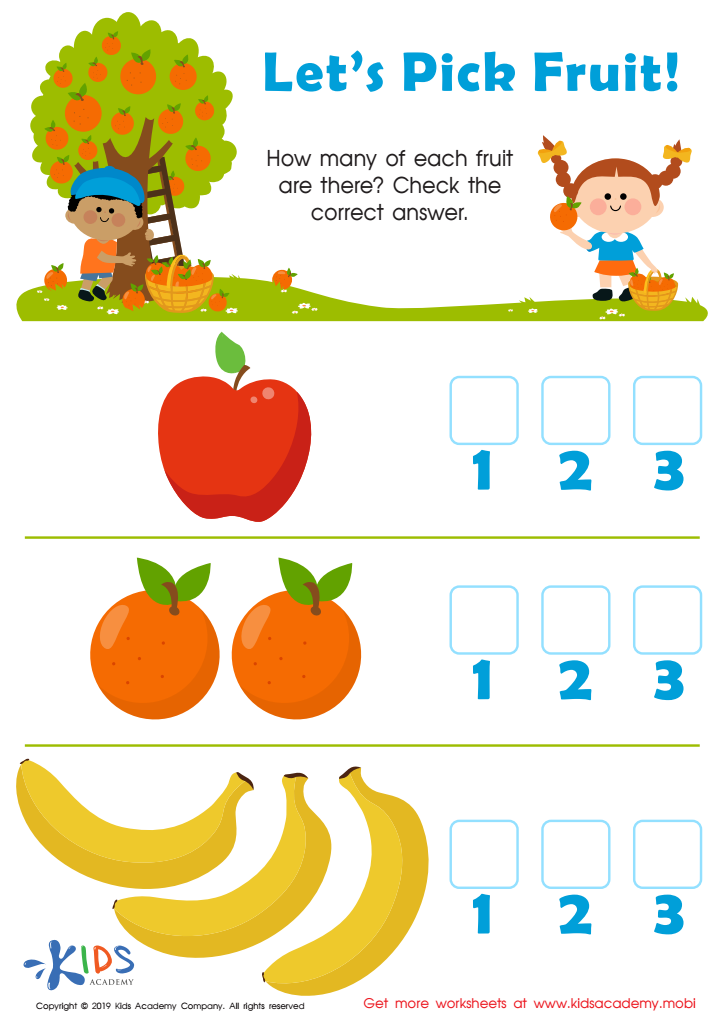
Let's Pick Fruit Worksheet








Color recognition and early number skills are foundational elements in the cognitive development of children aged 4-9. Parents and teachers should prioritize these because they not only pave the way for academic achievement but also enhance critical cognitive and perceptual functions.
Color recognition is crucial as it helps children categorize and interpret the world. By distinguishing between different colors, children develop the visual discrimination skills needed for reading, sorting, and problem-solving. This skill also fosters creativity and expression, allowing children to communicate their ideas more effectively in both artistic and verbal forms. Recognizing colors can improve memory by creating vibrant mental images that aid in remembering and organizing information.
Early number skills, including simple counting and basic arithmetic, provide the building blocks for mathematical understanding. Number recognition and the ability to perform basic operations like addition and subtraction are essential life skills. They enable children to grasp more complex math concepts in later grades and support logical reasoning and problem-solving abilities. These skills extend beyond the classroom; they are used in everyday activities like measuring ingredients, telling time, and managing allowances.
Investing time in developing these skills supports overall brain development and prepares children for future educational success. When parents and teachers engage children in activities that promote color recognition and number skills, they equip them with the essential tools needed for intellectual and social growth.








