Data interpretation Easy Numbers Worksheets for Ages 4-9
3 filtered results
-
From - To
Our "Data Interpretation Easy Numbers Worksheets for Ages 4-9" provide young learners with an exciting introduction to understanding and analyzing data. Designed for children aged 4-9, these colorful worksheets feature engaging activities that simplify complex concepts, aiding in learning how to interpret charts, graphs, and tables. By connecting math with real-world scenarios, we foster critical thinking and analytical skills from an early age. Perfect for classroom or home use, our printable worksheets make learning data interpretation both fun and effortless for kids, setting a strong foundation for future academic success. Explore today and watch your child's confidence soar!
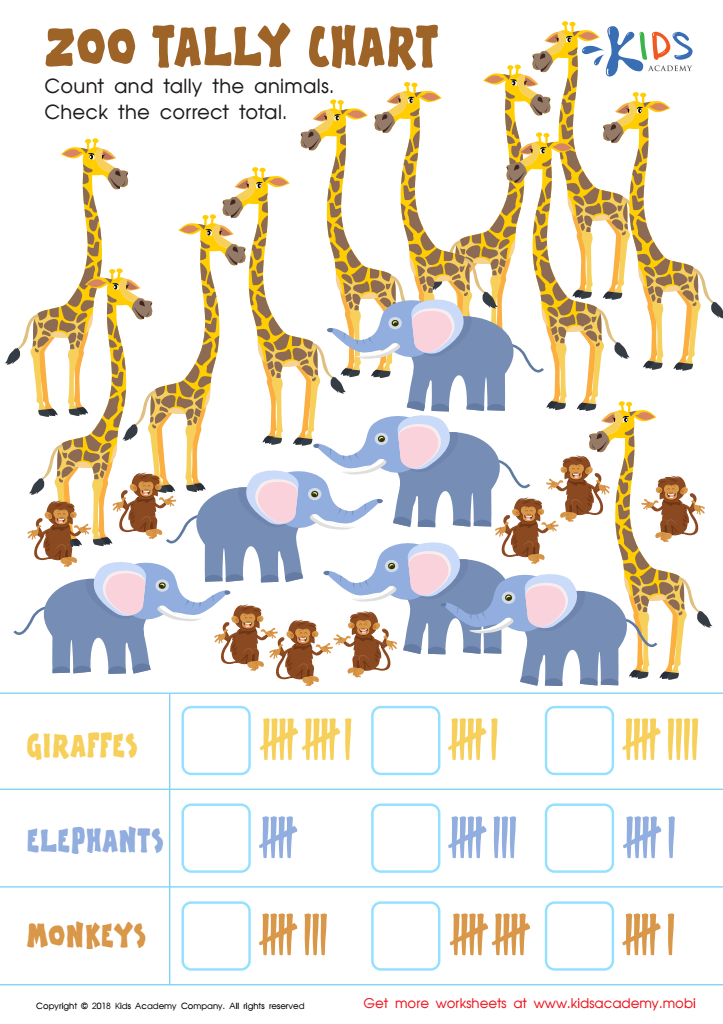
Zoo Tally Chart Worksheet
 Assign to My Students
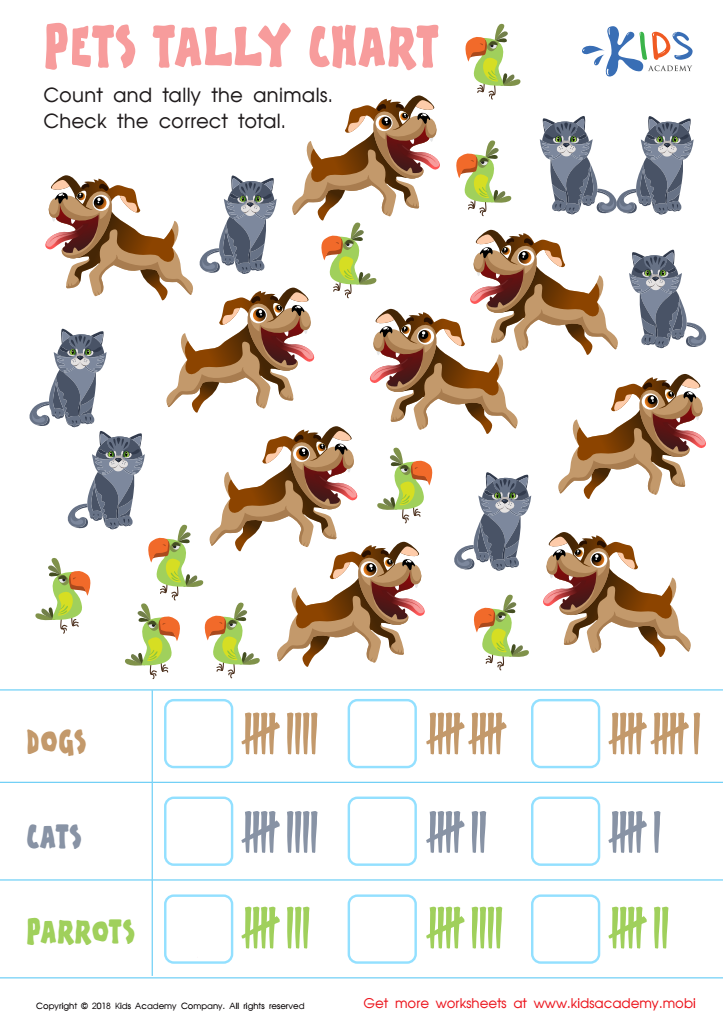
Pets Tally Chart Worksheet
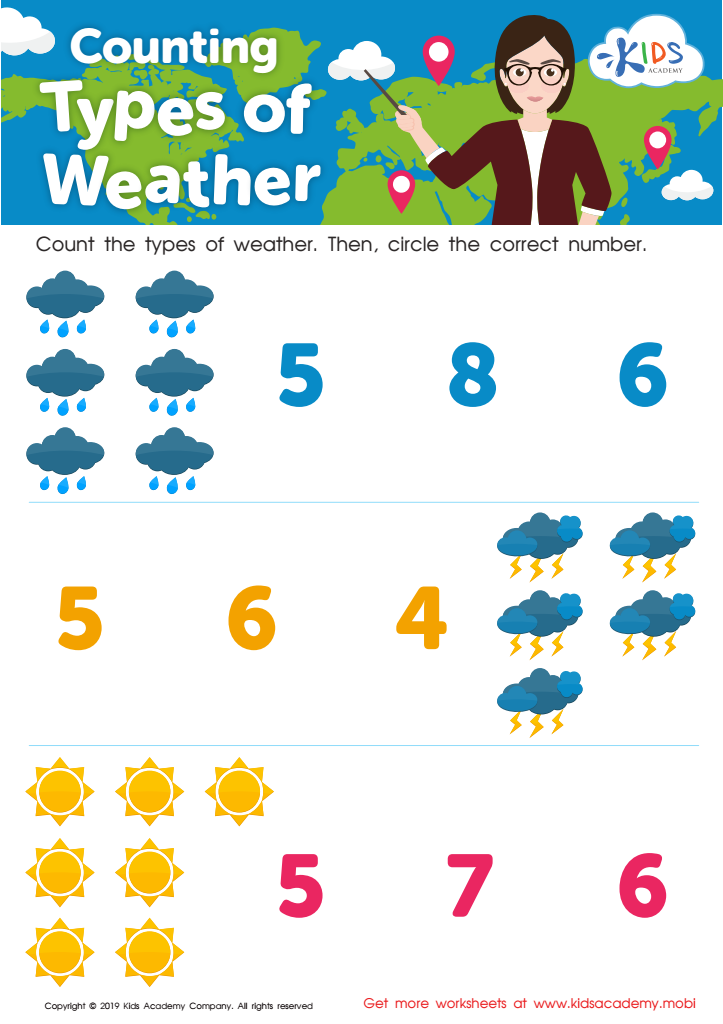
Counting Types of Weather Worksheet








Data interpretation skills are foundational tools that empower children to understand, analyze, and derive meaning from numerical information they encounter daily. Introducing Data interpretation Easy Numbers to children aged 4-9 sets the stage for numerous educational and practical benefits.
Firstly, these skills foster early mathematical literacy. By interpreting simple graphs, charts, and basic data sets, children begin to grasp concepts like counting, comparing quantities, and recognizing patterns. This early exposure builds confidence and lays a strong groundwork for more complex mathematical reasoning in later grades.
Secondly, data interpretation encourages critical thinking and problem-solving. Young learners become adept at asking questions, making predictions, and drawing conclusions based on evidence, which are valuable skills that extend beyond math into all areas of learning and daily life.
Furthermore, as our world increasingly relies on data, having the ability to interpret data helps children become informed individuals. They can make sense of weather charts, understand simple sports statistics, and grasp basic financial concepts – skills they will use throughout their lives.
Lastly, integrating these skills in a fun and engaging manner using colorful, relatable examples keeps young children engaged, making learning enjoyable and more effective. By prioritizing data interpretation skills, parents and teachers equip children with essential tools for academic success and life-long competences.








