Color recognition Easy Math Worksheets for Ages 4-9
6 filtered results
-
From - To
Explore our engaging Color Recognition Easy Math Worksheets designed specifically for children aged 4-9! These interactive resources facilitate hands-on learning through fun activities that enhance color identification while introducing early math concepts. Perfect for home or classroom use, these worksheets encourage kids to develop critical thinking skills and cognitive abilities as they explore vibrant visuals and complete exciting tasks. From sorting and matching to basic counting, each worksheet is crafted to ensure learning is both enjoyable and effective. Foster your child's confidence in math while celebrating the beauty of colors. Download these delightful resources today and watch your child's skills flourish!
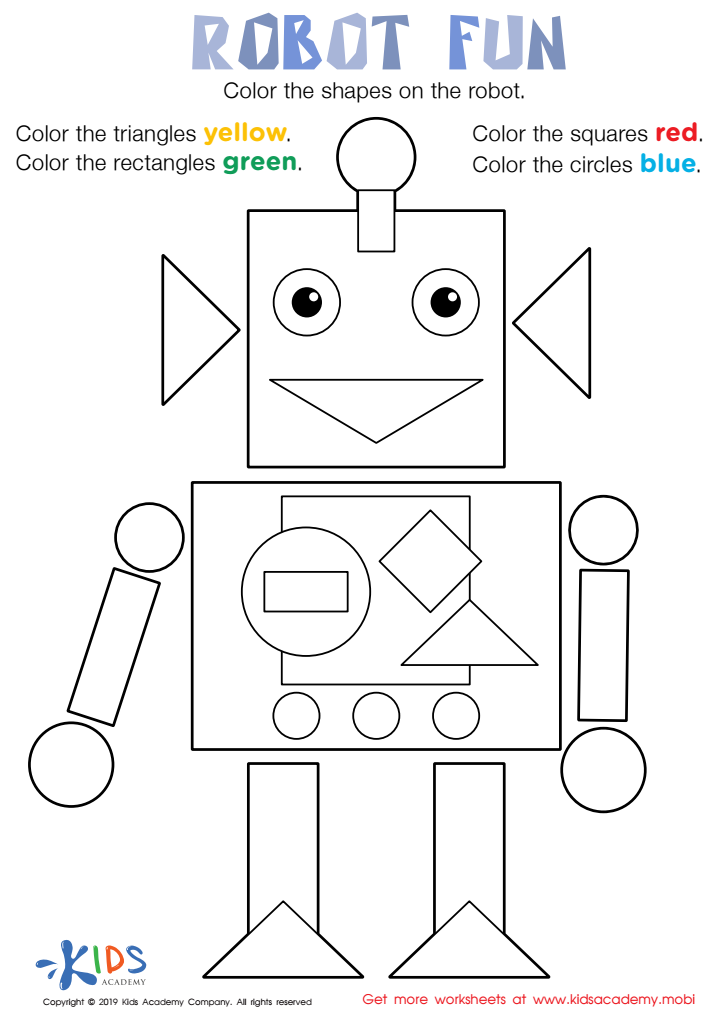
Robot Fun Worksheet
 Assign to My Students
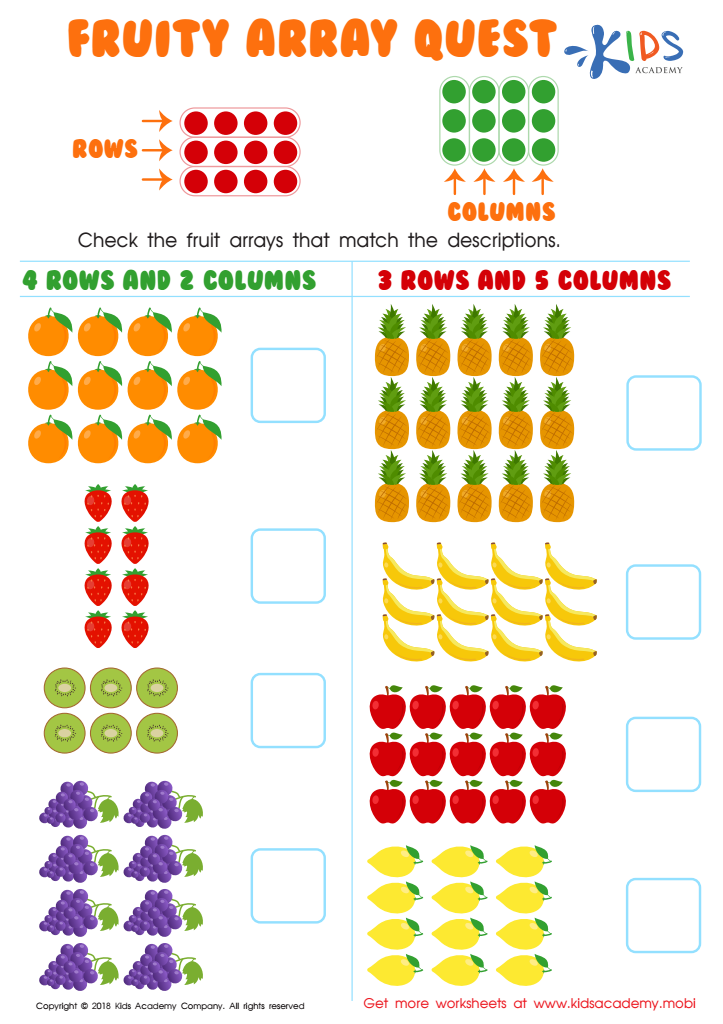
Fruity Array Quest Worksheet
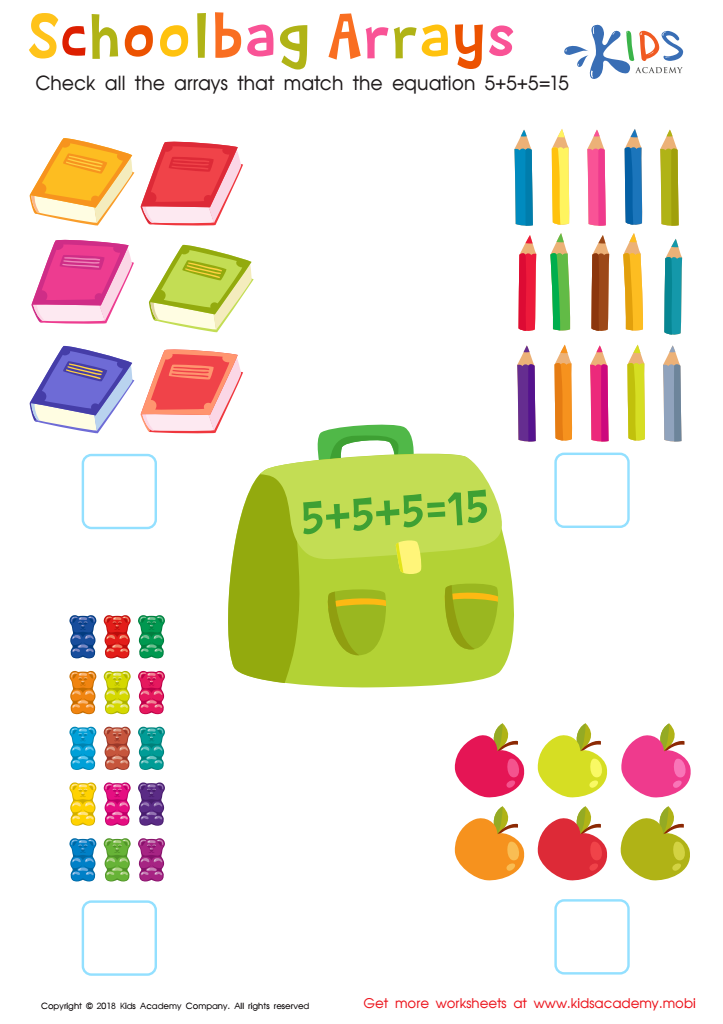
Schoolbag Arrays Worksheet
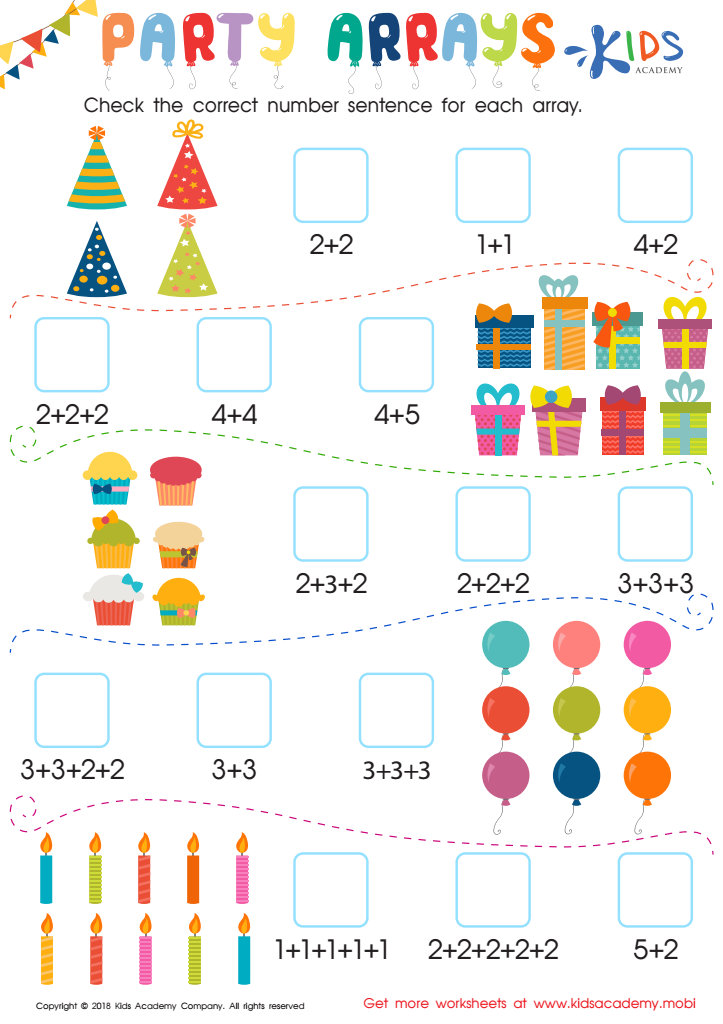
Party Arrays Worksheet
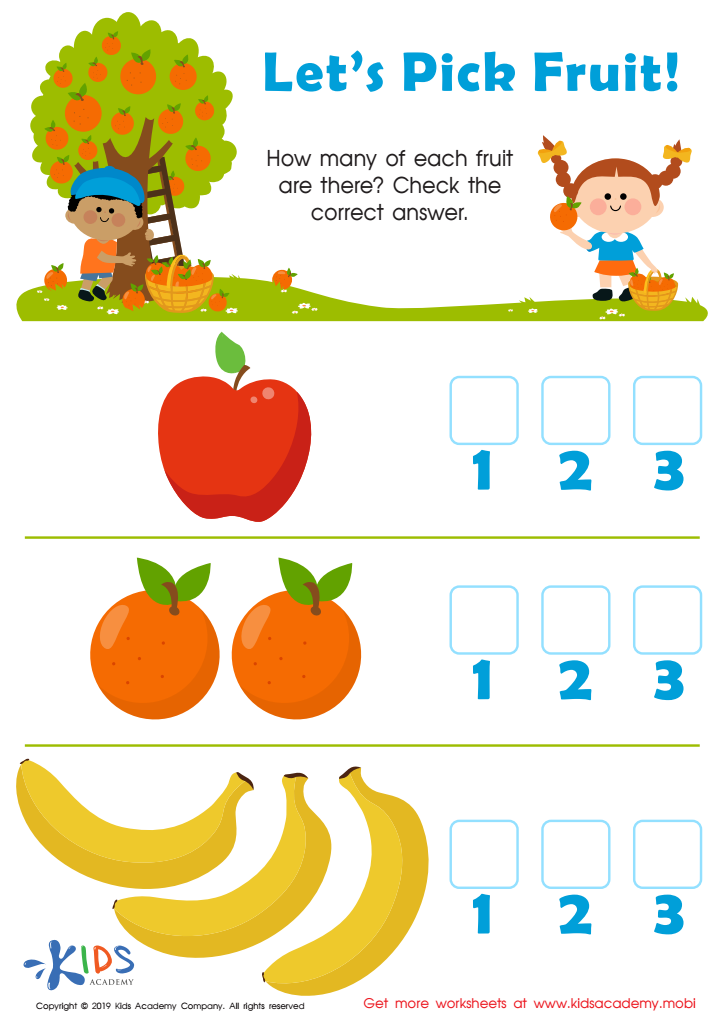
Let's Pick Fruit Worksheet
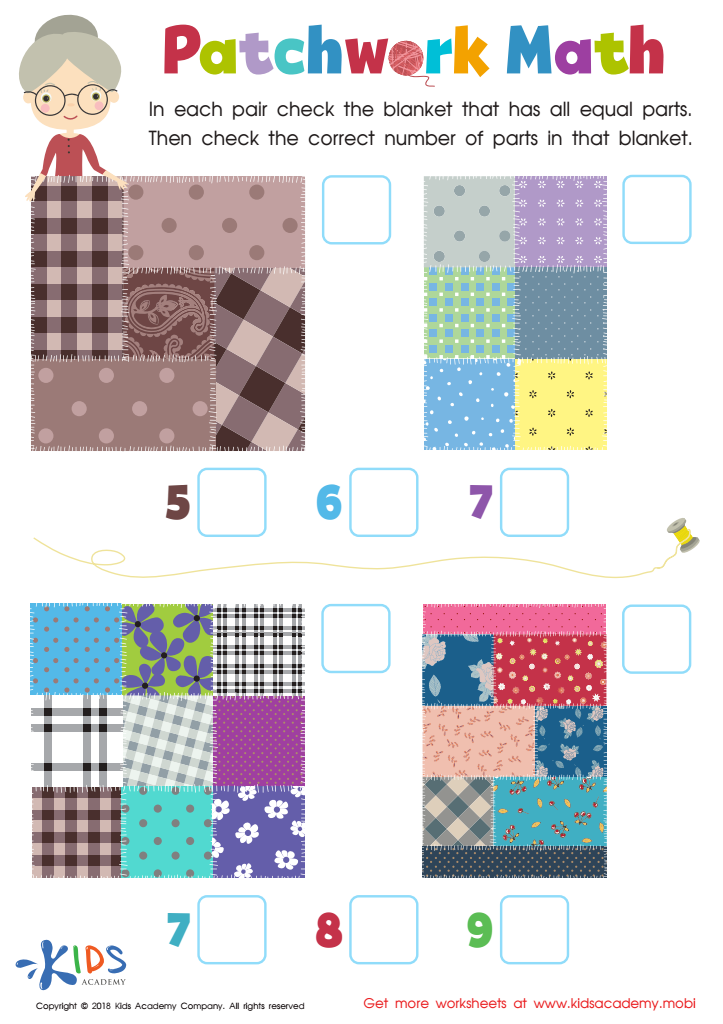
Patchwork Math Worksheet




.jpg)



Color recognition and early math skills are foundational elements in a child's development, particularly for children aged 4-9. Firstly, recognizing colors helps children make sense of the world around them, enhancing their cognitive and visual perception. It develops their ability to categorize and differentiate, which is crucial as they progress in learning and interacting with their environment.
Additionally, when color recognition is combined with early math concepts, it creates a dynamic learning experience. For example, teaching children to associate colors with quantities or shapes not only makes math engaging but also helps reinforce their understanding of numbers and basic operations. These activities can improve memory, critical thinking, and problem-solving skills.
Furthermore, mastering color recognition and foundational math boosts children’s confidence in their abilities, paving the way for a positive attitude toward learning. Researchers have found that children who grasp these early concepts are often better prepared for future academic challenges.
Finally, incorporating color recognition into easy math activities is a fun and interactive way to engage children. Such involvement fosters a strong bond between parents and teachers, creating a supportive learning environment that encourages exploration and growth. When parents and teachers prioritize these skills, they are investing in children’s long-term success.








