Filters

15 filtered results

Clear all filters
Favorites
With answer key
Interactive

15 filtered results

Difficulty Level

Grade


Subject

    Discover our "Easy Patterns Worksheets for Ages 4-9," designed to engage young learners and enhance their understanding of patterns through fun, interactive activities. These worksheets feature colorful visuals and simple exercises that help children identify, create, and extend various patterns, boosting critical thinking and foundational math skills. Ideal for home or classroom use, our printable resources cater to diverse learning styles, making math enjoyable and accessible for every child. Whether it’s through shapes, colors, or common objects, your child will develop essential pattern recognition skills that build a strong mathematical foundation. Start exploring the exciting world of patterns today!
    Check out this FREE Trial Lesson on Patterns for age 4-9!

    My Family

    Favorites
    With answer key
    Interactive
    • 4-9
    • Patterns
    • Easy
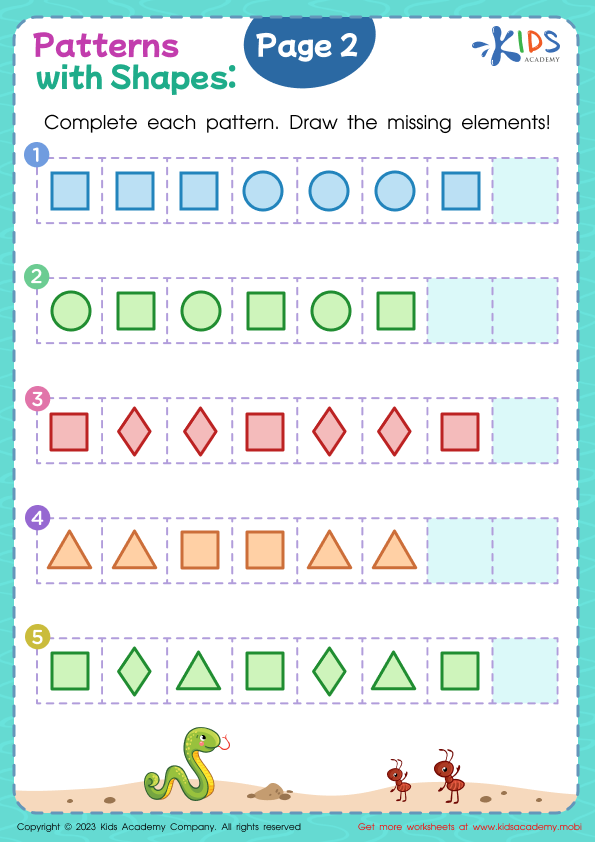
    Patterns with Shapes: Page 2
    Patterns with Shapes: Page 2

    Patterns with Shapes: Page 2

    Patterns with Shapes: Page 2
    Worksheet
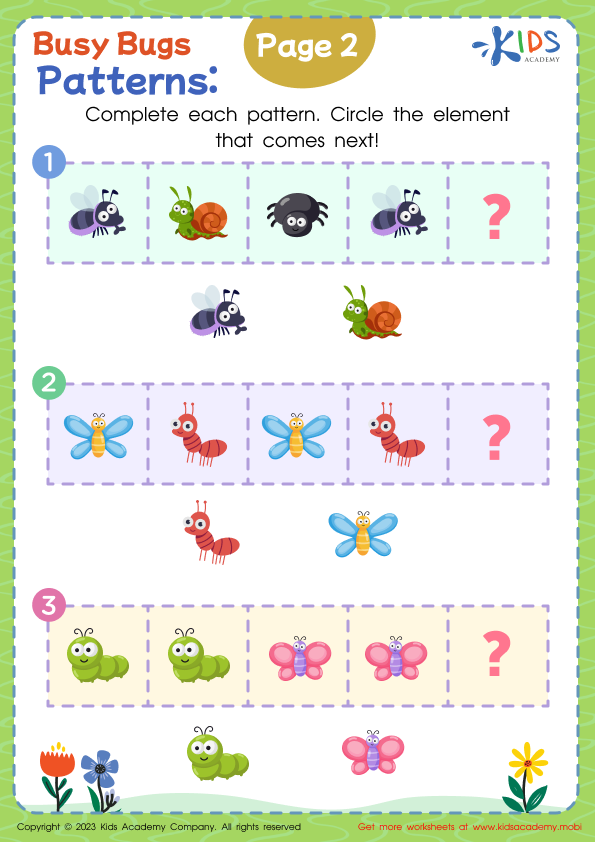
    Busy Bugs Patterns: Page 2
    Busy Bugs Patterns: Page 2

    Busy Bugs Patterns: Page 2

    Busy Bugs Patterns: Page 2
    Worksheet
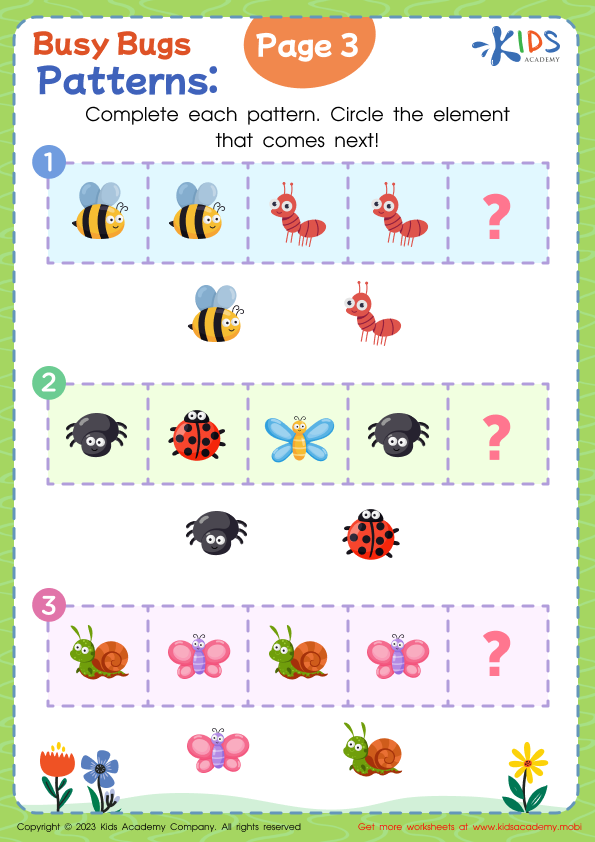
    Busy Bugs Patterns: Page 3
    Busy Bugs Patterns: Page 3

    Busy Bugs Patterns: Page 3

    Busy Bugs Patterns: Page 3
    Worksheet
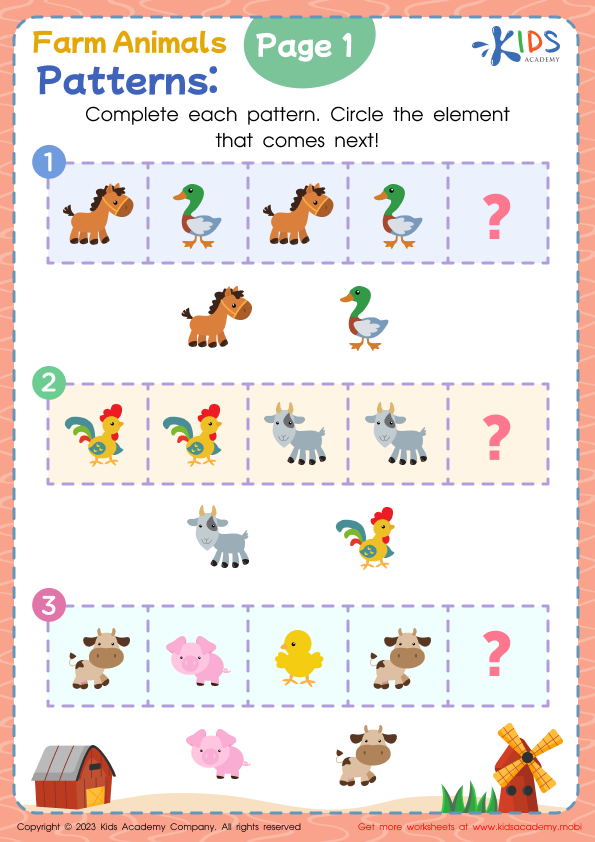
    Farm Animals Patterns: Page 1
    Farm Animals Patterns: Page 1

    Farm Animals Patterns: Page 1

    Farm Animals Patterns: Page 1
    Worksheet
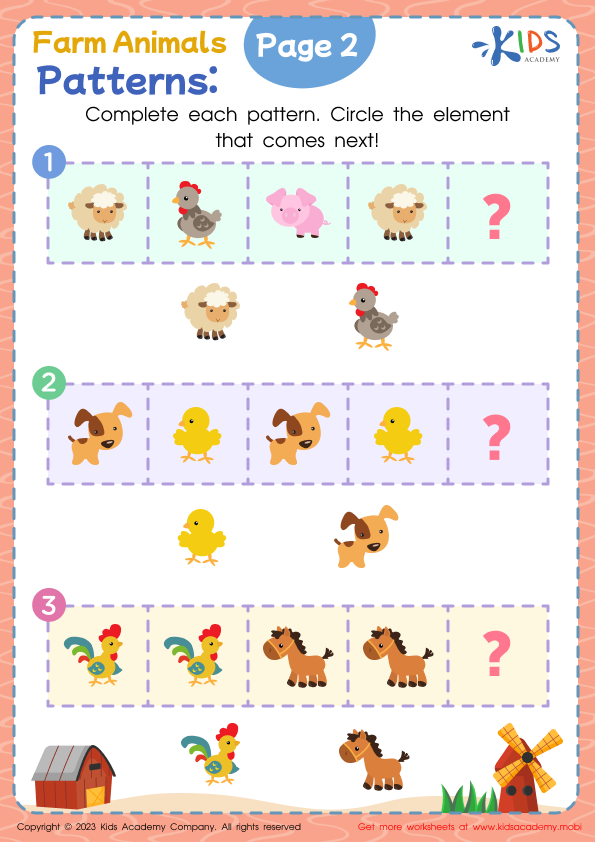
    Farm Animals Patterns: Page 2
    Farm Animals Patterns: Page 2

    Farm Animals Patterns: Page 2

    Farm Animals Patterns: Page 2
    Worksheet
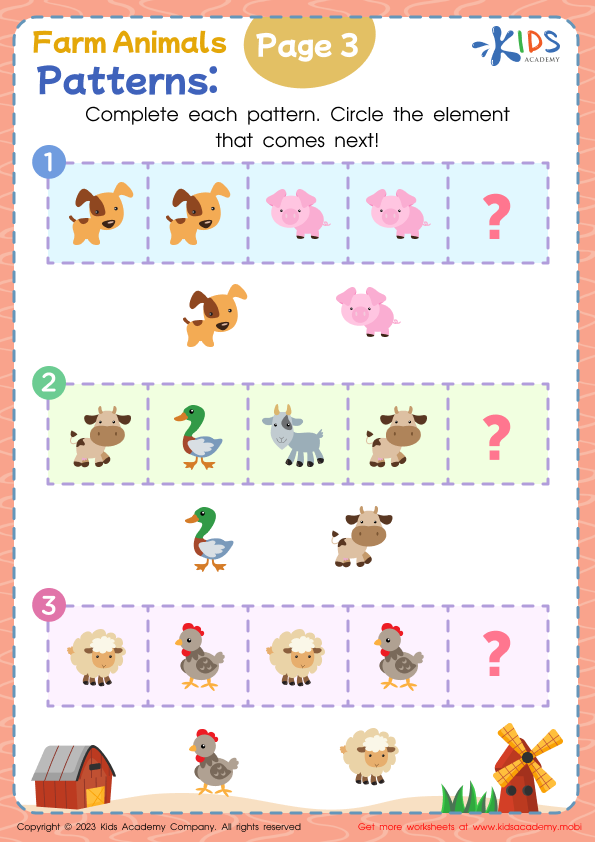
    Farm Animals Patterns: Page 3
    Farm Animals Patterns: Page 3

    Farm Animals Patterns: Page 3

    Farm Animals Patterns: Page 3
    Worksheet
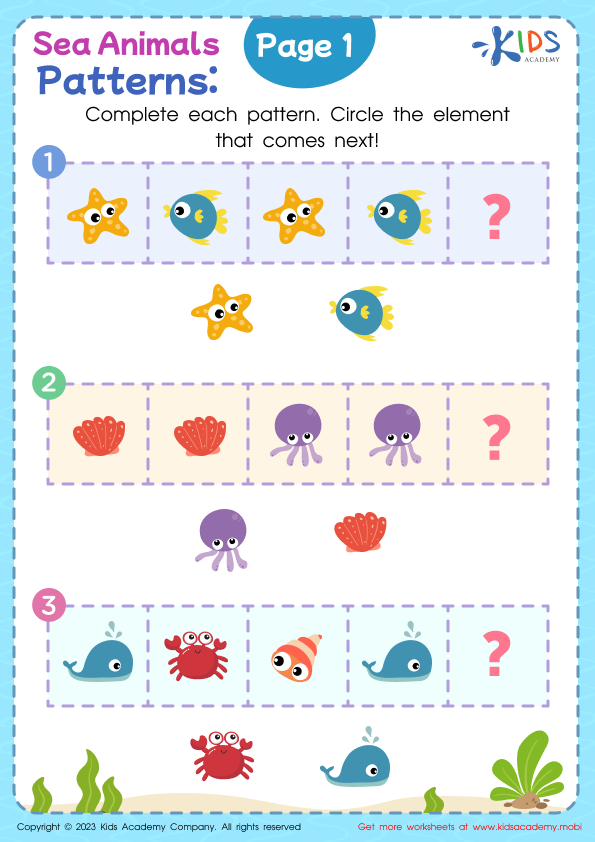
    Sea Animals Patterns: Page 1
    Sea Animals Patterns: Page 1

    Sea Animals Patterns: Page 1

    Sea Animals Patterns: Page 1
    Worksheet
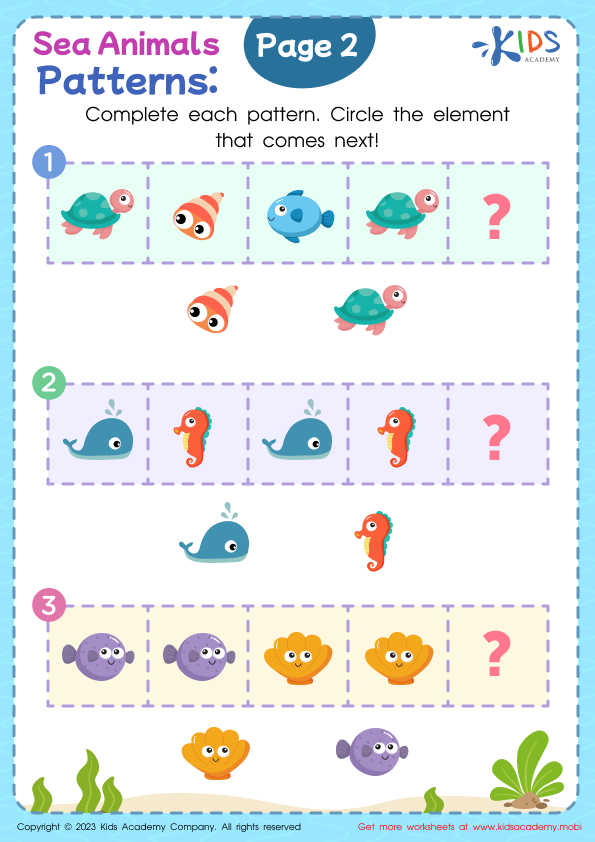
    Sea Animals Patterns: Page 2
    Sea Animals Patterns: Page 2

    Sea Animals Patterns: Page 2

    Sea Animals Patterns: Page 2
    Worksheet
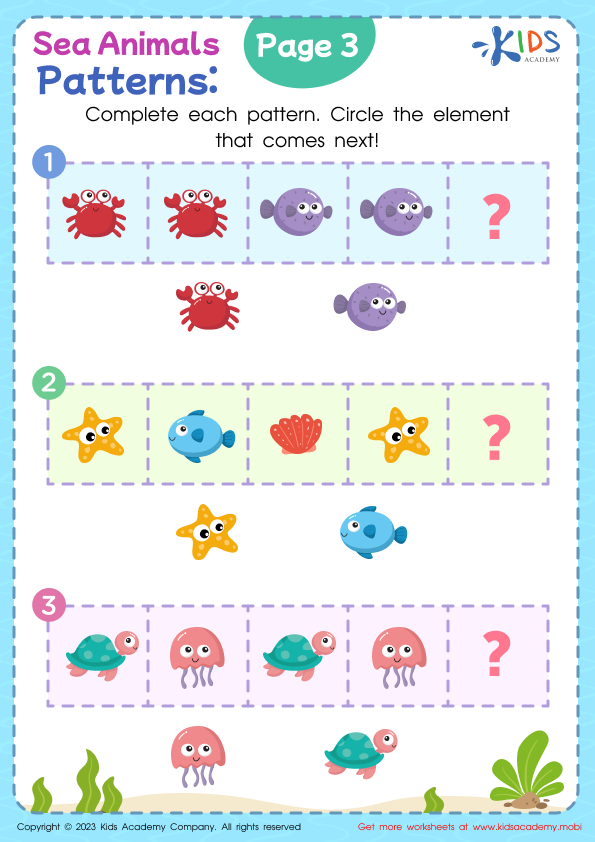
    Sea Animals Patterns: Page 3
    Sea Animals Patterns: Page 3

    Sea Animals Patterns: Page 3

    Sea Animals Patterns: Page 3
    Worksheet
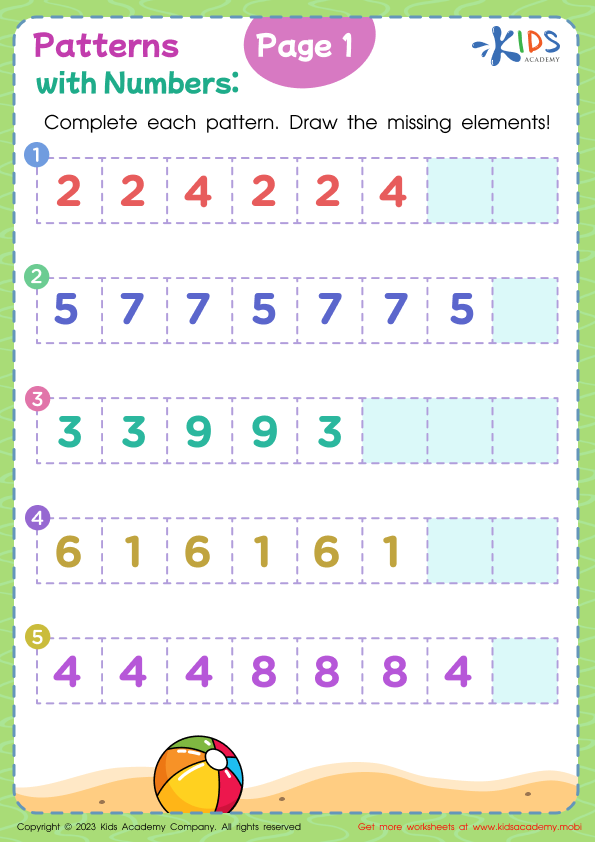
    Patterns with Numbers: Page 1
    Patterns with Numbers: Page 1

    Patterns with Numbers: Page 1

    Patterns with Numbers: Page 1
    Worksheet
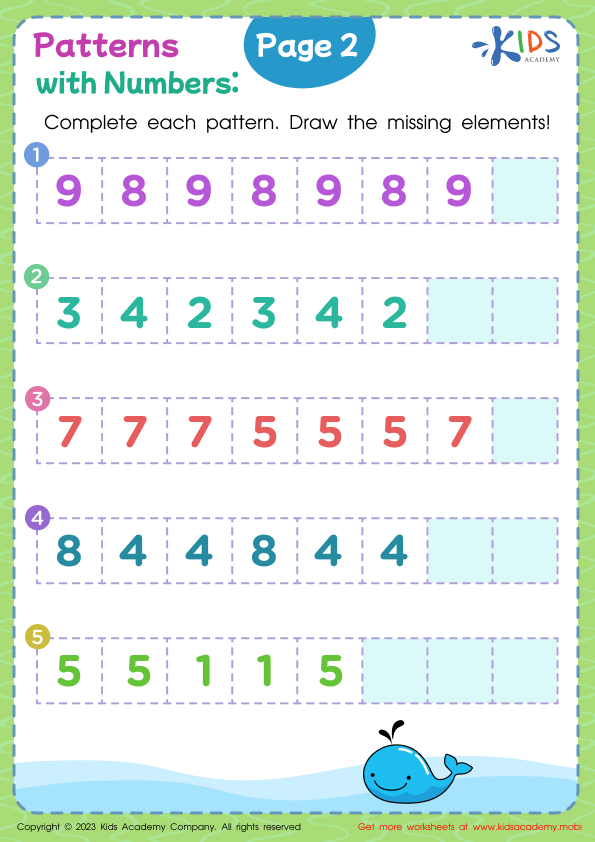
    Patterns with Numbers: Page 2
    Patterns with Numbers: Page 2

    Patterns with Numbers: Page 2

    Patterns with Numbers: Page 2
    Worksheet
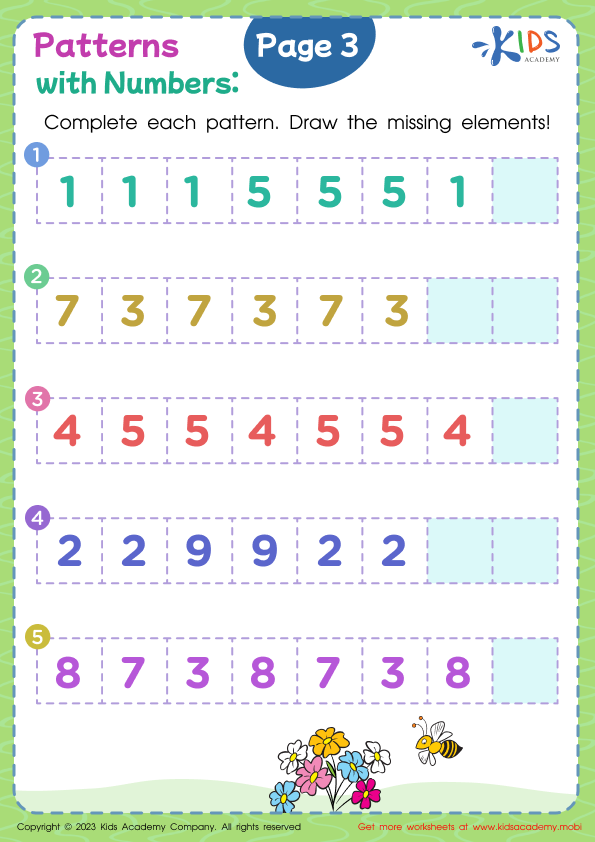
    Patterns with Numbers: Page 3
    Patterns with Numbers: Page 3

    Patterns with Numbers: Page 3

    Patterns with Numbers: Page 3
    Worksheet
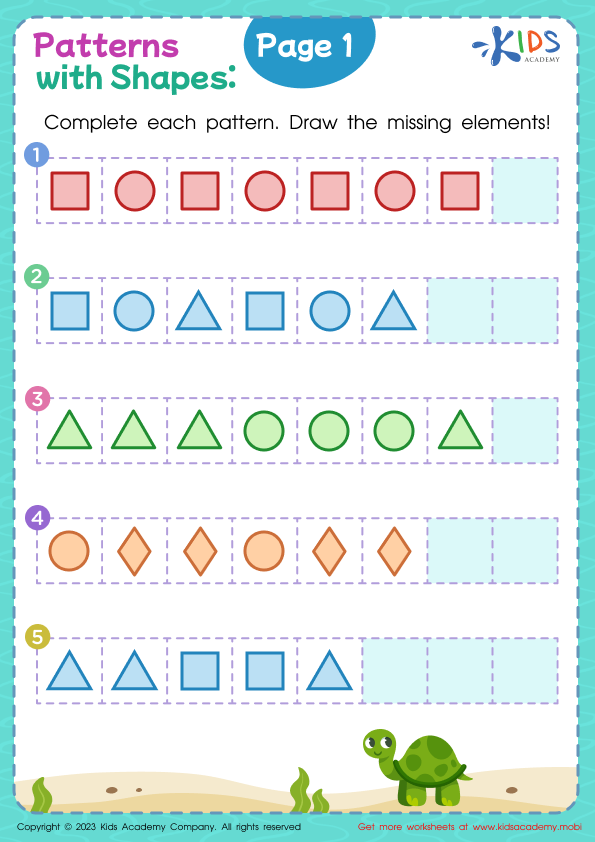
    Patterns with Shapes: Page 1
    Patterns with Shapes: Page 1

    Patterns with Shapes: Page 1

    Patterns with Shapes: Page 1
    Worksheet
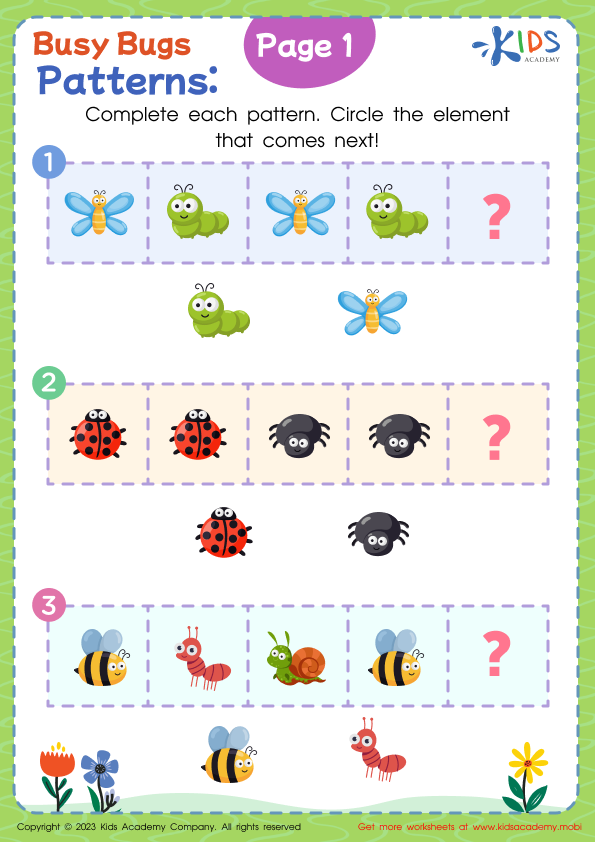
    Busy Bugs Patterns: Page 1
    Busy Bugs Patterns: Page 1

    Busy Bugs Patterns: Page 1

    Busy Bugs Patterns: Page 1
    Worksheet
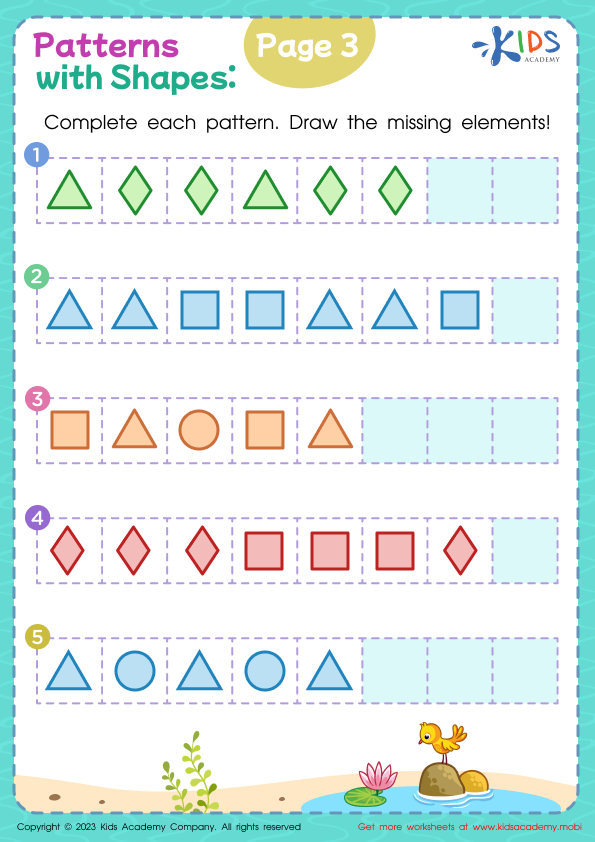
    Patterns with Shapes: Page 3
    Patterns with Shapes: Page 3

    Patterns with Shapes: Page 3

    Patterns with Shapes: Page 3
    Worksheet


    Easy Patterns for Ages 4-9 play a crucial role in early childhood education, forming the foundation for various cognitive and mathematical skills. At this developmental stage, children are naturally inclined to recognize, create, and extend patterns, which significantly enhances their ability to think critically and solve problems. Engaging with patterns helps children develop a sense of order and structure in their learning, fostering precision and attention to detail.

    For parents and teachers, introducing easy patterns in engaging ways can spark curiosity and encourage exploration, making learning enjoyable. Patterns serve as a gateway to understand sequences, shapes, and numbers, which are fundamental concepts in both math and science. When children recognize patterns, they also strengthen their linguistic and social skills through collaborative activities and discussions about their findings.

    Moreover, establishing a solid framework in pattern recognition enhances future learning experiences in advanced mathematics. Emphasizing the importance of this early educational stage equips children with essential skills that contribute to their overall academic achievement and cognitive development. By prioritizing easy patterns, parents and teachers actively invest in students’ lifelong learning journeys, ensuring they are well-prepared for the challenges ahead. In essence, nurturing an appreciation for patterns is pivotal for holistic growth and success.