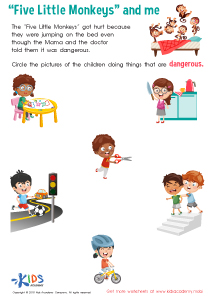
Cognitive Development Easy Building Vocabulary Worksheets for Ages 4-9
4 filtered results
-
From - To
Enhance your child's cognitive development with our Easy Building Vocabulary Worksheets, specifically designed for ages 4-9. These interactive and engaging worksheets introduce new words in a fun, relatable way, promoting language skills and comprehension. By combining visuals with hands-on activities, children learn to recognize, understand, and use vocabulary effectively. The worksheets cater to various learning styles, ensuring that every child can thrive. Supporting literacy foundations, these resources empower young learners to express themselves confidently. Perfect for at-home learning or classroom activities, our curriculum-aligned worksheets make building vocabulary enjoyable and effective. Unlock your child's potential today!
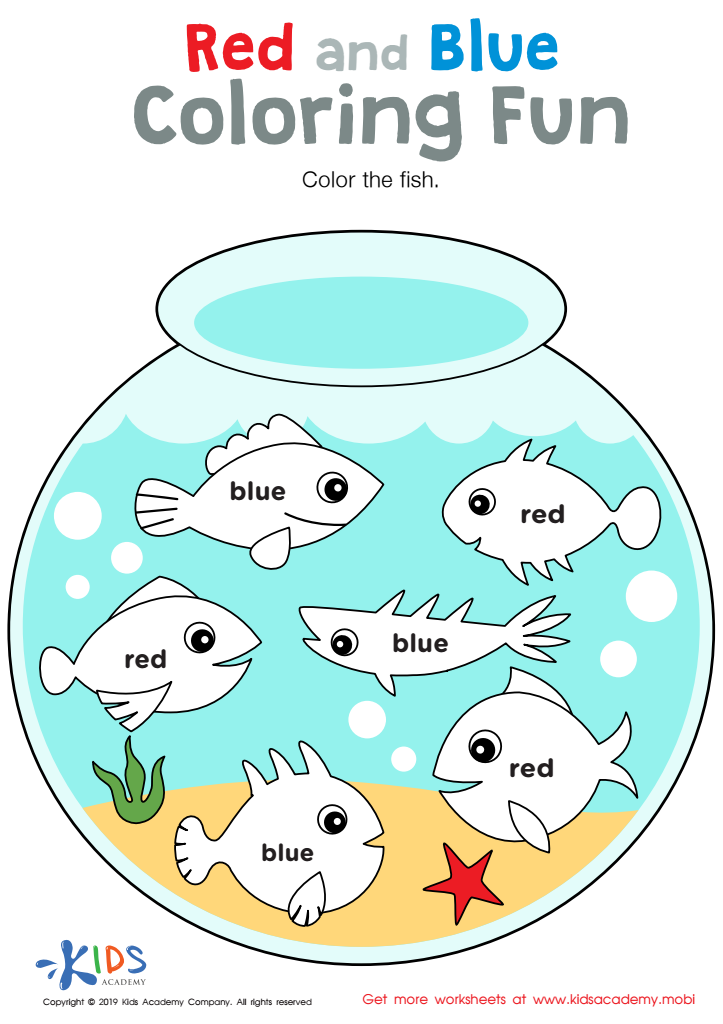
Red and Blue Coloring Fun Worksheet
 Assign to My Students











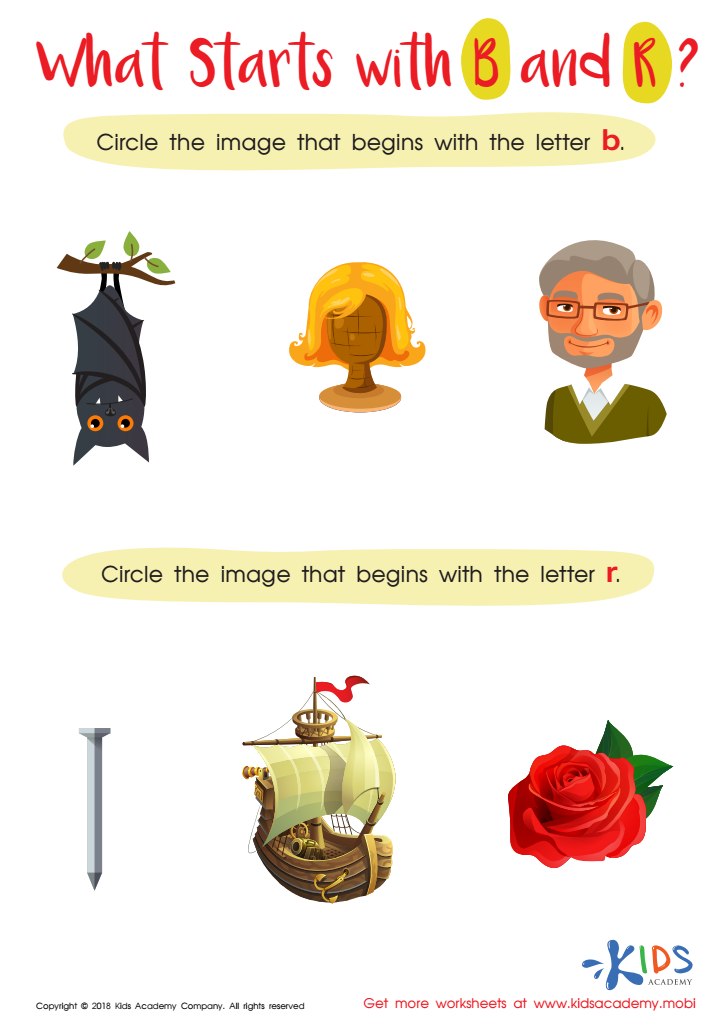
What Starts with B and R? Worksheet
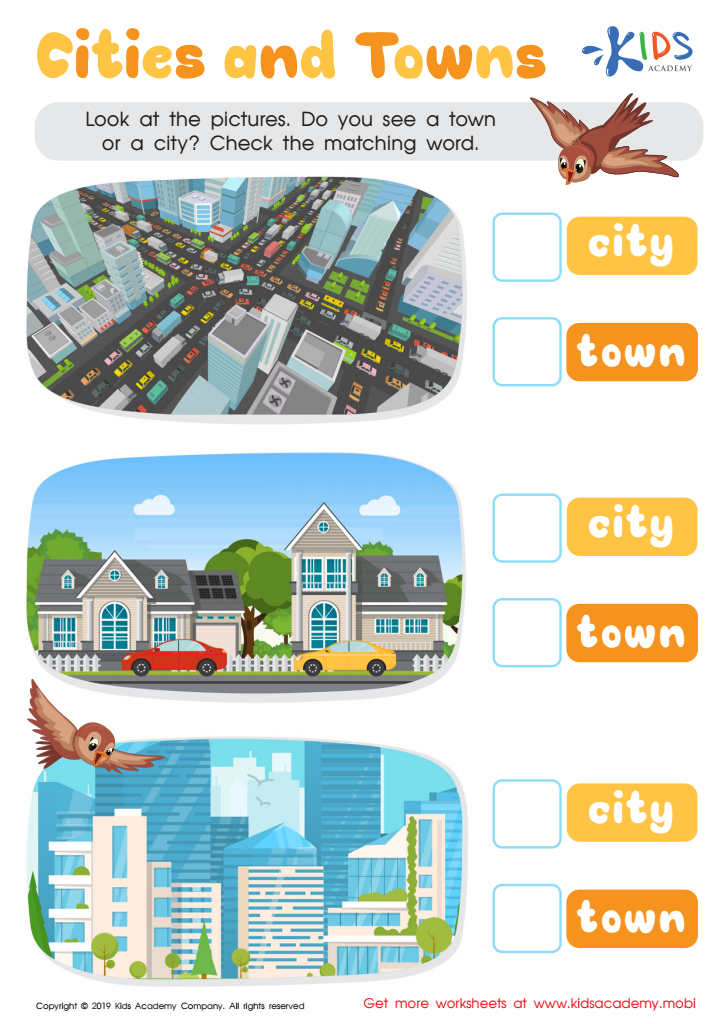
Cities and Towns Worksheet
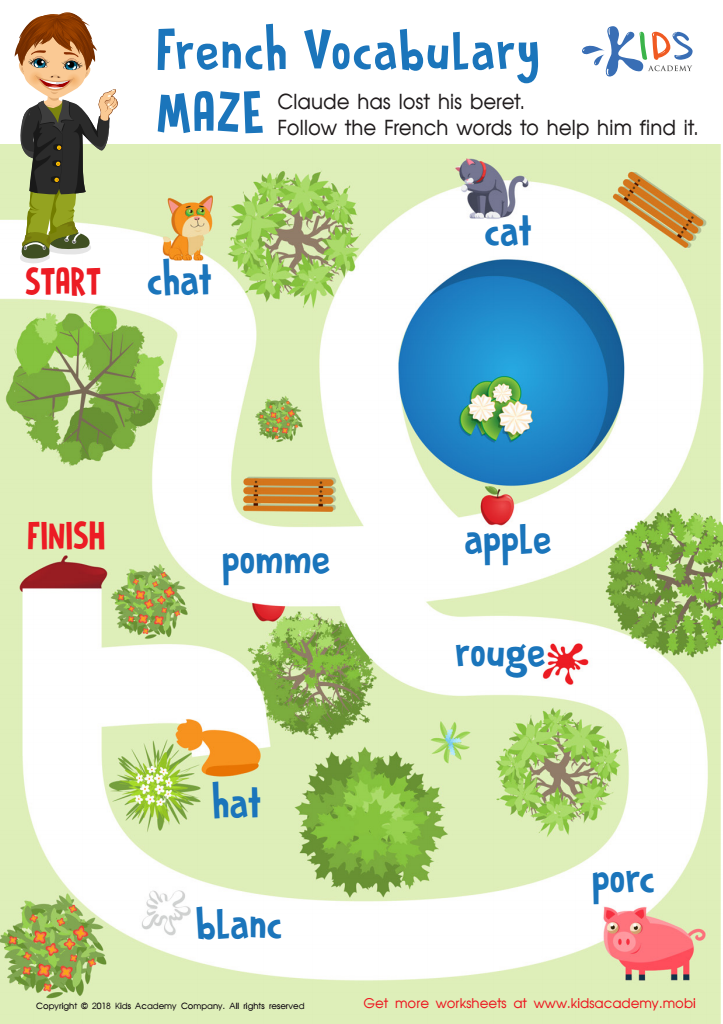
French Vocabulary Maze Worksheet








Cognitive development is crucial during the early years of childhood, particularly between ages 4 to 9, when children's brains are rapidly growing and forming connections. Parents and teachers should care about enhancing vocabulary during this stage because a rich vocabulary is foundational for overall cognitive skills.
When children build their vocabulary, they improve their ability to express thoughts, comprehend stories, and engage in conversations. A strong vocabulary enhances reading skills, allowing children to decode and understand texts independently, fostering better academic outcomes as they progress.
Furthermore, a robust vocabulary supports social and emotional development. Children can articulate feelings and thoughts more precisely, promoting better communication with peers and adults. This also helps in building relationships and developing empathy.
Moreover, early exposure to diverse words can cultivate curiosity and a love for learning. Engaging with new vocabulary through fun activities like games, storytelling, and songs can ignite a child's imagination.
Investing in vocabulary building not only aids in cognitive advancement but prepares children for future educational challenges, ensuring they are well-equipped to navigate the world around them. Supporting this aspect of development is essential for parents and teachers committed to fostering well-rounded, articulate, and confident children.