Sight word recognition Easy Building Vocabulary Worksheets for Ages 4-9
3 filtered results
-
From - To
Enhance your child's reading journey with our Sight Word Recognition Easy Building Vocabulary Worksheets tailored for ages 4-9! These engaging, printable worksheets make learning essential sight words fun and effective, helping young readers build a strong vocabulary foundation. Perfect for early learners, each activity is thoughtfully designed to support reading fluency and confidence. By regularly practicing with our colorful and interactive worksheets, kids can easily recognize high-frequency words, boosting their reading skills while enjoying the process. Ideal for both classroom and home learning, our resources ensure a comprehensive approach to early literacy development. Join now and inspire a lifelong love of reading!
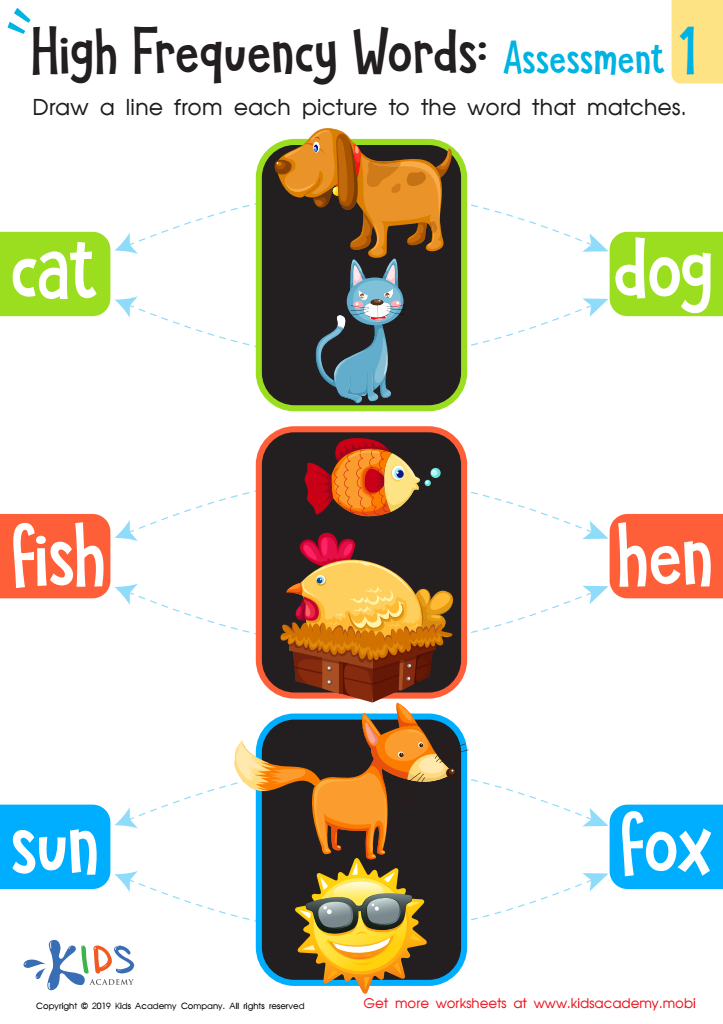
High Frequency Words: Assessment 1 Worksheet
 Assign to My Students











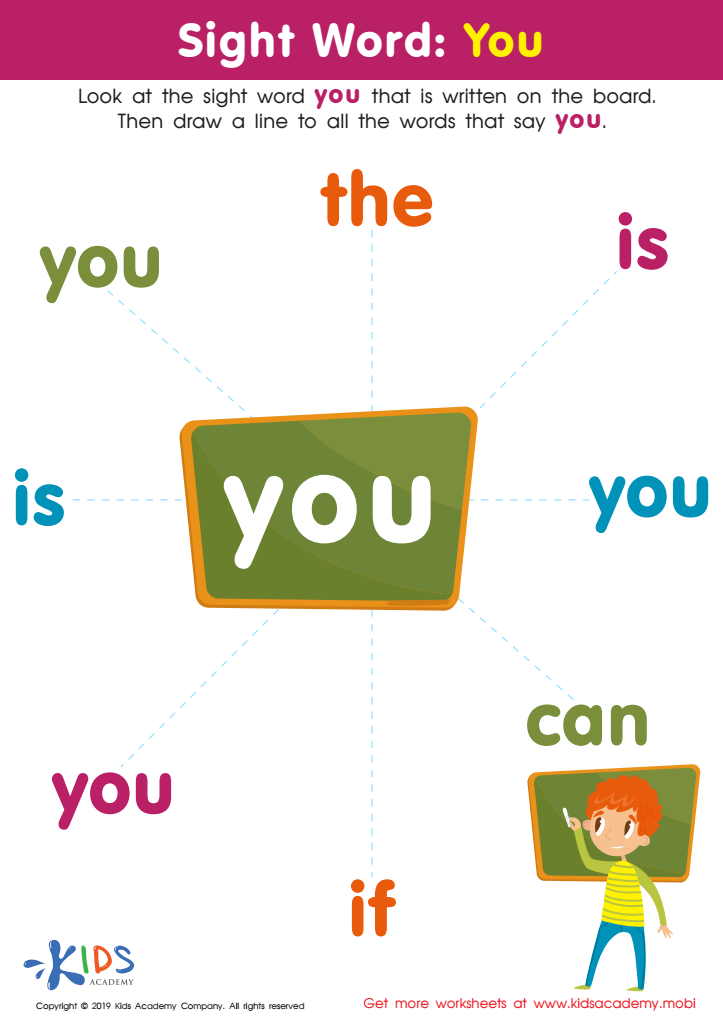
Sight Word You Worksheet
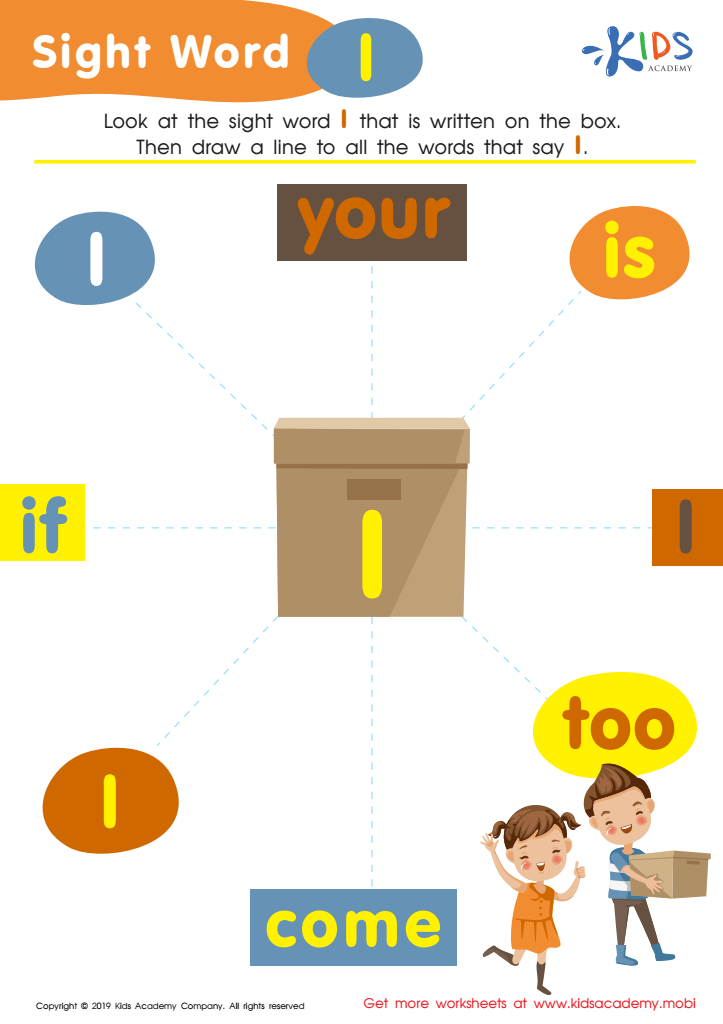
Sight Word I Worksheet








Sight word recognition is critical in early childhood education, particularly for children aged 4-9, as it serves as a foundation for comprehensive reading skills. Sight words are common words that frequently appear in texts, often, they cannot be easily sounded out using phonics rules, like "the," "and," or "is." When children recognize these words instantly, it allows them to read more fluently, which contributes to better comprehension.
For parents and teachers, promoting sight word recognition can significantly enhance a child's literacy development. Recognizing sight words automatically frees up cognitive resources. Instead of sounding out each word, children can focus on the meaning of the text. This aids in developing their vocabulary and understanding of language patterns.
Building a robust vocabulary at an early age also has profound long-term benefits. It boosts confidence in young readers as they encounter familiar words in varied contexts. Instructional strategies such as flashcards, interactive games, and repetitive reading can make learning sight words engaging and effective.
Overall, by paying attention to sight word recognition, parents and teachers are investing in the child's future academic success and a lifelong love for reading. Achieving fluency and strong vocabulary early on sets the stage for more complex language and academic skills down the road.