Fine Motor Skills Easy Reading Comprehension Worksheets for Ages 4-9
6 filtered results
-
From - To
Discover our Fine Motor Skills Easy Reading Comprehension Worksheets for ages 4-9, designed to enhance young learners' reading and fine motor skills simultaneously. These engaging, kid-friendly worksheets feature age-appropriate texts and exercises that support comprehension and handwriting development. Perfect for early grade students, our interactive activities foster literacy and dexterity, promoting better writing abilities and cognitive growth. Ideal for parents and educators seeking creative, educational resources, these worksheets make learning both effective and enjoyable. Transform reading practice into fun, skill-building adventures with Kids Academy’s expertly crafted materials. Start improving your child’s motor skills and reading comprehension today!

Little Blue Belle Worksheet
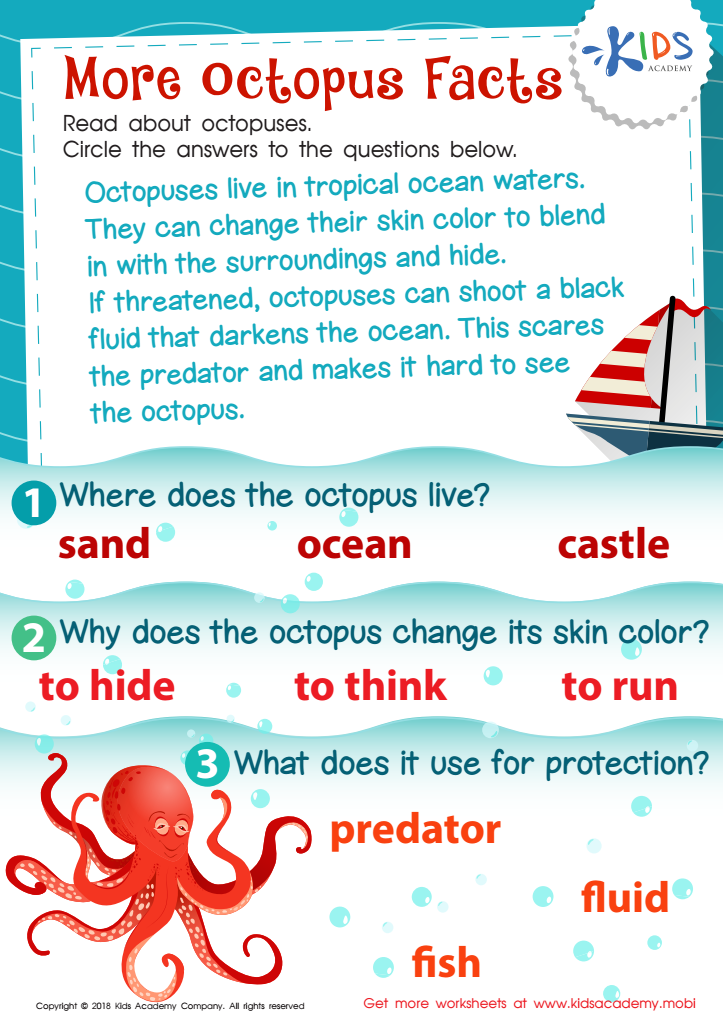
More Octopus Facts Worksheet
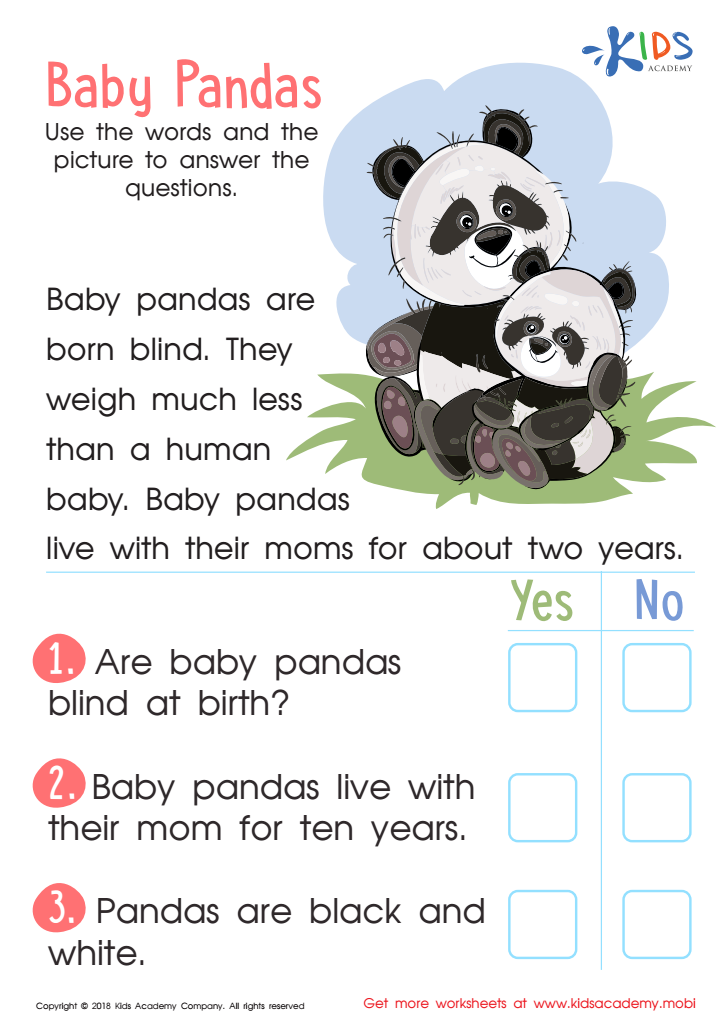
Baby Pandas Worksheet
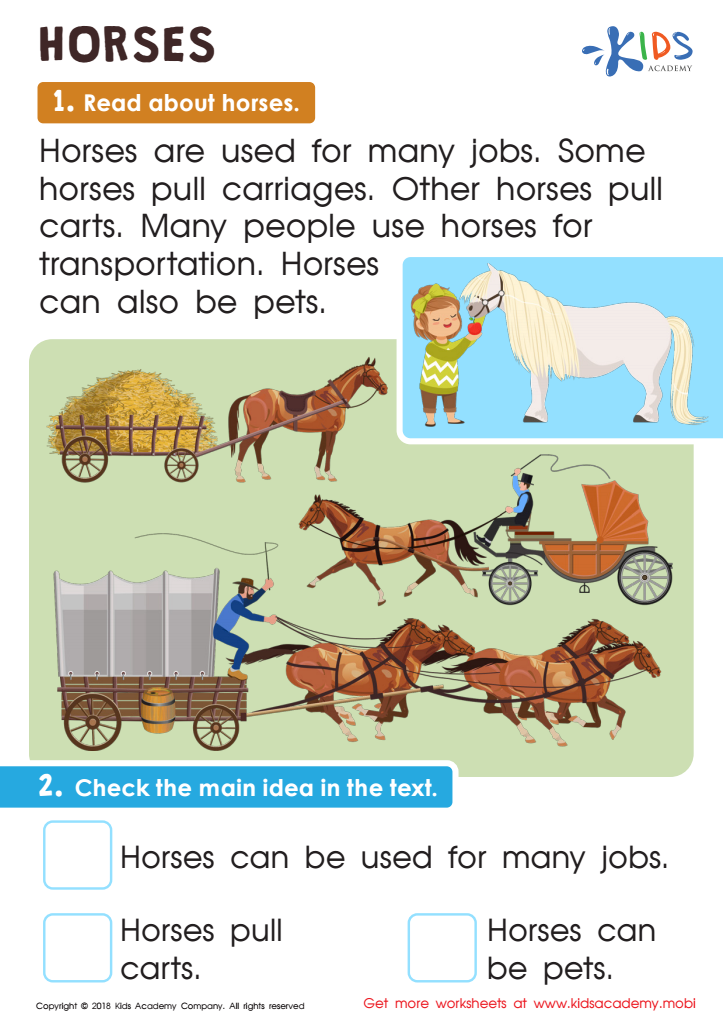
Horses Worksheet

Hickory Dickory Dock Coloring Page
 Assign to My Students
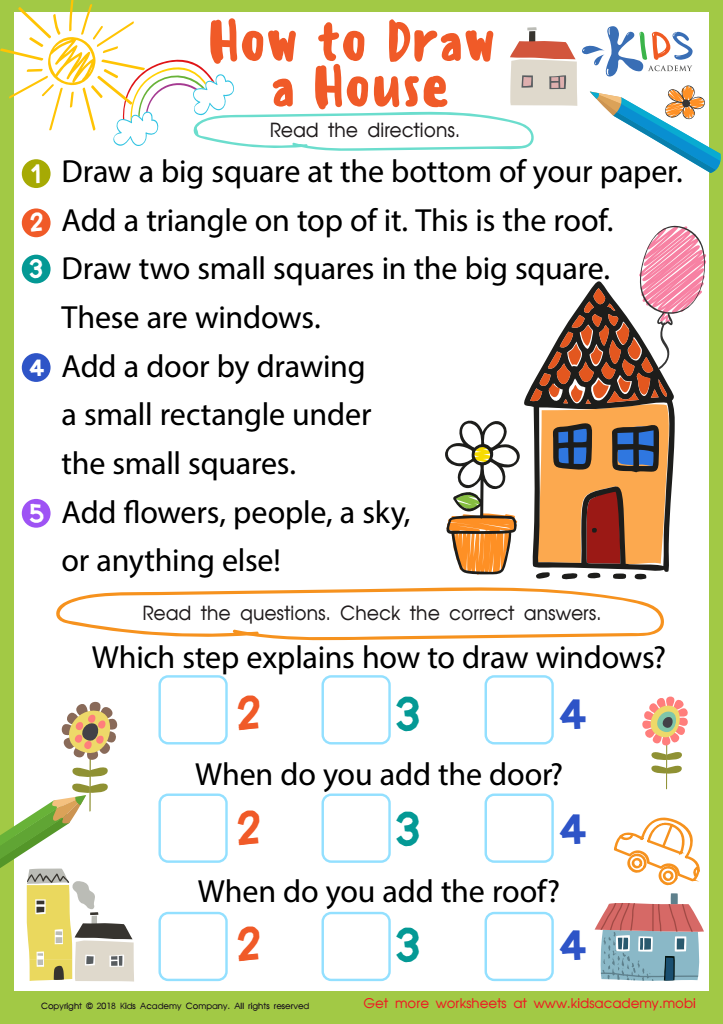
How to Draw House Worksheet








Fine motor skills are critical for young children's overall development and success in school. These skills involve the coordination of small muscles, especially in the hands and fingers, to perform tasks like holding a pencil, using scissors, buttoning clothes, and tying shoelaces. Here are key reasons why parents and teachers should care about fine motor skills:
-
Academic Achievement: Fine motor skills are essential for tasks such as writing and drawing. Proficiency in these skills allows children to focus more on learning the material rather than struggling with the mechanics of holding a pencil or cutting paper.
-
Self-Esteem: When children can perform everyday tasks independently, their confidence grows. This sense of autonomy is a significant boost to a child's self-esteem, encouraging them to engage more in learning and social activities.
-
Cognitive Development: There is a strong correlation between fine motor skills and cognitive development, including reasoning, problem-solving, and planning skills. Activities that enhance fine motor skills often require practice and concentration, skills that are transferable to other areas of learning.
-
Preparation for Daily Life: Daily activities, from dressing to personal grooming, require fine motor control. Developing these skills ensures that children can manage self-care and daily tasks, leading to a more effective and organized routine.
In summary, fine motor skills are foundational to a child’s educational and personal life, rendering them crucial for holistic development.