Cognitive Development Easy Reading Fiction Worksheets for Ages 4-9
2 filtered results
-
From - To
Unlock the power of imagination and learning with our "Cognitive Development Easy Reading Fiction Worksheets for Ages 4-9." These engaging, printable worksheets are designed to enhance cognitive skills through delightful stories and characters. Fostering critical thinking and comprehension, each worksheet encourages young readers to predict outcomes, analyze characters, and make connections. Ideal for home or classroom use, our materials support early literacy while stimulating curiosity and creativity. Watch your child develop essential cognitive abilities as they immerse themselves in fun, age-appropriate fiction. Explore the joy of reading and empower your child's intellectual growth with our thoughtfully crafted resources!
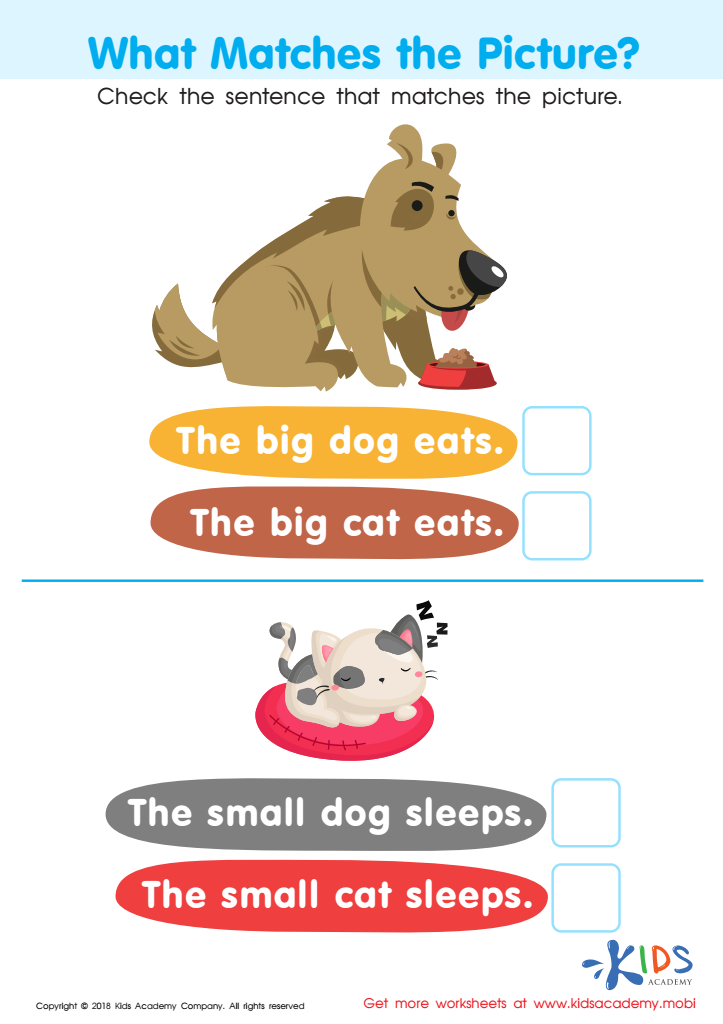
What Matches the Picture? Worksheet
 Assign to My Students
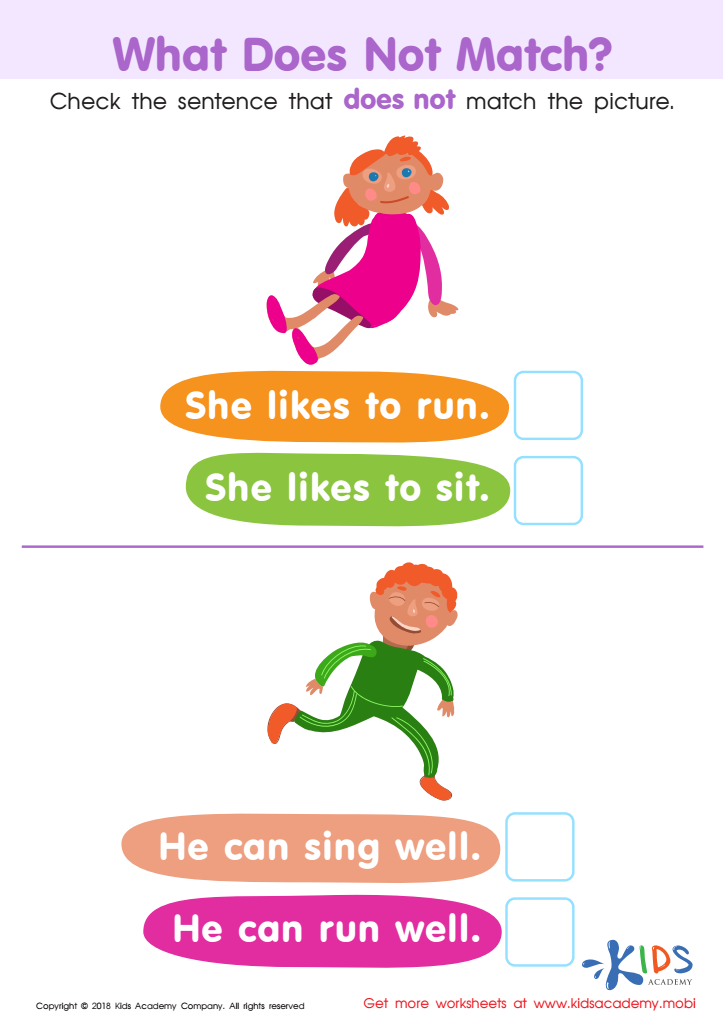
What Does Not Match? Worksheet



.jpg)




Cognitive development during early childhood is crucial as it lays the foundation for future learning and growth. Easy reading fiction for ages 4-9 plays a significant role in this development by stimulating imagination, enhancing language skills, and fostering critical thinking. When children engage with age-appropriate stories, they learn to comprehend narratives, make connections between ideas, and predict outcomes.
Moreover, these books often present relatable characters and situations, helping children understand emotions and develop empathy. This not only improves social skills but also enhances emotional intelligence, which is vital for navigating the complexities of relationships later in life.
Parents and teachers should care about easy reading fiction because it encourages a love for reading—a vital skill that can improve academic success throughout a child’s education. These stories also serve as excellent conversation starters, enabling adults to discuss themes and morals, fostering deeper understanding.
Incorporating easy reading fiction into a child's daily routine nurtures a broad range of cognitive abilities while making learning enjoyable. By prioritizing these definitions in their literacy practices, parents and teachers create a rich learning environment that promotes not only literacy but overall cognitive and emotional development.