Reading comprehension Easy Songs Worksheets for Ages 4-9
4 filtered results
Difficulty Level
Grade
Age
-
From - To
Subject
Activity
Standards
Welcome to our "Reading Comprehension Easy Songs Worksheets" page, designed specifically for children ages 4-9! These engaging worksheets combine fun and educational songs to enhance your child's reading comprehension skills. Each activity promotes listening, critical thinking, and vocabulary development, making learning enjoyable. Perfect for both classroom and home use, our worksheets cater to various learning styles, ensuring that every child can thrive. With catchy tunes and interactive exercises, kids will be excited to read, sing, and comprehend. Help your little ones on their literacy journey today by exploring our collection of creative resources that make learning to read a joyous experience!
Favorites
With answer key
Interactive
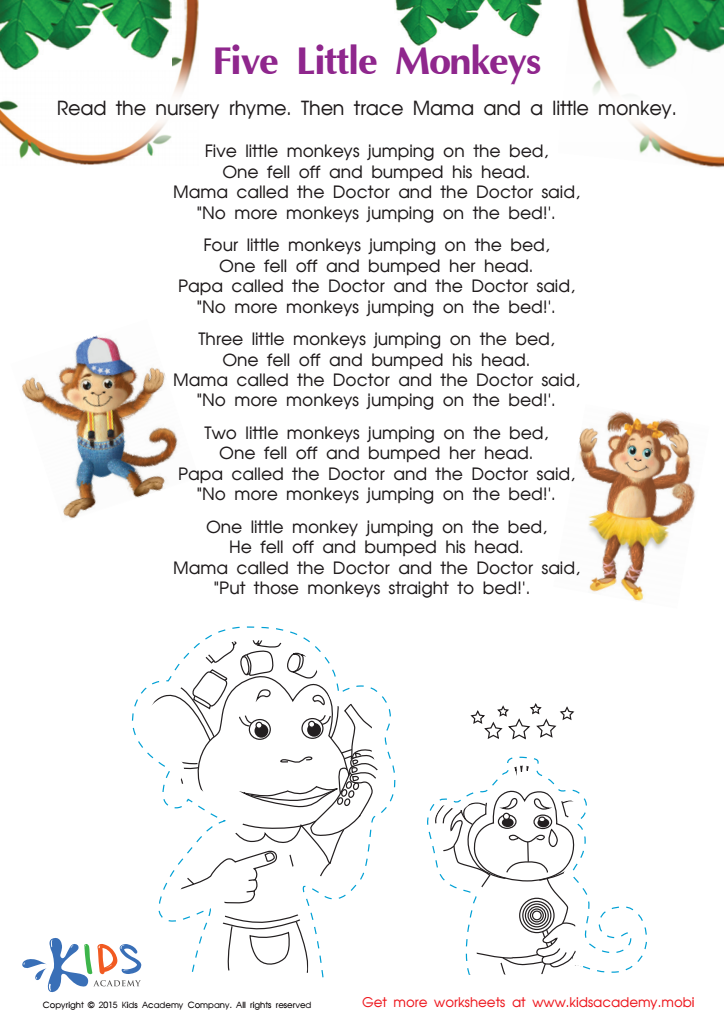
The Five Little Monkeys Nursery Rhyme Worksheet
Sing the beloved nursery rhyme "Five Little Monkeys" with your child, and add a finger play for extra fun! After a few times, encourage them to join in and fill the songs with laughter. Also, have fun coloring the worksheet featuring the monkeys and their Mama.
 Assign to My Students
The Five Little Monkeys Nursery Rhyme Worksheet
Worksheet
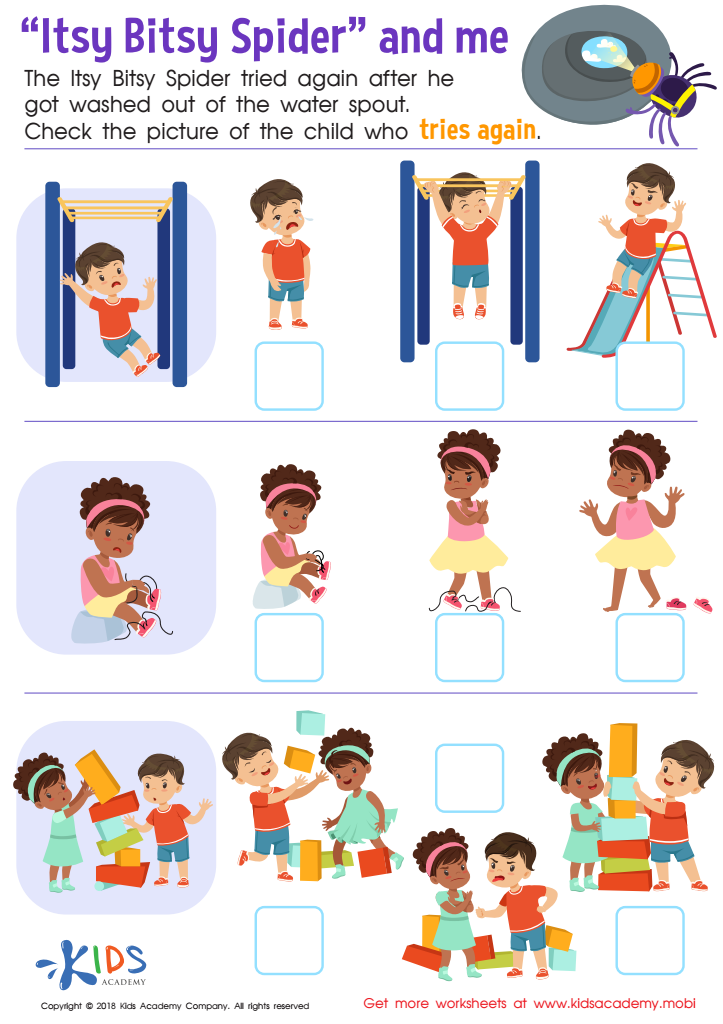
Itsy Bitsy Spider and Me Worksheet
Ensure your child's success - teach them determination and perseverance! Introduce them to the Itsy-Bitsy spider and this fun worksheet. It shows kids working hard and teaches them to 'try again.' Have them identify scenes and check the box for those who succeeded.
Itsy Bitsy Spider and Me Worksheet
Worksheet
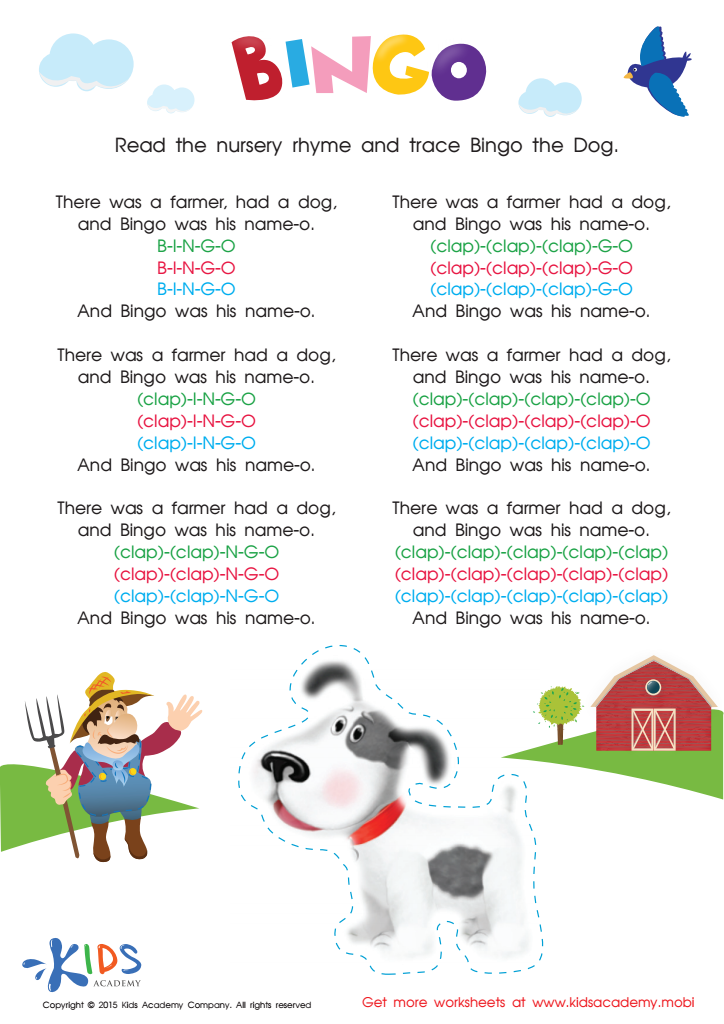
Nursery Rhymes: The Bingo Song Worksheet
Introduce The Bingo Song to your little ones. Have your kids sing some words and lines aloud, while you replace letters with claps. Add other activities: tapping, patting, jumping, and use your imagination. Print our free Bingo Song Coloring Pages and let your kids color them. Get more free worksheets at our website Kids Academy.
Nursery Rhymes: The Bingo Song Worksheet
Worksheet
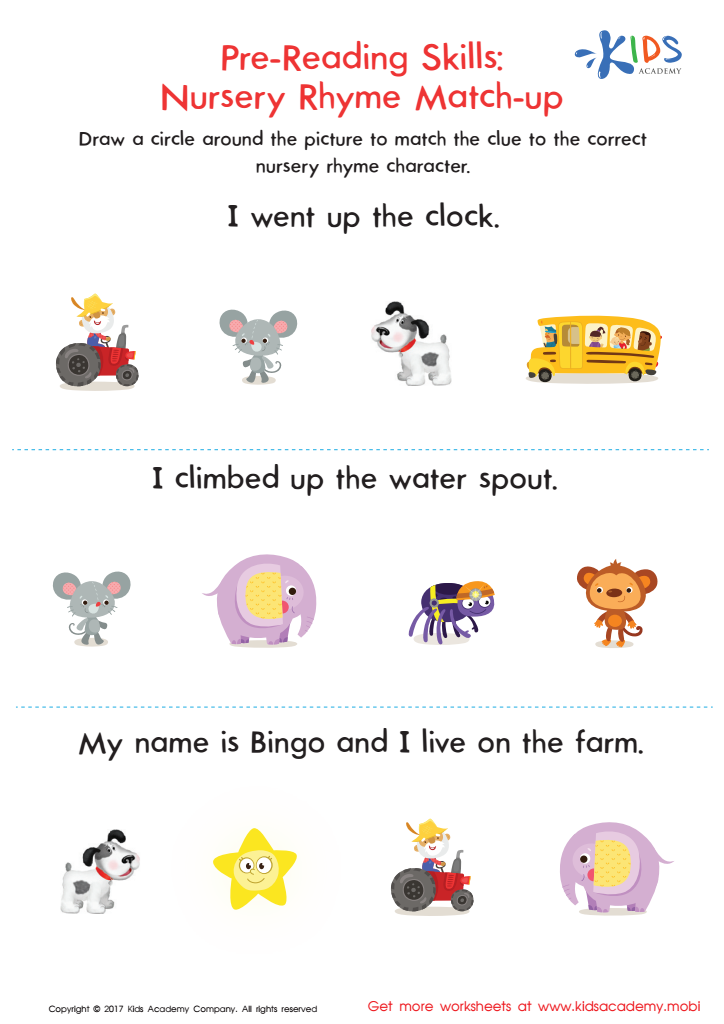
Nursery Rhyme Match–Up Worksheet
This worksheet helps kids build pre-reading skills using stories they know and love! By connecting with prior knowledge, kids can develop ideas about characters and set the stage for reading strategies.
Nursery Rhyme Match–Up Worksheet
Worksheet
Join Kids Academy for Free
Who is primarily going to use this learning content?



.jpg)




Reading comprehension is a vital skill for young learners, laying the foundation for their overall academic success. "Easy Songs for Ages 4-9" effectively support this development by engaging children in a fun and memorable way. These musical resources help enhance language skills, vocabulary acquisition, and listening abilities, which are essential components of comprehension.
Music has a unique ability to captivate young children, making learning enjoyable and interactive. By incorporating catchy tunes and lyrics, songs can make complex concepts more accessible and relatable. This melodious approach reinforces memory retention, helping children recall information more easily. Additionally, songs often emphasize rhythm, repetition, and rhyme, which are key to solidifying language skills.
Moreover, engaging with songs allows children to practice critical thinking as they interpret lyrics and understand deeper meanings. This practice sets the stage for improved reading comprehension by encouraging connections between text and context.
Ultimately, parents and teachers who utilize "Easy Songs for Ages 4-9" are providing children with a robust tool for fostering literacy. By nurturing reading comprehension through music, they cultivate a love for learning that can last a lifetime, effectively preparing students for future academic challenges.